

 English
 Deutsch
 Español
 Français

Ultralight Folding Hiking Backpack: A Practical Solution for Lightweight Outdoor Carrying
Content
- 1 Product Overview
- 2 Why Lightweight and Foldable Design Matters
- 3 Material Construction and Performance
- 4 Functional Advantages Compared with Conventional Backpacks
- 5 Applications Across Outdoor and Travel Markets
- 6 Capacity Selection and User Requirements
- 7 Carrying Comfort and Ergonomic Considerations
- 8 Foldability, Storage, and User Convenience
- 9 Manufacturing Quality and Product Reliability
- 10 Quality Control Considerations for Buyers
- 11 OEM and Private-Label Opportunities
- 12 Retail Positioning and Marketing Advantages
- 13 Care and Maintenance Guidance
- 14 Environmental and Supply Chain Considerations
- 15 Recommended Buyer Evaluation Checklist
- 16 Frequently Asked Questions
- 16.1 What is the main advantage of this folding hiking backpack?
- 16.2 Is the backpack fully waterproof?
- 16.3 What material is used to make the backpack?
- 16.4 What activities is the backpack suitable for?
- 16.5 Can it be used as a secondary backpack during travel?
- 16.6 Is it suitable for mountaineering?
- 16.7 How does the foldable design benefit retailers?
- 16.8 What should buyers check during sample approval?
- 16.9 Can the product be customized for private-label orders?
- 16.10 Why is manufacturing experience important for a foldable backpack?
- 16.11 How does CragHaven Outdoor support international buyers?
- 17 Conclusion
- 18 References
- 19 Product: Ultralight folding outdoor hiking backpack, large capacity backpack
Modern outdoor users increasingly want equipment that performs reliably without adding unnecessary weight or bulk. Hikers, campers, travelers, emergency planners, and outdoor retailers are all looking for products that can adapt to different situations while remaining easy to store, transport, and use. The ultralight folding outdoor hiking backpack is designed to answer this demand. It combines a lightweight construction, generous storage capacity, compact folding performance, and practical weather resistance in one versatile product.
This backpack is developed for users who need an additional carrying solution without the size and weight of a conventional backpack. It can be packed into a suitcase, stored inside a larger hiking pack, or carried as an emergency daypack. When required, it unfolds quickly and provides useful space for clothing, food, equipment, personal items, or travel essentials. This makes it suitable for day hiking, camping, short trips, mountaineering support, travel, and general outdoor use.
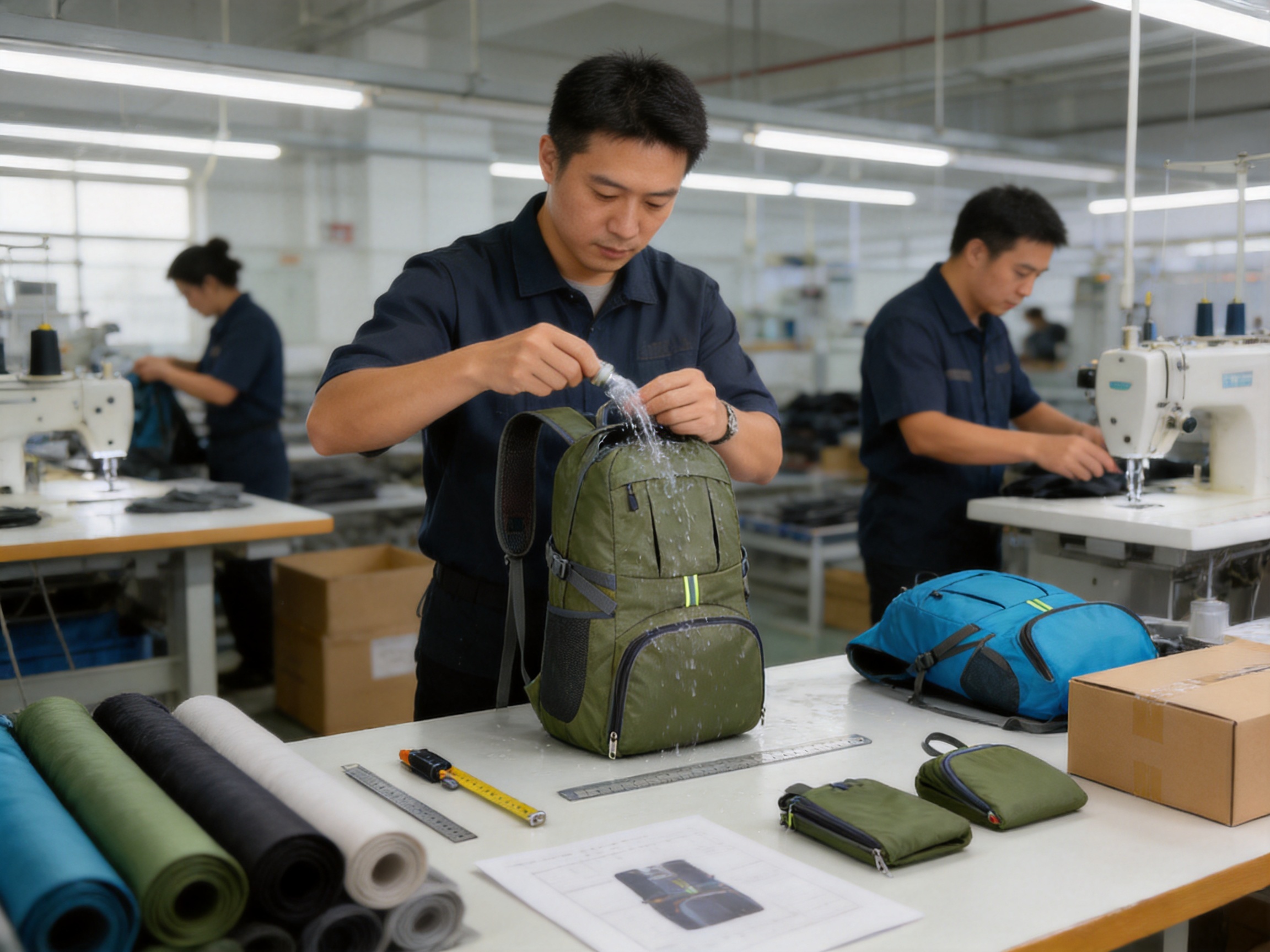
The product is made from high-density, ultra-lightweight polyester fabric. This material provides a useful balance between low weight and everyday durability. Its abrasion resistance helps the backpack withstand contact with rough surfaces, while its tear resistance supports longer service life during repeated outdoor use. A durable water-repellent treatment on the surface helps protect the contents from light rain and short periods of exposure to moisture.
For buyers, distributors, private-label customers, and outdoor retailers, the product also offers commercial advantages. Its broad application range makes it easier to position in different sales channels. It can be marketed as a foldable hiking backpack, a packable outdoor backpack, a travel daypack, an emergency backup bag, or a lightweight camping accessory. This flexibility helps retailers serve several customer groups with one practical product category.
Product Overview
The ultralight folding outdoor hiking backpack is a compact, packable backpack designed to provide convenient carrying capacity when needed and minimal storage volume when not in use. Its product reference is WFDS261001, and its category is mountaineering backpack. The design is intended for customers who value portability, flexibility, and efficient use of space.
Unlike a large expedition backpack, this product is not intended to replace a fully structured, multi-day technical pack. Its value lies in its adaptability. It can function as a primary daypack for short outdoor activities or as a secondary backpack carried inside luggage or a larger backpack. This makes it especially useful for travelers who need an extra bag after arriving at a destination, hikers who want a lightweight summit or side-trip pack, and campers who need a compact storage solution.
The backpack is constructed from high-density polyester fabric selected for its low weight, abrasion resistance, tear resistance, and dimensional stability. The fabric is also treated with a water-repellent finish. This treatment helps water bead on the surface during light rain, reducing the speed at which moisture reaches the interior. As with most water-repellent outdoor products, the treatment is intended to improve protection rather than create a fully waterproof enclosure.
The folding design allows the backpack to be compressed into a smaller package for storage and transportation. This is a major advantage over many traditional backpacks, which can occupy significant space even when empty. A compact folded form can reduce packing pressure for travelers, lower storage requirements for retailers, and make the product easier to carry as a backup item.
Its large-capacity structure gives users room for everyday outdoor necessities. Depending on the final configuration and market specification, the backpack can be used for clothing layers, snacks, water, maps, small equipment, personal accessories, and light camping supplies. The product is particularly well suited to day hikes and short outdoor activities where users want a practical amount of storage without the weight of a heavy frame or large suspension system.
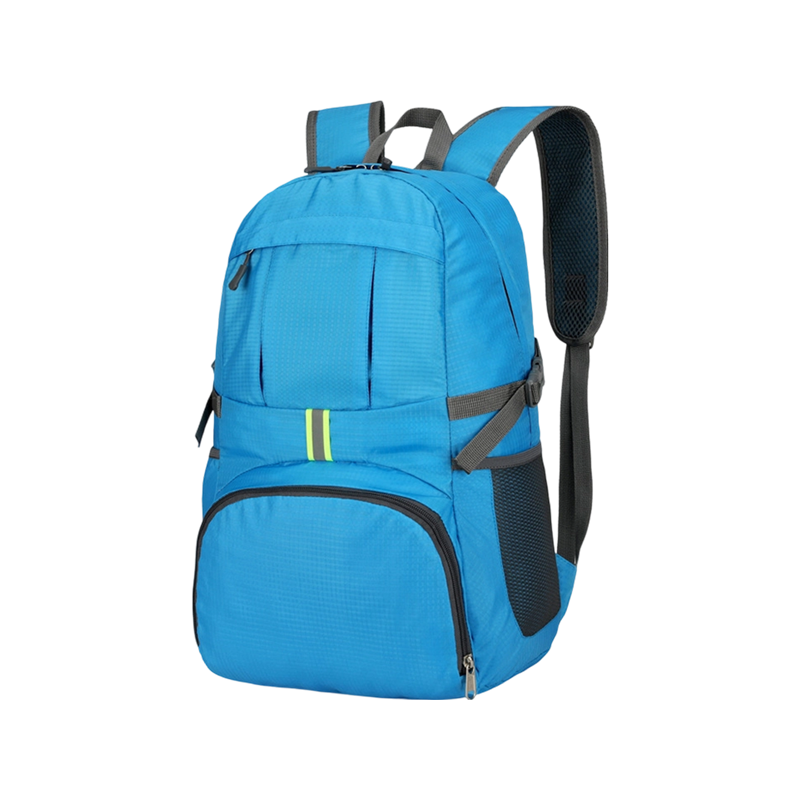
Ultralight folding outdoor hiking backpack, large capacity backpack
Why Lightweight and Foldable Design Matters
Weight has a direct effect on comfort, energy consumption, and mobility during outdoor activities. Every additional item carried on a trail adds to the physical demand placed on the user. A lightweight backpack helps reduce the burden during walking, sightseeing, commuting, and short-distance travel. It is also easier to lift, handle, pack, and transport between different locations.
However, low weight alone does not guarantee a good outdoor product. A very light backpack may be unsuitable if the fabric tears easily, the seams fail under normal loads, or the shoulder straps create pressure points. The design challenge is to reduce unnecessary material and structural weight while preserving the durability and usability required by outdoor customers. The product addresses this challenge through lightweight high-density polyester fabric and a practical configuration focused on essential carrying functions.
Foldability adds another layer of convenience. A backpack that can be folded quickly gives users more flexibility during travel. It can remain inside a suitcase until needed, occupy a small space in a vehicle, or be stored in a larger backpack without interfering with other equipment. This is valuable for travelers who may need a shopping bag, a daypack, or an extra carrying option during a trip.
For outdoor retailers, foldability also improves merchandising and logistics. Packable products require less warehouse volume and can be displayed in compact packaging. More units can be stored in a limited retail area, and the products are easier to arrange in travel, hiking, camping, or emergency-preparedness sections. Reduced product volume may also support more efficient shipment planning, although final shipping results depend on packaging design, order quantities, and transportation conditions.
Foldability is also relevant to emergency preparedness. A compact backpack can be kept in a car, office, home, or travel bag until additional storage is needed. In an unexpected situation, it can carry food, water, clothing, documents, or basic equipment. While it is not a substitute for specialized rescue equipment, its low storage volume makes it a useful addition to general preparedness products.
Material Construction and Performance
High-Density Polyester Fabric
The backpack uses high-density polyester fabric as its primary material. Polyester is widely used in outdoor products because it offers good dimensional stability, color retention, and practical resistance to everyday abrasion. High-density construction can help create a tighter, more stable fabric structure, supporting better resistance to surface wear and tearing than a loosely constructed lightweight fabric.
Material density must be balanced carefully. Excessively heavy fabric would reduce the main advantage of a packable backpack, while fabric that is too thin may not provide sufficient durability for repeated outdoor use. A properly selected high-density polyester provides a middle ground: light enough for travel and hiking, but sufficiently robust for normal contact with equipment, luggage compartments, trail surfaces, and outdoor accessories.
Abrasion Resistance
Outdoor backpacks regularly come into contact with challenging surfaces. They may rub against rocks, wooden benches, vehicle compartments, tent floors, luggage racks, or other equipment. Abrasion resistance helps the outer fabric maintain its integrity under these conditions. It is especially important for a foldable product because repeated folding and unfolding may place additional stress on areas of the fabric that are frequently handled.
Improved abrasion resistance also benefits retailers and brand owners because it supports a more dependable user experience. Customers generally expect an outdoor backpack to withstand normal outdoor contact without quickly developing visible wear. Although no lightweight fabric is indestructible, appropriate material selection can reduce premature damage and improve perceived product value.
Tear Resistance
Tear resistance is important when a backpack carries unevenly distributed items or encounters a sharp edge. A small puncture or cut can become larger if the fabric does not resist tear propagation. The high-density polyester construction is intended to provide better resistance to this type of damage during ordinary use.
Tear resistance also depends on more than fabric alone. Seam construction, reinforcement at stress points, zipper installation, strap attachment, and the overall pattern design all contribute to performance. This is why responsible product development must evaluate the backpack as a complete system rather than judging fabric specifications in isolation.
Durable Water-Repellent Treatment
The surface is treated with a durable water-repellent finish, commonly known as DWR. This treatment encourages light water exposure to form droplets on the outside of the fabric instead of immediately soaking into it. For hikers and travelers, this can provide useful protection during light rain, brief showers, or accidental splashes.
The treatment is particularly appropriate for a lightweight foldable backpack because it improves weather resistance without requiring a heavy waterproof membrane or rigid construction. It helps maintain the low-weight character of the product while adding a practical layer of protection for everyday outdoor conditions.
Users should understand that water repellency is different from complete waterproofing. Prolonged exposure to heavy rain, immersion, or water pressure may eventually allow moisture to pass through fabric, seams, zippers, or closures. Retail communication should therefore describe the product accurately as suitable for light rain and general moisture resistance rather than presenting it as a fully waterproof dry bag.
Functional Advantages Compared with Conventional Backpacks
The main competitive advantage of this product is its balance of portability, storage capacity, and practical durability. Conventional backpacks may provide more structure, padding, or load-support features, but they often take up more space and add more weight. The folding design is intended for customers who do not need a rigid frame or highly technical suspension system for every outing.
Compared with a basic casual bag, the product provides a more outdoor-oriented material selection. High-density polyester, abrasion resistance, tear resistance, and water-repellent treatment are features that support use in hiking, camping, and travel environments. Compared with a simple fabric tote, it offers better organization, improved carrying stability, and more secure backpack-style transportation.
Compared with a large technical mountaineering pack, the product is easier to store and carry as a secondary option. A mountaineer may use a large pack for an approach or multi-day journey and then unfold this backpack for short excursions, supply collection, or movement around a base area. The compact design allows it to serve a supporting role without competing directly with the load-carrying function of a large expedition pack.
Compared with many low-cost foldable bags, the use of high-density fabric and an outdoor-focused development process provides a stronger basis for durability. Product quality depends on more than appearance. Fabric consistency, sewing accuracy, stress-point reinforcement, hardware selection, and folding performance all influence how the backpack performs after repeated use.
| Comparison Factor | Ultralight Folding Hiking Backpack | Basic Casual Tote | Conventional Structured Backpack | Large Technical Pack |
|---|---|---|---|---|
| Storage efficiency | Folds into a compact form | Usually compact | Moderate to low | Low when empty |
| Outdoor suitability | Designed for hiking, travel, and camping support | Limited | Varies by model | High |
| Weight | Ultralight construction | Very light | Moderate | Higher because of structure |
| Weather protection | Water-repellent surface for light rain | Usually limited | Varies by fabric and treatment | Often higher, depending on specification |
| Carrying support | Backpack-style shoulder carrying | Limited | Usually stronger support | Advanced load-support systems |
| Best use | Day hikes, travel, camping, backup carrying | Shopping and casual carrying | Daily use and general travel | Multi-day trekking and heavy loads |
Applications Across Outdoor and Travel Markets
Day Hiking
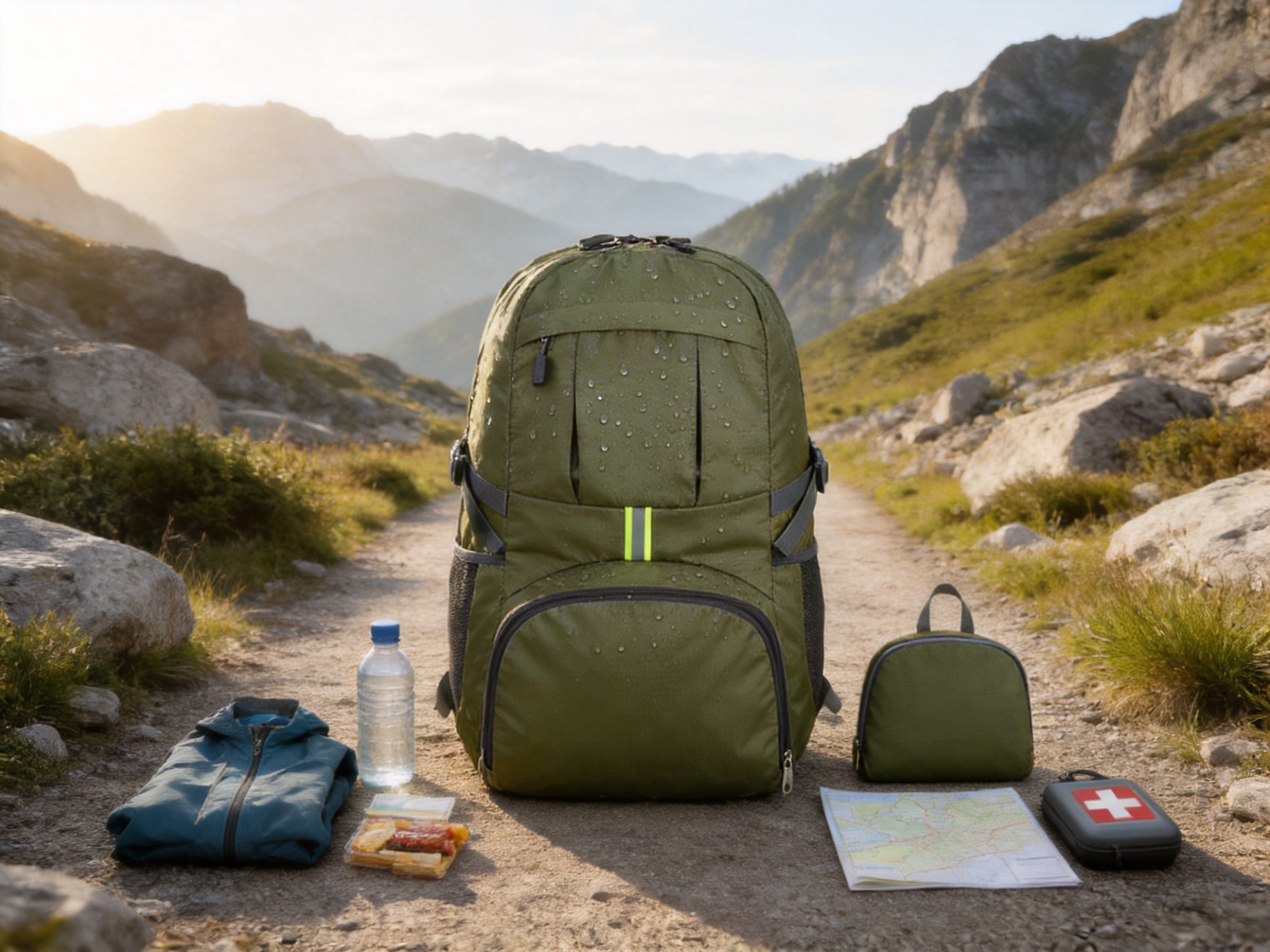
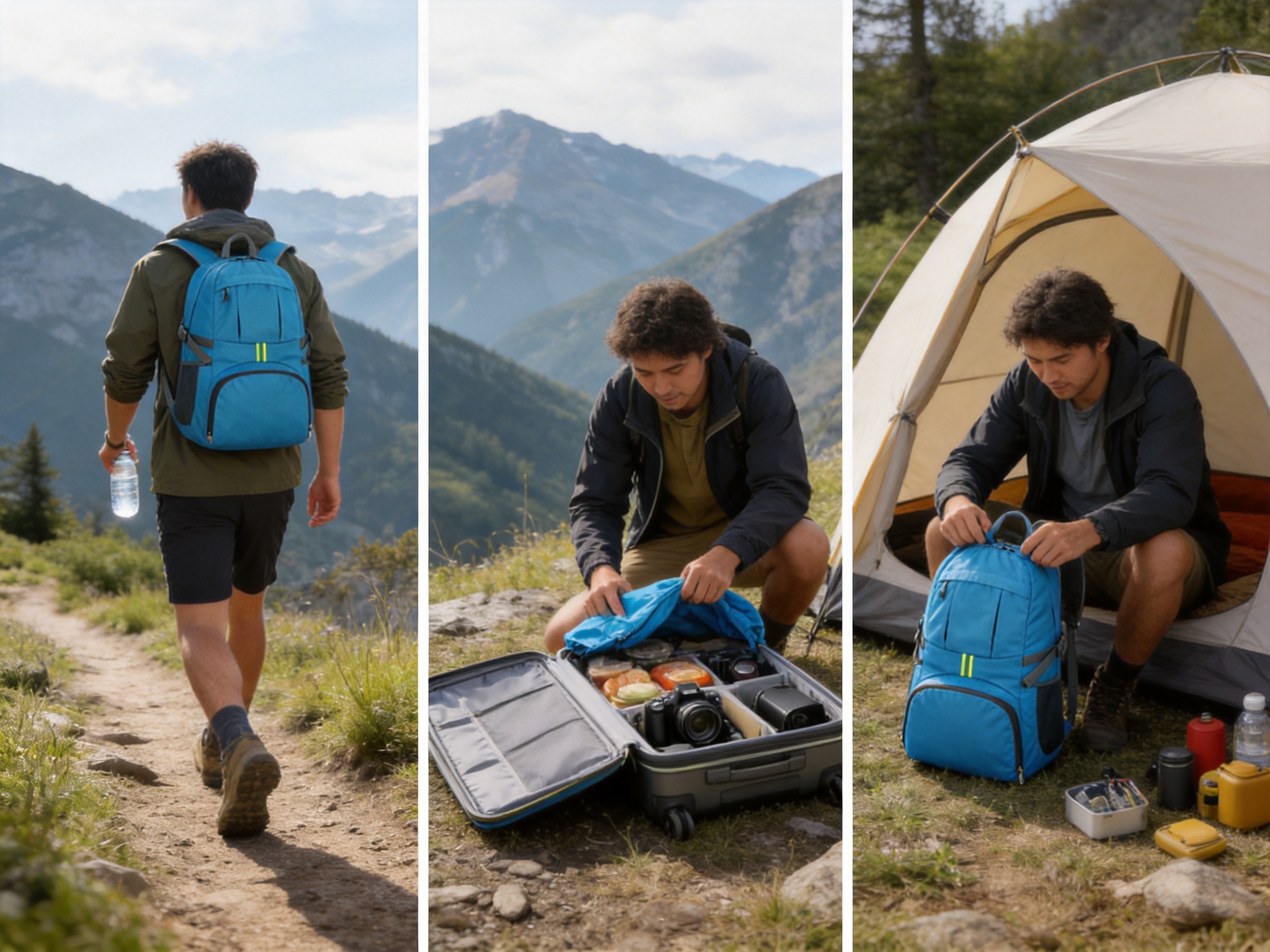
Day hiking is one of the most suitable applications for this backpack. Hikers may need space for water, snacks, a light jacket, sunscreen, maps, a first-aid kit, and personal items. A lightweight design helps keep the total load manageable, while the packable structure makes it easy to store before and after the hike.
For casual hikers and beginners, the product provides a simple entry point into outdoor equipment. It does not require the user to understand complex suspension adjustments or technical backpack systems. Its primary benefit is straightforward: it offers useful capacity in a lightweight format and can be carried comfortably for shorter outdoor activities.
Camping
Campers can use the backpack for moving supplies around a campsite, carrying personal items during short walks, or organizing equipment inside a larger camping setup. Its compact folded form is valuable when vehicle space or luggage space is limited. It can remain stored until a separate day-carrying solution is required.
For light camping trips, the backpack may carry clothing, food, water, small tools, or personal equipment. Users should select the load according to the backpack’s intended capacity and construction. It is best positioned for lightweight camping support rather than the transportation of very heavy or rigid equipment.
Travel
Travelers often need more than one type of bag during a trip. A suitcase may be useful for transportation but inconvenient for sightseeing, day tours, shopping, or local excursions. A foldable backpack can remain inside the suitcase during transit and then be unfolded at the destination.
The product is also useful for travelers who want to reduce luggage volume. Instead of packing a second full-size backpack, users can carry a lightweight foldable option that occupies minimal space. Its outdoor-inspired construction can provide more practical performance than an ordinary fashion bag during walking tours, airport transfers, and mixed indoor-outdoor activities.
Mountaineering Support
Although the product is not designed to replace a heavy expedition pack, it can support mountaineering activities. A climber may use it for short approaches, base-camp movement, equipment organization, or low-volume excursions. Its compact storage format allows it to be packed inside a larger mountaineering backpack until needed.
For mountain retailers, this creates a useful complementary product. Customers purchasing technical climbing equipment may also appreciate a lightweight secondary pack for less demanding stages of a trip. Its application as a support backpack expands its relevance beyond ordinary day hiking.
Emergency and Backup Use
A compact foldable backpack can be kept in a vehicle, workplace, dormitory, home storage area, or larger travel bag. It may be used when an unexpected carrying need appears. Examples include carrying supplies during a relocation, transporting personal items after a vehicle breakdown, or organizing essential items during a travel disruption.
The product should not be represented as specialized disaster-response equipment unless additional testing and specifications support that claim. Nevertheless, its low storage volume, rapid deployment, and useful capacity make it a practical general-purpose backup bag.
Capacity Selection and User Requirements
Capacity should be evaluated according to the activity, duration, climate, and equipment requirements. A smaller pack may be sufficient for short walks, while a longer day hike may require space for extra clothing, food, water, and safety equipment. Retailers should present capacity information clearly so customers can match the product to their intended use.
| Approximate Capacity | Suitable Application | Typical Contents |
|---|---|---|
| 10–20 liters | Short walks, city travel, emergency backup | Personal items, snacks, light clothing, documents |
| 20–30 liters | Day hiking and lightweight outdoor activities | Water, food, jacket, first-aid items, accessories |
| 30–40 liters | Camping and extended hiking | Additional clothing, cooking accessories, compact equipment |
| 40 liters and above | Multi-day trekking and heavier outdoor loads | Sleeping systems, larger equipment, extended supplies |
The product is most naturally positioned for day hiking, travel, camping support, and lightweight outdoor activities. If buyers require multi-day trekking capacity, they should confirm the exact size, load rating, strap design, and support structure before selecting a specification. A large stated volume does not automatically mean a backpack is appropriate for heavy loads.
Capacity should also be considered in relation to external pockets, compartments, closures, and access points. A well-organized backpack can feel more practical than a larger but poorly organized design. Retailers may therefore wish to evaluate not only total volume but also how easily users can separate water, clothing, food, electronics, and small accessories.
Carrying Comfort and Ergonomic Considerations
Lightweight construction contributes to comfort, but carrying comfort also depends on the shoulder straps, back contact area, adjustment points, and load distribution. A backpack should remain stable while the user walks, bends, climbs, or changes direction. Even a lightweight load can become uncomfortable if the straps are too narrow, poorly positioned, or difficult to adjust.
Breathable shoulder straps can help reduce heat and moisture accumulation around the shoulders. They may also distribute pressure more evenly than simple unstructured fabric straps. Adjustable strap lengths allow different users to obtain a better fit, which is particularly important for products sold in international markets where body proportions and clothing layers may vary.
An adjustable chest strap can improve stability by helping keep the shoulder straps in position. This feature may be useful on uneven terrain, during faster walking, or when the user carries the backpack over a jacket. A waist strap, when included in the relevant specification, can assist with load distribution, although the effectiveness of a waist strap depends on its width, positioning, adjustment range, and the total load carried.
Retail buyers should review the intended carrying system carefully. A foldable backpack is usually optimized for portability, so it may not provide the same padding or structural support as a large technical backpack. Its strongest market position is lightweight and moderate-load use. Clear product education helps customers appreciate its purpose and avoid comparing it unfairly with a specialized heavy-load pack.
Foldability, Storage, and User Convenience
The folding mechanism is central to the product’s value. A backpack should fold quickly without requiring complicated steps. Users should be able to understand how to compress and unfold it after minimal instruction. If the design includes an integrated storage pouch, the pouch can help keep the folded product organized and reduce the chance of losing a separate carrying case.
Repeated folding places stress on fabric creases, seams, zippers, and attachment points. For this reason, the folding design should be considered during pattern development rather than added after the backpack has already been designed. Panels should fold naturally, bulky hardware should be minimized, and the product should return to its usable shape without excessive wrinkling or distortion.
Compact folding also improves transport efficiency inside a customer’s existing luggage. A traveler can store the backpack in a suitcase pocket, a larger backpack, a vehicle compartment, or a hotel room. For retailers and distributors, the same characteristic can simplify inventory handling and reduce the amount of shelf space required per unit.
In commercial terms, packability creates a clear product message that is easy to communicate: carry it when needed, store it when not needed. This simple benefit is relevant to hikers, students, commuters, tourists, campers, and customers who want a backup bag without purchasing a large product.
Manufacturing Quality and Product Reliability
Outdoor equipment is exposed to repeated movement, changing weather, rough surfaces, and varying loads. Manufacturing quality therefore has a direct influence on user satisfaction. A backpack may have an attractive design, but its long-term value depends on how consistently the materials, seams, hardware, and finishing details are produced.
CragHaven Outdoor approaches product development as both an outdoor brand and a cross-border manufacturing partner based in Hangzhou, China. Its stated focus covers mountaineering, hiking, and camping scenarios. This orientation is important because the company’s development process is based on real outdoor applications rather than appearance alone.
The company emphasizes a product philosophy centered on weather, terrain, and time. In practical terms, this means considering how the backpack will be exposed to handling, outdoor surfaces, changing conditions, repeated packing, and long-term use. A product developed around these factors is more likely to address real customer problems than one designed only to meet a catalog specification.
Material Selection
Material selection is one of the first stages in reliable product development. The fabric must match the expected load, environment, folding frequency, and target price. For this backpack, high-density polyester is selected to support a combination of low weight, abrasion resistance, tear resistance, and stable appearance.
Material consistency is also important for large orders. Color, weight, coating performance, surface feel, and fabric construction should remain sufficiently consistent from batch to batch. Consistency helps retailers maintain a stable product presentation and reduces variation in customer experience.
Pattern Engineering
Pattern engineering influences capacity, foldability, balance, and stress distribution. A carefully developed pattern can reduce unnecessary fabric and improve the way the backpack sits on the user’s back. It can also help place seams away from high-friction areas and provide more reliable attachment points for straps and handles.
For a foldable product, pattern engineering must account for both expanded and compressed states. The backpack should provide a useful shape when open and a manageable form when folded. This requires attention to panel dimensions, seam allowances, closure placement, fabric behavior, and the relationship between the storage pouch and the main body.
Stitching and Reinforcement
Stitching is a critical part of backpack performance. Stress is concentrated around shoulder strap attachments, handles, pocket openings, corners, zipper ends, and areas where the fabric changes direction. Reinforcing these points can reduce the risk of seam failure during normal use.
Consistent stitch length, thread tension, seam alignment, and reinforcement methods contribute to product reliability. Manufacturing inspection should identify loose threads, skipped stitches, uneven seams, fabric damage, incomplete closures, and other defects before products reach customers.
Hardware and Closure Inspection
Zippers, buckles, adjusters, cord locks, and other hardware must function smoothly and remain compatible with the lightweight design. Hardware that is too heavy can compromise the product’s low-weight objective, while hardware that is too weak may reduce service life.
Repeated opening and closing tests can help identify zipper resistance, misalignment, slider problems, and premature wear. Buckles and adjusters should also be checked for secure engagement and suitable adjustment range. These details may appear small, but they strongly influence the customer’s perception of quality.
Sampling and Optimization
CragHaven Outdoor describes sampling, testing, and optimization as standard stages that should not be omitted. This approach is valuable for a foldable hiking backpack because the product must perform in several different conditions: folded, unfolded, lightly loaded, fully loaded within its intended range, carried during movement, and exposed to ordinary outdoor moisture.
Samples allow design teams and buyers to check dimensions, folding efficiency, fabric feel, carrying comfort, pocket access, strap adjustment, appearance, and manufacturing feasibility. Feedback from sampling can then be used to refine the pattern, change a material, adjust a seam, improve reinforcement, or simplify a production step.
Optimization should continue until the product achieves an appropriate balance between performance, cost, weight, appearance, and production stability. The objective is not simply to add more features. Unnecessary features can increase weight, cost, and failure points. A well-optimized backpack uses features that solve real user problems.
Quality Control Considerations for Buyers
Buyers evaluating this type of backpack should review both product specifications and manufacturing controls. Useful inspection areas include fabric weight, color consistency, surface treatment, seam quality, zipper operation, strap attachment, folded dimensions, expanded dimensions, and packaging condition.
Water-repellent performance should be described carefully and evaluated according to the intended claim. A simple surface spray or light water test may help confirm whether water beads on the fabric, but it does not represent prolonged heavy-rain performance. If a buyer requires specific water-resistance results, the testing method and acceptance criteria should be agreed upon in advance.
Load testing should reflect the intended application. A backpack marketed for lightweight day hiking should be tested with a reasonable outdoor load, while a product intended for heavier use requires more demanding evaluation. Buyers should avoid presenting the backpack as a heavy-load technical pack unless the construction and test results support that market position.
Fold and unfold testing is particularly relevant. The product should maintain its basic shape and function after repeated packing cycles. Inspectors can examine whether seams become distorted, whether the storage pouch remains usable, whether zippers continue to operate smoothly, and whether the fabric shows abnormal damage at common fold lines.
Packaging should protect the product from dust, moisture, compression damage, and contamination during shipping. Clear folding instructions and care information can improve the customer experience and reduce misuse. For private-label projects, packaging, labels, hangtags, color cards, and instruction materials can be adapted to the buyer’s brand requirements where applicable.
OEM and Private-Label Opportunities
The product is suitable for outdoor retailers, travel brands, camping distributors, promotional programs, and private-label businesses seeking a practical packable backpack. The broad usage range allows buyers to position it under different product names and marketing themes while maintaining the core functional advantages.
Potential customization areas may include color, logo application, woven labels, printed graphics, packaging, hangtags, zipper pulls, storage pouch details, and selected material options. The feasibility of each customization depends on order quantity, production method, lead time, sample approval, and the desired level of design change.
Buyers should define the intended market before finalizing the specification. A backpack for urban travel may prioritize appearance, laptop compatibility, and luggage integration, while a hiking-oriented version may emphasize water-bottle storage, breathable straps, and outdoor colors. A camping version may require more compartments or stronger reinforcement.
Customization should preserve the product’s core balance. Excessive decoration, heavy hardware, or unnecessary structural additions may reduce the advantages of the original lightweight foldable concept. The best private-label development usually improves market relevance without compromising packability, durability, or ease of use.
CragHaven Outdoor’s location in Hangzhou provides access to China’s established textile, bag, hardware, sampling, and manufacturing networks. This can support efficient communication between design development and production. For international buyers, a manufacturing partner that understands both product details and export-market expectations can help reduce uncertainty during development and ordering.
Retail Positioning and Marketing Advantages
The product offers several clear selling points that retailers can communicate to customers. These include ultralight construction, compact folding, useful capacity, high-density polyester fabric, abrasion resistance, tear resistance, light-rain protection, and suitability for hiking, camping, travel, and emergency backup use.
Its versatility allows it to appear in more than one retail category. In an outdoor store, it can be presented as a lightweight daypack or packable hiking backpack. In a travel section, it can be marketed as a luggage-friendly day bag. In a camping department, it can be positioned as a compact support pack. In an emergency-preparedness section, it can be shown as a low-volume backup carrying option.
Product photography and packaging should demonstrate the difference between the folded and unfolded forms. Customers need to understand how the backpack is stored and how quickly it can be prepared for use. Clear visuals can make the compactness advantage more tangible than technical measurements alone.
Retail copy should also distinguish water-repellent protection from waterproof performance. Accurate communication builds customer trust and reduces returns caused by unrealistic expectations. The product is designed for light rain and general outdoor use, not for immersion or prolonged severe weather unless additional specifications confirm otherwise.
The product’s broad user profile can support different promotional campaigns. Possible audiences include weekend hikers, frequent travelers, students, commuters, campers, festival visitors, outdoor beginners, and customers preparing vehicle or home emergency supplies. Each audience can be shown a different practical use while retaining the same core product identity.
Care and Maintenance Guidance
Proper care can help preserve the fabric, coating, and structural components of the backpack. Users should remove dirt and debris after outdoor activities, especially when the bag has been placed on wet or abrasive surfaces. Mild cleaning methods are generally preferable to harsh chemicals that may affect the fabric finish or coating.
The backpack should be dried thoroughly before long-term storage. Storing a damp product may create unpleasant odors and may affect the fabric or coating over time. Once dry, the backpack can be folded according to the intended storage method and kept in a clean, dry location.
Users should avoid carrying sharp objects without suitable protection. Even a tear-resistant fabric can be damaged by exposed blades, pointed tools, or rough metal edges. Heavy loads should remain within the intended product specification, and contents should be distributed to reduce unnecessary strain on seams and closures.
Water-repellent treatment may gradually lose effectiveness through repeated abrasion, cleaning, and general use. If the outer surface no longer causes light water to bead, the product may need appropriate re-treatment according to the care instructions and material compatibility. Any re-treatment should be tested carefully to avoid damaging the fabric or changing its appearance.
Environmental and Supply Chain Considerations
Lightweight products can support more efficient use of materials when they are designed responsibly and used for a long service life. The value of a foldable backpack is not only its low shipping or storage volume but also its ability to serve multiple purposes. One product can function as a travel bag, daypack, camping support bag, and emergency backup item.
Durability is an important part of responsible product development. A backpack that remains useful through repeated trips may reduce the need for frequent replacement. This is why fabric strength, reliable stitching, stable hardware, and consistent finishing should be considered alongside appearance and purchase price.
Supply chain reliability also matters to international buyers. Consistent materials, repeatable production, clear communication, sampling, and quality inspections can reduce unexpected variation between orders. CragHaven Outdoor states that it aims to reduce uncertainty for customers through participation in both product design and manufacturing rather than acting only as a sourcing intermediary.
For buyers planning long-term cooperation, it is useful to establish clear procedures for product approval, material confirmation, sample retention, inspection standards, packaging requirements, and change management. These procedures help ensure that future production remains aligned with the approved reference sample.
Recommended Buyer Evaluation Checklist
Before placing an order, buyers should confirm the exact product dimensions, folded dimensions, unfolded dimensions, approximate capacity, material composition, color, weight, closure type, pocket configuration, strap design, and packaging method.
Buyers should also ask how the fabric, water-repellent treatment, stitching, and hardware are inspected. If the product is intended for a specific retail market, labeling, care instructions, barcode requirements, and packaging regulations should be reviewed before production begins.
- Confirm the intended application and target customer.
- Review the fabric specification and surface treatment.
- Check the folded size and storage method.
- Evaluate the unfolded capacity and internal organization.
- Inspect shoulder straps, chest straps, waist straps, and adjustment points.
- Review zipper and buckle performance.
- Check reinforcement at handles, straps, corners, and stress points.
- Discuss light-rain protection claims and testing expectations.
- Approve a production sample before bulk manufacturing.
- Define acceptable quality limits for bulk inspection.
- Confirm logo, label, packaging, and carton requirements.
- Review care instructions and customer-facing product information.
Frequently Asked Questions
What is the main advantage of this folding hiking backpack?
The main advantage is its combination of useful outdoor carrying capacity and compact storage. It can be unfolded for hiking, travel, camping, or backup use and then folded into a smaller form when it is no longer needed. Its ultralight construction helps reduce carrying burden and makes it easier to place inside luggage or another backpack.
Is the backpack fully waterproof?
No. The backpack uses a durable water-repellent surface treatment intended to protect against light rain and minor moisture exposure. It should not be described as fully waterproof unless a specific waterproof construction and test result are provided. Prolonged heavy rain, immersion, or water pressure may eventually allow moisture to enter through the fabric, seams, or closures.
What material is used to make the backpack?
The product is made from high-density, ultra-lightweight polyester fabric. The material is selected for its balance of low weight, abrasion resistance, tear resistance, and dimensional stability. The exact material weight and construction should be confirmed in the final product specification.
What activities is the backpack suitable for?
It is suitable for day hiking, lightweight outdoor activities, travel, camping support, mountaineering support, short trips, and emergency backup use. It is best positioned for moderate loads and portable applications rather than replacing a large technical backpack designed for heavy multi-day loads.
Can it be used as a secondary backpack during travel?
Yes. Its foldable structure makes it suitable for carrying inside a suitcase or larger backpack. Travelers can unfold it for sightseeing, shopping, short walks, airport transfers, or day trips after reaching their destination.
Is it suitable for mountaineering?
It can support mountaineering activities as a lightweight secondary or support backpack. It may be useful for base-camp movement, short excursions, or carrying small quantities of equipment. Buyers seeking a technical pack for climbing loads, heavy gear, or multi-day expeditions should confirm that the specific configuration provides the necessary capacity, reinforcement, and load-support features.
How does the foldable design benefit retailers?
The design can reduce storage volume, simplify display, and support multiple sales categories. Retailers can present it as a hiking backpack, travel daypack, camping accessory, or emergency backup bag. Its compact form may also make warehouse handling and shipment planning more efficient.
What should buyers check during sample approval?
Buyers should inspect the material, fabric feel, color, dimensions, folded size, unfolded shape, stitching, strap attachment, zipper operation, water-repellent finish, storage pouch, and overall carrying comfort. They should also confirm that the product matches the agreed artwork, labels, packaging, and specifications.
Can the product be customized for private-label orders?
Potential customization may include colors, logos, labels, packaging, hangtags, printed graphics, zipper pulls, and selected design details. The available options depend on order quantity, material availability, production method, and sample approval. Buyers should discuss customization requirements before the quotation and development stage.
Why is manufacturing experience important for a foldable backpack?
A foldable backpack must perform in both compressed and expanded states. Repeated folding can affect seams, fabric, zippers, and storage components. Manufacturing experience helps ensure that material selection, pattern engineering, stitching, reinforcement, inspection, and packaging are considered together rather than treated as separate tasks.
How does CragHaven Outdoor support international buyers?
CragHaven Outdoor operates as an outdoor brand and cross-border manufacturing partner based in Hangzhou, China. The company focuses on hiking, camping, and mountaineering applications and emphasizes material selection, sampling, testing, optimization, and reliable manufacturing. Its stated objective is to support long-term cooperation by participating in product development as well as production.
Conclusion
The ultralight folding outdoor hiking backpack provides a practical response to the growing demand for portable, adaptable outdoor equipment. Its high-density polyester construction supports low weight, abrasion resistance, and tear resistance, while the durable water-repellent surface treatment adds protection against light rain. The folding structure allows users to store and transport the backpack with minimal space, creating value for hikers, travelers, campers, mountaineers, and emergency-preparedness customers.
Its strongest competitive position comes from balance. It is lighter and easier to store than many conventional backpacks, more outdoor-oriented than a basic casual bag, and more flexible as a secondary pack than a large technical backpack. It is not designed to replace every type of outdoor pack. Instead, it provides a focused solution for moderate loads, short trips, day activities, and situations where compact storage matters.
For buyers and retailers, the product also offers broad market potential. It can be sold through outdoor, travel, camping, lifestyle, and emergency-preparedness channels. Its packable structure supports efficient storage and convenient merchandising, while its practical materials and outdoor-focused development provide a stronger foundation for long-term product value.
CragHaven Outdoor’s manufacturing approach emphasizes real-world use, careful material selection, sampling, testing, optimization, and consistent production. These strengths are important for a product that must remain lightweight without becoming fragile. By combining functional design with manufacturing discipline, the company aims to provide reliable outdoor gear for international retailers, distributors, and private-label customers.
For buyers seeking a foldable hiking backpack, the key evaluation points are clear: confirm the intended use, review the material and construction, assess capacity and comfort, test the folding system, define weather-resistance expectations, and approve production quality before bulk manufacturing. When these factors are properly balanced, the product can become a versatile and commercially valuable addition to an outdoor gear range.
References
1. Product information supplied for the WFDS261001 ultralight folding outdoor hiking backpack.
2. CragHaven Outdoor company information and product development principles supplied by the manufacturer.
3. General outdoor equipment design considerations for fabric durability, packability, carrying comfort, and weather resistance.
4. General textile and backpack manufacturing practices related to polyester fabric construction, stitching, reinforcement, hardware inspection, and sample approval.
5. General buyer guidelines for outdoor product sourcing, private-label development, quality control, and international supply chain management.
6. General guidance on the distinction between durable water repellency and fully waterproof product construction.
Product: Ultralight folding outdoor hiking backpack, large capacity backpack




- Phone: +86-15968800379
- E-mail: [email protected]
- Address: Room 1002, Huishang Building, Gongshu District, Hangzhou City, Zhejiang Province.
Copyright © CragHaven Outdoor All Rights Reserved. Outdoor Gear Manufacturers Wholesale Mountaineering Camping Gear Suppliers
