

 English
 Deutsch
 Español
 Français
Black Vinyl Butterfly Canopy for Reliable Outdoor Shade and Shelter
Content
- 1 Designed Around Real Outdoor Use
- 2 Black Vinyl Coating and Sun Protection
- 3 210D High-Density Oxford Cloth
- 4 Butterfly Geometry for Wider Shade Coverage
- 5 Taller, Thicker Steel Frame
- 6 Rainproof and Sunshade Performance
- 7 Advantages Over Basic Canopy Alternatives
- 8 Manufacturing Approach and Product Development Strengths
- 9 Quality Control Considerations
- 10 OEM and Global Retail Supply Potential
- 11 Use Scenarios
- 12 Setup, Care, and Storage
- 13 Why the Product Fits the CragHaven Outdoor Philosophy
- 14 Q&A
- 14.1 What is the main purpose of this canopy?
- 14.2 Why use black vinyl coating?
- 14.3 Is the product suitable for backpacking?
- 14.4 What is the benefit of 210D Oxford cloth?
- 14.5 Does the butterfly shape improve rain performance?
- 14.6 Is the steel frame windproof?
- 14.7 Can the canopy be customized for private-label sales?
- 14.8 How should the canopy be stored?
- 14.9 What makes CragHaven Outdoor suitable as a manufacturing partner?
- 14.10 What weather conditions should be avoided?
- 15 Conclusion
- 16 References
- 17 Product: Outdoor picnic camping black vinyl tent, rainproof and sunshade canopy, picnic butterfly curtain canopy
Outdoor shelter must do more than create an attractive place to sit. It must reduce sun exposure, manage rain, withstand repeated setup, remain stable in changing weather, and provide enough usable space for the people and equipment beneath it. The outdoor picnic camping black vinyl tent is designed around these practical demands. Combining a black vinyl sun-protection coating, 210D high-density Oxford cloth, a taller steel frame, and a butterfly-shaped roof profile, it is positioned as a dependable canopy for family picnics, beach outings, campsites, parks, outdoor events, and other stationary or semi-stationary applications.
Unlike a lightweight recreational shelter intended primarily for short backpacking trips, this canopy emphasizes coverage, shade performance, structural support, and long-term repeat use. Its materials are selected for outdoor scenarios in which the product may remain assembled for several hours, experience direct sunlight, encounter wind from an exposed beach or open field, or be packed and unpacked repeatedly throughout a season.
The design also reflects a realistic balance between portability and protection. Vinyl-coated fabric is generally heavier than thin, uncoated, or PU-coated alternatives, but that additional material weight contributes to stronger solar protection and a more substantial feel. The 210D Oxford fabric provides a practical middle ground between lightweight materials that may tear easily and very heavy fabrics that add bulk without delivering proportional benefits for canopy use.
For buyers, retailers, importers, and outdoor brands, the product offers more than an individual shelter. It represents a manufacturable outdoor gear solution supported by CragHaven Outdoor’s product development, sampling, testing, and production capabilities. The company works with global markets and focuses on functional equipment for hiking, mountaineering, camping, and related outdoor activities. Its manufacturing approach is based on matching materials and construction methods to real environments rather than simply adding specifications to a product listing.
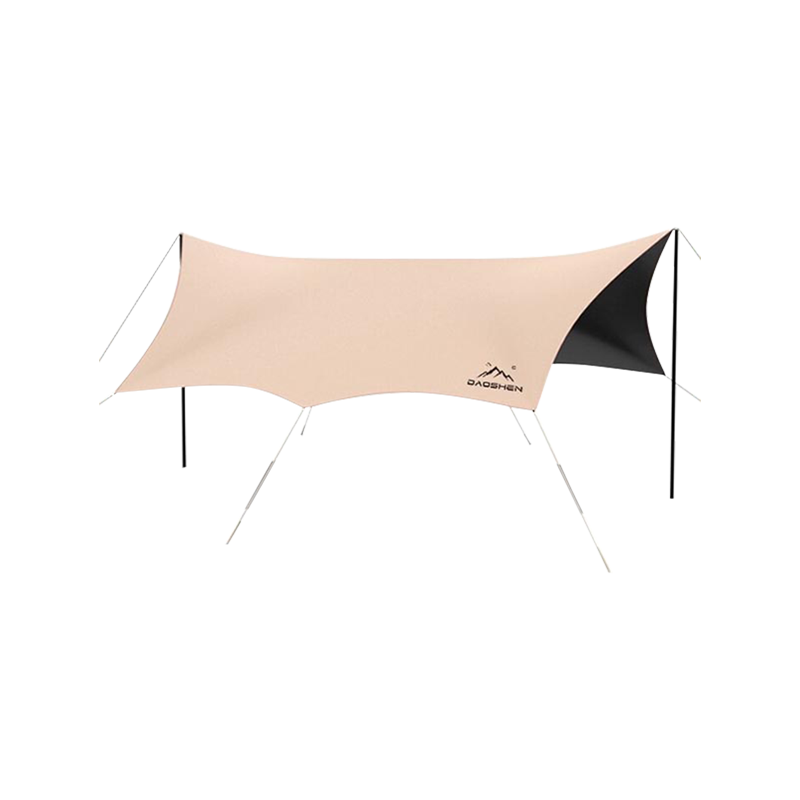
Outdoor picnic camping black vinyl tent, rainproof and sunshade canopy, picnic butterfly curtain canopy
Designed Around Real Outdoor Use
Many canopies appear similar when viewed only through product photographs. The differences become clearer during actual use. A basic shelter may provide temporary shade but allow excessive heat beneath the fabric. A thin frame may look convenient but flex under gusts. A flat roof may cover a large area but collect rainwater. A lightweight fabric may pack easily but show damage after several setup cycles or contact with rough ground.
The black vinyl butterfly canopy addresses these issues as a coordinated system. The fabric, coating, roof shape, frame height, frame thickness, and anchoring approach all contribute to overall performance. No single feature can guarantee stability or weather protection by itself. Instead, the value of the product comes from the way these features work together.
The canopy is particularly suitable for users who prioritize comfort and coverage over ultralight packing weight. Families can use it as a shaded area for meals and rest. Beach users can benefit from a darker, more protective overhead layer when direct sunlight is intense. Campers can establish a communal cooking, dining, or relaxation area. Retailers can position it as a practical outdoor lifestyle product rather than a specialist mountaineering shelter.
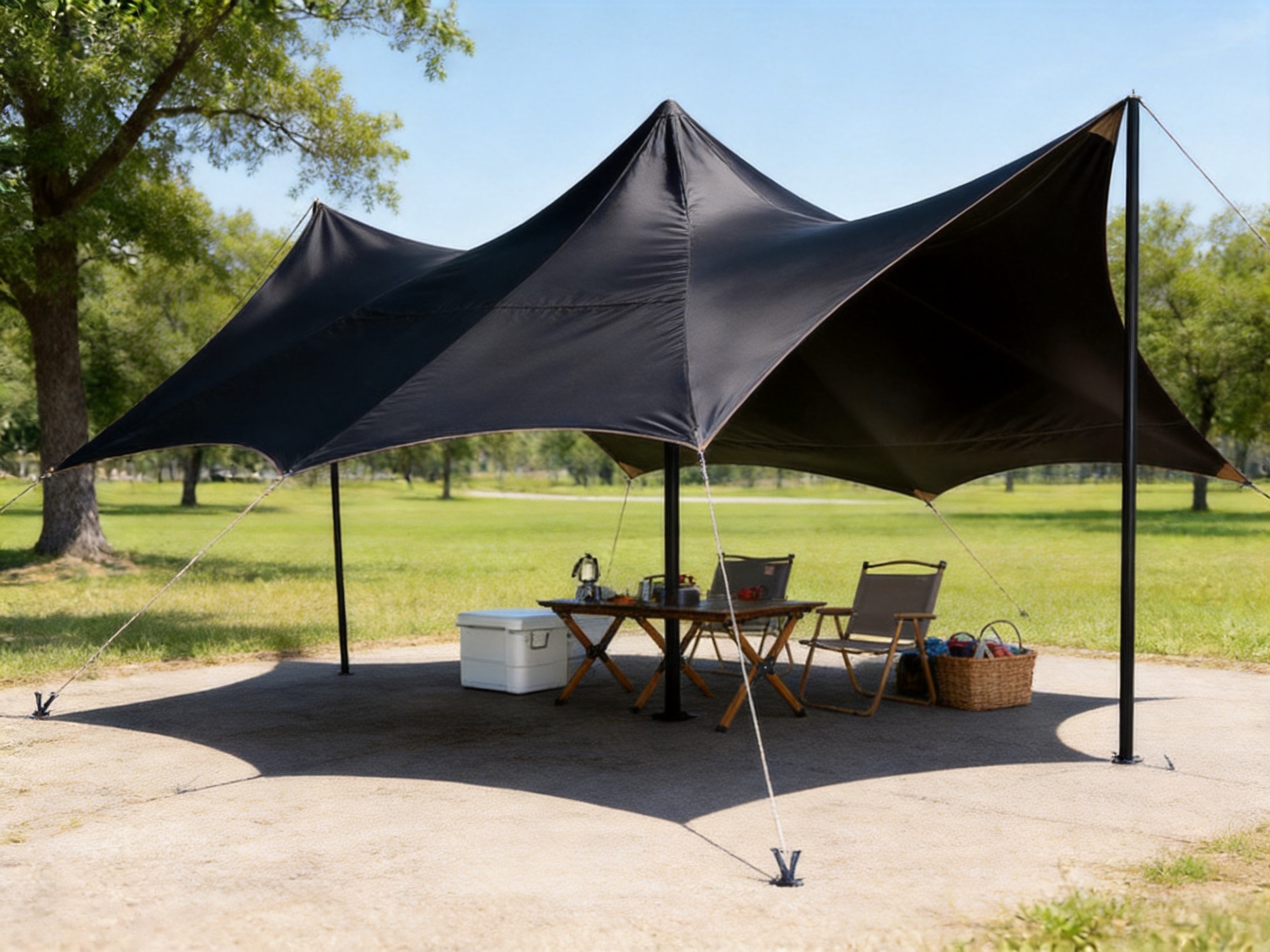
Its butterfly geometry also gives the product a distinctive visual identity. The raised center and dual-slope roof create a broad, open appearance while improving the way rainwater moves away from the fabric. The shape can provide a more comfortable sense of space than a low, flat canopy, especially when several people are seated underneath it.
Black Vinyl Coating and Sun Protection
The black vinyl coating is one of the product’s most important performance features. Sunlight contains visible light, infrared energy, and ultraviolet radiation. Although visible brightness is easy to notice, ultraviolet exposure is less obvious and can still affect skin, fabrics, plastics, and other outdoor materials. A canopy intended for long periods of daytime use must therefore do more than create a dark-looking shadow.
Black vinyl coating absorbs a substantial portion of incoming solar radiation at the surface layer. This helps limit the amount of ultraviolet radiation passing through the fabric to the shaded area below. In comparison, standard uncoated fabrics or lighter fabrics with similar thickness may permit more ultraviolet transmission through the weave. A lighter color can reflect visible light effectively, but color alone does not determine the complete level of solar protection.
The coating also contributes to the fabric’s weather barrier. When properly applied, vinyl creates a dense surface that helps resist water penetration and supports the canopy’s rainproof function. This is especially useful for picnics and campsites, where a brief shower can interrupt an outing if the overhead shelter is not sufficiently resistant to moisture.
One advantage of vinyl over many PU-coated fabrics is its suitability for extended sun exposure. PU coatings can gradually deteriorate under repeated ultraviolet exposure, particularly when a canopy is frequently left pitched in direct sunlight. As the coating ages, water resistance and surface integrity may decline. Vinyl is commonly selected for applications where the product must maintain protective performance across repeated seasonal use.
This does not mean that any canopy should be left permanently outdoors without care. Folding the product only after it is dry, avoiding unnecessary abrasion, storing it away from extreme heat, and checking the frame and seams regularly can all extend useful life. However, the base material selection gives the product an advantage in scenarios involving a full day of sun exposure rather than only a short overnight stay.
Compared with a simple light-colored polyester canopy, the black vinyl construction can offer a deeper, more consistent shaded environment. This can improve comfort during midday use, when the sun is strongest and a thin fabric may allow a noticeable amount of brightness and heat beneath the roof. For families, this added comfort can make the difference between using a canopy as a brief stopover and using it as a central area for meals, conversation, and relaxation.
210D High-Density Oxford Cloth
The canopy uses 210D high-density Oxford cloth to balance strength, weight, and handling. Denier, commonly abbreviated as D, indicates the thickness or mass of the yarn used in the fabric. It is not the only measure of fabric quality, but it provides a useful starting point when comparing similar outdoor materials.
Fabrics below approximately 150D may be easier to pack, but they can be more vulnerable to tearing under wind load, contact with branches, rough ground, or repeated folding. At the other end of the range, fabrics above 300D can add considerable weight. That extra weight may be worthwhile for floors, expedition equipment, or heavy-duty transport covers, but it is not always necessary for a recreational canopy that must be carried between a vehicle, campsite, beach, or park.
At 210D, the Oxford cloth offers a practical middle range. It is substantial enough to support repeated setup and outdoor exposure while remaining more manageable than very heavy shelter fabrics. This is important for a family product because the canopy may be handled by several users, transported in a car, or moved between storage and an outdoor location during the same season.
Oxford weave construction also contributes to durability. Its basket-style interlacing distributes stress across multiple fibers rather than concentrating all force along one straight thread line. If a small puncture or abrasion occurs, the weave can help reduce the tendency for damage to spread rapidly compared with a weaker plain weave of similar denier.
Fabric performance is influenced by more than denier and weave. The finish applied after weaving can affect how the surface responds to friction, moisture, dust, sand, and handling. A coated or calendared surface can reduce direct friction against rough materials and help preserve the fabric during ordinary use. In a canopy, this matters because the fabric is frequently folded, placed on the ground during installation, pulled across a frame, and exposed to outdoor debris.
The fabric should still be treated as a technical outdoor material rather than an indestructible sheet. Sharp branches, exposed rocks, careless dragging, and improper folding can damage any canopy. The advantage of the 210D Oxford construction is that it provides a stronger everyday foundation and a more reliable balance for the intended application.
Butterfly Geometry for Wider Shade Coverage
The butterfly roof profile is not only a visual design choice. Its raised central area and two sloping sides influence shade coverage, drainage, headroom, and wind behavior. A flat roof may have a simple appearance, but it can create water pockets during rain and may catch wind across a broad horizontal surface.
The dual-slope butterfly structure encourages rainwater to move toward the sides instead of remaining concentrated at the center. This reduces the risk of standing water adding unnecessary weight to the fabric and frame. Effective runoff is especially important during changing weather, when a canopy may need to transition from bright sunshine to light rain without being dismantled immediately.
The raised center can also increase the perceived interior space. Users are less likely to feel confined beneath the shelter, and taller occupants can move around more comfortably. A higher central area is useful when the canopy is used for dining tables, picnic baskets, coolers, chairs, children’s activities, or shared camping equipment.
Shade conditions change as the sun moves across the sky. A broad butterfly footprint can provide more consistent protection across different sun angles than a narrow shelter with a similar central peak. The result is a larger usable shaded zone for people who remain seated for several hours.
The sloped roofline may also help deflect mild-to-moderate airflow. Rather than presenting one large flat plane directly to the wind, the angled surfaces can reduce the sail-like effect associated with some flat-top designs. Proper anchoring remains essential, but the geometry gives the shelter a more practical aerodynamic profile for ordinary outdoor conditions.
The product is not intended to replace a certified storm shelter or an expedition tent in severe weather. Wind resistance depends on correct assembly, ground conditions, anchoring, fabric tension, and local weather. Nevertheless, the butterfly form provides a sensible structural and functional advantage for picnic, beach, camping, and recreational use.
Taller, Thicker Steel Frame
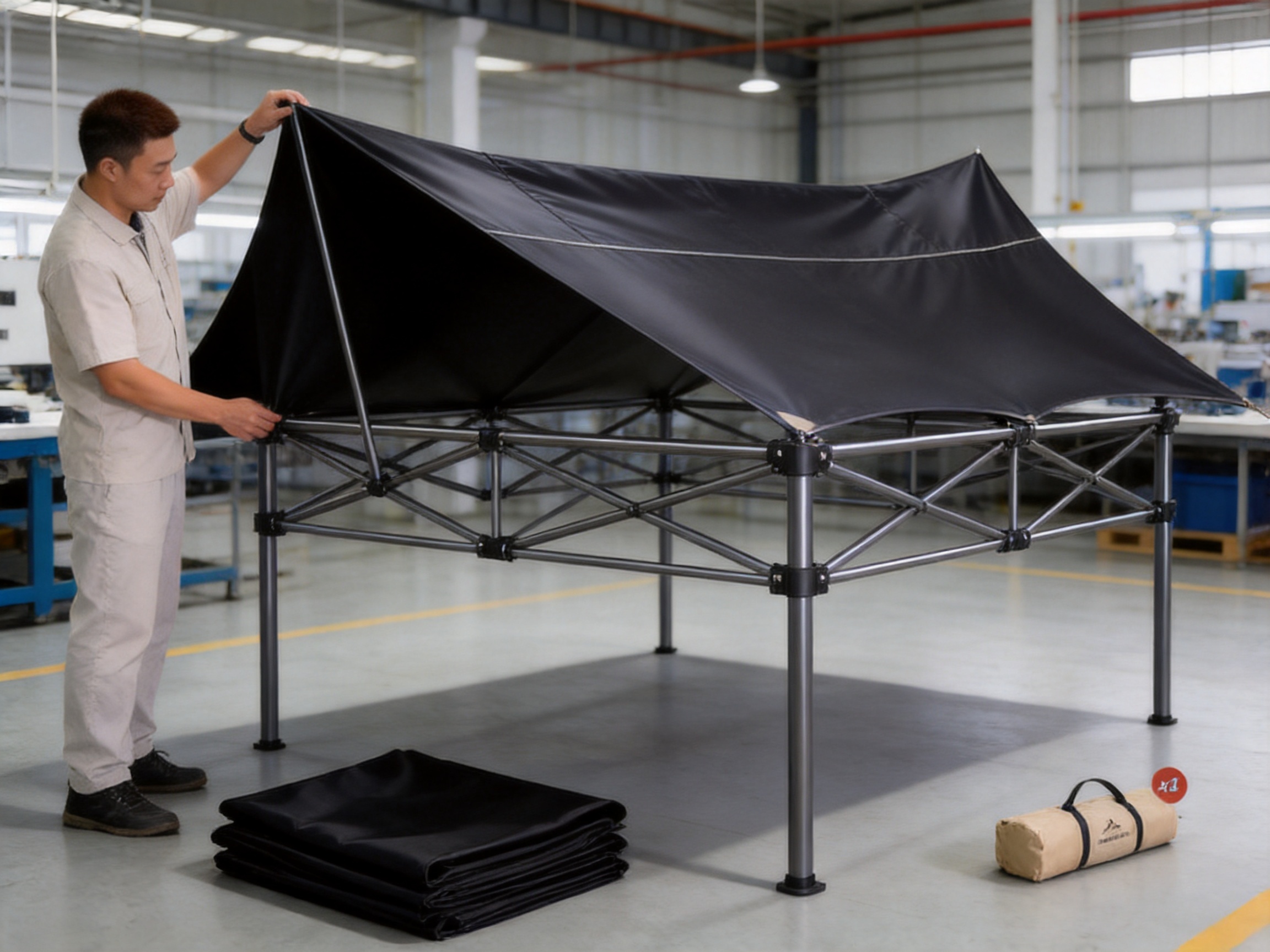
A canopy’s fabric may attract the most attention, but the frame determines how effectively the shelter supports that fabric. The product uses a taller and thicker steel frame to improve headroom and overall structural support. Steel provides a solid foundation for a canopy intended for repeated use, particularly when the product is designed around broad coverage rather than minimum carrying weight.
A taller structure creates greater leverage at the base when exposed to wind. For this reason, height must be matched with suitable tube strength and frame construction. Increasing the thickness of the steel frame helps improve resistance to bending and deformation. It also contributes to a more stable feel during entry, exit, and ordinary movement beneath the canopy.
Frame joints deserve particular attention. In many temporary shelters, connection points experience significant stress because loads transfer from the fabric and roof sections into the legs and cross members. Reinforced or well-constructed joints can distribute force more effectively than simple friction-fit connections. The frame should therefore be evaluated as a complete assembly rather than by tube dimensions alone.
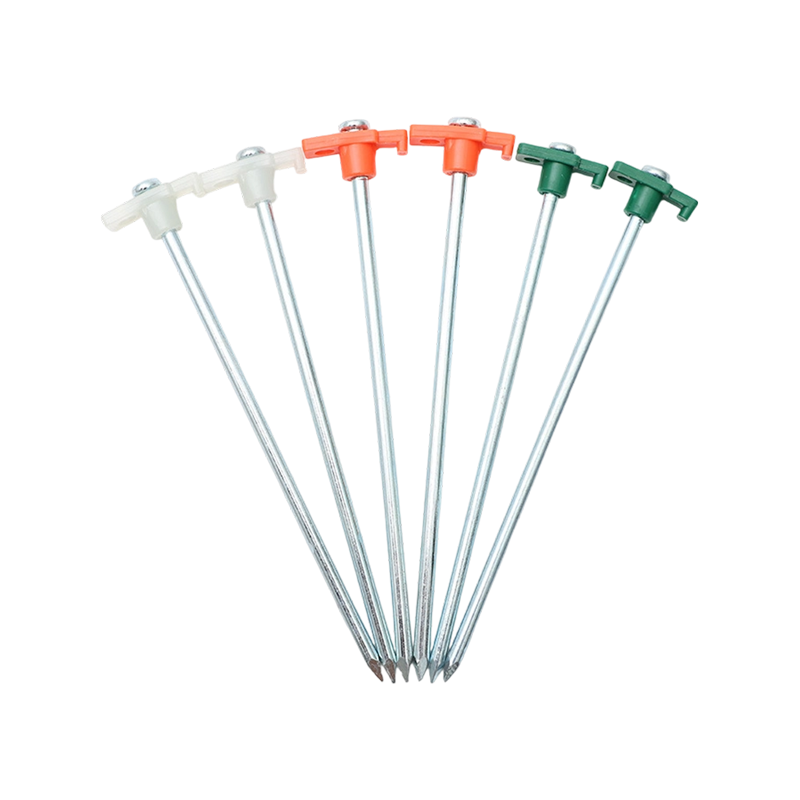
The frame’s stability also depends on the ground anchoring system. Stakes, ropes, sandbags, or other weighting methods help transfer wind loads into the ground. A strong frame cannot compensate for a canopy that has been placed on soft sand or exposed grass without adequate anchoring. Conversely, proper anchoring allows the steel structure to perform more effectively within the product’s intended weather conditions.
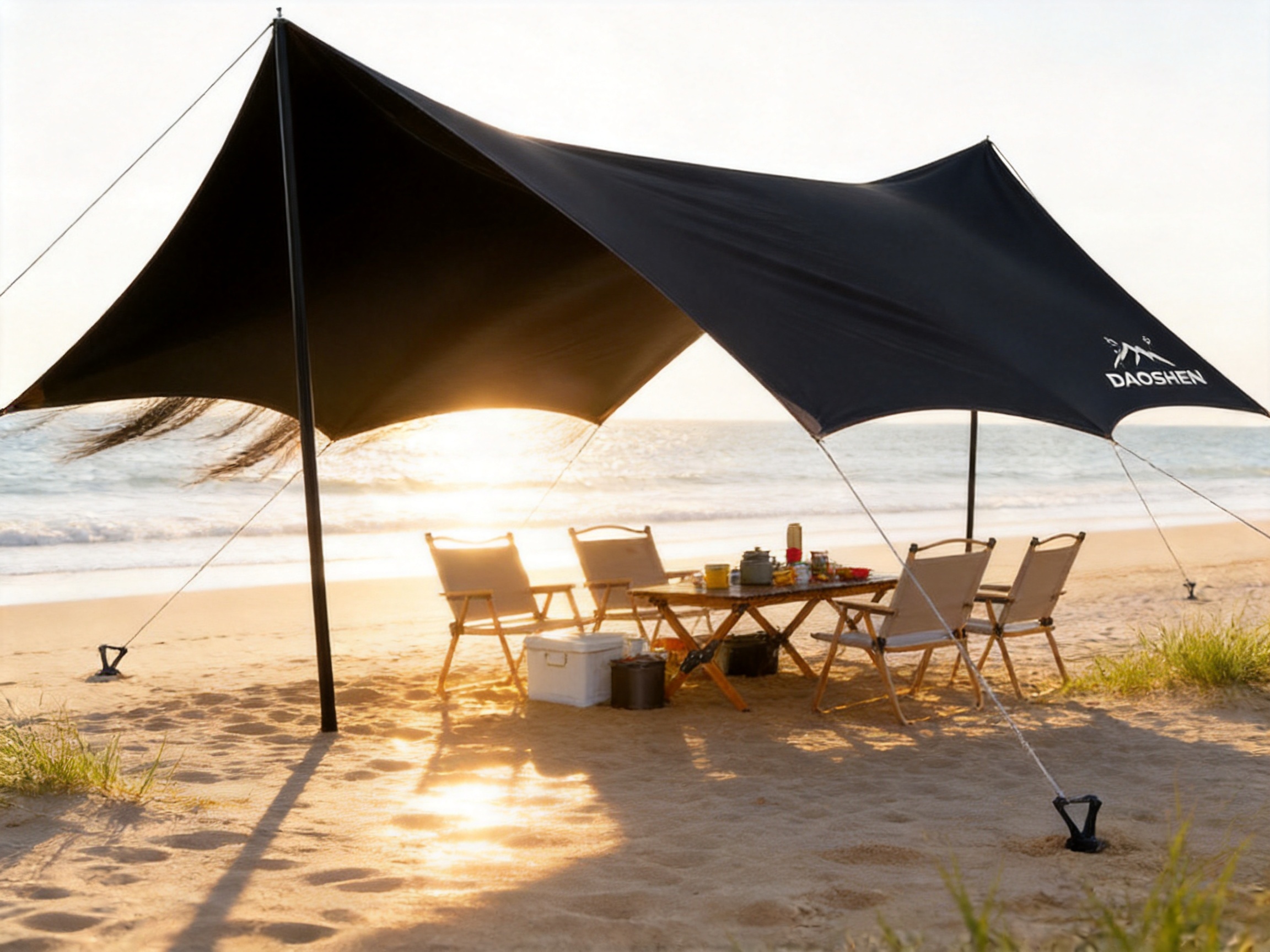
For beach applications, users should take extra care with sand anchoring. Ordinary stakes may not hold as securely in loose sand as they do in firm soil. Sandbags or purpose-designed anchors can provide additional resistance. On hard ground, users should choose appropriate stakes and avoid forcing components into surfaces that may damage them or the frame.
The taller frame is also beneficial for commercial and group use. Retailers, event organizers, outdoor clubs, and hospitality operators often need a shelter that feels comfortable rather than temporary. A higher roof and stronger frame can create a more welcoming environment for guests while preserving the practical benefits of a portable canopy.
Rainproof and Sunshade Performance
The product combines two functions that are often treated separately: protection from sunlight and resistance to rain. A canopy that performs well in only one condition may be inconvenient in the field. The black vinyl coating supports both the sunshade role and the rainproof surface, while the butterfly structure assists with water runoff.
During sunny weather, the coated fabric helps create a darker overhead environment. This can reduce glare on tables, food, books, camping equipment, and electronic devices. It can also make outdoor meals more comfortable by limiting direct solar exposure on people and surfaces beneath the roof.
During light rain, the sloped design encourages water to move away from the center. This reduces pooling and helps preserve the shape of the roof. The canopy should still be installed with appropriate fabric tension, because loose sections can collect water even when the overall design supports drainage.
Rain resistance depends on more than the coating. Seam construction, stitching quality, fabric tension, care, and long-term storage all influence performance. Professional manufacturing must therefore consider the entire production process, from fabric inspection and cutting to sewing, coating, assembly, and quality checks.
The canopy is best understood as a recreational shelter for normal outdoor conditions. Users should dismantle it before severe storms, heavy snowfall, lightning, or extreme wind. Avoiding hazardous weather is not a weakness of the design; it is a responsible operating practice for almost every portable canopy.
Advantages Over Basic Canopy Alternatives
The product’s competitive advantages become clearer when it is compared with common alternatives. A basic polyester canopy may be lighter and less expensive, but it may provide less substantial solar protection and may deteriorate more quickly under prolonged ultraviolet exposure. A thin-frame shelter may be easier to lift but less stable when fully extended. A flat-top canopy may be simple to manufacture but more prone to water pooling and less effective at managing airflow.
Compared with lightweight backpacking shelters, the black vinyl butterfly canopy is more focused on shared comfort and stationary use. Backpacking tents prioritize minimum packed weight, compact dimensions, and individual sleeping protection. This product instead prioritizes open shade, family space, headroom, and daytime usability. It is therefore more suitable for vehicles, campsites, parks, beaches, and picnic areas than for long-distance carrying over mountain trails.
Compared with inexpensive temporary shades, the product offers a more considered material package. The combination of vinyl-coated fabric, 210D Oxford cloth, and a stronger steel frame is intended to support repeated seasonal use. Buyers seeking a product for retailers or branded outdoor collections may find this balance more attractive than a low-cost shelter designed for occasional use.
The product also has a broader application range than a simple sun umbrella. An umbrella may be convenient for one or two people but offers limited communal coverage and can become difficult to manage in wind. The butterfly canopy provides a defined outdoor room for chairs, tables, food, games, and shared equipment.
| Feature | Black Vinyl Butterfly Canopy | Basic Lightweight Canopy | Typical Use Benefit |
|---|---|---|---|
| Surface material | Black vinyl-coated 210D Oxford cloth | Often thinner polyester or basic coated fabric | Improved shade, durability, and weather resistance |
| Roof profile | Raised butterfly shape with dual slopes | Often flat or simple rectangular top | Better runoff, headroom, and broad shade coverage |
| Frame approach | Taller, thicker steel structure | Frequently lighter-gauge frame | More substantial support for repeated outdoor use |
| Sun exposure suitability | Designed for extended daytime shade applications | Better suited to shorter or occasional use | Greater comfort at beaches, parks, and picnics |
| Portability profile | Vehicle-based or stationary recreational use | May favor lower carrying weight | Balances transportability with protection |
| Rain management | Coated fabric and sloped roof assist water runoff | Performance varies by fabric and roof design | More practical shelter during light rain |
No product is ideal for every use. A backpacker carrying equipment for many miles may prefer a much lighter shelter. However, for customers who need a durable, comfortable, and visually distinctive shared canopy, the black vinyl butterfly design offers a more appropriate performance profile.
Manufacturing Approach and Product Development Strengths
CragHaven Outdoor approaches product development as a combination of environmental understanding, material selection, sampling, and manufacturing control. The company is based in Hangzhou, China, and works as both an outdoor brand and a cross-border manufacturing partner. Its product focus includes camping, hiking, mountaineering, and related outdoor scenarios.
The company’s design philosophy begins with actual use conditions. Instead of developing products only to fill a catalog, the team considers weather, terrain, handling, storage, and repeated use. This approach is relevant to the canopy because its performance depends on the interaction between the material, coating, frame, roof shape, and anchoring method.
Material selection is treated as a functional decision. The black vinyl coating is chosen for strong sunshade performance and resistance to the demands of prolonged outdoor exposure. The 210D Oxford cloth is selected to balance durability and manageable weight. The steel frame is designed to provide support for a taller structure, while the butterfly geometry addresses shade coverage and rain runoff.
Sampling is an important part of this process. A product may appear satisfactory in a drawing or digital model, but physical samples reveal practical issues such as fabric tension, joint movement, assembly sequence, roof drainage, packing volume, and user handling. Repeated sampling allows these details to be reviewed before larger-scale production.
Testing and optimization also help convert a design concept into a repeatable product. Frame sections can be checked for fit and alignment. Fabric panels can be reviewed for cutting accuracy and seam placement. The assembly process can be evaluated for consistency, and packaging can be considered from the perspective of transport, warehouse storage, and retail presentation.
CragHaven’s manufacturing strength lies in connecting product understanding with China’s mature outdoor manufacturing system. This includes access to established material supply chains, experienced sewing and fabrication capabilities, metal frame production, assembly resources, and export-oriented logistics. For global buyers, the ability to coordinate these elements through one professional partner can reduce communication gaps and supply-chain uncertainty.
Quality Control Considerations
Quality control for a canopy should cover the complete product rather than focus on one visible feature. Fabric inspection can identify weaving defects, coating inconsistencies, color variation, or damage before cutting. Accurate cutting helps ensure that panels fit the intended frame geometry. Consistent sewing supports seam strength and improves the finished appearance.
Coating quality should be evaluated for coverage, adhesion, flexibility, and surface consistency. A coating that looks acceptable but separates, cracks, or becomes excessively brittle during handling will reduce the product’s service life. Proper folding and storage instructions should also be developed around the material’s characteristics.
Frame inspection includes checking tube dimensions, surface treatment, joint alignment, weld or connection quality, and opening and closing movement. A frame that is technically strong but difficult to assemble can create poor user experiences and increase the risk of incorrect installation.
Final assembly checks should confirm that the canopy fabric fits the frame, the roof profile is correctly formed, and all included components are present. Packaging inspections are equally important because missing stakes, ropes, connectors, or instructions can create customer complaints even when the main structure is manufactured correctly.
For OEM and private-label customers, quality control can be coordinated with product specifications, packaging requirements, labeling, color standards, and market expectations. CragHaven’s role as a manufacturing partner allows buyers to discuss product adjustments during development rather than relying solely on an off-the-shelf item.
OEM and Global Retail Supply Potential
The product can serve multiple business models. Outdoor retailers may offer it as a family camping or beach shade solution. E-commerce sellers may position it around sun protection, picnic comfort, and rain-ready outdoor use. Private-label brands may incorporate the canopy into a broader collection of recreational shelters and camping accessories.
OEM cooperation can include adjustments to fabric color, logo placement, packaging design, instruction manuals, accessory combinations, and product presentation. Depending on project requirements, buyers may also request changes to frame finishes, carry-bag details, carton markings, or supporting accessories.
Successful customization requires more than applying a logo to a standard product. It requires a clear understanding of intended markets, customer expectations, target price, packing requirements, order quantity, compliance needs, and delivery schedule. CragHaven’s development process is designed to support communication from initial concept through sampling and production.
For distributors, the canopy’s strongest commercial message is its clear relationship between visible design and practical function. The butterfly roof is distinctive in product photography. The dark coated fabric communicates sunshade performance. The taller frame suggests usable interior height, while the Oxford cloth and steel structure support a durability-oriented positioning.
Retailers should present the product accurately. It should be marketed for picnic, beach, campground, park, and family outdoor use, with proper anchoring and weather awareness. Avoiding exaggerated claims helps establish customer trust and reduces misuse. A clear explanation of the canopy’s weight, intended setup, care requirements, and weather limitations can improve satisfaction after purchase.
Use Scenarios
Family Picnics
For family picnics, the canopy can create a central gathering area for meals, conversation, and rest. The broader shade footprint helps protect several people at once, while the raised center gives the space a less cramped feeling. A table, chairs, coolers, picnic baskets, and children’s items can be arranged beneath the shelter without occupying the entire shaded area.
Beach Relaxation
Beach environments often combine strong sunlight, reflective sand, and changing airflow. The black vinyl surface helps create a darker overhead space, while the sloped butterfly roof supports a broad shade pattern. Because sand can be unstable, users should pay special attention to anchoring and should not leave the canopy unattended when wind conditions increase.
Camping Communal Areas
At a campground, the canopy can function as a communal living area separate from sleeping tents. It may provide cover for cooking preparation, dining, equipment organization, or evening conversation. The rainproof surface is useful when light showers occur, although cooking appliances should always be used with appropriate ventilation and safety precautions.
Outdoor Events
Clubs, recreational groups, schools, and small outdoor events can use the canopy as a meeting point, refreshment area, registration station, or shaded waiting zone. Its distinctive roof profile can make a designated area easier to identify. Commercial users should consider local regulations, public-space requirements, anchoring standards, and event-specific safety procedures.
Setup, Care, and Storage
Correct setup is essential to achieving the product’s intended performance. Users should select a level area free from sharp stones, branches, unstable ground, and overhead hazards. The frame should be opened according to the supplied instructions, and the fabric should be positioned without unnecessary twisting or excessive pulling.
All available anchoring components should be used when the canopy is placed outdoors. In windy locations, additional weighting may be appropriate. The canopy should not be installed close to cliffs, water edges, unstable trees, or other areas where a sudden change in weather could create danger.
After use, loose dirt and sand should be removed before folding. If the fabric is wet, it should be dried completely before long-term storage. Packing wet vinyl-coated fabric can encourage odors, mildew, and surface deterioration. The frame should also be checked for sand or debris in joints before being folded and stored.
Users should avoid dragging the canopy across rough surfaces. When moving it, the fabric and frame should be lifted or carried using suitable handles or designated parts. Sharp tools, open flames, abrasive chemicals, and high heat should be kept away from the canopy material.
Periodic inspection is recommended. Check for loose stitching, damaged fabric, bent frame sections, worn connectors, missing stakes, and weakened ropes. Small problems are easier to address before the next outdoor trip. This maintenance approach is particularly important for retailers, rental operators, and organizations that use the same canopy frequently.
Why the Product Fits the CragHaven Outdoor Philosophy
CragHaven Outdoor describes its product philosophy through balance and stability in nature. That philosophy is reflected in the canopy’s material choices. The product is not built solely around minimum cost or minimum weight. Instead, it balances solar protection, weather resistance, fabric durability, structural support, usable height, shade coverage, and transportability.
The company’s development principles emphasize solving real outdoor problems. The black vinyl coating responds to strong sunlight. The Oxford cloth addresses wear and tear. The thicker steel frame supports a taller structure. The butterfly roof improves shade distribution and runoff. These are connected decisions rather than unrelated specifications.
The company also emphasizes long-term value. In practical terms, long-term value means a product that remains useful after repeated setup, transport, exposure, and storage. It also means a manufacturing partner that can communicate clearly, sample carefully, optimize designs, and support stable production for global customers.
For buyers evaluating outdoor gear suppliers, this combination of design thinking and manufacturing capability can be more valuable than a supplier that only offers a large catalog. A product that has been developed around actual use is easier to position, explain, and support in the marketplace.
Q&A
What is the main purpose of this canopy?
The main purpose is to provide a broad outdoor shade and rain-resistant area for picnics, camping, beach relaxation, parks, family gatherings, and similar recreational activities. It is designed for shared daytime use rather than ultralight backpacking.
Why use black vinyl coating?
Black vinyl coating helps block and absorb a significant portion of incoming ultraviolet radiation while creating a darker shaded environment underneath. It also supports water resistance and is well suited to canopies that may experience prolonged sun exposure.
Is the product suitable for backpacking?
The product is better suited to vehicle-based camping, beaches, parks, and stationary outdoor use. Vinyl coating and a steel frame provide useful durability and support but generally add more weight than an ultralight backpacking shelter.
What is the benefit of 210D Oxford cloth?
210D Oxford cloth provides a balance between durability and manageable weight. Its woven structure helps distribute stress across multiple fibers, making it suitable for repeated setup, ground contact, wind exposure, and general recreational use.
Does the butterfly shape improve rain performance?
The raised center and sloped roof encourage water to move toward the sides, reducing the likelihood of water pooling in the middle. Proper setup and fabric tension remain important, and the canopy should be taken down before severe weather.
Is the steel frame windproof?
No portable canopy should be described as completely windproof. The thicker steel frame and sloped roof are intended to improve support and performance in ordinary mild-to-moderate conditions, but correct anchoring and responsible weather judgment are essential.
Can the canopy be customized for private-label sales?
OEM and private-label projects may include options such as branding, packaging, fabric colors, instruction materials, accessory combinations, and selected product details. Final customization depends on technical requirements, order quantity, sampling, and production planning.
How should the canopy be stored?
The canopy should be cleaned of dirt and sand, dried completely, folded carefully, and stored in a dry location away from extreme heat and sharp objects. The frame and connection points should be inspected before storage.
What makes CragHaven Outdoor suitable as a manufacturing partner?
CragHaven Outdoor combines outdoor product development with manufacturing coordination. The company focuses on real use conditions, material selection, physical sampling, testing, optimization, and stable supply for global markets.
What weather conditions should be avoided?
Users should avoid severe wind, thunderstorms, lightning, heavy snow, flooding, and other hazardous weather. The canopy is intended for normal recreational conditions and should not be treated as a storm shelter.
Conclusion
The outdoor picnic camping black vinyl tent is designed as a practical, durable, and visually distinctive shelter for people who need more than temporary shade. Its black vinyl coating supports stronger sun protection and water resistance. The 210D high-density Oxford cloth balances durability with manageable weight. The taller, thicker steel frame provides a substantial foundation, while the butterfly roof profile improves headroom, shade coverage, drainage, and airflow management.
Its main competitive advantage is the coordination of these features. Instead of optimizing only for low weight or low purchase cost, the design focuses on real outdoor comfort and repeated seasonal use. It is particularly well suited to family picnics, beach relaxation, vehicle-based camping, parks, group activities, and outdoor events.
For distributors, retailers, and outdoor brands, the product also offers a clear manufacturing story. CragHaven Outdoor develops products around weather, terrain, handling, and time. Through material selection, sampling, testing, optimization, and production coordination, the company aims to provide reliable outdoor gear and reduce uncertainty for international customers.
With suitable anchoring, responsible weather use, and proper care, the canopy can become a dependable part of an outdoor equipment range. It provides a comfortable shared space while demonstrating how thoughtful materials and manufacturing decisions can improve the everyday performance of recreational outdoor gear.
References
International Organization for Standardization. Textiles — Determination of Linear Density of Mass per Unit Length — Related Principles for Yarn and Fabric Evaluation.
International Organization for Standardization. Textiles — Tests for Color Fastness and Resistance to Light Exposure.
American Society for Testing and Materials. Standard Practices for Outdoor Fabric Performance, Coated Textiles, and Water Resistance Evaluation.
American Society for Testing and Materials. Standard Test Methods for Tensile, Tear, and Abrasion Resistance of Textile Materials.
Outdoor Industry Technical Literature. Principles of Canopy Design, Frame Stability, Ground Anchoring, and Weather-Appropriate Use.
Textile Engineering References. Oxford Weave Construction, Denier Measurement, Coating Technologies, and Fabric Durability.
CragHaven Outdoor Product Development Materials. Black Vinyl Butterfly Canopy Design, Material Selection, Sampling, and Manufacturing Information.
Product: Outdoor picnic camping black vinyl tent, rainproof and sunshade canopy, picnic butterfly curtain canopy


- Phone: +86-15968800379
- E-mail: [email protected]
- Address: Room 1002, Huishang Building, Gongshu District, Hangzhou City, Zhejiang Province.
Copyright © CragHaven Outdoor All Rights Reserved. Outdoor Gear Manufacturers Wholesale Mountaineering Camping Gear Suppliers
