

 English
 Deutsch
 Español
 Français
Why Black Vinyl Butterfly Canopies Are Raising the Standard for Outdoor Shade
Content
- 1 A Canopy Designed Around Real Outdoor Use
- 2 Black Vinyl Coating for Stronger Sun Protection
- 3 210D High-Density Oxford Cloth
- 4 Butterfly Geometry for Wider, More Consistent Shade
- 5 Taller, Thicker Steel Frame for Structural Confidence
- 6 Comparison with Common Canopy Alternatives
- 7 Manufacturing Strengths Behind the Product
- 8 OEM and Private-Label Advantages for Global Buyers
- 9 Recommended Use Scenarios
- 10 Setup, Care, and Service Life
- 11 Quality and Value Considerations for Retailers
- 12 Frequently Asked Questions
- 12.1 What is the main purpose of this product?
- 12.2 Is it suitable for backpacking?
- 12.3 Why is the canopy black?
- 12.4 Does the canopy provide rain protection?
- 12.5 What does 210D Oxford cloth mean?
- 12.6 Why use a steel frame instead of a lighter frame?
- 12.7 Can the canopy be used on a beach?
- 12.8 What makes the butterfly shape useful?
- 12.9 How should the canopy be stored?
- 12.10 Can the product be customized for OEM orders?
- 12.11 What should buyers evaluate before placing a bulk order?
- 13 Conclusion
- 14 References
- 15 Product: Outdoor picnic camping black vinyl tent, rainproof and sunshade canopy, picnic butterfly curtain canopy
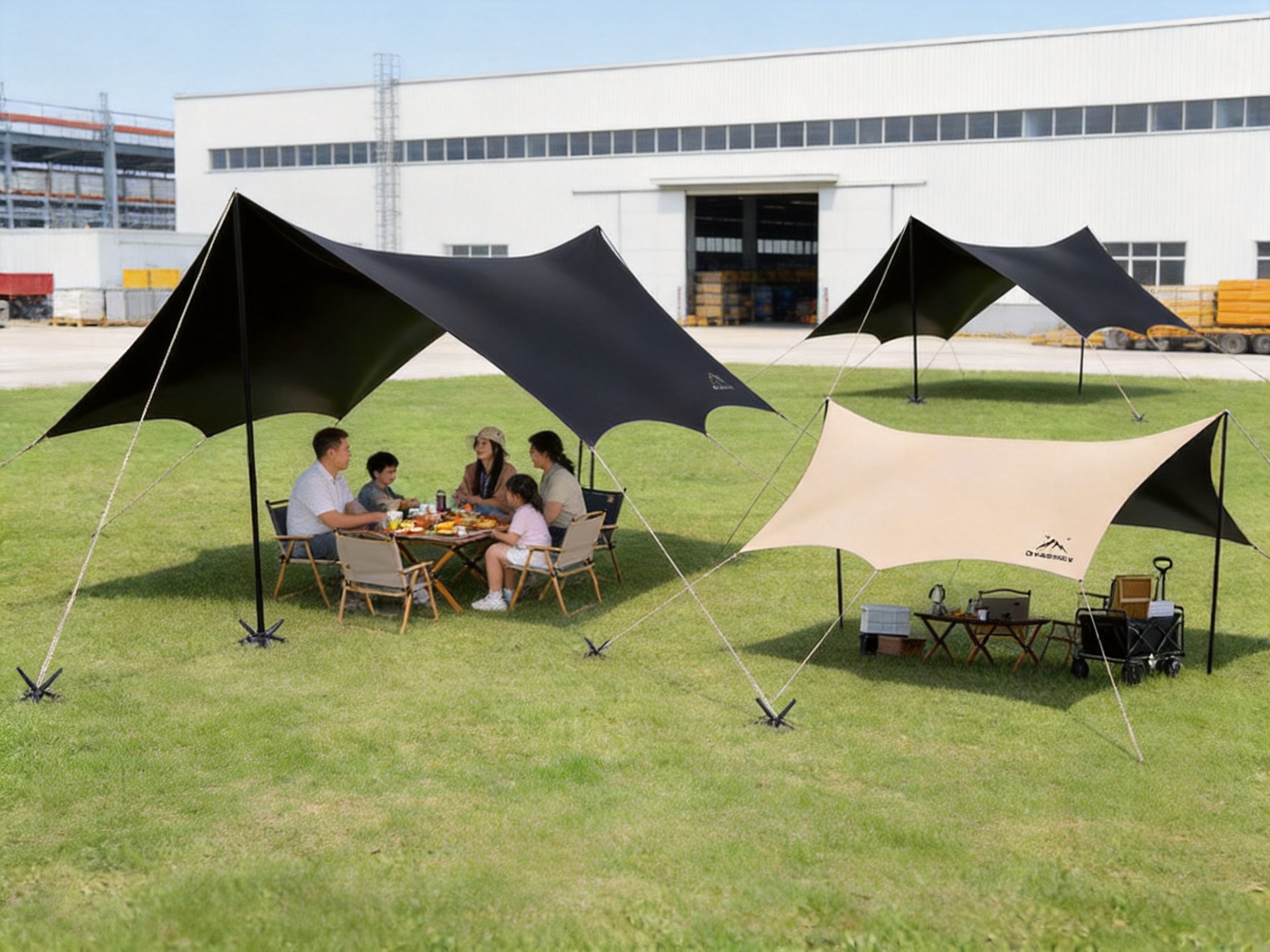
Outdoor shelter has evolved from a basic convenience into an important part of the camping, picnic, beach, and leisure experience. Families, event organizers, retailers, and outdoor users increasingly expect a canopy to provide more than temporary cover. They want dependable shade, effective rain protection, practical interior space, durable materials, stable framing, and a design that remains useful after repeated setup and storage. The outdoor picnic camping black vinyl tent addresses these expectations through a combination of protective fabric, a reinforced steel frame, and a butterfly-shaped roof designed for broad shade coverage.
This product is positioned as a spacious outdoor canopy for family picnics, beach relaxation, camping areas, parks, and similar settings. Its black vinyl coating helps limit solar exposure, while the 210D high-density Oxford cloth provides a balance between durability and manageable weight. A taller, thicker steel structure improves headroom and contributes to stability, and the butterfly geometry supports both shade distribution and rain runoff.
Unlike lightweight shelters designed primarily for occasional backpacking, this canopy is intended for users who value coverage, material strength, and comfortable stationary use. The design reflects a practical understanding of how outdoor products perform over a full day in changing weather, on different surfaces, and under repeated assembly. It is especially suitable for consumers who want a more substantial alternative to thin polyester pop-up canopies or minimally reinforced recreational shelters.
For retailers and outdoor brands, the product also represents a strong OEM and private-label opportunity. Its construction combines familiar, marketable features with a differentiated visual profile. The black exterior, butterfly silhouette, generous height, and family-oriented use scenarios can help a product line stand apart from standard square or flat-roof canopies.
A Canopy Designed Around Real Outdoor Use
Many outdoor shelters are developed around a list of specifications rather than the conditions in which people actually use them. In practice, a canopy must handle direct sunlight, light and moderate rain, wind movement, repeated folding, ground contact, and the friction caused by transport and setup. It must also remain comfortable for people sitting underneath it for several hours.
The black vinyl butterfly canopy is designed around these practical requirements. Its fabric system is intended to reduce sun exposure while maintaining a weather-resistant outer layer. Its Oxford cloth construction is selected to withstand the normal stresses associated with family camping, beach use, picnicking, and seasonal outdoor activity. Its steel frame provides a stronger structural foundation than many lightweight aluminum or thin-wall recreational alternatives.
The product is not positioned as an ultralight backpacking tent. That distinction is important. Vinyl-coated fabric generally weighs more and packs less compactly than thin PU-coated or uncoated polyester fabrics. However, stationary outdoor users often prefer greater shade performance, more substantial material, and improved longevity over minimum packed weight. The result is a shelter better suited to a vehicle-supported trip, a beach day, a family gathering, or a park picnic than to a long-distance hiking route.
This focus allows the design to make sensible tradeoffs. More robust materials can be used where they deliver meaningful value. The frame can prioritize height and rigidity. The canopy profile can prioritize usable shade rather than the smallest possible folded package. For the intended market, these decisions can produce a more satisfying and dependable product.
Black Vinyl Coating for Stronger Sun Protection
Sun protection is one of the most important performance factors in a recreational canopy. A shelter that provides only a thin visual barrier may still allow considerable solar energy and ultraviolet radiation to reach the people beneath it. This can lead to uncomfortable heat, fading of interior items, and reduced protection during long periods outdoors.
The black vinyl coating provides a dense protective layer across the fabric surface. Rather than relying only on the weave of the base cloth, the coating adds another barrier between direct sunlight and the shaded interior. Black-coated canopies absorb a significant portion of incoming radiation at the upper surface, helping reduce the amount that passes through the material.
Compared with uncoated or lightly colored fabrics of similar thickness, a dense dark coating can provide more consistent coverage. Light-colored fabrics may reflect visible light effectively, but reflection of visible brightness does not automatically mean that ultraviolet transmission is equally low. The coating and fabric combination are therefore important when evaluating a canopy for extended daytime use.
For families spending several hours at a beach or picnic site, improved shade can make the entire outdoor experience more comfortable. Children can have a cooler area for breaks, food can remain under cover, and adults can sit beneath the canopy without constantly repositioning chairs as the sun moves. Shade coverage is not merely an aesthetic feature; it directly influences how long and how comfortably a group can use an outdoor area.
The vinyl coating also contributes to the canopy’s rain-resistant characteristics. A properly finished coating helps limit water penetration through the fabric, allowing the shelter to serve as a practical cover during light or moderate rainfall. The sloped butterfly roof further supports this function by directing water away from the center rather than allowing it to collect on a flat surface.
Vinyl Compared with Conventional PU-Coated Fabric
Polyurethane-coated fabric remains popular because it can be lightweight, flexible, and relatively easy to pack. It is often suitable for backpacking tents and products where every reduction in weight matters. However, PU coatings can be more vulnerable to long-term degradation when exposed to strong sunlight for extended periods. Repeated ultraviolet exposure may eventually affect coating performance, flexibility, and waterproof characteristics.
Vinyl coating is generally heavier, but it offers a more substantial surface and can be advantageous for canopies intended to remain pitched during a full day of sun exposure. The coating is suited to products where shade quality, weather resistance, and repeated seasonal use are more important than achieving the lowest possible packed weight.
This difference gives the black vinyl canopy a clear position against lightweight competitors. It is not attempting to replace every type of outdoor shelter. Instead, it serves a user group that wants a more durable and protective canopy for stationary recreation. Retailers can communicate this distinction clearly by presenting the product as a robust family and leisure shelter rather than as a minimalist trekking tent.
At the same time, responsible use remains essential. No portable canopy should be treated as permanent architecture, and users should not leave it unattended in severe weather. Proper anchoring, correct assembly, and reasonable judgment about wind and storm conditions are necessary for safe use.
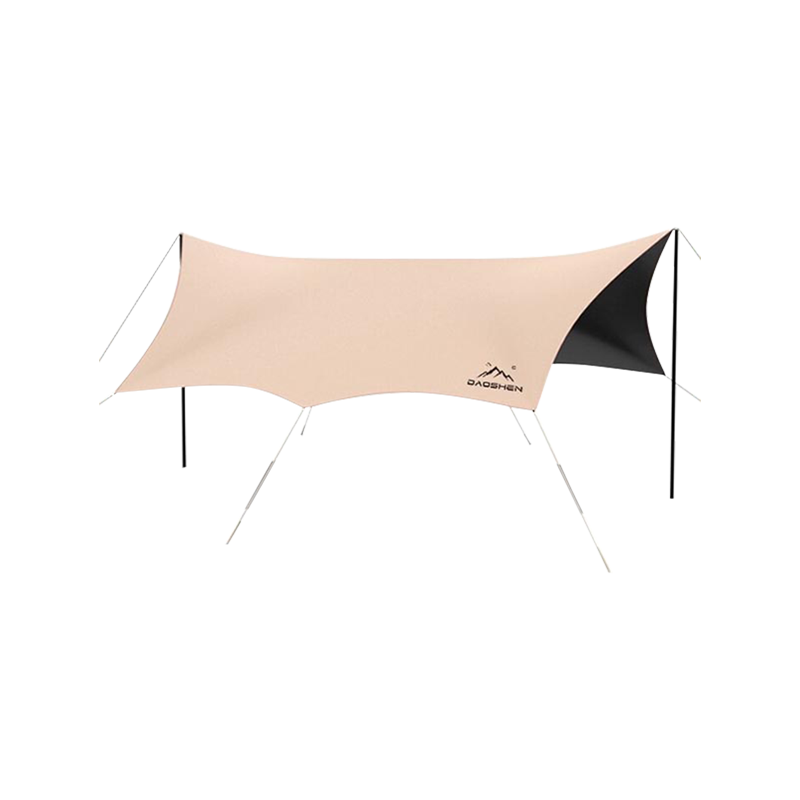
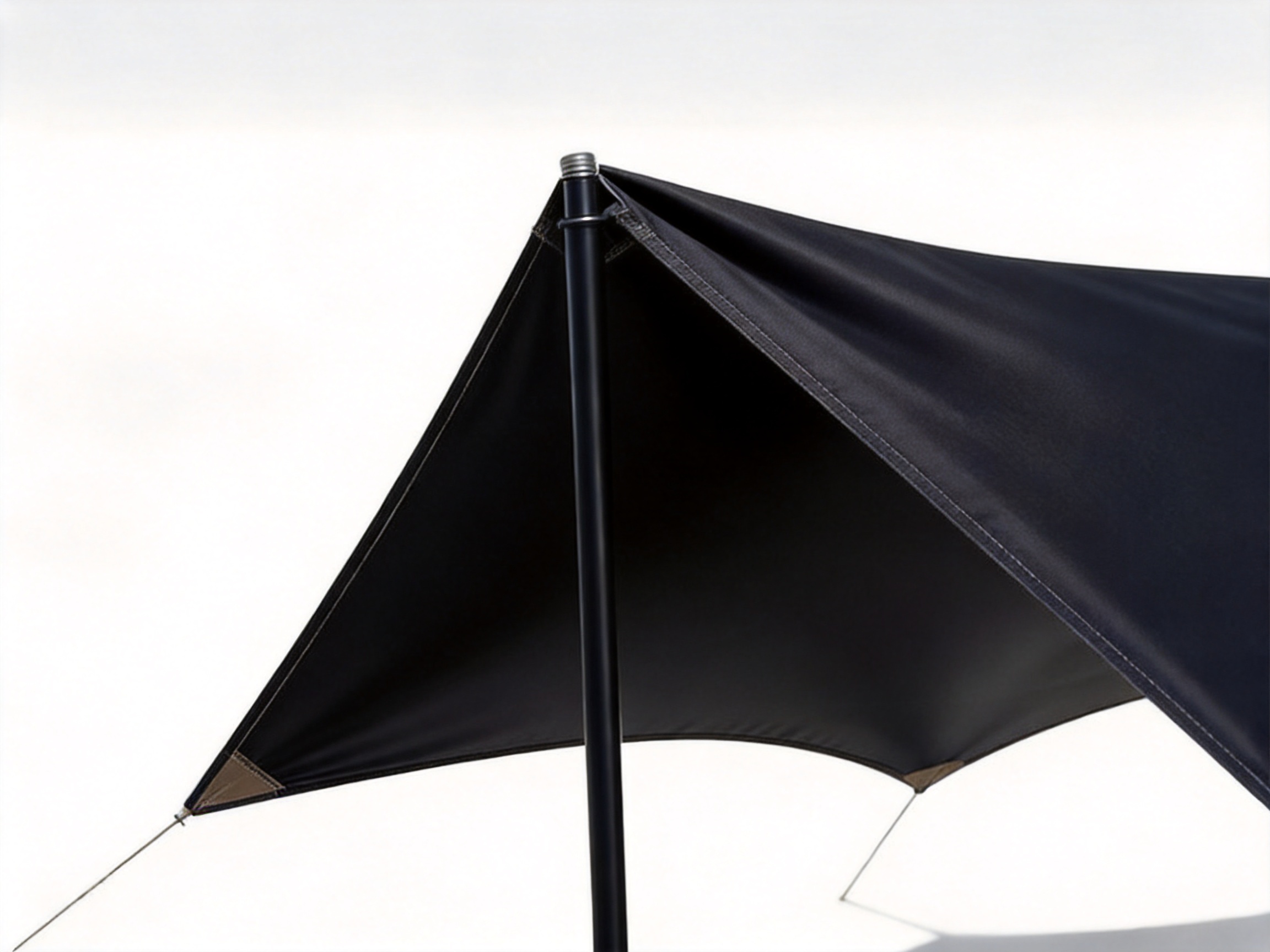
Outdoor picnic camping black vinyl tent, rainproof and sunshade canopy, picnic butterfly curtain canopy
210D High-Density Oxford Cloth
The base fabric is another major component of the product’s performance. The canopy uses 210D high-density Oxford cloth, a material selected to balance durability, weight, flexibility, and cost. Denier describes the thickness and mass of the fibers used in the textile. A 210D specification occupies a useful middle range for recreational canopy applications.
Fabrics below approximately 150D can be more vulnerable to tearing and puncture when exposed to wind tension, rough ground, branches, or repeated handling. Heavier fabrics above 300D may offer additional abrasion resistance, but they also increase packed weight, material cost, and handling difficulty. For a family canopy that needs to be transported and assembled without becoming excessively cumbersome, 210D can provide a practical compromise.
Oxford cloth is recognized for its basket-style weave. This construction distributes stress across intersecting groups of fibers instead of allowing a small defect to follow a single straight thread line. If the fabric encounters a minor puncture or abrasion, the woven structure can help reduce the likelihood of the damage spreading rapidly.
The fabric’s performance does not depend on denier alone. Weave density, coating consistency, seam construction, edge finishing, and the quality of cutting and sewing all influence the final product. A well-designed textile system can perform better than a nominally heavier fabric that has poor finishing or weak seams.
For a canopy, the cloth must withstand repeated folding, unfolding, storage, and tensioning. It may also touch sand, grass, soil, or occasional rough surfaces during setup. A coated and finished Oxford fabric can reduce friction and limit the impact of ordinary contact. The smooth outer surface is easier to wipe clean than a rough untreated textile, which is valuable for products used at beaches, parks, and family picnic areas.
Balancing Durability and Portability
One of the most important design decisions in outdoor equipment is finding the correct relationship between strength and portability. A fabric can be made heavier and thicker, but that does not always create a better product. Additional weight may discourage users from bringing the shelter outdoors, make setup more difficult, and increase transportation costs for retailers and consumers.
The 210D specification supports a balanced approach. It provides a more substantial feel than very thin entry-level canopy fabric without moving into the weight category associated with heavy-duty industrial covers. The vinyl coating adds protective performance, while the Oxford weave supports resistance to everyday tearing and handling damage.
This balance also helps with product positioning. A retailer can present the canopy as a durable family shelter with practical transportability. It is appropriate for car camping, beach trips, outdoor gatherings, and seasonal leisure use, while remaining more manageable than a fully industrial shelter.
Butterfly Geometry for Wider, More Consistent Shade
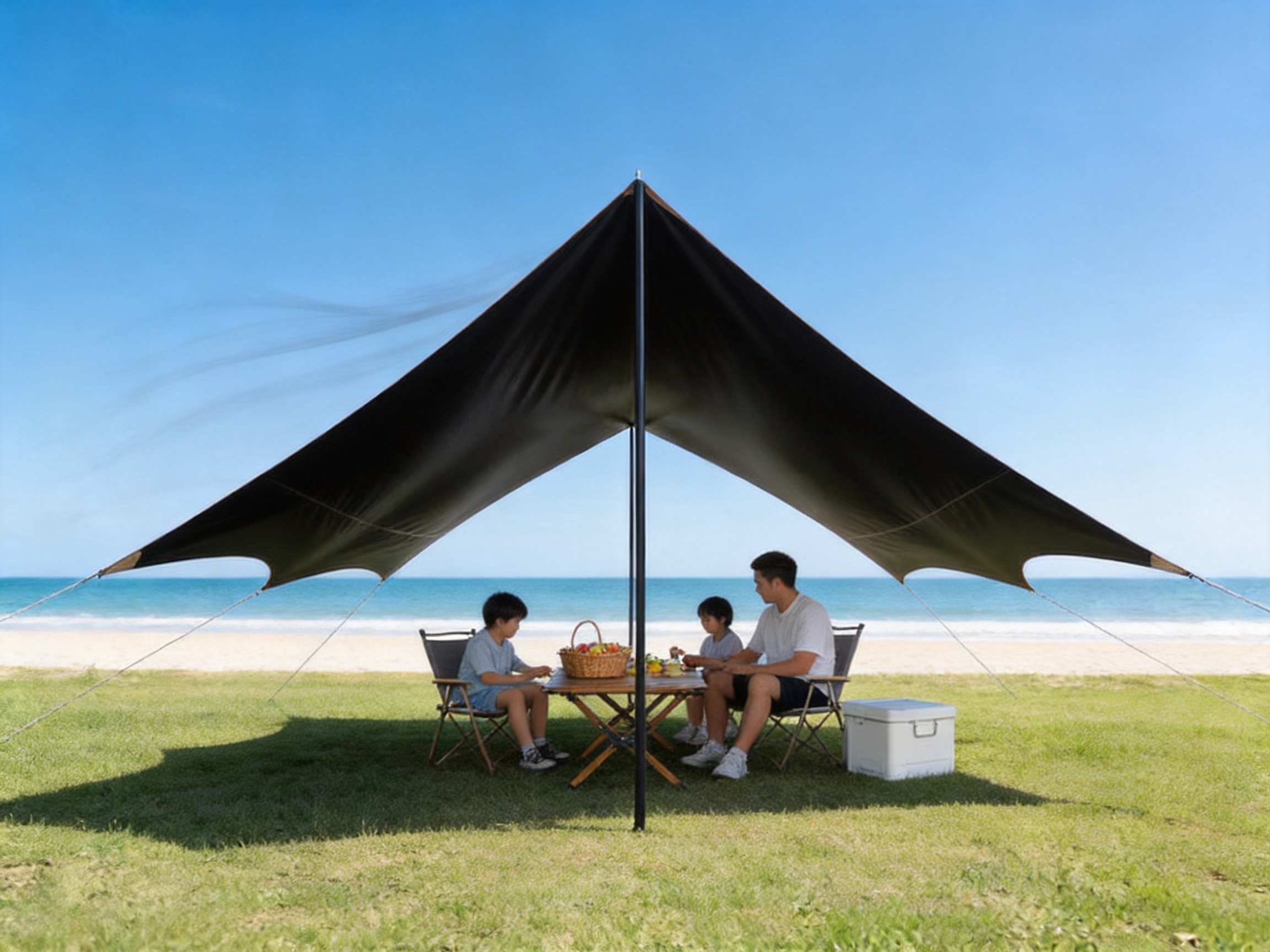
The butterfly-shaped roof is one of the product’s most visible design features. Instead of using a simple flat plane, the canopy forms a raised central profile with two sloping sides. This geometry creates a distinctive appearance, but its benefits are not limited to visual differentiation.
A dual-slope roof can provide a broader shaded footprint than a basic flat-top design with a similar amount of fabric. The angled surfaces create useful coverage on both sides of the central peak and help the canopy maintain shade as the sun moves throughout the day. This is particularly valuable for families who remain in one location for several hours.
Shade direction changes as the sun travels from east to west. A flat canopy may provide excellent protection at one time but leave one side exposed later. The broad butterfly profile gives users a larger area in which to position chairs, coolers, food, and personal belongings. It also allows a group to adjust seating within the canopy as the angle of sunlight changes.
The raised center contributes to interior comfort as well. Greater central height improves headroom and makes the space feel less confined. Users can sit, stand, move around, and organize picnic equipment with less frustration. For a family product, this practical roominess may be more important than achieving the smallest packed size.
Improved Rain Runoff
Flat canopy roofs can develop low points where rainwater collects. Even a relatively small amount of standing water can add considerable weight to the fabric and place additional stress on seams, attachment points, and the frame. Over time, repeated pooling may contribute to material deformation or premature wear.
The butterfly roof encourages water to move down the sloped surfaces toward the sides. This does not make the canopy suitable for extreme storms, but it improves drainage during ordinary rain and reduces the likelihood of water remaining trapped on the roof. Proper setup and adequate tension are still necessary because loose fabric can form pockets even on a sloped design.
The shape also improves the user experience during changing weather. A family can remain beneath the canopy during a passing shower without dealing with a sagging roof filled with water. After the rain stops, the sloped fabric can dry more efficiently than a flat surface that retains damp areas.
Wind Deflection Benefits
Wind resistance depends on many factors, including frame design, anchoring, fabric tension, joint strength, and the intensity and direction of the wind. No canopy shape can eliminate these variables. Nevertheless, a sloped roof can help deflect airflow more effectively than a large flat surface that behaves like a sail.
The butterfly profile reduces some of the direct upward-facing area and allows wind to move across angled surfaces. This can be beneficial in mild-to-moderate wind conditions, especially in exposed locations such as beaches. Users must still stake or weight the canopy correctly and should take it down when severe weather is expected.
Taller, Thicker Steel Frame for Structural Confidence
A canopy’s fabric receives most of the attention, but the frame determines whether the shelter feels stable and usable. This product uses a taller, thicker steel frame to support the raised roofline and provide a firm structural foundation. Steel is heavier than many aluminum alternatives, but it offers useful rigidity and resistance to bending for stationary outdoor shelters.
Additional height improves usability by increasing interior headroom. Adults can move more comfortably beneath the canopy, while the raised roof creates a more open environment for family seating and picnic equipment. However, a taller frame also experiences greater leverage during wind. For that reason, height must be matched with appropriate tube thickness and joint construction.
A narrow, lightweight frame may be adequate for a small recreational shade structure, but it can feel unstable when supporting a broad canopy surface. Thicker steel tubing helps resist bending and provides greater confidence during normal use. The frame’s proportions should be considered as a complete system rather than judged only by the height measurement.
Why Frame Joints Matter
Structural tubing is only one part of frame performance. Joints, hinges, connectors, and attachment points often experience concentrated stress. During wind movement, loads travel through the canopy fabric into the frame and then into the joints and ground-contact areas. A strong tube cannot compensate for a poorly designed connection.
Manufacturing quality therefore includes careful attention to joint alignment, reinforcement, welding, fastener fit, and repeated movement during opening and closing. A frame that operates smoothly is less likely to be damaged by forced assembly. Consistent joint construction also helps create a more uniform product across production batches.
For OEM buyers, this is an important area for specification review. Frame samples should be opened and closed repeatedly, checked for unwanted play, and evaluated under controlled loading. The product development team can use these tests to refine tube thickness, connection details, and reinforcement before mass production.
Anchoring as Part of the Structural System
Even a well-engineered frame needs appropriate ground support. A canopy presents a large surface to wind, and that force must ultimately be transferred through the frame to stakes, sandbags, or another anchoring method. Anchoring is not an optional accessory; it is a necessary part of safe outdoor operation.
Grass and soil may allow stakes to provide effective resistance when installed correctly. Sand requires suitable sand anchors or weighted bags. Hard surfaces may require alternative weighting methods, provided that the solution is safe and does not damage the frame. Users should always consider the ground condition, wind direction, and the length of time the canopy will remain assembled.
The product’s stability should therefore be understood as the combined result of frame design, fabric tension, roof geometry, and anchoring. This integrated approach is more meaningful than evaluating wind resistance from a single component in isolation.
Comparison with Common Canopy Alternatives
The outdoor shelter market includes thin polyester sunshades, lightweight aluminum pop-up canopies, basic square tarps, and more technical backpacking shelters. Each category has a different purpose. The black vinyl butterfly canopy competes most directly with recreational family canopies that prioritize shade, comfort, and repeated seasonal use.
| Feature | Black Vinyl Butterfly Canopy | Basic Thin Polyester Canopy | Ultralight Backpacking Shelter |
|---|---|---|---|
| Primary use | Family picnics, beach use, camping, parks, and stationary recreation | Short recreational use and occasional shade | Weight-sensitive hiking and overnight travel |
| Sun protection approach | Black vinyl coating combined with dense Oxford cloth | Usually relies on fabric color and a lighter coating | Often prioritizes low weight over maximum daytime shade |
| Fabric balance | 210D Oxford cloth for durability and manageable weight | Often thinner fabric with lower resistance to abrasion | Very light fabric requiring careful handling |
| Frame construction | Taller, thicker steel frame | May use lighter or thinner support members | Often uses lightweight poles rather than a full canopy frame |
| Roof profile | Butterfly-shaped, dual-slope design | Frequently flat or conventionally peaked | Varies according to shelter type and weight target |
| Portability priority | Vehicle-supported and stationary outdoor use | Moderate portability | Maximum packability and minimum weight |
| Value proposition | Shade coverage, comfort, durability, and structural confidence | Low initial cost and simple operation | Low packed weight and compact transport |
The comparison shows why the product should not be judged solely by packed weight. A lightweight shelter may be easier to carry, but it may offer less shade, lower headroom, reduced resistance to rough handling, and a shorter service life under demanding recreational use. The black vinyl canopy is designed for users who are willing to transport a more substantial product in exchange for a more protective and comfortable outdoor space.
Its competitive advantage also comes from the combination of features. A vinyl coating alone does not guarantee a superior canopy, and a thicker frame alone does not solve every outdoor problem. The product brings together protective coating, Oxford fabric, a robust steel frame, a raised butterfly profile, and a use scenario that matches the construction.
Manufacturing Strengths Behind the Product
Product quality is influenced by the manufacturing process as much as by the initial concept. CragHaven Outdoor approaches product development as a combination of design, sampling, testing, and production control rather than as simple catalog sourcing. This approach is particularly valuable for outdoor gear because performance depends on how individual materials and components work together under real conditions.
The company is based in Hangzhou, China, and operates as both an outdoor brand and a cross-border manufacturing partner. Its focus includes mountaineering, hiking, and camping scenarios, giving the product development process a clear connection to outdoor use rather than purely fashion-driven merchandising.
A practical manufacturing process begins with scenario definition. Before materials are finalized, the intended environment must be considered. A canopy used at a beach faces stronger exposure to wind and sand than one used in a sheltered backyard. A family picnic shelter needs usable headroom and broad coverage. A product intended for retailers must also be repeatable, scalable, and consistent between batches.
Material Selection Based on Function
The selection of black vinyl coating, 210D Oxford cloth, and steel framing reflects a function-first approach. The fabric is chosen for sun protection, weather resistance, and everyday durability. The Oxford weave supports tear resistance and handling durability. The frame is selected for stability and headroom rather than minimum weight.
This approach helps prevent a common problem in outdoor product development: adding specifications that sound attractive but do not improve actual use. Each component should solve a recognizable problem. The coating addresses solar exposure and rain resistance. The cloth addresses tearing and wear. The frame addresses stability and interior space. The roof shape addresses shade movement and water runoff.
Sampling and Iterative Optimization
Sampling is a critical stage for products with multiple interacting components. A prototype may reveal that a particular fabric tension places too much stress on a corner, that a joint needs reinforcement, or that the roof profile requires adjustment to improve drainage. These issues are easier and less costly to correct before production tooling and large-scale manufacturing are completed.
Repeated sampling allows the development team to compare materials, examine assembly behavior, and evaluate the product from both user and production perspectives. A design that looks attractive in a drawing may be difficult to sew consistently or may require unnecessary labor. Optimization must therefore consider performance, manufacturability, quality stability, and target market requirements together.
For global retailers, this process reduces uncertainty. A supplier that participates in product development can help identify potential problems before they become customer complaints. The result is a more reliable path from concept to repeatable production.
Testing for Real-World Conditions
Testing should reflect how a canopy will actually be used. Fabric evaluation can include tear resistance, coating uniformity, water resistance, color stability, seam strength, and repeated folding. Frame evaluation can include opening and closing cycles, joint movement, load behavior, tube deformation, and connection security.
Environmental considerations are also important. Direct sunlight, moisture, sand, temperature changes, and ground contact can all affect a product over time. While no portable shelter is immune to misuse or severe weather, controlled testing helps establish realistic performance expectations and identify weak points.
The company’s stated development philosophy emphasizes weather, terrain, and time. This is a useful framework for outdoor gear because it directs attention toward durability in context. A product that performs well only in a showroom is not enough. It must remain functional after transport, setup, exposure, storage, and repeated seasonal use.
OEM and Private-Label Advantages for Global Buyers
For importers, distributors, and outdoor retailers, a successful product must be more than technically capable. It must be suitable for packaging, merchandising, market positioning, quality control, and long-term supply. The manufacturer’s cross-border experience supports buyers who need communication and development aligned with Western-market expectations.
The black vinyl butterfly canopy offers several opportunities for customization. Buyers may be able to discuss fabric colors, logo placement, packaging design, accessory combinations, carton markings, instruction materials, and target-market requirements. Any customization should be confirmed during the product development process because changes to materials or construction can affect testing, cost, lead time, and minimum order quantities.
A supplier involved in both design and manufacturing can also help buyers avoid unnecessary specification conflicts. For example, a request for a larger canopy, lighter weight, thicker coating, and lower cost may involve unavoidable tradeoffs. An experienced product partner can explain which changes are practical and which may reduce durability or stability.
Stable manufacturing is especially important for outdoor products because quality inconsistency can be visible in frame alignment, seam appearance, coating coverage, and accessory fit. A structured sampling and production process helps create a more consistent result for every shipment.
Supply Chain Communication
Clear communication reduces risk at every stage. Product requirements should cover fabric composition, coating expectations, frame materials, dimensions, packaging, testing, labeling, and inspection standards. Visual references are helpful, but written specifications are also necessary to avoid misunderstanding.
The company’s professional, Western-market-oriented communication model is intended to support long-term partnerships rather than one-time transactions. This matters when a product evolves through multiple seasons. Retailers may need updated packaging, revised accessories, regional compliance documentation, or adjustments based on customer feedback.
CragHaven Outdoor’s focus on reducing supply chain uncertainty aligns with the needs of global buyers seeking dependable outdoor gear. The goal is not simply to offer a finished item, but to participate in the process of turning a product concept into a stable, scalable commercial product.
Recommended Use Scenarios
The canopy is particularly appropriate for family picnics. Its generous headroom and broad shade area allow several people to sit comfortably while keeping food, bags, and recreational equipment protected from direct sun. The black coating is useful during long daytime gatherings when ordinary fabric may provide insufficient thermal comfort.
Beach use is another natural application. Beaches often combine intense sunlight, reflective sand, and greater wind exposure than sheltered parks. The canopy’s sun-protective coating, sloped roof, and steel structure make it a practical choice for a vehicle-supported beach day. Users should pay special attention to sand-appropriate anchoring and should never leave the shelter unattended when wind conditions change.
At campgrounds, the canopy can serve as a communal living area outside a tent or recreational vehicle. It can provide a place for meals, games, equipment organization, and rest. Because the product is not intended as an ultralight backpacking shelter, it is best transported by car or another vehicle rather than carried over long distances.
The canopy may also suit outdoor markets, family events, garden gatherings, and recreational clubs, subject to local rules and the requirements of the specific event. For commercial or semi-permanent applications, buyers should confirm whether additional anchoring, fire-safety, or local regulatory provisions apply.
Setup, Care, and Service Life
Proper handling is essential to achieving the best performance from any outdoor canopy. Users should select a level area free from sharp branches, stones, and objects that could puncture the fabric or interfere with the frame. The canopy should be assembled according to the instructions, with all major joints fully engaged and the fabric positioned evenly.
Anchoring should be completed before the canopy is left unattended. In sand, suitable weights or sand anchors are preferable to ordinary short stakes. In soil, stakes should be inserted securely at an appropriate angle. Users should inspect the anchoring system when wind direction or ground conditions change.
After use, the canopy should be cleaned of sand, leaves, and moisture before storage whenever possible. A wet canopy should not be packed away for an extended period because trapped moisture can encourage mildew, odor, coating deterioration, and fabric damage. The material should be dried in a ventilated location before being folded and stored.
Folding should avoid unnecessary sharp creases in the same location every time. The frame should not be forced if a joint is misaligned or if fabric is caught in the mechanism. Periodic inspection can identify loose fasteners, damaged stitching, bent tubes, worn connectors, or coating defects before they become larger problems.
These care practices are not unique to this product, but they are particularly important for a heavier coated canopy. Careful cleaning, drying, and storage help preserve the coating, fabric, and frame across repeated seasonal use.
Quality and Value Considerations for Retailers
A successful outdoor product should offer visible value as soon as a customer sees it and functional value after repeated use. The black exterior and butterfly form create immediate visual differentiation. The product’s practical advantages become more apparent during use: improved shade, increased headroom, better water runoff, and a stronger overall feel.
Retailers can position the canopy within the premium recreational shade segment without presenting it as an expedition shelter. The most relevant selling points are broad sun protection, durable Oxford cloth, a substantial steel frame, comfortable family space, and a design suitable for beaches, parks, and car camping.
Product education is important because consumers may otherwise compare only dimensions or packed weight. A clear product description should explain why vinyl is used, why the frame is heavier, and how the butterfly geometry improves shade distribution. Honest positioning can reduce returns caused by customers expecting ultralight portability from a stationary family canopy.
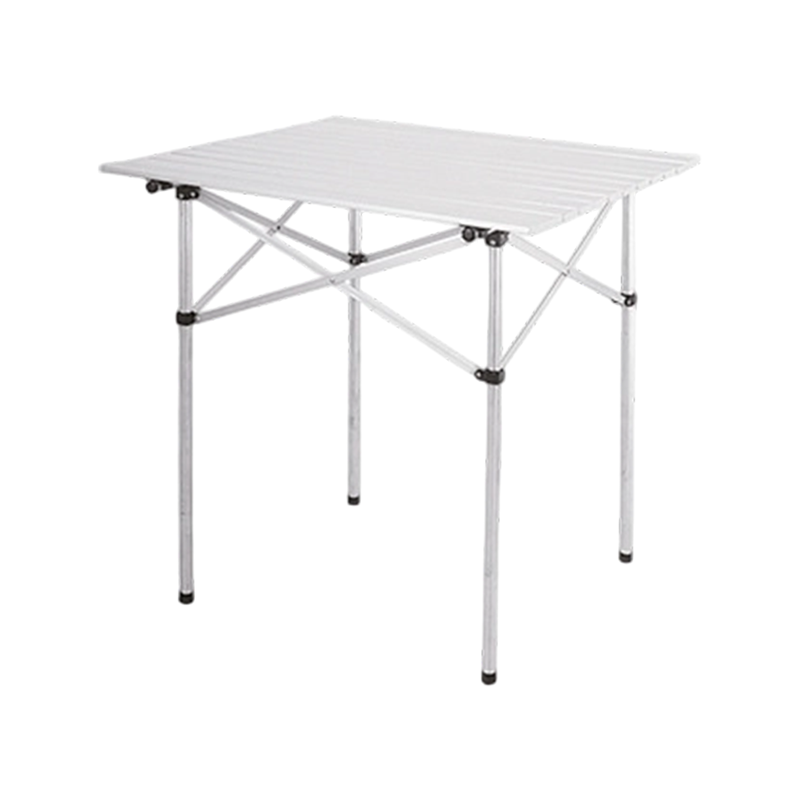
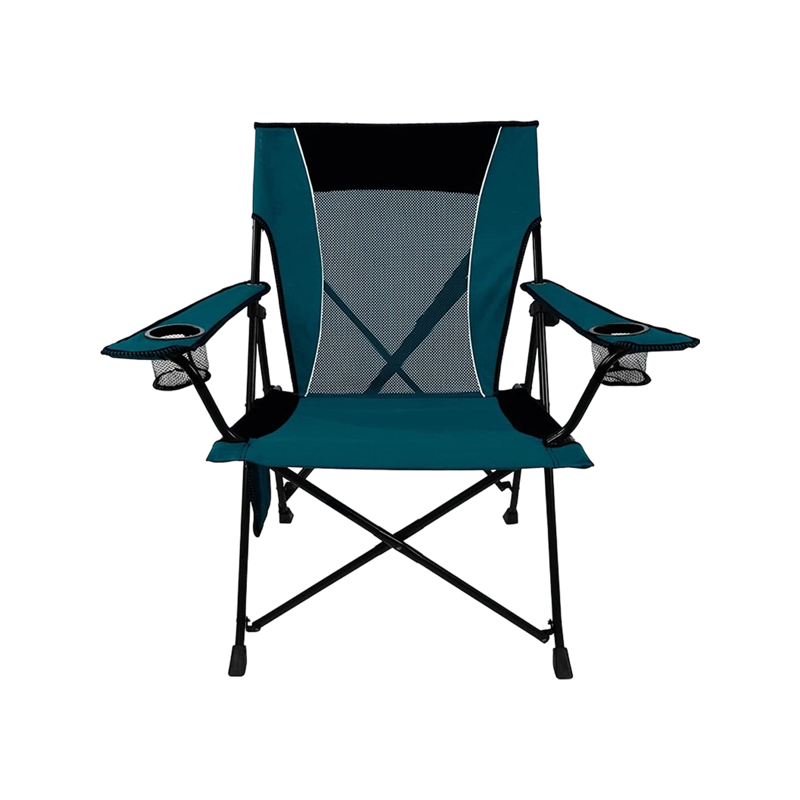
For distributors, the combination of differentiated design and practical materials can support a complete outdoor leisure collection. The canopy may be paired with camping chairs, picnic tables, ground mats, coolers, beach accessories, or family recreation products. Its broad usage scenarios make it suitable for multiple seasonal campaigns.
Frequently Asked Questions
What is the main purpose of this product?
The product is a protective outdoor canopy designed for family picnics, beach relaxation, camping, parks, and other stationary recreational settings. It provides shade, headroom, and weather coverage through a black vinyl-coated Oxford fabric and a reinforced steel frame.
Is it suitable for backpacking?
It is not primarily designed for long-distance backpacking. The vinyl coating and steel frame provide useful durability and stability, but they also add weight compared with ultralight backpacking shelters. The product is better suited to vehicle-supported travel and fixed outdoor leisure locations.
Why is the canopy black?
The black vinyl coating creates a dense protective layer that helps limit ultraviolet transmission and direct solar exposure. It is intended to provide stronger daytime shade than many thin, uncoated, or lightly coated fabrics.
Does the canopy provide rain protection?
The coated fabric and sloped butterfly roof are designed to support rain resistance and water runoff. The canopy is appropriate for ordinary outdoor use and light or moderate rain, but it should not be treated as a permanent storm shelter. Correct setup, fabric tension, and anchoring remain important.
What does 210D Oxford cloth mean?
The 210D specification refers to the denier range of the fabric yarns. Oxford cloth uses a basket-style weave that distributes stress across multiple fibers. The combination offers a practical balance between tear resistance, durability, weight, and portability for recreational canopy use.
Why use a steel frame instead of a lighter frame?
Steel provides a substantial structural foundation and can resist bending effectively when properly designed. The taller, thicker frame improves headroom and stability, although it makes the product heavier than some lightweight aluminum alternatives.
Can the canopy be used on a beach?
Yes. Beach use is one of the intended scenarios. Users should use suitable sand anchors or weighted bags and should monitor wind conditions carefully. The canopy should be taken down if severe or rapidly increasing wind is expected.
What makes the butterfly shape useful?
The dual-slope roof provides a raised center, broad shade coverage, improved rain runoff, and a profile that can deflect some wind more effectively than a flat roof. It also creates a more open and comfortable interior.
How should the canopy be stored?
Remove sand and debris, allow the fabric to dry completely, fold it without forcing the frame, and store it in a dry, ventilated location. Avoid long-term storage while the canopy is wet or dirty.
Can the product be customized for OEM orders?
OEM discussions may include branding, packaging, color, labeling, accessory combinations, and other market requirements. Customization should be confirmed with the manufacturer during sampling because it may affect materials, testing, production lead time, and minimum order quantities.
What should buyers evaluate before placing a bulk order?
Buyers should review fabric and coating specifications, frame construction, joint quality, dimensions, packed size, accessories, packaging, inspection standards, testing documentation, labeling, and intended use conditions. A pre-production sample and clearly approved specification are recommended.
Conclusion
The outdoor picnic camping black vinyl tent is a substantial recreational canopy developed for users who value protection, comfort, and durability over minimum weight. Its black vinyl coating is designed to limit solar exposure, while the 210D high-density Oxford cloth supports resistance to tearing and everyday wear. The taller, thicker steel frame provides increased headroom and structural confidence, and the butterfly roof improves shade distribution, rain runoff, and overall visual distinction.
Its advantages over lighter competitors come from the complete design rather than one isolated feature. The product matches its materials to its intended use: beaches, parks, family picnics, camping areas, and other vehicle-supported outdoor environments. This makes it a practical choice for consumers who want a comfortable shaded space that can be used repeatedly through the season.
For global retailers and outdoor brands, the product also benefits from a development process centered on real-world use, material selection, sampling, testing, and manufacturing consistency. CragHaven Outdoor’s role as both an outdoor brand and cross-border manufacturing partner supports OEM cooperation, private-label development, and long-term supply relationships.
A canopy should be judged by how well it performs over time, not only by how it looks when new. By combining protective coating, durable fabric, a reinforced frame, and a functional butterfly profile, this product offers a considered solution for modern outdoor leisure. It is a strong candidate for brands seeking a differentiated family canopy with practical performance and scalable manufacturing support.
References
1. Outdoor Fabric Performance Principles: Ultraviolet Protection, Coating Systems, and Weather Exposure.
2. Textile Engineering Fundamentals: Denier, Oxford Weave Construction, Tear Strength, and Abrasion Resistance.
3. Portable Shelter Design: Frame Geometry, Joint Reinforcement, Load Transfer, and Ground Anchoring.
4. Recreational Canopy Safety Practices: Setup, Wind Management, Rain Runoff, Storage, and Maintenance.
5. Product Development for Outdoor Equipment: Scenario-Based Design, Sampling, Testing, and Manufacturing Optimization.
6. International OEM Manufacturing Management: Specification Control, Quality Assurance, Packaging, and Supply Chain Communication.
Product: Outdoor picnic camping black vinyl tent, rainproof and sunshade canopy, picnic butterfly curtain canopy


- Phone: +86-15968800379
- E-mail: [email protected]
- Address: Room 1002, Huishang Building, Gongshu District, Hangzhou City, Zhejiang Province.
Copyright © CragHaven Outdoor All Rights Reserved. Outdoor Gear Manufacturers Wholesale Mountaineering Camping Gear Suppliers
