CragHaven Outdoor
Blog
  • Ultralight Folding Hiking Backpack: A Practical Guide to Packability, Performance, and Reliable Manufacturing

    Ultralight Folding Hiking Backpack: A Practical Guide to Packability, Performance, and Reliable Manufacturing

    2026-08-25
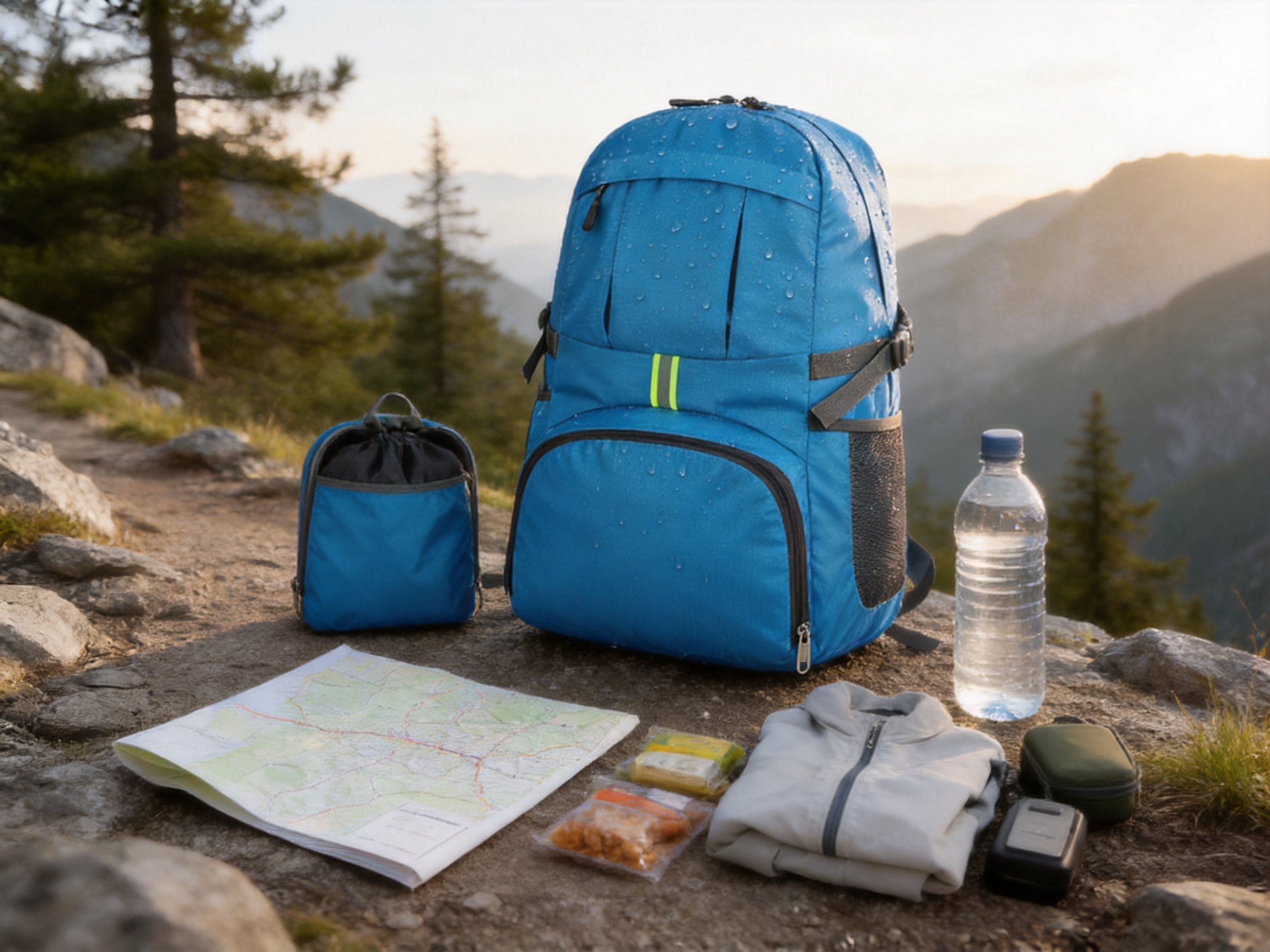
    For hikers, travelers, campers, and outdoor retailers, a backpack must do more than provide storage. It must remain comfortable while carrying essential equipment, withstand repeated use, resist changing weather, and occupy as little space as possible when it is not needed. The ultralight folding outdoor hiking backpack described in this article is designed around these requirements. It combines a large carrying capacity with lightweight polyester fabric, compact folding performance, abrasion resistance, tear resistance, and a water-repellent surface treatment. Its design addresses a common problem in outdoor equipment: users often need a dependable secondary backpack without wanting to carry the bulk and weight of a conventional pack. A foldable backpack can be stored inside luggage, a larger trekking pack, a vehicle, or an emergency kit. When required, it can be unfolded quickly and used for day hiking, short trips, camping, travel, or additional gear transportation. For buyers and retailers, the product also offers a practical balance between functionality, cost efficiency, and market versatility. It can serve several outdoor applications instead of being limited to one specific activity. The combination of a compact storage profile, durable fabric, substantial capacity, and adaptable use makes it suitable for outdoor retailers, private-label programs, travel product distributors, and camping equipment suppliers. Why Foldable Hiking Backpacks Are Increasingly Important Outdoor consumers are becoming more selective about the products they carry. They want equipment that performs reliably but does not create unnecessary weight or storage problems. A traditional hiking backpack may offer excellent structure and support, but it can be inconvenient as a backup bag or travel companion. It often takes up considerable space even when empty. A foldable hiking backpack solves this issue by allowing the main body to collapse into a compact form. The user can keep it in a suitcase during travel, place it inside a larger backpack, or store it in a car for unexpected needs. Once unfolded, it provides practical carrying space for clothing, food, water, personal items, or light camping equipment. This flexibility gives the product a broader market position than a single-purpose daypack. It can be sold to hikers who need an additional summit bag, travelers who want a lightweight day bag at their destination, campers who need a flexible equipment carrier, and consumers looking for an emergency backup backpack. For retailers, a product with several usage scenarios can appeal to a wider customer base. It also creates opportunities for seasonal sales, travel collections, outdoor gift sets, promotional programs, and private-label product lines. Product Overview and Core Design Concept The ultralight folding outdoor hiking backpack is made with high-density polyester fabric selected for a combination of low weight, practical durability, and stable performance. The fabric is designed to resist everyday abrasion and tearing, which is important when the backpack is placed on rough ground, carried through wooded areas, or packed together with other equipment. The surface is treated with a durable water-repellent coating. This treatment helps water form droplets and roll away from the fabric during light rain or brief exposure to moisture. It is intended to provide useful protection for ordinary outdoor conditions, although it should not be understood as a substitute for a fully waterproof dry bag or a backpack with sealed seams and waterproof construction. The backpack is designed for quick folding and easy storage. Its folding function reduces the amount of space needed when the product is not being used. This is especially useful for travelers and outdoor users who prefer to carry a secondary bag without accepting the volume of a rigid or heavily structured backpack. The large-capacity format provides sufficient room for day-use equipment and short-trip essentials. Depending on the final specification selected by the buyer, capacity can be positioned for day hiking, travel, camping, or general outdoor use. This allows the product to be adapted to different retail categories and customer expectations. Product code WFDS261001 identifies the model within the product range. Buyers can use this reference when discussing sampling, packaging, color options, labeling, order quantities, and production arrangements. Ultralight folding outdoor hiking backpack, large capacity backpack Key Advantages Over Conventional Outdoor Backpacks Lower Storage Burden The most obvious advantage is the ability to fold the backpack when it is not required. A conventional backpack may need a dedicated shelf, closet space, or luggage compartment. A folding model can be compressed and stored inside another bag, making it easier to transport and organize. This feature is valuable for international travelers, outdoor guides, families, and retailers managing limited inventory space. It also improves convenience for consumers who want to carry one extra bag without permanently adding substantial volume to their equipment. Useful Capacity Without Excessive Weight The product is intended to provide a practical storage capacity while maintaining an ultralight profile. This balance is important because a backpack that is extremely light but too small may not satisfy users, while a large pack with unnecessary structural components can become uncomfortable to transport. The design focuses on carrying the items normally required for short hiking trips and day-to-day outdoor use. Clothing layers, snacks, water, a camera, personal accessories, a light jacket, and basic emergency supplies can be organized within the available space. Durable Fabric for Repeated Outdoor Use High-density polyester provides a dependable foundation for a lightweight backpack. Its dimensional stability helps the product maintain its shape during normal use, folding, and unfolding. The material also offers good resistance to everyday abrasion and contributes to reliable color retention for retail products. Compared with very thin, low-density fabrics, a carefully selected high-density polyester can provide a more reassuring user experience. Consumers are less likely to perceive the backpack as fragile when the fabric feels stable and resists common contact with branches, equipment, luggage surfaces, and outdoor ground conditions. Protection Against Light Rain The DWR treatment improves the backpack’s suitability for changing outdoor conditions. During light rain or short exposure to moisture, the surface can help reduce rapid water absorption. This gives users additional time to seek shelter or protect sensitive contents. The water-repellent finish is particularly suitable for hiking, travel, and short outdoor activities where the user needs basic weather protection but does not require a fully waterproof expedition pack. Retail communication should clearly distinguish water repellency from complete waterproofing so that customer expectations remain accurate. Multiple Outdoor Applications Many backpacks are designed for a narrow activity. A technical mountaineering pack may be unsuitable for travel, while a casual city backpack may lack the durability required for outdoor use. This folding backpack occupies a flexible middle position. It can support hiking, camping, travel, emergency storage, and general outdoor activities. This versatility can reduce the need for consumers to purchase several specialized bags. For retailers, it supports broader product positioning and makes the item suitable for different departments, including travel accessories, hiking equipment, camping supplies, and outdoor lifestyle collections. Material Selection and Performance Considerations Material selection has a direct effect on backpack weight, tear resistance, abrasion resistance, appearance, folding performance, and service life. A manufacturer must consider these characteristics together rather than focusing on a single specification. Material TypeMain Performance CharacteristicsTypical ApplicationRipstop NylonLightweight, strong, and resistant to progressive tearingHiking and backpacking productsPolyesterStable dimensions, good color retention, and practical durabilityGeneral outdoor and travel productsPU-Coated FabricImproved water resistance through a coating layerRain-oriented outdoor applicationsHigh-Density NylonStrong abrasion resistance and long-term durabilityFrequent or demanding outdoor useCommon fabric choices for foldable outdoor backpacks High-density polyester is appropriate for this model because it supports the product’s intended balance between lightweight portability and daily outdoor durability. The fabric is not selected solely because it is inexpensive or light. It is selected because it can provide consistent performance across several common use cases while remaining suitable for folding construction. Fabric density should be matched with the intended capacity and load level. A larger backpack may place greater stress on seams, shoulder strap attachment points, zippers, and the base panel. These areas require careful pattern development and stitching to prevent the material from being overloaded during normal use. The DWR finish adds another layer of functional value. Surface treatment can improve the user’s experience in light rain, but its long-term performance depends on use, cleaning, friction, and storage conditions. Buyers should therefore evaluate not only the initial water-repellent effect but also the consistency of application during production and the care instructions provided to end users. Capacity Planning for Different Users Capacity is one of the most important purchasing factors because it determines what the user can carry and how the backpack will be positioned in the market. A bag that is too small may not satisfy hikers, while a bag that is unnecessarily large may reduce portability and increase weight. Approximate CapacityRecommended UseTypical Contents10–20 litersShort walks, city travel, and emergency backupWater, snacks, phone, light clothing, and personal items20–30 litersDay hiking and light outdoor activitiesFood, water, rain layer, first-aid items, and small equipment30–40 litersCamping and extended hikingClothing, cooking accessories, sleeping equipment, and supplies40 liters and aboveMulti-day trekking and mountaineeringLarge equipment loads and extended expedition suppliesCapacity ranges and common outdoor applications The large-capacity positioning of the product gives buyers room to target consumers who need more than a compact emergency bag. At the same time, its folding construction keeps the unused product easy to store. This combination is useful for travelers who may need a larger bag during a trip but do not want to carry a full-size backpack throughout the journey. Retailers should select the final capacity according to their target market. A travel-focused collection may emphasize compact storage and moderate capacity, while a camping collection may require additional volume and reinforced construction. Capacity should also be considered alongside strap design, pocket layout, zipper performance, and load distribution. Foldability and Storage Efficiency Foldability is not simply a matter of making the fabric soft enough to bend. A well-designed folding backpack must collapse efficiently while protecting the fabric, seams, hardware, and storage structure from unnecessary stress. The folding mechanism should be intuitive. Users should be able to understand where and how the backpack folds without consulting complicated instructions. Quick folding and unfolding improve the practical value of the product, especially when it is used during travel or changing weather conditions. Compact folded dimensions reduce storage requirements.An integrated storage pouch keeps the folded product organized.A quick folding process improves convenience during travel.Low added weight preserves the ultralight character of the backpack.The folded item can be placed inside larger luggage or another backpack. Repeated folding is an important manufacturing consideration. Sharp creases, excessive tension, or poorly positioned seams can reduce the service life of a packable product. The design and sampling process should therefore examine how the fabric behaves after repeated folding cycles, how the storage pouch accommodates the product, and whether the backpack unfolds without permanent deformation. For buyers, foldability should be assessed through physical samples rather than photographs alone. A sample review can reveal whether the product is genuinely easy to pack, whether the pouch is large enough, and whether the folded dimensions match the intended packaging and retail claims. Carrying Comfort and Load Distribution Ultralight construction should not mean that comfort is ignored. Even a lightweight backpack can become uncomfortable if the shoulder straps are narrow, the load sits too far from the user’s back, or the adjustment system does not provide adequate stability. Comfort FeaturePurposeBuyer Evaluation PointBreathable shoulder strapsImprove airflow and reduce pressureCheck padding, width, and edge finishingAdjustable chest strapImprove stability during movementReview adjustment range and buckle operationWaist strapHelp distribute heavier loadsConfirm whether it matches the intended capacityPadded back panelIncrease comfort during longer useAssess thickness, ventilation, and flexibilityErgonomic constructionSupport natural body movementTest fit with different body sizesBackpack comfort features and purchasing considerations For a foldable product, comfort features must be balanced with packability. Excessive rigid padding may improve structure but reduce the ability to fold the backpack into a compact form. The product’s design therefore needs to determine which comfort elements provide the greatest practical benefit without creating unnecessary volume. Buyers should test the backpack with representative loads rather than evaluating it empty. A sample that feels comfortable without contents may behave differently when filled with water bottles, clothing, or camping supplies. Testing should include walking, bending, climbing, and accessing the main compartment. Adjustment hardware is also important. Buckles and strap adjusters should operate smoothly and remain secure during movement. Stress points should be reinforced because the shoulder straps and chest strap experience repeated pulling forces during use. Weather Resistance and Outdoor Reliability Outdoor products are exposed to changing conditions, including light rain, damp ground, dust, abrasion, temperature changes, and repeated handling. A reliable backpack should be designed with these situations in mind. The water-repellent surface treatment helps protect the outer fabric during brief or light rainfall. It can also reduce the speed at which moisture spreads across the surface. This is useful when the backpack is used for hiking, travel, or camping in generally variable conditions. However, buyers should distinguish between water-repellent fabric and waterproof construction. Water repellency usually concerns the fabric surface, while waterproof performance may also require coated materials, waterproof zippers, seam sealing, storm flaps, and carefully controlled construction. The product is intended to protect against light rain rather than replace a specialist waterproof pack. Durability should be evaluated through several factors: Fabric resistance to tearing and abrasion.Strength of shoulder strap attachment points.Reinforcement at high-stress seams.Reliable zipper operation after repeated opening and closing.Consistent stitching quality throughout the main body.Stable performance after folding and unfolding. These details influence the total ownership experience. A backpack may appear attractive when new, but its commercial value depends on how well it performs after months of use. Consistent manufacturing and inspection are therefore as important as the initial material specification. Manufacturing Strengths and Process Control CragHaven Outdoor is based in Hangzhou, China, and operates as both an outdoor brand and a cross-border manufacturing partner. Its approach is centered on real outdoor applications rather than catalog development alone. Product decisions are connected to weather, terrain, usage patterns, and long-term service requirements. This approach gives the manufacturer an advantage when developing functional equipment. Outdoor products must work in real environments, and a specification sheet cannot fully describe how a backpack behaves when wet, overloaded, folded repeatedly, or carried over uneven terrain. Product development therefore benefits from practical scenario analysis and repeated evaluation. Scenario-Based Product Development The development process begins with the intended use. For a foldable hiking backpack, relevant questions include how quickly it should unfold, where it will be stored, what type of equipment it will carry, how frequently it will be folded, and what weather exposure is expected. These questions help determine fabric selection, capacity, pocket arrangement, strap construction, reinforcement, folding method, and finishing details. Instead of adding features without a clear purpose, the design can focus on solving specific user problems. Material Selection for Long-Term Value Material decisions are made with attention to durability, reliability, and long-term use. High-density polyester supports the product’s need for low weight and practical resistance to abrasion and tearing. The DWR treatment adds protection against light rain without changing the product into a heavier waterproof expedition bag. Choosing materials according to use rather than short-term trends can help buyers reduce product returns and maintain a more consistent customer experience. It also supports more predictable production because the selected fabric and components can be evaluated through sampling before larger orders are placed. Sampling, Testing, and Optimization Sampling is an important stage in the company’s manufacturing philosophy. A sample provides an opportunity to review dimensions, fit, fabric hand feel, folding behavior, stitching, hardware, logo placement, and packaging before production begins. Testing and optimization allow potential issues to be identified early. For example, a sample may reveal that a storage pouch is too small, that a zipper opening does not provide sufficient access, or that a shoulder strap attachment requires additional reinforcement. Correcting such issues before bulk production can improve consistency and reduce avoidable supply chain problems. Repeatable Production For global buyers, reliable repeat production is essential. Retailers need confidence that a second order will maintain the same basic dimensions, material characteristics, colors, workmanship, and packaging standards as the first order. Consistent manufacturing depends on controlled materials, clear specifications, approved samples, standardized sewing procedures, and quality inspections. These systems are particularly important for private-label customers, because brand reputation is directly connected to the quality of the supplied product. Communication for International Buyers CragHaven Outdoor positions itself as a cross-border manufacturing partner with a Western-market-oriented communication style. This is valuable when buyers need to discuss technical specifications, packaging requirements, product claims, labeling, sample revisions, and delivery expectations. Clear communication reduces uncertainty. Buyers can define the intended market, required capacity, fabric preferences, color references, branding requirements, and testing expectations before production. A structured communication process also helps prevent misunderstandings caused by incomplete product descriptions or assumptions about outdoor use. Quality Control Priorities for This Backpack Quality control should cover the entire product rather than focusing only on appearance. A backpack can look acceptable while still having weaknesses in its seams, strap attachments, folding performance, or water-repellent finish. Inspection AreaWhat to ReviewFabricWeight, density, color consistency, surface defects, and tear resistanceStitchingEven stitch length, clean thread finishing, and reinforced stress pointsStrapsAttachment strength, adjustment range, padding, and edge finishingZippersSmooth operation, alignment, puller strength, and repeated-cycle performanceFolding functionCompactness, ease of folding, pouch fit, and unfolding recoveryWater repellencyConsistent surface treatment and resistance to light moistureDimensionsFinished size, folded size, capacity, and production tolerancesPackagingProtection during transport, labeling accuracy, and retail presentationRecommended quality control checkpoints Inspection standards should be agreed before bulk manufacturing. Buyers may require pre-production samples, production samples, inspection reports, carton checks, or third-party testing depending on their market and distribution channels. Packaging should also be considered part of product quality. A foldable backpack must arrive without unnecessary creasing, contamination, or damage to the fabric and hardware. The package should preserve the product’s appearance while maintaining the space-saving advantage of the design. Competitive Positioning for Outdoor Retailers The backpack’s strongest competitive advantage is its combination of portability and usefulness. Some compact bags prioritize minimal folded volume but sacrifice capacity or durability. Some larger backpacks provide more structure but are difficult to store and transport. This product is positioned between these extremes. Its high-density polyester fabric supports durability while maintaining an ultralight profile. Its folding construction makes it more convenient than a conventional daypack for travel and backup use. Its DWR treatment adds practical protection for light rain. Its larger capacity gives it broader functionality than a small emergency pouch or basic foldable tote. Retailers can position the backpack around several customer benefits: Carry an extra backpack without adding substantial luggage volume.Unfold a practical daypack when a larger bag is needed.Use one product for hiking, travel, camping, and outdoor backup.Benefit from a lightweight design suitable for short trips.Receive added protection from light rain through the water-repellent finish.Choose a product developed with attention to materials and manufacturing consistency. For private-label programs, the product can be incorporated into outdoor collections that emphasize practical design, lightweight equipment, travel convenience, and dependable value. Buyers should ensure that all final product claims correspond to the approved specification and test results. Applications Across Hiking, Camping, and Travel Day Hiking For day hikes, the backpack can carry water, snacks, a light jacket, personal items, navigation accessories, and basic first-aid supplies. The lightweight design helps reduce unnecessary fatigue, while the storage capacity provides room for changing conditions during the day. Camping Campers can use the backpack for short-distance transport around a campsite, collecting supplies, carrying clothing, or organizing smaller equipment. Its packable form also allows it to be stored inside a larger camping bag until it is needed. Travel Travelers often need a small or medium-sized bag after arriving at their destination. A folding backpack can remain inside a suitcase during transportation and then be used for sightseeing, shopping, day trips, or local excursions. Mountaineering Support For mountaineering and trekking, the backpack can function as a secondary or support bag for lighter loads. It should not automatically be marketed as a substitute for a specialized technical mountaineering pack unless the final product has the required structure, capacity, harness system, and tested load performance. Emergency Backup The compact storage profile makes the backpack suitable for emergency kits, vehicle storage, disaster preparedness, and workplace backup supplies. Its ability to remain stored until required is one of its most useful practical characteristics. Purchasing Considerations for Wholesale Buyers Wholesale buyers should establish the intended market before finalizing the product specification. A backpack for travel retailers may prioritize compact folding, appearance, and moderate capacity. A product for outdoor specialists may require stronger reinforcements, more technical details, and expanded testing. Important purchasing questions include: What capacity is required for the target customer?What folded dimensions are acceptable for the intended packaging?Will the backpack be sold for hiking, travel, camping, or general use?What color range and branding method are required?Are chest straps, waist straps, or additional pockets needed?What water-resistance claims can be supported?What packaging, labeling, and carton requirements apply?What inspection standards must be completed before shipment? Buyers should request an approved sample before placing a large production order. The sample should be checked with actual contents and folded repeatedly. It should also be reviewed for visual consistency, fabric feel, zipper performance, strap comfort, and the overall impression presented to the end consumer. For private-label customers, the approved sample should include all important brand details, including labels, hangtags, logo placement, care instructions, packaging, and barcode information. A written specification can reduce confusion during repeat orders and make quality discussions more objective. Customization and Private-Label Opportunities Outdoor retailers often need products that match their brand positioning. Customization may include color selection, logo application, woven labels, printed labels, packaging design, hangtags, and product inserts. The extent of customization depends on the order volume, production schedule, and technical requirements. Color selection should consider both outdoor practicality and retail presentation. Darker colors may be preferred for frequent outdoor use because they can help conceal ordinary marks, while brighter colors may improve visibility and create a stronger lifestyle appearance. The final selection should be evaluated under appropriate lighting and confirmed with production samples. Branding placement should not interfere with folding, storage, zippers, seams, or high-contact areas. A logo positioned on a fold line may experience unnecessary wear, while a label attached near a strap seam may affect comfort or construction. The manufacturer can help identify a location that supports visibility without compromising function. Packaging is another opportunity to communicate the product’s key benefits. Buyers may highlight compact storage, lightweight construction, light-rain protection, multi-use functionality, and outdoor versatility. Marketing language should remain accurate and should not claim complete waterproofing or technical expedition performance unless those characteristics have been specifically developed and verified. Care, Handling, and Service Life Correct care helps preserve fabric appearance and surface treatment. Users should follow the care instructions supplied with the final product. In general, excessive heat, harsh chemicals, aggressive brushing, and repeated high-friction washing may reduce the performance of coatings and fabric finishes. The backpack should be stored clean and dry. If it becomes wet during use, allowing it to dry before long-term storage can help prevent odor and material deterioration. The product should also be folded according to its intended method rather than compressed under excessive weight. Although the backpack is designed for outdoor use, it should be loaded according to its intended capacity and construction. Overloading can place stress on zippers, seams, shoulder strap anchors, and fabric panels. Retailers can improve customer satisfaction by providing clear guidance about suitable loads and use conditions. Why Manufacturing Quality Supports Long-Term Brand Value Outdoor equipment is closely associated with trust. A customer may rely on a backpack while walking in unfamiliar terrain, traveling far from home, or carrying essential supplies. If a zipper fails, a strap separates, or the fabric tears prematurely, the problem affects more than one purchase. It can damage the customer’s confidence in the retailer and the entire product category. CragHaven Outdoor’s manufacturing philosophy emphasizes that products should be developed for weather, terrain, and time. This perspective supports a more disciplined approach to product creation. Design features are expected to solve practical problems, materials are evaluated for durability and reliability, and sampling and testing are treated as standard steps rather than optional additions. The company’s location in Hangzhou provides access to China’s mature manufacturing ecosystem and efficient supply chain. This can support scalable production, coordinated material sourcing, product development, and international order fulfillment. For global customers, the combination of product understanding and manufacturing capability can simplify the process of turning a concept into a stable, repeatable product. The company also aims to participate in both design and manufacturing rather than functioning only as a factory sourcing intermediary. This is valuable when buyers need help refining a product for a specific outdoor scenario. A knowledgeable manufacturing partner can identify conflicts between capacity, weight, reinforcement, comfort, packability, and cost before they become production problems. Environmental and Commercial Efficiency A foldable backpack can contribute to practical efficiency by reducing unused storage volume during transportation and retail handling. More compact products may be easier to organize in warehouses, carry in luggage, and display in stores. These advantages do not replace the need for responsible material and production decisions, but they can support more efficient product use and distribution. Durability also has commercial and environmental value. A product that remains useful for a longer period may reduce the frequency of replacement. Consistent construction, reliable stitching, and appropriate material selection help support this goal. Buyers interested in sustainability should discuss material composition, packaging reduction, production waste, durability testing, and end-of-life considerations with the manufacturer. Sustainability claims should be based on documented specifications and verifiable processes rather than general marketing language. Recommended Product Evaluation Process Step One: Define the Market Identify whether the target customers are hikers, campers, travelers, mountaineers, emergency-preparedness buyers, or general outdoor consumers. This decision influences capacity, features, colors, packaging, and marketing claims. Step Two: Confirm the Technical Specification Review the fabric, surface treatment, dimensions, folded size, capacity, strap construction, zipper type, pocket configuration, and reinforcement details. Confirm which features are standard and which may require customization. Step Three: Test the Physical Sample Unfold the backpack, adjust the straps, load it with representative contents, walk with it, and fold it repeatedly. Check whether the storage pouch is practical and whether the product recovers its shape after unfolding. Step Four: Review Quality Requirements Agree on inspection points, acceptable tolerances, packaging requirements, labeling, color standards, and pre-shipment procedures. Document the approved sample for future reference. Step Five: Confirm Commercial Details Discuss minimum order quantities, lead times, customization, payment terms, shipping arrangements, and repeat-order procedures. Clear commercial planning helps prevent delays and inconsistent expectations. Frequently Asked Questions What is the main advantage of a foldable hiking backpack? The main advantage is that it combines practical carrying capacity with compact storage. Users can carry the backpack inside luggage or another bag and unfold it when additional storage is needed. This makes it useful for hiking, travel, camping, and emergency backup purposes. Is this backpack suitable for light rain? Yes. The fabric surface is treated with a DWR water-repellent coating designed to help protect against light rain. It should not be described as fully waterproof unless the final construction includes and passes the necessary waterproof testing, such as seam sealing and waterproof closure evaluation. What material is used in the backpack? The backpack uses high-density polyester fabric. The material is selected for its lightweight character, abrasion resistance, tear resistance, dimensional stability, and suitability for general outdoor use. Can the backpack replace a technical mountaineering pack? It can support mountaineering-related activities as a lightweight secondary or backup bag, but it should not automatically replace a specialized technical mountaineering pack. Technical climbing and multi-day expeditions may require a structured frame, advanced harness system, specialized attachment points, higher load support, and additional safety features. What capacity is suitable for day hiking? A capacity between 20 and 30 liters is commonly suitable for day hiking because it provides space for water, food, clothing layers, personal items, and basic emergency supplies without becoming unnecessarily bulky. Is the backpack suitable for travel? Yes. Its folding design allows it to be stored in a suitcase or larger travel bag. Once unfolded, it can be used for sightseeing, shopping, day trips, and local transportation. What should wholesale buyers check before ordering? Wholesale buyers should confirm capacity, fabric, folded dimensions, water-repellent performance, strap construction, zipper quality, color, branding, packaging, inspection requirements, and production tolerances. A physical sample should be tested before bulk production. Can the product be customized for private-label orders? Private-label possibilities may include colors, logos, labels, packaging, hangtags, and product inserts. The available options depend on order requirements and production conditions. Buyers should confirm customization details during the sample and quotation stages. How does the manufacturer support product reliability? CragHaven Outdoor emphasizes scenario-based development, careful material selection, sampling, testing, optimization, and consistent manufacturing. These processes help address practical concerns such as folding durability, seam strength, fabric performance, and repeat-production consistency. How should the backpack be stored? The backpack should be cleaned according to its care instructions, dried thoroughly after exposure to moisture, folded using its intended method, and stored away from excessive heat, harsh chemicals, and prolonged dampness. Conclusion The ultralight folding outdoor hiking backpack is designed to address the modern need for equipment that is functional, durable, and easy to carry. Its high-density polyester fabric provides a useful balance between low weight and resistance to abrasion and tearing. Its DWR-treated surface supports protection against light rain, while its folding construction reduces storage and transportation demands. Compared with conventional backpacks, the product offers greater convenience for travel, backup use, and multi-purpose outdoor activities. It can support day hiking, camping, travel, emergency preparation, and selected mountaineering support applications. This versatility gives retailers more opportunities to position the product across several outdoor categories. Its value also depends on the quality of its development and production. CragHaven Outdoor combines outdoor product knowledge with cross-border manufacturing capability in Hangzhou, China. Through scenario-based design, material selection, sampling, testing, optimization, and quality control, the company works to reduce uncertainty for international buyers and deliver reliable, repeatable outdoor products. For buyers seeking a packable outdoor backpack for retail, private-label, or distribution programs, the most important step is to match the final specification with the intended market. When capacity, comfort, weather resistance, foldability, and manufacturing quality are evaluated together, this product can provide a practical and commercially adaptable solution for global outdoor customers. References 1. CragHaven Outdoor. Product Information for Ultralight Folding Outdoor Hiking Backpack, Product Code WFDS261001. 2. CragHaven Outdoor. Company Profile and Manufacturing Philosophy. 3. General outdoor equipment design principles concerning backpack capacity, load distribution, fabric durability, and weather resistance. 4. General textile product development practices for polyester fabrics, water-repellent treatments, stitching, and reinforcement. 5. General purchasing guidelines for private-label outdoor equipment, sample approval, quality inspection, packaging, and repeat production. Product: Ultralight folding outdoor hiking backpack, large capacity backpack .profile-card { display: flex; align-items: flex-start; gap: 2rem; background-color: white; padding: 2rem; border-radius: 12px; box-shadow: 0 2px 10px rgba(0,0,0,0.05); } .profile-avatar { width: 120px; height: 120px; border-radius: 50%; overflow: hidden; flex-shrink: 0; } .profile-avatar img { width: 100%; height: 100%; object-fit: cover; display: block; } .profile-info { flex-grow: 1; } .profile-name { font-size:27px; font-weight: 900; margin-bottom: 1rem; color: #1a1a1a; } .profile-bio { line-height: 1.6; color: #333; } @media (max-width: 600px) { .profile-card { flex-direction: column; align-items: center; text-align: center; gap: 1.5rem; } } Deng Yuli — International Sales Manager 10 years of B2B sales experience in outdoor equipment manufacturing, focusing on key account development, quotation negotiation, product proposal preparation, and long-term cooperation with overseas distributors and private-label brands.
    View Article
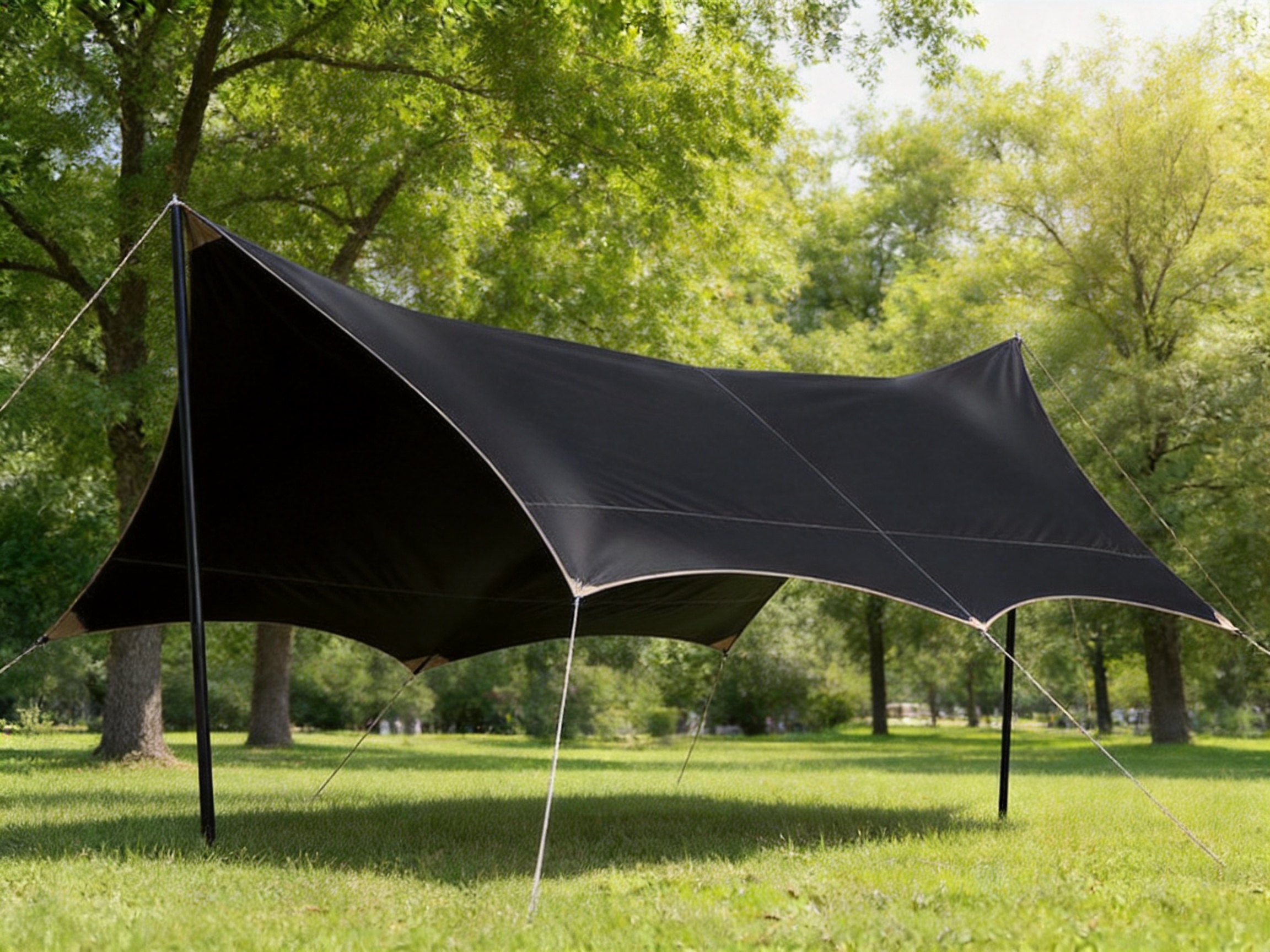
  • Why a Black Vinyl Butterfly Canopy Is a Practical Choice for Outdoor Picnics and Camping

    Why a Black Vinyl Butterfly Canopy Is a Practical Choice for Outdoor Picnics and Camping

    2026-08-23
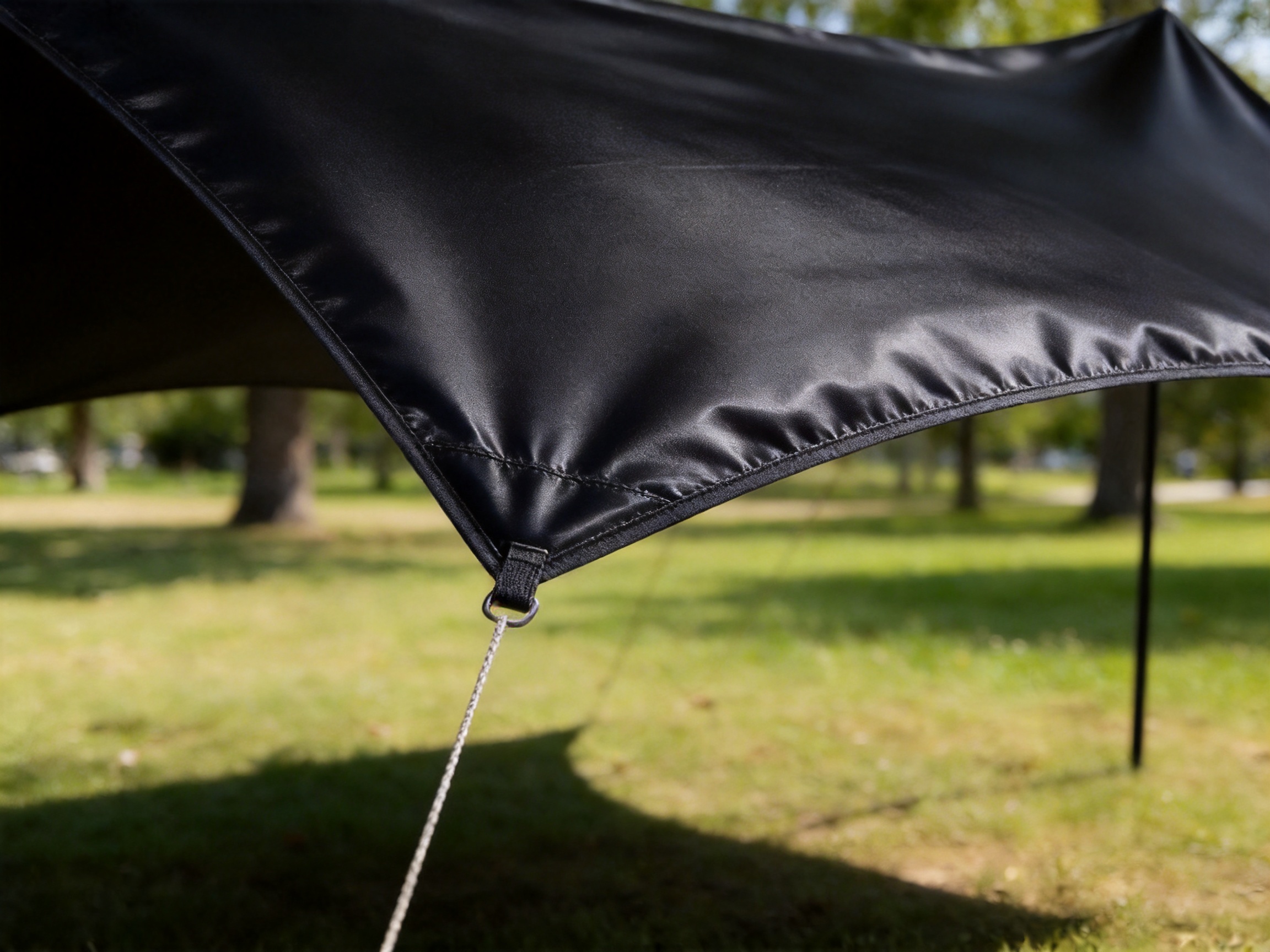
    Outdoor shelter has to do more than create a pleasant visual impression. It must provide dependable shade, manage rain, withstand repeated setup, and remain practical for the people who use it. At a family picnic, beach gathering, campsite, or outdoor event, a canopy is often exposed to changing sunlight, gusts of wind, damp ground, sand, accidental contact, and frequent folding. These conditions quickly reveal the difference between a lightweight shelter designed mainly for occasional convenience and a better-engineered canopy designed around real outdoor use. The outdoor picnic camping black vinyl tent described in this article is built around that practical idea. It combines a black vinyl-coated canopy, 210D high-density Oxford cloth, a taller and thicker steel frame, and a butterfly-shaped roof profile. Together, these features create a shelter intended to deliver strong shade coverage, rain protection, usable headroom, and dependable structural support for family picnics, beach relaxation, camping areas, and other stationary outdoor applications. Although it is described as a tent, its design is especially suitable for canopy-style use. It is not positioned as a lightweight backpacking shelter for long-distance mountain travel. Instead, it is a spacious outdoor shade and weather-protection solution for situations where users can transport the product by vehicle or carry it a short distance to a destination. This distinction is important because product quality should always be judged against the intended scenario. A stationary family canopy benefits from robust materials and a stronger frame, while an alpine backpacking shelter prioritizes minimum weight and compact packing. Understanding the Product’s Core Design The product combines four main design decisions. First, its black vinyl coating is selected to improve solar protection and support weather resistance. Second, the canopy uses 210D high-density Oxford cloth, a balanced fabric choice that aims to resist tearing and everyday wear without becoming unnecessarily heavy. Third, the taller and thicker steel frame provides more headroom and a stronger structural foundation than a very light frame. Finally, the butterfly-shaped geometry creates a broad, dual-slope roof that improves shade distribution and encourages rain runoff. None of these features should be considered in isolation. A dark coating is more useful when it is applied to a durable base fabric. A strong fabric cannot perform properly if the frame twists or collapses under ordinary outdoor stress. A tall frame needs appropriate tube thickness and secure joints. A broad roof requires reliable anchoring because a large surface area can catch wind. The value of this canopy comes from the way its materials and geometry work together as a complete system. This system-based approach also explains why the product can offer advantages over many low-cost standard fabric canopies. Basic canopies often focus on low purchase price and minimal packed weight. They may use thin polyester, light tubing, flat roof panels, or simple joints. Such products can be suitable for occasional use in calm weather, but they may provide less consistent shade, lower abrasion resistance, reduced headroom, and less confidence during repeated seasonal use. Design elementPrimary purposePractical benefit Black vinyl coatingReduce solar transmission and support weather resistanceDeeper shade and better suitability for extended daytime use 210D Oxford clothBalance fabric durability and manageable weightImproved resistance to everyday wear, setup stress, and small tears Taller steel frameIncrease interior headroomMore comfortable use for families and seated groups Thicker steel tubingImprove resistance to bendingGreater structural support when properly anchored Butterfly-shaped roofCreate a broad, dual-slope canopy profileWide shade coverage and improved rain runoff System-based anchoringTransfer wind loads safely to the groundBetter stability than relying on frame strength alone Black Vinyl Coating and Solar Protection Sun protection is one of the most important functions of a picnic canopy. Standard light-colored fabric may reflect a significant amount of visible light, but color alone does not determine how much ultraviolet radiation reaches the shaded space below. The weave, coating, thickness, and construction of the fabric all influence its solar performance. A black vinyl coating creates a dense surface layer that absorbs a substantial portion of incoming ultraviolet radiation before it can pass through the canopy material. This helps explain why a black-coated canopy can feel noticeably darker and more protective than an uncoated fabric of similar apparent thickness. The underside receives less direct brightness, and the covered area becomes more comfortable during long periods of daytime use. This is particularly useful at beaches, parks, sporting areas, and family picnic sites where users may remain under the canopy for several hours rather than simply passing through it. The coating also contributes to the visual character of the product. Black creates a clean, practical appearance that can suit commercial rental operations, event use, outdoor retail collections, and private family equipment. Unlike very light fabric, a dark surface may make ordinary dust or minor marks less visually prominent. Nevertheless, the canopy should still be cleaned and dried after use because appearance does not replace maintenance. It is important to use accurate language when discussing sun protection. A canopy creates shade and can reduce exposure, but it should not be treated as a substitute for sunscreen, protective clothing, sunglasses, or other personal sun-safety measures. Actual protection depends on fabric construction, installation angle, gaps at the sides, reflected radiation, and the position of the sun. The product’s black vinyl coating is a meaningful design advantage, but responsible outdoor use still requires complete sun-protection habits. Black Vinyl Compared with Standard Polyester Many entry-level canopies rely on untreated or lightly treated polyester because it is economical, flexible, and easy to pack. Polyester remains a useful material, but a standard polyester canopy may allow more light and ultraviolet radiation through the fabric, especially when the material is thin or lightly colored. It may also provide a brighter and warmer environment beneath the roof during prolonged exposure. Vinyl-coated fabric is generally heavier than an equivalent lightweight polyester canopy. That added weight is a tradeoff rather than a defect. For vehicle-based outings and stationary installations, the additional material can be worthwhile because it supports deeper shade, a more substantial hand feel, and improved resistance to repeated weather exposure. The product is therefore better matched to beaches, parks, family gathering areas, and campsites with vehicle access than to ultralight trekking routes. Compared with a very thin fabric, a vinyl-coated canopy may also retain its weather-protection qualities more consistently across repeated seasonal use. Direct sunlight can accelerate the degradation of some coatings and textiles. A properly formulated vinyl surface is selected to resist this type of exposure and help maintain water resistance and structural integrity over time. Users should still avoid leaving any temporary canopy permanently erected in severe weather, because prolonged exposure to high wind, storms, and abrasive conditions can damage even a well-built shelter. Why 210D Oxford Cloth Matters The canopy uses 210D high-density Oxford cloth, a fabric choice that sits between ultralight material and very heavy-duty textile. The “210D” designation refers to denier, a measurement related to the mass and thickness of the yarn. Denier is useful for comparing fabrics, but it is not the only factor that determines performance. Weave density, coating quality, yarn strength, stitching, seam construction, and finishing all affect how a canopy behaves in outdoor conditions. Fabric below approximately 150D can be very light and easy to pack, but it may be more vulnerable to punctures, abrasion, and tearing when exposed to rough ground or repeated setup. Fabrics above 300D can offer additional robustness, yet they may add substantial weight and reduce portability without delivering a proportional benefit for a recreational canopy. A 210D Oxford construction offers a practical middle ground for products that need to be transported, assembled, folded, and stored regularly. Oxford cloth is associated with a basket-style weave in which yarns cross in a manner that distributes stress across more than one thread line. When a small nick or puncture occurs, this structure can help reduce the tendency of the damage to spread rapidly compared with a simpler and less dense plain weave of similar yarn size. This does not make the canopy impossible to tear. Sharp branches, exposed metal, improper folding, and excessive tension can still cause damage. It does, however, make the fabric more appropriate for repeated family and recreational use. High-density construction also supports a more stable base for the vinyl coating. A coating performs best when it is applied to a fabric that maintains its shape and resists excessive stretching. During setup, wind, and folding, the base cloth experiences movement. A balanced Oxford material helps the finished canopy maintain a practical combination of strength, flexibility, and manageable weight. Resistance to Wear in Real Outdoor Scenarios A canopy is exposed to more than wind and rain. It may brush against tree branches during setup, touch sandy ground at a beach, be placed near gravel, or be folded while small particles remain on the surface. Children may accidentally lean against the side, and users may pull the fabric into position more forcefully than intended. These repeated minor stresses can shorten the life of a weak fabric even when no single incident appears serious. The 210D Oxford cloth is selected with these conditions in mind. Its durability supports repeated setup and takedown, while its weight remains more manageable than a much heavier industrial textile. A coated and finished surface can also reduce friction against common outdoor contact points. However, users should avoid dragging the canopy across rough ground, placing it on sharp objects, or forcing the frame when the fabric is caught. Good handling is part of product performance. Fabric durability is also influenced by seams and load distribution. A strong panel can still fail if stitching is weak or if tension is concentrated at a small attachment point. For that reason, manufacturing quality must include attention to cut accuracy, seam alignment, reinforcement zones, and the way fabric connects to the frame. These areas are central to a repeatable product rather than optional cosmetic details. Frame Height, Steel Thickness, and Stability The taller steel frame serves two functions. The most obvious is improved headroom. Users can stand, move around, organize picnic supplies, and enter or leave the covered area with less crouching. Greater height also makes the canopy more comfortable for family groups, especially when chairs, tables, coolers, and other equipment occupy the floor area. The less visible function is the relationship between height and structural design. A tall frame experiences leverage during wind loading. If the tubing is too thin, the increased height can make the structure more vulnerable to bending or twisting. The product addresses this relationship by pairing a taller frame with thicker steel components. The objective is not simply to make the canopy higher; it is to create a more useful structure without sacrificing reasonable support. Steel offers a useful combination of rigidity, strength, and cost efficiency for a stationary or vehicle-transported canopy. Compared with very light aluminum or thin composite components, steel can provide a more substantial feel and better resistance to deformation when appropriately designed. Its main tradeoffs are weight and the need for protective finishing against corrosion. Proper storage, drying, and care around damaged surface finishes help preserve the frame over time. Joints Are as Important as Tubes Frame tubes are only one part of a canopy structure. Joints, hinges, connectors, brackets, and attachment points transfer loads from one section to another. In many folding structures, the joint area experiences concentrated stress during opening, closing, and wind movement. A tube may remain straight while a weak connector loosens, bends, or fractures. A serious manufacturing assessment therefore looks beyond tube diameter. It considers joint fit, connection geometry, weld quality where applicable, reinforcement, folding movement, and the consistency of assembly. Reinforced or securely constructed joints can distribute loads across a wider area than simple friction-fit connections. This reduces the likelihood that one small point will carry the entire force generated by the canopy. Manufacturing consistency is especially important for folding products. If one joint is misaligned, the frame may require excessive force to open. If a connection is too loose, the structure may move unnecessarily in use. If a bracket has sharp edges, it may damage the canopy fabric. Repeatable assembly control helps prevent these small issues from becoming field failures. Butterfly Geometry for Broad Shade Coverage The butterfly profile gives the canopy a distinctive dual-slope roofline rather than a single flat plane. This geometry can create a broad shaded footprint and distribute the fabric across two sloping sections. The raised central area provides additional visual openness while helping the roof direct rainwater away from the peak and toward the sides. Flat-top canopies can collect water when rain falls faster than it drains. Even a small amount of standing water adds weight to the roof and transfers additional stress to the fabric, seams, and frame. A sloped butterfly profile encourages runoff and reduces the likelihood of persistent pooling when the canopy is correctly tensioned and installed. It is not a replacement for proper setup, but it is a useful geometric advantage. Shade coverage changes as the sun moves. A narrow shelter may provide excellent shade in one direction during one part of the day and much less protection later. A wider butterfly footprint can provide more consistent coverage across changing solar angles, particularly when users remain seated in a fixed arrangement. This is one reason the design suits family picnics and beach relaxation, where people may stay in the same area for several hours. The sloped surfaces may also present a more favorable profile to mild or moderate wind than a completely flat roof. Air can move across the angled fabric instead of meeting a single broad horizontal surface. However, no canopy should be considered storm-proof. Wind conditions can change rapidly, and the shelter must be properly staked or weighted. In strong wind, thunderstorms, or severe weather, taking the canopy down is the safest choice. Outdoor picnic camping black vinyl tent, rainproof and sunshade canopy, picnic butterfly curtain canopy Rain Protection and Everyday Weather Management The product is designed to provide rain protection as well as shade. The vinyl-coated surface helps water move across the canopy rather than immediately penetrating the fabric. The butterfly roof encourages runoff, and the dual-slope form can reduce water accumulation compared with a flat roof. These features make the shelter more useful during short rain showers, changing weather at a picnic, or damp conditions at a campsite. Rain performance depends on installation quality. The canopy should be fully opened, correctly tensioned, and positioned so that water can flow away from the central structure. Fabric that is loose, folded, or incorrectly attached may create pockets where water collects. Users should also inspect seams, connection points, and coating damage before use, particularly after long storage. “Rainproof” should be understood as a product-use benefit rather than permission to ignore weather forecasts. Temporary canopies are not designed to replace permanent structures or shelters in extreme conditions. Heavy rain combined with strong wind can create significant loads, while lightning presents a separate safety risk. The correct approach is to use the canopy within appropriate weather limits and remove it when conditions become unsafe. Wind Stability Requires Anchoring A strong frame can improve stability, but it cannot eliminate the need for ground anchoring. A canopy acts as a large surface that interacts with moving air. Wind loads travel from the fabric to the frame and then into the feet, stakes, sandbags, or other anchors. If the base is not secured, the entire shelter may shift, lift, or overturn even when the steel tubes themselves remain undamaged. Different surfaces require different anchoring methods. Soft soil may accept stakes designed for ground penetration. Sand often requires longer or specialized sand anchors, while hard surfaces may require weighted bases. A beach installation should account for changing wind direction and loose sand. A park installation should use secure stakes where permitted and should avoid damaging underground utilities or irrigation systems. The canopy’s stability is therefore a system performance issue. Frame thickness, joint design, roof geometry, fabric tension, anchor selection, and setup technique all contribute. Users should distribute weights evenly, check every connection, and periodically inspect the structure during use. A few minutes of preparation can significantly reduce the risk of movement or damage. Advantages over Lightweight Standard Canopies The product’s competitive advantages are most apparent when it is compared with basic canopies designed primarily around low weight and low cost. A standard lightweight canopy may be convenient to carry, but its thin fabric may offer less effective shade, its frame may feel less substantial, and its roof may provide less consistent coverage. These limitations are not universal, but they are common considerations in entry-level products. The black vinyl coating offers a darker and more protective shaded environment than many uncoated fabrics. The 210D Oxford cloth provides a more durable platform for repeated use than very thin textile. The taller and thicker steel frame adds usable space and structural substance. The butterfly roof provides a broader footprint and improved drainage geometry. Together, these features target the needs of users who value comfort, repeatability, and weather management more than the absolute lightest packed weight. The product may also have advantages over some low-cost dark canopies that achieve color but not complete construction quality. A dark fabric by itself does not guarantee robust performance. If it is attached to a weak frame, poorly finished at the seams, or difficult to anchor, the visual benefit will not compensate for structural limitations. The value here lies in combining the black coating with a stronger fabric, a purpose-built steel structure, and an efficient roof profile. Comparison factorBasic lightweight canopyBlack vinyl butterfly canopyBest fit Solar protectionMay depend on thin or uncoated fabricBlack vinyl surface supports deeper shadeLong daytime picnics and beach use Fabric durabilityOften prioritizes minimum weight210D Oxford cloth balances weight and wear resistanceRepeated seasonal setup HeadroomMay be limited by a lower frameTaller frame offers more usable interior spaceFamily groups and standing access Roof drainageFlat surfaces may collect waterDual-slope butterfly profile encourages runoffVariable daytime weather Frame feelVery light tubing may flex moreThicker steel offers a more substantial structureStationary or vehicle-based use PortabilityUsually easier to carry long distancesHeavier but suitable for short transportCars, vans, parks, beaches, campsites Designed for Practical Outdoor Scenarios Family Picnics Family picnics often require more than a small patch of shade. Users may bring folding chairs, a picnic table, food containers, toys, coolers, and personal bags. A broad canopy provides a central place where people can eat, rest, and organize supplies. The taller frame makes movement more comfortable, while the dark roof helps reduce glare and heat from direct sunlight. The product’s materials are also suitable for repeated family use. A canopy that is set up several times each season benefits from a fabric that can tolerate ordinary handling and a frame that does not feel fragile. Families should still teach children not to hang from the frame or pull on the fabric, and adults should check the anchoring system before allowing the group to gather underneath. Beach Relaxation Beach environments create a demanding combination of bright sunlight, wind, sand, and salt exposure. The black vinyl coating is valuable in this setting because strong solar radiation can make uncoated fabric feel less protective. The butterfly shape provides a wide area of shade for chairs and beach equipment, while the sloped roof can help manage short rain showers. Beach users should pay particular attention to anchoring. Ordinary short stakes may not be sufficient in loose sand. Sandbags, sand anchors, or other appropriate weighting solutions should be used according to local conditions. After the outing, sand should be removed before folding because abrasive particles can wear coatings, scratch frame finishes, and interfere with joints. Camping Areas At a campsite, the canopy can function as a communal shelter for meals, preparation, and relaxation. It can complement rather than replace a sleeping tent. The product is especially appropriate when users arrive by vehicle and want a durable shared area beside the main campsite. The roof provides daytime shade, and the rain-resistant surface can help maintain a usable outdoor living area during light precipitation. Campers should select a level site away from dead branches, steep drainage paths, and areas prone to flooding. The canopy should not be placed too close to an open flame, stove, or heat source because coated fabric can be damaged by high temperatures and sparks. Proper ventilation and sensible campsite organization remain essential. Manufacturing Strengths and Product Development Approach The company behind the product approaches outdoor equipment as a combination of design, material selection, sampling, testing, and manufacturing control. This is significant because a product can have attractive specifications on paper and still perform poorly if the production process is inconsistent. The stated development philosophy begins with real weather, terrain, and time rather than with catalog appearance alone. That philosophy supports a practical product-development sequence. Designers first identify the intended use scenario: family picnics, beaches, campsites, and other stationary outdoor areas. They then select materials that match the expected stress level. For this canopy, that means choosing a vinyl-coated textile, 210D Oxford cloth, and a stronger steel frame rather than using the lightest possible materials. The geometry is then shaped around shade coverage, rain runoff, headroom, and wind behavior. Sampling is another essential part of the process. A physical sample allows the development team to evaluate how the fabric fits the frame, whether the roof tension is balanced, how the butterfly peak is formed, and whether the folded product can be handled efficiently. Sample review can reveal problems that are difficult to identify from drawings alone, such as fabric bunching, awkward joint movement, insufficient reinforcement, or difficult assembly steps. Repeated optimization helps transform an initial concept into a more reliable production model. Adjustments may involve panel dimensions, coating behavior, seam placement, tube thickness, connector alignment, or anchoring integration. The goal is not to add features without purpose. It is to ensure that each feature solves a real use problem and can be reproduced consistently in manufacturing. Material Selection Based on Use Material selection is one of the company’s stated strengths. Instead of treating every outdoor product as a variation of the same catalog item, the development approach considers how the product will actually be used. A canopy for beaches and family parks faces different priorities from a backpacking tent. It can accept more weight in exchange for deeper shade, a sturdier frame, and a more spacious covered area. The use of 210D Oxford cloth reflects this balanced approach. The fabric is not selected merely because a denier number looks impressive. It is selected because it provides a reasonable relationship between tear resistance, wear resistance, coating support, and transport weight. Similarly, the steel frame is made taller for practical headroom but is paired with greater thickness to address the structural implications of added height. Manufacturing and Quality Consistency For a canopy to perform consistently, manufacturing must control more than the appearance of the finished fabric. Cutting accuracy affects panel fit. Sewing precision affects seam strength and tension. Coating uniformity affects the continuity of the weather-resistant surface. Frame assembly affects opening, folding, and load transfer. Packaging affects whether the product reaches the customer without deformation or missing components. A professional manufacturing partner evaluates these stages as connected operations. Fabric panels must match the intended roof geometry. Reinforcement must be placed where forces are concentrated. Frame parts must align with the canopy attachment points. The completed product should be inspected for visible defects, incomplete stitching, coating damage, sharp edges, and incorrect components before shipment. This process-oriented approach is useful for global retailers and private-label buyers. Retailers need products that are not only attractive in images but also repeatable across production batches. Consistency reduces customer complaints, simplifies inventory planning, and supports long-term product positioning. A manufacturing partner that participates in design and optimization can address issues earlier than a sourcing model based only on selecting an existing factory catalog item. OEM and Private-Label Potential For retailers seeking outdoor gear, the product offers a practical foundation for OEM or private-label development. The existing design already has a clear market position: a robust, shaded, vehicle-transported canopy for picnic, beach, and camping scenarios. Buyers can evaluate the base product according to their target market, packaging requirements, color strategy, accessory needs, and regional weather expectations. OEM development should begin with a detailed product brief. Important questions include the preferred canopy dimensions, packed size, target retail price, frame finish, accessory set, logo placement, packaging language, and intended sales channel. A buyer serving beach retailers may emphasize UV protection and sand anchoring. A family lifestyle retailer may prioritize headroom, easy setup, and storage convenience. A camping distributor may focus on rain management and compatibility with existing campsite equipment. Customization should preserve the product’s functional logic. Changing the fabric color may affect solar performance. Reducing tube thickness may reduce the structural margin. Altering the roof profile may change rain runoff and shade coverage. A responsible OEM process evaluates the effect of each change through samples and testing rather than treating customization as a purely visual exercise. CragHaven Outdoor presents itself as more than a factory-sourcing contact. Its stated role includes design participation, manufacturing coordination, sampling, testing, and communication with Western-market-oriented customers. This can be valuable for buyers that need a partner capable of translating market requirements into stable production details. Long-term supply relationships benefit when both sides discuss actual usage conditions, not only price and delivery dates. Installation Guidance for Better Performance Correct installation helps the canopy deliver the benefits of its materials and structure. Begin by selecting a reasonably level surface with enough clearance around the entire frame. Avoid locations beneath dead branches, near sharp rocks, or in natural drainage channels. Place the frame and canopy so that doors, paths, cooking areas, and seating zones remain accessible. Open the frame gradually and keep fingers clear of folding joints. Do not force a section that appears misaligned. Check that the fabric is attached according to the intended connection points and that the roof is evenly tensioned. Uneven tension can create wrinkles, shift the central peak, and increase the chance of water pooling. Anchor every available base point before placing heavy equipment or people under the canopy. On soft ground, use suitable stakes and confirm that they are fully engaged. On sand, use a weighting approach appropriate to the local conditions. On hard ground, use approved weighted bases rather than improvised objects that may create trip hazards. Inspect the shelter after the first few minutes of use and again whenever the wind direction or intensity changes. Look for lifted corners, loose lines, shifting feet, unusual frame movement, and water accumulation. If conditions become severe, evacuate the area beneath the canopy and take the structure down. A canopy is a tool for improving outdoor comfort, not a reason to remain exposed to dangerous weather. Care, Cleaning, and Storage Routine care can extend the useful life of the fabric and frame. Before folding, remove leaves, sand, mud, and other debris from the canopy. Use a soft brush or gentle cleaning method that will not damage the vinyl surface. Harsh solvents, abrasive tools, and aggressive scrubbing may reduce coating performance. If soap is necessary, use a mild solution and rinse thoroughly. Dry the canopy completely before storage. Folding damp fabric can encourage mildew, create unpleasant odors, and cause long-term coating or textile problems. Drying is especially important after beach or rainy use. The frame should also be dried so that moisture does not remain around joints or damaged finish areas. Fold the canopy without sharp creases or unnecessary compression. Store it in a cool, dry place away from direct sunlight, chemicals, rodents, and high heat. Do not place heavy objects on top of the folded product. Periodically inspect the fabric, seams, frame tubes, joints, fasteners, and anchor accessories even when the canopy has not been used recently. Small issues should be addressed before the next outing. A minor tear can expand when exposed to wind. A loose joint can become more difficult to repair after repeated movement. A missing anchor can turn a calm installation into an unstable one when conditions change. Preventive inspection is a simple part of responsible outdoor equipment ownership. Purchasing Considerations for Retailers and End Users Retailers should present the product according to its real strengths. The most persuasive benefits are not vague claims of universal superiority but clear explanations of where the canopy performs best. It is a strong candidate for buyers who need deep shade, a durable canopy textile, more headroom, broad coverage, and vehicle-based portability. End users should consider transport and storage before purchase. The heavier vinyl-coated construction and steel frame are advantageous for stability and durability, but they will not be as convenient as an ultralight shelter carried over long distances. Customers should have enough vehicle space or short-distance carrying capacity to move the packed product from storage to the installation site. Buyers should also evaluate the local environment. Coastal users need to plan for sand and salt. Park users need to follow local staking rules. Campers need to consider nearby fire sources, terrain, and weather forecasts. Event operators need a clear inspection and anchoring procedure for every installation. Matching the product to the use scenario produces better results than focusing on one specification alone. For wholesale and OEM buyers, questions about sample approval, packaging, accessory configuration, inspection procedures, replacement parts, production lead time, and shipping protection should be discussed before an order is finalized. These details contribute directly to customer satisfaction and long-term supply performance. Q&A: Common Questions About the Canopy Q1: Is this product designed for backpacking? No. Its black vinyl coating, 210D Oxford cloth, and thicker steel frame are intended to support shade, durability, and stability rather than minimum trail weight. It is better suited to vehicle-based camping, family picnics, beaches, parks, and other locations where the product does not need to be carried long distances. Q2: What is the main advantage of the black vinyl coating? The coating helps block and absorb a substantial portion of incoming solar radiation, creating deeper shade than many standard uncoated or lightly treated fabrics. It also supports weather resistance during normal outdoor use. Personal sun-protection measures are still recommended because no canopy eliminates all indirect or reflected exposure. Q3: Why use 210D Oxford cloth instead of a thinner fabric? 210D Oxford cloth provides a practical balance of tear resistance, wear resistance, coating support, and manageable weight. It is more substantial than many ultralight fabrics while avoiding the unnecessary weight of very heavy textiles intended for harsher industrial applications. Q4: Does the butterfly shape help during rain? Yes. The dual-slope roof encourages rainwater to run toward the sides and can reduce pooling compared with a flat-top design. Correct setup and fabric tension remain essential, and the canopy should not be used as protection during severe storms. Q5: Is the canopy suitable for windy beaches? It can be suitable for mild-to-moderate wind when properly installed and anchored. Beaches require special attention because loose sand can make ordinary stakes ineffective. Use suitable sand anchors or distributed weights, monitor conditions continuously, and take the canopy down if strong wind or severe weather develops. Q6: Does a taller frame make the canopy less stable? Height can increase leverage forces, which is why frame thickness and joint construction matter. This product pairs a taller structure with thicker steel components. Even so, stability depends on the complete system, including anchoring, fabric tension, ground conditions, and weather. Q7: Can the canopy remain outside for an entire season? It is intended for outdoor use and can tolerate normal seasonal exposure when properly maintained, but it should not be treated as a permanent structure. Extended exposure to strong wind, storms, standing moisture, ultraviolet radiation, and abrasive debris can shorten the life of any temporary canopy. Q8: How should the product be stored after rain? Allow the canopy to dry completely before folding and storing it. Remove dirt and sand, inspect the coating and seams, and keep the product in a dry, shaded storage area. Folding it while wet can encourage mildew and unpleasant odors. Q9: What should OEM buyers discuss with the manufacturer? OEM buyers should discuss dimensions, colors, logo application, fabric and coating requirements, frame details, accessory packages, packaging, inspection standards, sample approval, replacement components, shipping protection, and target-market regulations. Any design change should be evaluated for its effect on performance and production consistency. Q10: What makes the manufacturer suitable for global outdoor retailers? The company combines outdoor product development with manufacturing coordination. Its stated approach includes scenario-based design, material selection, sampling, testing, optimization, and communication aimed at global markets. This can help retailers move from a basic product concept to a more stable and repeatable supply solution. Conclusion The outdoor picnic camping black vinyl tent is designed for users who want more than the minimum shelter offered by a lightweight standard canopy. Its black vinyl coating supports deeper shade and everyday weather protection. Its 210D Oxford cloth balances durability with manageable weight. Its taller and thicker steel frame provides useful headroom and a more substantial structural foundation. Its butterfly-shaped roof broadens shade coverage and helps manage rain runoff. The product’s advantages are strongest in realistic use scenarios: family picnics, beach relaxation, vehicle-based camping, parks, and outdoor gatherings. It is not intended to compete with ultralight backpacking shelters on packed weight, and it should not be marketed as a substitute for a permanent building or severe-weather shelter. Its purpose is different: to provide a comfortable, durable, and practical outdoor living area where transport is available and repeated use matters. The manufacturing approach adds value by connecting design decisions with real conditions. Through scenario-based development, appropriate material selection, physical sampling, testing, optimization, and production coordination, CragHaven Outdoor aims to reduce the uncertainty often associated with outdoor gear sourcing. For global retailers and OEM buyers, this combination of product function and manufacturing support creates a foundation for long-term cooperation. When the canopy is correctly installed, anchored, cleaned, dried, and stored, it can become a dependable part of an outdoor equipment range. Its balanced design speaks to a market that values shade quality, structural confidence, durability, and practical comfort over the absolute lowest weight. For those requirements, the black vinyl butterfly canopy presents a considered alternative to ordinary fabric shelters. References 1. International Organization for Standardization. Textile Fibres and Related Measurements: General Principles of Denier and Linear Density. 2. American Society for Testing and Materials. Standard Practices for Evaluating Fabric Tear Strength and Resistance to Abrasion. 3. American Society for Testing and Materials. Standard Guidance for Water Resistance and Weathering Performance of Outdoor Textiles. 4. World Health Organization. Ultraviolet Radiation, Shade, and Personal Sun-Protection Guidance. 5. Outdoor Industry Association. Practical Considerations for Canopy Selection, Outdoor Use, and Equipment Care. 6. Manufacturer product-development information supplied for the black vinyl butterfly canopy, including material, frame, geometry, and intended-use details. For product inquiries, OEM discussions, and outdoor gear supply cooperation, CragHaven Outdoor can be contacted through its Hangzhou, China office, by telephone at +86-15968800379, or by email at [email protected]. Product: Outdoor picnic camping black vinyl tent, rainproof and sunshade canopy, picnic butterfly curtain canopy .profile-card { display: flex; align-items: flex-start; gap: 2rem; background-color: white; padding: 2rem; border-radius: 12px; box-shadow: 0 2px 10px rgba(0,0,0,0.05); } .profile-avatar { width: 120px; height: 120px; border-radius: 50%; overflow: hidden; flex-shrink: 0; } .profile-avatar img { width: 100%; height: 100%; object-fit: cover; display: block; } .profile-info { flex-grow: 1; } .profile-name { font-size:27px; font-weight: 900; margin-bottom: 1rem; color: #1a1a1a; } .profile-bio { line-height: 1.6; color: #333; } @media (max-width: 600px) { .profile-card { flex-direction: column; align-items: center; text-align: center; gap: 1.5rem; } } Deng Yuli — International Sales Manager 10 years of B2B sales experience in outdoor equipment manufacturing, focusing on key account development, quotation negotiation, product proposal preparation, and long-term cooperation with overseas distributors and private-label brands.
    View Article
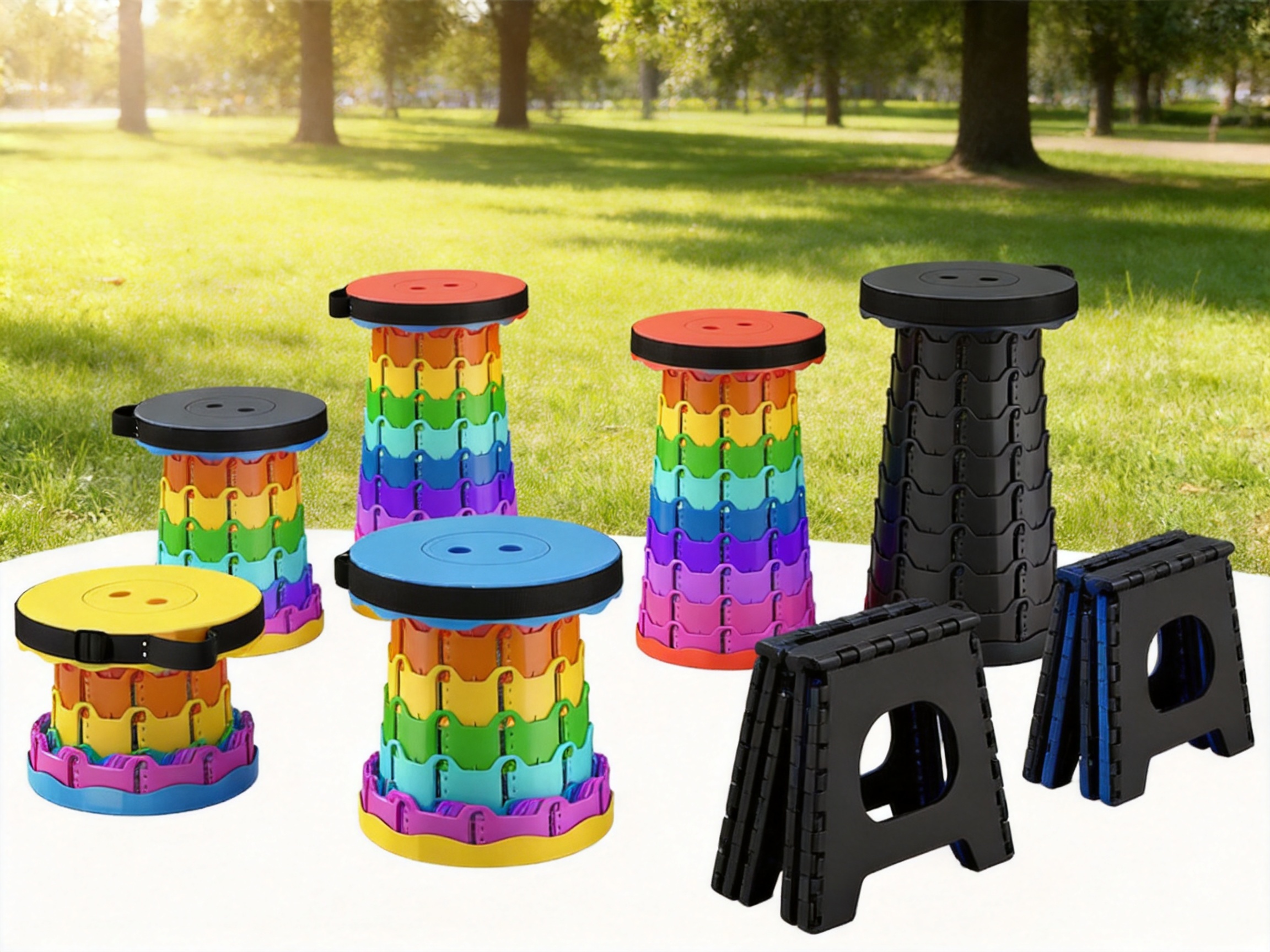
  • Portable Outdoor Extendable Folding Stool: A Practical Guide to Adjustable Seating for Hiking, Camping, and Travel

    Portable Outdoor Extendable Folding Stool: A Practical Guide to Adjustable Seating for Hiking, Camping, and Travel

    2026-08-21
    Introduction: Rethinking Portable Outdoor Seating Outdoor equipment is becoming lighter, more compact, and more adaptable to changing user needs. Hikers, campers, anglers, travelers, and visitors at outdoor events increasingly want products that provide practical support without adding unnecessary bulk to their equipment. Seating is a clear example of this change. Traditional outdoor chairs can be comfortable, but they may be too large for short hiking breaks, crowded campsites, public queues, or activities that require frequent movement. A portable extendable folding stool offers a different solution by combining compact storage, adjustable height, quick deployment, and convenient transportation in one product. The portable outdoor storage folding extendable stool is designed for users who need a personal seat that can be carried almost anywhere. Its folding structure allows it to be stored in a small space, while its extendable design allows the seating height to be adjusted according to personal preference and ground conditions. When folded, the stool is approximately the size of a water bottle, making it suitable for backpacks, vehicle compartments, equipment boxes, and other limited storage areas. This product is especially useful in outdoor situations where comfort and mobility must be balanced. A mountaineer may need a brief rest during a route. A camper may require a convenient seat near a tent or cooking area. An angler may remain in one location for several hours. A traveler may need a seat while waiting in a queue or at an outdoor event. In each case, the product provides a practical seating option without the storage requirements of a full-size chair. Beyond its compact appearance, the stool represents a broader approach to outdoor product development. Its value comes from the interaction of material selection, structural engineering, manufacturing consistency, usability, and scenario-based design. CragHaven Outdoor develops this type of product with attention to actual outdoor conditions, including uneven terrain, repeated folding, transportation, changing weather, and long-term use. Portable outdoor storage folding extendable stool, adjustable hiking stool What Makes an Extendable Folding Stool Different? A conventional fixed-height stool offers a simple sitting function, but it may not adapt well to different users or environments. A conventional camping chair often provides more back support, yet it usually requires more room during transportation and setup. The extendable folding stool occupies a useful position between these two categories. It is more compact than a full chair and more adjustable than a fixed stool. The product uses an innovative folding structure that allows users to unfold it and use it immediately. After use, it can be folded again for storage and transportation. This simple operating sequence is important in outdoor environments because users may be standing on uneven ground, carrying other equipment, or working under time pressure. Equipment that requires complicated assembly can become inconvenient, particularly during short breaks or frequent location changes. The extendable mechanism provides another important distinction. Rather than limiting the user to one fixed seating height, the stool allows the height to be adjusted to suit different conditions. A lower setting may be useful during a short rest or when the user wants to maintain a compact profile. A higher setting may be more convenient for waiting, fishing, or sitting beside a camping table. Adjustable positioning also helps users respond to uneven ground, although the stool should always be placed on a firm and stable surface before use. The product is made from thickened polypropylene, commonly known as PP. This material supports the product’s lightweight design while providing a practical level of strength for portable seating applications. Material selection is not based only on reducing weight. The material must also tolerate repeated folding, everyday transportation, contact with outdoor surfaces, and routine handling. The product’s structure and material work together to provide stable support while keeping the stool easy to carry. Another difference is storage efficiency. Bulky chairs can occupy valuable space in a backpack or vehicle, especially when users are already carrying tents, sleeping bags, cooking equipment, clothing, food, and safety supplies. A compact folding stool can be placed in a side pocket, equipment case, or small storage compartment. This helps users organize their gear more efficiently and may allow them to carry a seat in situations where a larger chair would be impractical. Core Product Advantages Compact Folding Structure The most visible advantage of the stool is its compact folding structure. When extended, it provides a stable sitting platform. When folded, it becomes much smaller and easier to store. This transformation allows one product to serve two very different needs: usable seating at the destination and minimal volume during transportation. For backpackers, volume can be as important as weight. A product that is light but difficult to pack may still create problems when combined with other equipment. The bottle-sized folded format helps users place the stool in spaces that would not accommodate a conventional chair. It can be carried inside a hiking pack, secured to the exterior of a bag, or stored in a car without occupying the space required by a large frame. Compact storage also improves household organization. Outdoor equipment is often used seasonally or intermittently, and products that are difficult to store may be left in garages, closets, or vehicle trunks. A folded stool can be placed with other small accessories, reducing clutter and making it easier to locate when needed. Adjustable Height for Different Environments Outdoor surfaces are rarely as predictable as indoor floors. Campsites may include compact soil, grass, gravel, or slightly uneven ground. Hiking routes may include rest areas with different elevations. Fishing locations may have banks, platforms, or other surfaces that require a different sitting position. Adjustable height provides users with greater flexibility than a fixed stool. The height adjustment feature can also accommodate different users. People vary in body height, leg length, sitting preferences, and activity requirements. One user may prefer a lower position for a short break, while another may prefer a higher position for longer periods of sitting. A flexible design is therefore more versatile for families, groups, retail customers, and outdoor rental operators. Adjustment is most valuable when it is straightforward. The user should be able to extend the stool, select a suitable height, and confirm that the structure is secure before sitting. The product’s practical appeal depends on this direct relationship between movement and function. It is not designed to be an elaborate piece of furniture; it is designed to provide a quick and adaptable rest point in outdoor environments. Lightweight Transportation Outdoor users often carry equipment over long distances. Every additional item must justify its space and weight. The stool’s lightweight PP construction and folding design address this concern by offering useful seating without the burden of a large metal or fabric chair. Lightweight equipment can improve the overall experience of hiking and travel. Users can move more easily between campsites, viewpoints, fishing locations, event areas, and transportation points. A compact stool may also be helpful for older users or people who prefer to reduce the physical demands of carrying outdoor gear. Lightweight does not mean that the product should be treated carelessly. Users should follow the product’s intended use instructions, place it on stable ground, avoid sudden lateral forces, and remain within the specified load capacity. Responsible use helps preserve the product and supports safe operation over time. Immediate Setup and Pack-Up Many outdoor situations require equipment that can be used without delay. A person waiting outdoors may not want to assemble a chair. A hiker stopping for a short rest may not want to unpack multiple components. A fisherman may need to move between locations and pack the seat repeatedly. The folding stool is designed around this need for immediate deployment. The unfold-and-use format reduces preparation time and makes the product suitable for short activities as well as extended outdoor stays. When the activity ends, the stool can be folded and returned to storage. This simple process is one of the reasons compact folding seating has become increasingly popular in modern outdoor recreation. Product FeatureUser BenefitTypical Application Folding structureReduces storage volume and simplifies transportationHiking, camping, travel, and outdoor events Extendable designAllows users to select a practical sitting heightUneven terrain, fishing, and waiting Thickened PP materialBalances lightweight handling with structural supportFrequent outdoor carrying and repeated use Quick deploymentReduces setup timeShort rest breaks and temporary seating Compact folded sizeUses less backpack and vehicle spaceBackpacking, road travel, and equipment storage Key features and practical applications of the portable extendable folding stool Advantages Compared with Conventional Outdoor Seating Compared with Fixed Stools A fixed stool may be simple and reliable, but its single height can limit comfort and adaptability. If the ground is uneven or the user has different seating preferences, the fixed design may not provide the desired position. A fixed stool can also take up more space because its legs or frame cannot be reduced significantly during transportation. The extendable folding stool offers greater flexibility in both use and storage. It can be adjusted during use and folded after use. This gives it an advantage in situations where portability and adaptability are more important than a permanently rigid structure. Compared with Full-Size Camping Chairs Full-size camping chairs often include backrests, armrests, wider seats, and larger supporting frames. These features may be useful for extended relaxation, but they also increase product size, weight, and setup requirements. A large chair may be suitable for a vehicle-based campsite but less convenient for a mountain trail, public queue, fishing trip, or crowded event. The extendable stool is intended for a different use pattern. It prioritizes mobility, low storage volume, and rapid deployment. It may not replace a full chair in every situation, but it can be more practical when users need a personal rest seat that can be carried over distance and stored in a small space. Compared with Disposable or Low-Durability Seating Temporary seating made from weak materials may be inexpensive, but it can create waste and provide inconsistent performance. Outdoor equipment is exposed to repeated handling, transportation, and contact with different surfaces. A reusable stool made from a durable material offers a more responsible and practical alternative to disposable seating for regular users. Durability should be evaluated together with design quality. Strong material alone cannot compensate for weak connections, poor alignment, or inconsistent manufacturing. The product’s folding elements, support structure, seat platform, and adjustment mechanism must work as an integrated system. Compared with Improvised Outdoor Seating Outdoor users sometimes sit on rocks, logs, backpacks, coolers, or equipment cases. These options may be available, but they are not always clean, stable, comfortable, or suitable for every environment. A dedicated portable stool provides a more predictable and organized seating solution. Using a purpose-designed product can also reduce the need to place personal equipment on damp or dirty ground. The stool can be deployed when the user arrives and folded away when the activity resumes, supporting better equipment management and personal comfort. Use in Hiking and Mountaineering Hiking often involves periods of movement followed by short or moderate rest intervals. A compact stool can be useful at trail junctions, viewpoints, shelters, transportation stops, and designated rest areas. Because it folds into a small package, users can carry it without giving up significant backpack space. During a hiking break, the stool provides a defined sitting surface rather than requiring the user to sit directly on the ground. This can be valuable in damp, cold, muddy, or rocky environments. It may also help users conserve energy during longer routes by providing a comfortable place to pause, organize equipment, drink water, or prepare a snack. Mountaineering and high-altitude activities require careful attention to weight, terrain, weather, and safety. The stool should be viewed as a convenience accessory rather than a substitute for essential safety equipment. It should be used only on a stable surface and should not be placed near unstable edges, steep slopes, loose rocks, or other hazards. When conditions are severe, users should prioritize route safety, shelter, weather protection, and communication equipment. The compact format can also be helpful for guides, outdoor instructors, photographers, and field workers who spend long periods at specific locations but still need to move equipment between sites. For professional users, repeated pack-up and deployment make structural reliability and manufacturing consistency especially important. Use in Camping and Basecamp Activities Camping involves many tasks that are easier when users have a convenient seat. Preparing food, sorting equipment, cleaning utensils, waiting for a cooking process, organizing clothing, and relaxing near a tent can all benefit from temporary seating. A stool can be placed near a camp kitchen, beside a storage box, or in an area where a large chair would be inconvenient. Its adjustable height is useful around different camping surfaces. Users may set the stool lower when sitting on open ground or choose a higher position near a portable table. Since campsite conditions vary, the ability to change the seating height can improve practical comfort without requiring multiple pieces of furniture. The stool is also suitable for minimalist camping. Some campers intentionally reduce the amount of equipment they carry and prefer products that perform more than one practical role. Although the stool is primarily designed for seating, its compact form and easy storage make it a useful part of a broader lightweight camping system. Campers should protect the stool from misuse. It should not be used as a ladder, stepping platform, table for heavy loads, or support for climbing into a vehicle or tent. It should also be kept away from open flames and excessive heat. Following these precautions helps preserve the PP structure and reduces the risk of accidents. Use in Fishing, Travel, and Outdoor Events Fishing often requires users to remain in one location for extended periods. A portable stool can provide a convenient seat at a fishing spot while remaining easy to move when conditions change. Its compact folded size is especially valuable when the user must carry rods, tackle boxes, bait, food, water, and weather protection. The adjustable design can be useful near different banks and platforms. However, fishing areas may include wet ground, mud, slippery surfaces, and unstable edges. The stool should be positioned carefully on a firm, level area, and users should check the surface before sitting. The product is not intended to provide support near water or to replace proper personal flotation equipment. For travel, a compact stool can be useful at outdoor attractions, transport stops, campsites, markets, and recreational areas. It can be stored in a vehicle or travel bag and taken out when seating is limited. Travelers may appreciate the fact that the stool does not require a separate carrying case or complicated assembly process. Outdoor events create another practical application. People may wait in lines, attend exhibitions, watch performances, participate in community activities, or work at temporary booths. A folding stool can provide personal seating while remaining compact enough for crowded environments. Event organizers, vendors, and service teams may also use it as a portable support item during setup and operation. Material Selection and Structural Reliability Material selection is one of the most important stages in the development of portable outdoor equipment. The chosen material must meet several competing requirements. It should be light enough for transportation, strong enough to support the intended user, resistant to ordinary wear, and suitable for efficient manufacturing. Thickened PP is used in this stool to support a balance between weight and load-bearing performance. Polypropylene is widely used in practical products because it can be formed into precise components, offers useful impact resistance, and is relatively easy to maintain. The material is also suitable for products that need repeated movement and convenient cleaning. The frame and support elements must distribute weight effectively. A well-designed support structure reduces concentrated stress and helps maintain stability when the user sits normally. Folding products require particular attention because moving parts can experience repeated mechanical loads. Hinges, connections, locking areas, and telescoping sections must be designed to operate consistently throughout regular use. Seat comfort also depends on the relationship between the seating surface and the supporting structure. A seat that is too narrow may feel unstable, while a seat that is too large may increase folded volume. Product development therefore requires a balance between usable seating area, compactness, weight, and structural performance. Component AreaPrimary Design ConsiderationQuality Objective Seat platformSupport, usable area, and user comfortStable seating under normal loading Folding connectionsRepeated opening and closingSmooth and consistent movement Extendable sectionsHeight control and alignmentSecure adjustment at selected positions Supporting baseContact with outdoor surfacesReliable balance on suitable ground Material finishHandling, cleaning, and outdoor exposurePractical long-term usability Structural areas considered during portable stool development Users should understand that no portable stool can eliminate every outdoor risk. Stability depends on the product, the user, the selected height, the ground surface, weather, and the way the stool is loaded. The best results come from using the stool as intended and checking the structure before every use. Manufacturing Process and Quality Approach Scenario-Based Product Development CragHaven Outdoor approaches product development from actual outdoor usage scenarios rather than from specifications alone. The company focuses on mountaineering, hiking, and camping environments, where equipment must respond to weather, terrain, transportation, and time. This approach begins with identifying a practical problem and then evaluating how design, material, and production can solve it. For a folding stool, scenario-based development includes examining how users carry the product, how quickly they need to deploy it, how they adjust the height, where they place it, and how often they fold it. These observations influence dimensions, surface treatment, component relationships, and packaging decisions. The goal is to ensure that the product performs as a complete solution rather than as a collection of isolated features. Outdoor equipment may look simple, but simple products often require careful development. The smaller the product, the more important each component becomes. A small change in the folding mechanism can affect storage size, user operation, stability, and manufacturing cost. CragHaven’s development process emphasizes sampling, testing, and optimization before a product is prepared for broader production. Material Evaluation Material evaluation considers more than appearance. PP components must be examined for consistency, forming quality, surface condition, and compatibility with the intended structure. Material selection is reviewed in relation to impact, repeated folding, temperature changes, handling, and storage. Different parts may require different specifications even when they are made from the same general material family. The seat surface may prioritize support and comfort, while connection areas may require precise dimensions and dependable fit. Manufacturing teams must control material processing so that finished components remain consistent from one production batch to another. A stable material supply is also important for global product programs. Retailers and distributors need confidence that samples, initial orders, and repeat orders will maintain comparable performance and appearance. Consistent procurement and production planning help reduce uncertainty for customers who depend on long-term supply. Sampling and Prototype Optimization Sampling is a key stage in the company’s product development process. Early samples help reveal practical issues that may not be obvious in drawings or digital models. Engineers and product teams can evaluate folding movement, adjustment behavior, dimensions, surface feel, storage volume, and overall handling. Prototype testing may lead to changes in the shape of a support component, the position of a connection, the tolerance of an extendable section, or the balance between material thickness and weight. This iterative process is valuable because outdoor users interact with products in ways that vary from indoor testing. A stool may be carried in a crowded backpack, opened on dusty ground, stored in a hot vehicle, or folded repeatedly during a single trip. Optimization continues until the product meets functional expectations and can be manufactured efficiently. This combination of usability and production awareness is important for OEM and private-label customers. A design that works only as a prototype may not provide reliable value at commercial volumes. Product development must therefore consider repeatability from the beginning. Manufacturing Precision and Process Control Reliable manufacturing depends on controlled processes. For a folding stool, process control may include material preparation, component forming, dimensional inspection, assembly, functional checks, surface inspection, and packaging review. Each stage contributes to the final product experience. Dimensional accuracy is particularly important for folding and telescoping parts. If components are too loose, the product may feel unstable. If they are too tight, adjustment may become difficult or inconsistent. Correct tolerances support smooth operation while preserving the intended structural relationship between parts. Assembly workers and quality personnel must also check the interaction between components. A product may pass a visual inspection yet fail to provide a satisfactory user experience if the folding movement is rough, a locking area is difficult to operate, or the seat does not align correctly. Functional inspection therefore complements appearance inspection. CragHaven integrates design and manufacturing capabilities to support closer communication between product development and production teams. This reduces the risk that design decisions will be disconnected from manufacturing realities. It also supports faster adjustments when a customer requests packaging changes, color options, structural refinements, or private-label requirements. Testing for Repeated Use Outdoor products should be assessed for the type of use they are expected to receive. A folding stool may be opened and closed many times, transported across different locations, exposed to dust, and placed on a variety of suitable surfaces. Repeated-use evaluation helps identify weaknesses before products reach customers. Testing can include folding-cycle checks, adjustment checks, visual inspections, load-related evaluations, surface reviews, and packaging assessments. The specific test method should correspond to the product design, target market, and customer requirements. Testing does not remove the need for responsible use, but it provides a stronger foundation for consistent product performance. Quality control is most effective when it is integrated into the entire development and manufacturing process. Final inspection alone cannot correct every issue. Quality should be considered during material selection, tooling, sampling, assembly, packaging, and shipment preparation. Why Manufacturing Capability Matters to Global Buyers Retailers and distributors selecting outdoor gear suppliers need more than attractive product images. They need dependable quality, clear communication, consistent delivery, and the ability to develop products for specific market requirements. A supplier’s manufacturing capability directly influences the reliability of the finished product and the stability of the customer’s supply chain. CragHaven Outdoor is based in Hangzhou, China, and works as both an outdoor brand and a cross-border manufacturing partner. Its product focus includes mountaineering, hiking, camping, and related outdoor scenarios. This combination allows the company to approach products from both a user perspective and a production perspective. For OEM customers, the ability to participate in design and manufacturing can be more valuable than simple factory sourcing. A supplier involved in the full product process can discuss functional requirements, materials, samples, packaging, and production feasibility in a coordinated manner. This can reduce communication gaps and help customers move from an early concept to a stable commercial product. Supply chain consistency is another consideration. Outdoor brands often need products to remain available across seasons and markets. Stable production planning, repeatable specifications, and documented quality procedures can help reduce unexpected variations between orders. These factors are especially important for retailers that build product lines around dependable outdoor accessories. Professional communication also supports international cooperation. Global buyers may require clear product information, accurate packaging details, market-specific documentation, private-label coordination, and practical responses to technical questions. A manufacturing partner that understands Western-market expectations can make the cooperation process more efficient. Private-Label and OEM Potential The extendable folding stool is suitable for outdoor retailers, camping brands, travel suppliers, fishing product distributors, promotional programs, and lifestyle companies seeking a compact seating product. Its simple, recognizable function makes it adaptable to different product ranges and customer groups. OEM and private-label projects may involve adjustments to product color, logo presentation, packaging design, instruction materials, carton configuration, or product combinations. Any modification should be evaluated against the structure and manufacturing process. For example, a change in surface treatment or packaging may affect cost, production timing, or inspection requirements. CragHaven’s participation in design and manufacturing supports a more integrated development process. Customers can discuss target users, expected sales channels, performance priorities, and packaging needs before confirming a production plan. The company’s stated emphasis on sampling, testing, and optimization helps ensure that commercial decisions are informed by actual product evaluation. For wholesale buyers, the product also offers opportunities for category expansion. It can be sold as a standalone accessory or grouped with hiking packs, camping equipment, fishing gear, travel items, or outdoor event supplies. Its small folded format can simplify warehouse storage and reduce the space required for retail display. Practical Selection Guide for Buyers Define the Primary Use Case Before purchasing or specifying an outdoor stool, buyers should identify the main user scenario. A hiking accessory may require the lowest practical weight and smallest folded size. A camping product may prioritize a more comfortable seat and a height suitable for tables. A fishing product may need packaging that communicates repeated outdoor use and easy transportation. Understanding the primary scenario helps determine which features deserve the greatest attention. A product designed for every possible use may become unnecessarily complicated. A focused product developed around real user needs is often easier to operate, manufacture, explain, and market. Review Folded Dimensions and Weight Folded dimensions affect how customers carry and store the product. Buyers should consider backpack pockets, vehicle compartments, warehouse shelving, shipping cartons, and retail displays. A product that performs well but cannot fit common storage spaces may be less attractive to the target market. Weight should be reviewed together with structural requirements. Excessive material reduction may affect durability, while excessive thickness may reduce portability. The best design achieves a practical balance for the intended users and application. Evaluate Adjustment and Stability The adjustment mechanism should be simple enough for ordinary users to understand. Customers should be able to extend the stool, choose the desired height, and recognize when it is properly positioned. The product should also provide a stable base when used on an appropriate surface. Buyers should request product samples and evaluate the adjustment process directly. Testing the product in different appropriate environments can reveal whether the height range, operating force, seat size, and folded format match the target market. Confirm Material and Quality Requirements Material information helps buyers evaluate expected product performance, but it should be considered together with manufacturing quality. Buyers may ask about the PP specification, component construction, inspection procedures, load-related testing, folding-cycle evaluation, and packaging protection. For private-label projects, it is useful to establish acceptance criteria before mass production. These criteria may include appearance, dimensions, color consistency, folding function, adjustment function, labeling, carton quality, and quantity accuracy. Clear requirements reduce misunderstandings between the buyer and supplier. Consider Packaging and Logistics The compact shape of the stool can provide advantages in shipping and storage, but packaging still requires careful planning. Packaging should protect the product from scratches, deformation, dust, and damage during transportation. Carton dimensions should be optimized for warehouse handling and shipping efficiency. Retail packaging should also explain the main benefits in a clear manner. Customers generally want to understand what the product is, how it folds, how it adjusts, where it can be used, and what precautions apply. Accurate information supports better purchasing decisions and reduces product returns caused by incorrect expectations. Responsible Use and Maintenance Before each use, users should inspect the stool for visible damage, cracks, loose parts, deformation, or abnormal movement. The folding and extendable sections should operate as intended. If the structure does not lock, align, or support the user normally, the stool should not be used until the issue has been addressed. The stool should be placed on a firm, stable, and reasonably level surface. Wet, loose, muddy, steep, or slippery ground may increase the risk of movement. Users should avoid placing only part of the base on a rock, edge, step, or unstable object. The product should be used only for seated support within its stated capacity. It should not be used as a ladder, climbing aid, jumping platform, vehicle support, or substitute for safety equipment. Sudden twisting, rocking, or side-loading may create forces that differ from normal sitting and may affect stability. Cleaning is generally straightforward. Users can remove ordinary dirt with a soft cloth, mild soap, and water, followed by thorough drying. Harsh solvents, abrasive tools, and excessive heat should be avoided unless specifically approved for the material. The stool should be stored dry and protected from prolonged high temperatures or direct exposure when not in use. Regular care can extend product life. Folding mechanisms should be kept free from excessive dirt, and users should avoid forcing parts that do not move normally. Proper maintenance is particularly important for products used frequently by guides, event staff, fishing operators, and commercial outdoor programs. Environmental and Long-Term Value A reusable folding stool can support more responsible consumption by replacing repeated purchases of low-quality temporary seating. Its compact design may also help reduce the storage and transportation burden associated with larger products. These benefits depend on durable construction, appropriate use, and a product life long enough to offset the resources used in manufacturing. Long-term value is not limited to environmental considerations. A product that remains useful across hiking, camping, fishing, travel, and events provides greater value than a product limited to one narrow situation. Multifunctionality can help users purchase fewer separate accessories and simplify their outdoor equipment systems. Manufacturing responsibility also matters. Consistent processes, careful material selection, reduced production waste, effective packaging, and reliable quality control can improve the overall efficiency of a product program. Buyers increasingly evaluate suppliers according to both product performance and the stability of the partnership behind the product. CragHaven Outdoor’s stated philosophy emphasizes durability, reliability, real-world use, and long-term cooperation. Its approach is based on the view that outdoor products should be developed for weather, terrain, and time rather than for catalog appearance alone. This principle is relevant to the stool because its success depends on repeated practical use rather than on visual novelty. Q&A What is a portable outdoor extendable folding stool? It is a compact outdoor seat with a folding structure and adjustable height. The stool can be unfolded for immediate use and folded again for transportation and storage. It is intended for activities such as hiking, camping, fishing, travel, queuing, and outdoor events. How small is the stool when folded? The product is designed to fold to approximately the size of a water bottle. The exact dimensions should be confirmed from the current product specification, but its compact format is intended to minimize backpack, vehicle, and storage-space requirements. What material is used for the stool? The product uses thickened PP material. This material supports a lightweight structure while providing practical load-bearing performance for normal seated use. The final performance also depends on the design of the support structure, connections, adjustment sections, and manufacturing quality. Can the stool be used on uneven terrain? The adjustable design helps the stool adapt to different height requirements and some variations in terrain. However, it must always be placed on a firm and stable surface. It should not be used on steep, loose, slippery, unstable, or dangerous ground. Is the stool suitable for long periods of fishing? Yes, it can provide convenient temporary seating for fishing and other activities that require users to remain in one location. Users should select a stable position away from unsafe edges and follow the product’s load and use instructions. Does the stool require assembly? The product is designed for quick deployment. Its folding structure allows users to unfold it and use it immediately rather than assembling multiple separate parts. Users should still confirm that the stool is fully extended and properly positioned before sitting. How does it compare with a full-size camping chair? A full-size camping chair may provide a backrest, armrests, and a larger sitting area, but it usually occupies more space and may be heavier. The extendable folding stool focuses on portability, compact storage, adjustable height, and fast setup. It is most suitable when mobility and space efficiency are priorities. Can the stool be used as a step or ladder? No. It is designed for seated support only and should not be used as a step, ladder, climbing aid, or elevated work platform. Such use can create forces and balance conditions that the product was not designed to withstand. What should buyers evaluate before placing an order? Buyers should review folded dimensions, product weight, adjustment range, material, structural stability, packaging, inspection standards, sample performance, target application, and supply capability. OEM customers should also confirm logo, color, packaging, labeling, and quality requirements before mass production. Why is supplier manufacturing capability important? Manufacturing capability affects consistency, repeat orders, quality control, delivery planning, and the ability to make practical product adjustments. A supplier involved in design, sampling, testing, and production can help reduce communication gaps and supply-chain uncertainty. How should the stool be cleaned? Ordinary dirt can generally be removed with a soft cloth, mild soap, and water. The stool should be dried before storage. Abrasive tools, harsh chemicals, and excessive heat should be avoided unless the product instructions specifically allow them. Who can benefit from this type of product? Hikers, campers, anglers, travelers, outdoor event visitors, field workers, guides, retailers, distributors, and private-label outdoor brands may benefit from the product. Its usefulness is greatest for people who need compact, adjustable, and quickly deployable seating. Conclusion The portable outdoor storage folding extendable stool responds to a clear need in modern outdoor recreation: comfortable temporary seating that does not create a significant transportation or storage burden. Its folding structure, adjustable height, thickened PP construction, and quick deployment make it suitable for hiking, camping, fishing, travel, queuing, and outdoor events. Compared with fixed stools, it offers greater adjustment and storage flexibility. Compared with full-size camping chairs, it provides a more compact and mobile alternative. Compared with improvised or disposable seating, it offers a dedicated reusable solution with a clearer performance purpose. Its value also depends on the manufacturing process behind the product. Material evaluation, prototype sampling, functional testing, dimensional control, assembly inspection, packaging management, and supply-chain coordination all contribute to consistent performance. CragHaven Outdoor combines product development with manufacturing participation to support outdoor equipment designed for actual environments rather than catalog presentation alone. For consumers, the stool provides a practical personal seat that can accompany a wide range of outdoor activities. For retailers and global buyers, it represents a versatile product category with strong portability, broad application potential, and opportunities for OEM or private-label development. When selected, manufactured, and used responsibly, an extendable folding stool can become a dependable part of a lightweight and organized outdoor equipment system. References 1. CragHaven Outdoor. Product information for the portable outdoor storage folding extendable stool, adjustable hiking stool. 2. CragHaven Outdoor. Company information and product development principles for mountaineering, hiking, and camping equipment. 3. General principles of outdoor equipment design, including portability, stability, adjustability, material selection, and repeated-use evaluation. 4. General polypropylene material considerations for lightweight consumer products and outdoor equipment components. 5. General guidance for safe use, inspection, storage, and maintenance of portable folding seating products. Product: Portable outdoor storage folding extendable stool, adjustable hiking stool .profile-card { display: flex; align-items: flex-start; gap: 2rem; background-color: white; padding: 2rem; border-radius: 12px; box-shadow: 0 2px 10px rgba(0,0,0,0.05); } .profile-avatar { width: 120px; height: 120px; border-radius: 50%; overflow: hidden; flex-shrink: 0; } .profile-avatar img { width: 100%; height: 100%; object-fit: cover; display: block; } .profile-info { flex-grow: 1; } .profile-name { font-size:27px; font-weight: 900; margin-bottom: 1rem; color: #1a1a1a; } .profile-bio { line-height: 1.6; color: #333; } @media (max-width: 600px) { .profile-card { flex-direction: column; align-items: center; text-align: center; gap: 1.5rem; } } Deng Yuli — International Sales Manager 10 years of B2B sales experience in outdoor equipment manufacturing, focusing on key account development, quotation negotiation, product proposal preparation, and long-term cooperation with overseas distributors and private-label brands.
    View Article
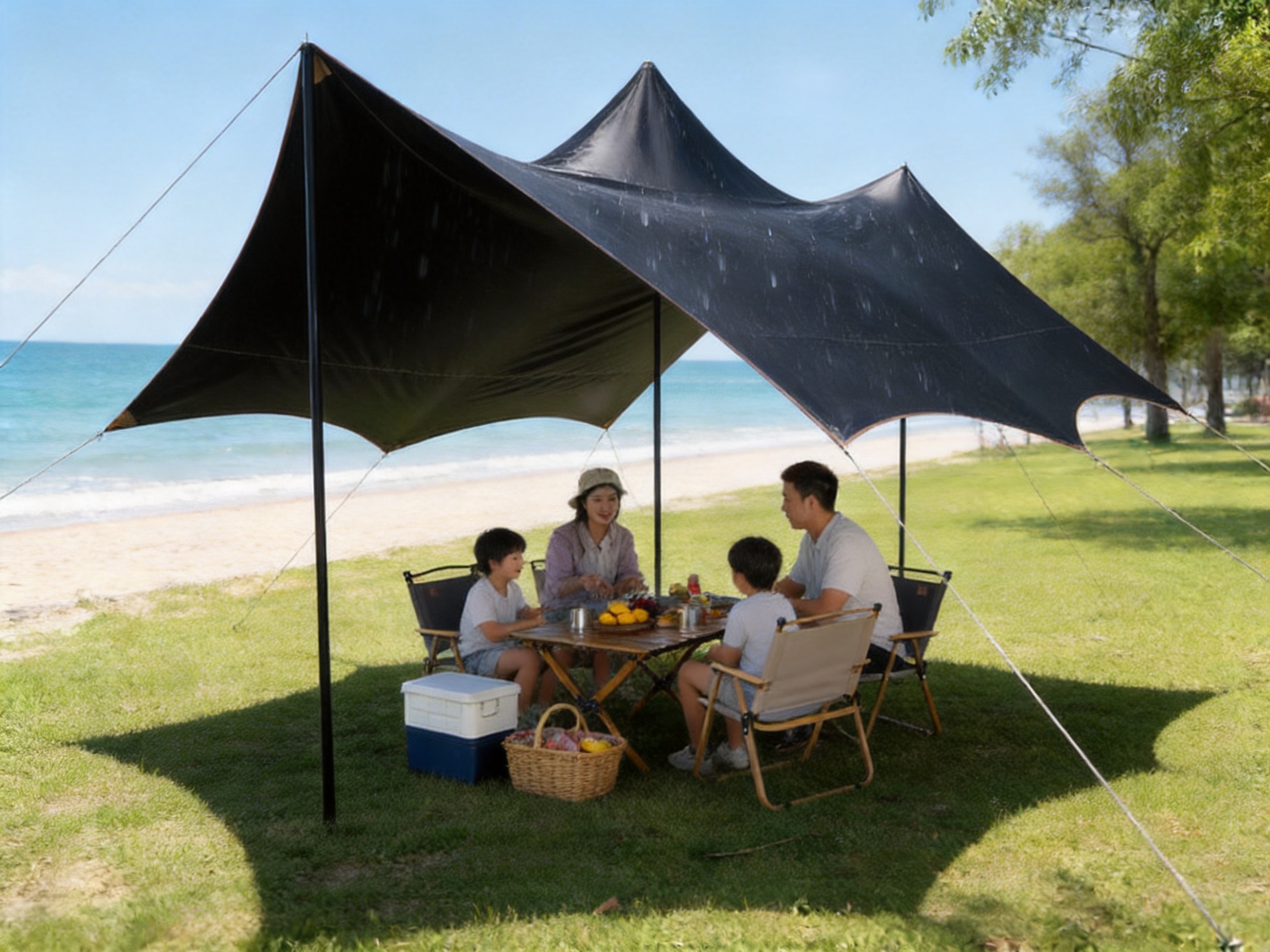
  • Outdoor Picnic Camping Canopy: Materials, Stability, Shade Performance, and Manufacturing Value

    Outdoor Picnic Camping Canopy: Materials, Stability, Shade Performance, and Manufacturing Value

    2026-08-19
    Outdoor shade equipment must do more than create a temporary roof. It must protect people from intense sunlight, cope with changing weather, withstand repeated assembly, and remain practical enough for family picnics, beach outings, campsites, and outdoor events. A well-designed canopy is therefore a complete system made up of fabric, coating, frame, joints, geometry, anchoring accessories, and manufacturing controls. This outdoor picnic camping black vinyl tent combines a sun-blocking black vinyl coating, 210D high-density Oxford cloth, a reinforced steel frame, and a butterfly-shaped roof profile. Together, these features create a shelter designed for users who need dependable shade and rain protection without moving into the weight and complexity of a full expedition tent. The product is especially suited to stationary or semi-stationary outdoor use. It can serve as a family picnic shelter, beach canopy, campsite gathering area, outdoor dining cover, relaxation space, or temporary event shelter. Its design prioritizes usable shade, structural stability, weather resistance, and repeatable setup rather than ultralight backpacking performance. Behind the product is CragHaven Outdoor, a Hangzhou-based outdoor brand and manufacturing partner focused on mountaineering, hiking, and camping equipment. Its approach combines outdoor-use analysis with material selection, sampling, testing, and production optimization. This is important because a canopy’s performance depends not only on its advertised fabric weight or frame material, but also on how those parts are engineered and assembled as one product. 1. The Product Concept: A Shelter Designed for Real Outdoor Use Many basic canopies are developed around a simple objective: create a roof at the lowest possible cost. That approach can produce a product that looks acceptable in a product photograph but performs poorly after repeated use. Thin fabric may transmit excessive sunlight, lightweight frames may flex in wind, and weak joints may become loose after multiple setup cycles. This product follows a more complete design concept. The black vinyl coating addresses solar exposure and water resistance. The 210D Oxford cloth provides a practical balance between durability and manageable weight. The taller, thicker steel structure improves headroom and supports the canopy surface. The butterfly-shaped geometry increases the effective shaded area while encouraging rainwater to run away from the roof rather than collect in a flat depression. These elements are mutually dependent. A strong fabric cannot compensate for a poorly designed frame. A heavy frame cannot guarantee stability if the anchoring arrangement is inadequate. A waterproof coating is less useful if seams and construction details are not properly controlled. The product’s value comes from treating the canopy as an integrated system rather than a collection of unrelated specifications. For buyers, retailers, and distributors, this integrated approach offers a more credible basis for product positioning. Instead of competing only on price, the canopy can be presented around practical benefits: stronger shade performance, improved fabric durability, a more comfortable interior height, a roof shape that supports runoff, and a frame system intended for repeated outdoor use. 2. Black Vinyl Coating and Solar Protection Sun protection is one of the most important functions of a canopy. Standard light-colored polyester fabric may reduce visible brightness, but visual shade and ultraviolet protection are not identical. A fabric can appear shaded while still allowing a meaningful amount of solar radiation to pass through its weave. The black vinyl coating used in this canopy is designed to block more sunlight than ordinary uncoated or lightly coated fabric. The coating forms a dense surface layer that absorbs and limits the transmission of ultraviolet radiation. This can help create a darker and more comfortable area beneath the canopy, particularly during strong midday sunlight. Black-coated fabric also provides a different performance profile from simple light-colored cloth. Light colors reflect a significant amount of visible light, which can make the surface appear bright and clean. However, reflection alone does not necessarily prevent ultraviolet transmission through the fabric structure. A dense vinyl coating helps address the transmission pathway by creating an additional barrier above the base cloth. For family picnics and beach relaxation, this distinction is meaningful. Users often remain under a canopy for several hours, and the difference between basic visual shade and stronger solar protection becomes more noticeable over time. A darker, more effective canopy interior may also improve comfort for children, older adults, and users who are sensitive to direct sunlight. The black surface has another practical advantage: it can reduce the amount of light entering from above and create a calmer interior environment. This is particularly useful when the canopy is used for outdoor meals, rest, conversation, or storage of personal belongings. The darker interior can provide a more defined separation from the surrounding bright environment. Vinyl Compared with PU-Coated Fabric Polyurethane-coated fabrics are widely used in tents and canopies because they can be relatively light and flexible. Their lower weight can be valuable for backpacking products, where every gram matters. However, prolonged exposure to direct sunlight can accelerate coating degradation, especially when the product is repeatedly pitched outdoors and stored without adequate drying or care. Vinyl coating is generally selected when stronger resistance to extended sun exposure, water, and repeated seasonal use is more important than minimum pack weight. It can maintain a dense protective layer across regular outdoor use and is well suited to shelters that remain set up for much of a day at a beach, park, campsite, or picnic area. The tradeoff is straightforward. Vinyl-coated material tends to be heavier and less compact than many PU-coated alternatives. That means this canopy is not intended to compete directly with ultralight trekking shelters. Its target use is different: practical outdoor shade with a stable footprint, generous coverage, and a material package designed for stationary or vehicle-supported recreation. Performance considerationBlack vinyl coatingBasic uncoated fabricTypical lightweight PU-coated fabric Sun-blocking potentialHigh, subject to construction and coating qualityLower and dependent on weave density and colorModerate to high, depending on coating thickness and color Long-duration outdoor positioningWell suited to extended daytime useMore limited under intense exposureUseful, but prolonged UV exposure may accelerate coating wear PackabilityHeavier and less flexibleUsually easy to foldGenerally lighter and more compact Primary market fitPicnics, beaches, parks, campsites, and family useBasic occasional shadeLightweight camping and travel applications The comparison does not mean that one coating is best for every situation. Backpackers may prefer a lighter material, while families using a vehicle to reach a campsite may prefer stronger shade and better resistance to repeated daytime exposure. The black vinyl configuration is optimized for the second group. Outdoor picnic camping black vinyl tent, rainproof and sunshade canopy, picnic butterfly curtain canopy 3. 210D Oxford Cloth: A Practical Durability Balance The base fabric uses 210D high-density Oxford cloth. The “210D” designation refers to denier, a measurement associated with the thickness and mass of the yarn. Denier should not be treated as a complete durability rating, because weave structure, coating, yarn quality, seam construction, and finishing all affect real-world performance. Nevertheless, it provides useful information about the intended balance between weight and strength. Fabric below approximately 150D may be more vulnerable to punctures, abrasion, and tearing when exposed to rough ground or repeated handling. Heavier fabrics above 300D can offer additional robustness, but the weight penalty may not be justified for a canopy that is not functioning as a tent floor or expedition shelter. For many canopy applications, 210D represents a practical middle position. Oxford cloth uses a basket-style weave that distributes stress across intersecting yarns. When a small puncture or cut occurs, this structure can help reduce the tendency of the damage to spread rapidly along one straight thread line. The result is a fabric better suited to repeated setup, folding, ground contact, and exposure to moderate wind forces than very light plain-weave material. High-density construction also helps create a more consistent base for the vinyl coating. A stable fabric surface allows the coating to be applied more evenly and can reduce irregular weak points across the canopy panel. Proper finishing further improves the material’s resistance to friction from sand, grass, branches, and campsite surfaces. Why Denier Alone Is Not Enough When comparing canopy products, buyers should avoid treating denier as a stand-alone measure of quality. Two fabrics may both be labeled 210D but perform differently because of variations in yarn strength, weave tightness, coating adhesion, surface finishing, and sewing precision. A manufacturer with stronger process control evaluates these factors together. Material inspection should verify the incoming fabric’s appearance, dimensions, coating consistency, and basic physical characteristics. During production, panels must be cut accurately so that stress is distributed as intended when the canopy is tensioned over the frame. Seam placement is also important. A seam located at a high-tension point must be reinforced appropriately, while attachment points for frame connectors, curtains, or guy lines need sufficient load distribution. A durable fabric can still fail prematurely if stitching is too short, thread tension is inconsistent, or reinforcement patches are undersized. The 210D Oxford selection therefore represents more than a number in a specification sheet. It is part of a broader construction strategy that balances durability, weight, flexibility, coating performance, and manufacturing repeatability. 4. Steel Frame Height, Thickness, and Structural Stability A canopy frame must support the roof while resisting bending, twisting, and movement caused by wind. The taller the structure, the more usable headroom it provides, but increased height also creates greater leverage at the base. A well-designed taller frame therefore requires appropriate tube thickness, joint construction, and anchoring. This product uses a taller, thicker steel frame to improve interior comfort and structural resistance. Taller headroom allows users to stand, move around, serve food, and arrange chairs with less restriction. It also makes the shelter more suitable for family gatherings and longer periods of use than a low, compact shade structure. Steel provides a useful combination of rigidity, load-bearing capacity, and cost efficiency. Compared with very thin aluminum structures, a properly sized steel frame can offer a more substantial feel and better resistance to everyday bending. Its weight is higher, but that additional mass can be acceptable for car camping, beach use, park events, and family picnics where the product does not need to be carried long distances. Frame tube thickness must be considered together with overall geometry. A tall frame with insufficient wall thickness may flex excessively during gusts. Conversely, a heavier tube can improve resistance to bending but may make setup and transportation less convenient. The product is positioned around the practical middle ground: stronger and more substantial than a minimal pop-up shade frame, but more portable than a permanent outdoor structure. Joints as Critical Load Areas In many canopy structures, the joints are more vulnerable than the straight sections of tubing. Each joint transfers force from one frame member to another, and repeated opening and closing can gradually expose weaknesses in pins, sleeves, welds, or connection points. For this reason, frame evaluation should include joint design rather than focusing only on tube diameter. Reinforced or securely formed joints distribute loads more effectively and can reduce localized deformation. Smooth movement during assembly is also valuable because it lowers the risk that users will force the frame into position and damage a connection. Manufacturing consistency is essential at this stage. Weld quality, joint alignment, surface finishing, and dimensional tolerance all affect whether the frame opens evenly and supports the canopy without unusual stress. A frame that is technically strong but poorly aligned may place excess tension on the fabric and shorten the service life of both components. Anchoring and Wind Management No portable canopy should be treated as windproof simply because it has a steel frame. Wind resistance is always influenced by wind speed, direction, ground conditions, canopy size, roof height, fabric tension, and anchoring quality. The frame and the anchoring system must work together. Stakes can be effective on firm soil, grass, or compacted ground when they are correctly positioned and fully inserted. Sandbags or other ballast may be more appropriate on beaches, paved areas, or locations where stakes cannot be used. Users should always follow safe setup practices and take down the canopy when severe weather approaches. The butterfly roof helps reduce some wind-catching behavior compared with a broad flat plane, but it does not eliminate wind load. Correct anchoring remains necessary. The product’s strength lies in the coordinated design of the steel structure, roof geometry, fabric tension, and anchoring approach—not in any single component acting alone. 5. Butterfly Geometry and Shade Coverage The butterfly-shaped canopy uses a peaked, dual-slope roofline. This shape creates a distinctive appearance, but its value is functional rather than merely decorative. The raised center and sloped surfaces help spread the fabric across a broader footprint and support more consistent shade coverage as the sun changes position. A flat canopy can provide strong shade when the sun is directly overhead, but its effective coverage may decrease as the sun moves toward the horizon. A wider butterfly profile can maintain useful shade across more changing angles, helping protect users throughout a long afternoon at a park, beach, or campsite. The center peak also improves rain runoff. Water is directed down the sloping roof sections instead of collecting in a large flat area. This reduces the risk of standing water becoming a heavy load on the fabric and frame. Good runoff performance is especially important because even a small amount of accumulated water can add considerable stress when a canopy remains pitched during a rain shower. Sloped surfaces may also deflect mild-to-moderate airflow more effectively than a flat roof that behaves like a sail. The geometry does not replace anchoring or make the shelter suitable for dangerous weather, but it can contribute to better everyday performance when the canopy is correctly assembled and secured. Interior Comfort and Practical Layout The roof profile creates a more usable interior for family activities. Chairs, picnic tables, coolers, storage boxes, and serving equipment can be arranged beneath the canopy without forcing everyone into a narrow central area. The increased height also improves visual openness and ventilation around the sides. The butterfly design can support curtain-style side coverage when additional protection is needed. The product description identifies a picnic butterfly curtain canopy configuration, making it suitable for situations where users want more privacy, reduced side glare, or additional shielding from light wind and low-angle sunlight. Side curtains can also help define a temporary outdoor living area. Families may use the space for dining, resting, changing clothes at the beach, organizing equipment, or creating a sheltered children’s area. The canopy therefore functions not only as a roof but as a flexible outdoor room. 6. Rain Protection and Weather-Use Considerations The product is designed as a rainproof and sunshade canopy, with the vinyl coating contributing to water resistance. A coated canopy surface helps rain run over the roof instead of soaking into the base fabric. The sloped butterfly roof further supports drainage by directing water toward the edges. Rain protection depends on the entire construction, however. Properly sealed or reinforced seams, correctly tensioned panels, and appropriate roof pitch all influence performance. If the fabric sags or the canopy is installed on uneven ground, water may collect even when the overall design is intended to promote runoff. Users should also avoid touching the underside of a heavily wet canopy or placing objects against the fabric in a way that creates pressure points. After use, the canopy should be dried fully before storage. Storing coated fabric while damp can encourage mildew, unpleasant odors, and premature material deterioration. The canopy is best understood as equipment for normal outdoor recreation and mild-to-moderate conditions. It is not a substitute for an engineered permanent shelter, and it should not be left unattended during storms, extreme wind, lightning, or other hazardous weather. Responsible use protects both the product and the people beneath it. 7. Manufacturing Strengths and Product Development Process Product performance begins before mass production. CragHaven Outdoor’s manufacturing approach is based on understanding how outdoor equipment is used in weather, terrain, and time. This perspective helps connect the product concept with the conditions it must face in real life. The company’s development principles emphasize practical problem solving instead of adding features only for catalog presentation. Each design element is expected to address a specific use condition: the vinyl coating addresses sunlight and water exposure, the Oxford cloth addresses repeated handling and wear, the steel frame addresses stability and headroom, and the butterfly geometry addresses shade distribution and runoff. Sampling, testing, and optimization are treated as standard stages rather than optional activities. A sample allows the manufacturer to examine more than appearance. It can reveal whether the frame opens smoothly, whether the fabric is correctly tensioned, whether the roof drains effectively, whether the curtains hang properly, and whether packaging protects the product during transport. Material Selection and Incoming Inspection A consistent manufacturing process begins with controlled material sourcing. Fabric rolls, vinyl coatings, steel tubing, connectors, thread, reinforcement patches, and accessories must meet defined requirements before entering production. Incoming inspection helps identify coating irregularities, dimensional variation, surface damage, or component defects at an early stage. For the fabric, inspection may include checking color consistency, coating coverage, width, visible defects, and the condition of the woven base. For steel components, the process may include dimensional checks, surface inspection, and verification that tubes and joints correspond to the approved design. These controls reduce the risk that inconsistent raw materials will become finished-product failures. Reliable material control is particularly important for OEM and private-label customers. Retailers need products that remain consistent across production batches. A canopy that changes noticeably in fabric feel, frame fit, or accessory quality from one shipment to another can create customer complaints and increase after-sales costs. Pattern Engineering and Cutting Accuracy Canopy panels must be cut according to patterns that account for seam allowances, tension, roof geometry, and connection points. Inaccurate cutting can produce wrinkles, uneven loading, or misaligned edges. Over time, these issues may cause unnecessary stress on seams or attachment areas. Pattern optimization also affects material efficiency. Better nesting of panels can reduce fabric waste while preserving the correct grain direction and construction strength. Efficient cutting supports more competitive production without requiring the manufacturer to reduce material quality. After cutting, panels should be organized and marked so that operators can assemble the correct parts in the correct sequence. This is especially important for a butterfly canopy, where roof sections, side curtains, reinforcement points, and frame attachment locations must align accurately. Sewing, Reinforcement, and Coated-Fabric Handling Coated fabric requires careful handling during sewing. Excessive needle damage, incorrect thread tension, or poor seam alignment can compromise the protective surface and create weak points. Operators must balance production efficiency with the need to preserve fabric integrity. High-stress areas should receive suitable reinforcement. These areas may include corners, guy-line attachment points, frame sleeves, curtain connections, and locations where the roof is pulled tightly over the structure. Reinforcement distributes force across a larger area rather than allowing one stitch line or small patch to carry the entire load. Seam quality also affects weather performance. Consistent stitch length, appropriate seam overlap, clean thread trimming, and proper inspection help reduce the chance of water entry or seam separation. The coating provides the primary surface barrier, but the sewn construction determines how that barrier performs at joins and transitions. Steel Frame Fabrication and Surface Protection Steel frame production includes tube cutting, forming, joint fabrication, surface treatment, and final assembly. Dimensional precision is important because even small differences between frame components can affect opening action, roof symmetry, and fabric tension. Welded or reinforced joints must be inspected for alignment and visible defects. A clean, consistent joint can distribute loads more effectively and help the frame move smoothly during setup. Surface treatment is also important because outdoor steel must resist corrosion caused by humidity, rain, sand, and storage conditions. Finished frame components should be checked for sharp edges or rough points that could damage the coated fabric or injure users. Protective caps, sleeves, and carefully finished connection areas improve the relationship between the frame and canopy material. Assembly, Functional Testing, and Packaging Final assembly provides an opportunity to verify that the product works as a complete system. The frame should open and close correctly, roof panels should align, curtains should attach as intended, and the finished canopy should stand evenly when placed on a suitable surface. Functional testing can include repeated setup and folding cycles, visual checks of roof tension, inspection of frame movement, and evaluation of accessory attachment. Where appropriate, manufacturers may also review water-shedding behavior and basic structural response under controlled conditions. These tests do not replace safe-use instructions, but they help identify production problems before shipment. Packaging is another part of manufacturing quality. Vinyl-coated fabric must be folded in a way that reduces unnecessary creasing and abrasion. Steel components should be protected from rubbing against panels or other metal parts. Correct packing also helps ensure that customers receive all necessary components and can identify them during setup. For global retailers, packaging consistency can be as important as product construction. Clear component organization, stable carton design, and accurate labeling support warehouse handling, reduce shipping damage, and improve the customer’s first experience with the product. 8. Competitive Advantages for Retailers and Distributors The product’s competitive position is based on a combination of material performance, usable design, and manufacturing support. It is not simply a larger version of a basic shade tent. Its black vinyl coating gives it a stronger sun-protection story, while the 210D Oxford base provides a credible durability story for repeated outdoor use. The taller, thicker steel frame helps differentiate the canopy from lightweight structures that may feel unstable or cramped. Customers who purchase a family shelter usually care about headroom, interior comfort, ease of arranging chairs, and confidence in ordinary wind conditions. These benefits are immediately understandable at the point of sale. The butterfly geometry creates another visible and functional distinction. A peaked roof gives the product a recognizable silhouette, while the practical benefits include broader shade coverage, improved rain runoff, and a potentially better response to mild airflow than a flat roof. This combination can help retailers build clearer product messaging than a generic “portable canopy” description. For distributors, the manufacturer’s OEM orientation is also valuable. CragHaven Outdoor participates in design and production rather than acting only as a sourcing intermediary. This can support more direct communication about materials, construction, sampling, packaging, and product adjustments. Long-term outdoor product programs benefit from stable cooperation. Retailers may require changes to colors, logos, packaging, curtain configurations, accessory bundles, carton markings, or target-market instructions. A manufacturer accustomed to sampling and optimization is better positioned to manage these changes systematically than a supplier focused only on immediate shipment. Value Versus Low-Cost Alternatives Low-cost canopies often compete through lighter materials and simplified structures. This can make them attractive for occasional use, but the lower initial price may be accompanied by reduced service life, weaker sun protection, less comfortable height, and greater sensitivity to wind or rough handling. The black vinyl canopy is positioned for buyers who want more than the minimum functional roof. Its value comes from its ability to serve several outdoor scenarios while retaining a relatively straightforward setup and transport format. For a family that uses a canopy repeatedly across a season, durability and shade performance may matter more than saving a small amount at the initial purchase. Compared with premium expedition shelters, this product has a different advantage: it focuses resources on shade area, family comfort, and robust stationary use rather than ultralight packability. That makes it an appealing option for vehicle-supported camping and outdoor leisure markets. 9. Recommended Use Scenarios At family picnics, the canopy can provide a central shaded area for meals, games, conversation, and rest. The darker roof helps reduce glare, while the taller structure creates enough space for tables and chairs. Side curtains can offer additional privacy or protection from low-angle sunlight. At the beach, the vinyl coating and broad butterfly profile are particularly relevant. Beaches often combine strong solar exposure with open wind conditions. Users should apply suitable sand anchoring or ballast, but the product’s shade-oriented construction makes it more appropriate for beach relaxation than a thin, lightly coated fabric shelter. At campgrounds, the canopy can function as a communal cooking, dining, or equipment area. It can extend the usable living space around a tent or recreational vehicle without requiring users to remain inside a sleeping shelter during the day. In parks and outdoor gathering areas, the canopy can create a comfortable meeting point for families and small groups. Its recognizable shape may also help users identify their location in a busy public space. For small outdoor events, markets, workshops, or promotional activities, the canopy can provide a temporary roof and defined area. Commercial users should evaluate local regulations, required fire or safety standards, anchoring conditions, and any event-specific requirements before deployment. 10. Setup, Care, and Service-Life Recommendations Before setup, users should select level ground free from sharp stones, branches, and other objects that could damage the fabric or interfere with the frame. The canopy should be unfolded carefully rather than dragged across abrasive surfaces. The frame should be extended gradually and evenly. Users should avoid forcing a joint or pulling a fabric panel sharply into place. If resistance occurs, the frame should be inspected for misalignment, trapped fabric, or an incorrectly positioned connector. All anchoring points should be used as intended. On grass or soil, stakes should be placed at appropriate angles and driven securely. On sand or hard surfaces, suitable ballast should be positioned so that it cannot shift easily. The canopy should not be left unattended in rising wind. After exposure to rain, the canopy should be opened or spread in a ventilated area until fully dry. Sand and dirt should be removed using gentle methods that do not damage the coating. Strong solvents, abrasive brushes, and aggressive cleaning chemicals should be avoided unless specifically approved for the material. Before storage, users should inspect the frame, fabric, seams, connectors, and anchoring accessories. Small problems are easier to address before the next trip. The fabric should be folded without trapping moisture, and heavy objects should not be placed on top of the packed canopy. These care practices are not merely maintenance suggestions. They protect the investment made in the vinyl coating, Oxford cloth, steel frame, and sewing construction. Responsible handling can significantly improve the product’s useful life and preserve its appearance. 11. Quality and Supply-Chain Considerations Outdoor gear buyers increasingly evaluate suppliers according to more than price and production capacity. They also consider communication, repeatability, testing discipline, delivery reliability, customization capability, and the supplier’s understanding of the final use environment. CragHaven Outdoor presents itself as a manufacturing partner that aims to reduce uncertainty in the supply chain. Its focus on design participation, repeated sampling, and practical product testing supports a more controlled development process. For global retailers, this can simplify communication between product concept, factory sample, and finished production. A strong supplier relationship should include clear approval procedures. The buyer and manufacturer should confirm fabric specifications, color standards, frame dimensions, logo placement, packaging requirements, included accessories, labeling, and inspection criteria before bulk production begins. Production documentation can further improve consistency. Approved samples, bill-of-material records, construction drawings, inspection checklists, and packaging specifications give both parties a shared reference. If a change becomes necessary, it can be reviewed against the approved baseline instead of being handled informally. The company’s location in Hangzhou provides access to China’s mature manufacturing ecosystem and established supply networks. More importantly, manufacturing resources are valuable when combined with disciplined development and quality management. Efficient production should not mean skipping sampling or reducing inspection. It should mean converting a tested design into stable, repeatable, and scalable output. 12. Questions and Answers What is the primary purpose of this outdoor canopy? It is designed to provide shade and rain protection for outdoor leisure activities such as family picnics, beach relaxation, camping, park visits, and small gatherings. Its taller frame and broad butterfly profile make it especially suitable for users who need a comfortable covered area rather than a minimal emergency shelter. Is it suitable for backpacking? The black vinyl coating and steel frame provide useful durability and stability, but they also make the product heavier than an ultralight PU-coated backpacking shelter. It is better suited to car camping, beach trips, parks, family outings, and stationary outdoor use where transport is supported by a vehicle. Why is black vinyl used instead of ordinary polyester? The black vinyl coating creates a denser barrier against sunlight and ultraviolet transmission than many basic uncoated fabrics. It is selected for stronger daytime shade and better suitability for repeated exposure to direct sun. The tradeoff is increased weight and reduced packability. What does 210D Oxford cloth contribute? It provides a balance between durability and weight. Its basket-style weave distributes stress across multiple yarns and can help resist small punctures and tears spreading. Actual performance also depends on coating quality, fabric density, reinforcement, stitching, and correct use. Does the steel frame make the canopy completely windproof? No portable canopy should be described as completely windproof. The thicker steel frame and butterfly roof can improve stability in appropriate conditions, but correct anchoring is still essential. The canopy should be taken down when strong winds, storms, lightning, or dangerous weather are expected. What is the advantage of the butterfly roof? The butterfly profile creates a peaked, dual-slope roof that can provide broad shade coverage, improve rain runoff, reduce water pooling, and deflect some airflow more effectively than a flat roof. It also gives the canopy a distinctive appearance and supports a more spacious interior layout. Can the canopy be used at the beach? Yes, beach use is one of its appropriate applications. Users should take special care with anchoring because sand and open coastal areas can create challenging wind conditions. Suitable sand stakes, sandbags, or other ballast should be selected according to local conditions. How should the canopy be stored? It should be cleaned gently, dried completely, folded carefully, and stored in a dry, ventilated place. Damp storage can cause mildew and odors, while abrasive folding or rough dragging can damage the vinyl coating and fabric surface. What makes the manufacturing process suitable for OEM projects? The development approach includes practical design analysis, material selection, sampling, testing, optimization, and production coordination. This gives OEM customers a structured foundation for discussing custom colors, branding, packaging, accessory configurations, and market-specific requirements. What should retailers emphasize when selling this product? Retailers can focus on the combination of strong daytime shade, 210D Oxford durability, a taller steel frame, butterfly-shaped coverage, rain runoff, family comfort, and suitability for beaches, parks, picnics, and vehicle-supported camping. It should be positioned as a robust recreational canopy rather than an ultralight trekking tent. 13. Final Evaluation This outdoor picnic camping black vinyl tent is designed around a clear use case: comfortable, repeatable outdoor shelter for people who value shade, durability, and space. The black vinyl coating addresses solar exposure more directly than basic fabric canopies. The 210D Oxford cloth provides a sensible durability-to-weight balance. The taller, thicker steel frame supports headroom and everyday structural confidence, while the butterfly geometry improves shade distribution and rain runoff. Its advantages become most apparent when the product is compared with low-cost canopies that rely on thin fabric, small frames, flat roofs, or minimal reinforcement. It also occupies a useful position between lightweight travel shelters and heavy permanent structures. The product is substantial enough for family and group use while remaining portable for vehicle-supported recreation. Manufacturing quality strengthens the product proposition. Material inspection, accurate pattern cutting, coated-fabric handling, reinforcement, frame fabrication, joint control, functional testing, and packaging all contribute to consistent performance. CragHaven Outdoor’s emphasis on real-world scenarios, repeated sampling, and long-term supply-chain cooperation provides a practical foundation for global retail and OEM customers. For buyers seeking an outdoor canopy that combines strong sun protection, practical weather resistance, comfortable height, and a distinctive roof design, this product offers a balanced and commercially relevant solution. Its best performance will come from correct setup, proper anchoring, responsible weather judgment, and regular care—principles that apply to all portable outdoor shelters, regardless of material or brand. References 1. ASTM International. Standard Guide for Characterizing Outdoor Fabrics and Coated Textile Materials. 2. International Organization for Standardization. Textile Testing Principles for Fabric Strength, Tear Resistance, and Coating Performance. 3. American Society of Civil Engineers. General Principles of Wind Load, Temporary Structures, and Outdoor Shelter Stability. 4. Textile Institute. Fundamentals of Denier, Woven Fabric Construction, and Oxford Weave Performance. 5. Outdoor Industry Association. Consumer Use and Care Considerations for Recreational Camping Equipment. 6. International Organization for Standardization. Quality Management Systems and Production Consistency Guidelines. 7. Technical literature on ultraviolet radiation, coated textiles, solar transmission, and outdoor material aging. Product: Outdoor picnic camping black vinyl tent, rainproof and sunshade canopy, picnic butterfly curtain canopy .profile-card { display: flex; align-items: flex-start; gap: 2rem; background-color: white; padding: 2rem; border-radius: 12px; box-shadow: 0 2px 10px rgba(0,0,0,0.05); } .profile-avatar { width: 120px; height: 120px; border-radius: 50%; overflow: hidden; flex-shrink: 0; } .profile-avatar img { width: 100%; height: 100%; object-fit: cover; display: block; } .profile-info { flex-grow: 1; } .profile-name { font-size:27px; font-weight: 900; margin-bottom: 1rem; color: #1a1a1a; } .profile-bio { line-height: 1.6; color: #333; } @media (max-width: 600px) { .profile-card { flex-direction: column; align-items: center; text-align: center; gap: 1.5rem; } } Deng Yuli — International Sales Manager 10 years of B2B sales experience in outdoor equipment manufacturing, focusing on key account development, quotation negotiation, product proposal preparation, and long-term cooperation with overseas distributors and private-label brands.
    View Article
  • How to Choose a Lightweight Folding Camping Chair for Coastal Adventures, Hiking, and Everyday Outdoor Use

    How to Choose a Lightweight Folding Camping Chair for Coastal Adventures, Hiking, and Everyday Outdoor Use

    2026-08-17
    A portable chair is one of the most useful pieces of equipment in a modern camping system. It provides a stable place to rest beside a tent, relax after a long hike, prepare food at a basecamp, or enjoy a quiet evening outdoors. However, not every folding chair delivers the same balance of comfort, portability, durability, and practical convenience. A chair that performs well in a dry forest may not be the best choice for a beach campsite. A chair designed for occasional backyard use may not withstand repeated folding, transportation, and exposure to changing weather conditions. The outdoor folding chair discussed in this article is designed as a multifunctional seating solution for camping, hiking, mountaineering support areas, fishing, travel, outdoor events, and recreational use. It combines a lightweight aluminum alloy frame with an Oxford cloth seat, a breathable mesh back panel, side storage pockets, integrated cup holders, and a quick-folding structure. These features are intended to solve the most common problems faced by outdoor users: excessive weight, poor ventilation, limited storage, difficult transport, and inefficient use of space. For retailers, distributors, and outdoor brands, the product also provides a practical platform for private-label development. Its construction can be adapted for different markets, including ultralight trekking, family camping, coastal recreation, institutional use, and general outdoor leisure. Careful material selection, controlled production, repeatable assembly, and usage-oriented testing are essential to ensuring that a portable chair performs consistently beyond the showroom. 1. Why the Right Camping Chair Matters Outdoor seating is often treated as a secondary accessory, but it has a direct effect on user comfort and the overall quality of an outdoor experience. A poorly designed chair can be unstable, difficult to carry, uncomfortable during extended sitting, or vulnerable to premature wear. These weaknesses become especially noticeable when the chair is used on uneven ground, transported over long distances, or exposed to moisture, dust, sand, and salt spray. A well-designed folding chair must perform several functions at the same time. It should support the user securely without unnecessary structural weight. It should fold into a compact form that fits inside a vehicle, storage box, tent vestibule, or equipment bag. It should provide enough back support for extended sitting while allowing heat and moisture to escape. It should also include practical storage features so that small personal items remain within reach rather than being placed on the ground. The product’s design addresses these requirements through a combination of structural and comfort features. The aluminum alloy frame reduces carrying weight compared with conventional steel frames. Oxford cloth provides a durable seating surface that can tolerate regular outdoor use. The mesh back panel improves airflow, while side pockets and cup holders create accessible storage for bottles, phones, tools, snacks, and other small items. These details may appear simple, but they are important differentiators in a competitive outdoor furniture market. Many low-cost chairs focus primarily on the lowest possible production price. More advanced products focus on the complete user experience, including the moments before sitting down, while carrying the chair, during extended use, and when packing the product away. 2. Product Overview and Core Advantages The portable multifunctional camping chair uses a folding frame architecture designed for quick deployment and compact storage. Users can open the chair when they arrive at a campsite and fold it again when moving to another location. This makes it suitable for consumers who value mobility and for professional users who need to transport multiple units efficiently. The principal product advantages include: Lightweight aluminum alloy construction for easier carrying. Oxford cloth seating for durability and dependable daily use. A breathable mesh back panel that reduces heat accumulation. Side pockets for personal accessories and outdoor essentials. Integrated cup holders for convenient beverage storage. Quick folding that minimizes transport and warehouse volume. A versatile design suitable for camping, hiking, fishing, events, and travel. Adaptability for OEM and ODM product programs. Compared with basic folding stools, the chair provides more complete back support and improved sitting comfort. Compared with heavier steel camping chairs, it offers lower transport weight and improved portability. Compared with minimalist ultralight seats, it offers more practical features, including side storage and a cup holder. This combination gives the product a broad market position between simple low-cost seating and highly specialized expedition furniture. The design is also suitable for multiple sales channels. Outdoor specialty stores can position it as a dependable camping accessory. General retailers can present it as a family recreation product. E-commerce sellers can emphasize its portability, storage functionality, and compact folded profile. Rental operators, event organizers, and institutional buyers may also benefit from its repeatable construction and easy handling. 3. Frame Material and Structural Efficiency The frame is the foundation of a folding chair. It determines the product’s load-bearing behavior, folding action, stability, weight, and resistance to long-term fatigue. Selecting a material only by its nominal strength is not enough. The material must also be evaluated according to density, corrosion resistance, forming characteristics, joint design, wall thickness, and actual use conditions. Three common frame choices for portable outdoor chairs are 7075 aluminum, 6061 aluminum, and high-tensile steel. Each material has a different engineering profile. 7075 aluminum offers high strength at low weight. 6061 aluminum provides a balanced combination of strength, corrosion resistance, formability, and cost. High-tensile steel offers excellent toughness and impact resistance but carries a substantial weight penalty and requires more extensive corrosion protection. 3.1 7075 Aluminum 7075 aluminum is a zinc-magnesium-copper alloy commonly associated with high-performance aerospace and sporting applications. In T6 temper, it can provide a typical yield strength of approximately 503 MPa and an ultimate tensile strength of about 572 MPa, with a density near 2.81 g/cm³. Its strength-to-weight ratio makes it attractive for premium ultralight products. A properly engineered 7075 frame can achieve high load-bearing performance while maintaining a low overall product weight. This is valuable for backpackers, mountaineers, and users who carry equipment over long distances. However, high strength does not automatically mean superior outdoor performance in every environment. 7075 aluminum is less corrosion-resistant than 6061 aluminum, particularly when exposed to chloride-rich marine conditions. Surface damage, stress concentration, and repeated loading can increase the possibility of pitting or stress-corrosion cracking. For this reason, a 7075 chair intended for coastal or beach use requires careful finishing, inspection, drainage, and maintenance. 7075 is best suited to applications where low weight is the primary purchasing factor and where users are willing to follow appropriate care instructions. It is an excellent option for premium backcountry chairs, moderate-humidity environments, and products where high strength is required without increasing frame dimensions. 3.2 6061 Aluminum 6061 aluminum is a magnesium-silicon alloy widely used in consumer products, outdoor equipment, transportation components, and fabricated structures. In T6 temper, its typical yield strength is approximately 276 MPa, its ultimate tensile strength is about 310 MPa, and its density is close to 2.70 g/cm³. Although its nominal strength is lower than that of 7075, 6061 aluminum offers an excellent balance for general-purpose outdoor chairs. It has strong corrosion resistance, good weldability, reliable formability, and relatively stable availability. These characteristics make it easier to use in frames that require bends, joints, brackets, and repeatable production processes. 6061 aluminum is particularly appropriate for coastal camping, fishing, family recreation, and all-purpose outdoor seating. It can be anodized or powder-coated to provide additional protection and a consistent visual finish. In a product intended for broad retail distribution, this balance of performance and manufacturability can be more valuable than the maximum possible tensile strength. The chair described here uses an aviation-grade aluminum alloy frame concept to support low weight and dependable structural performance. For different product programs, the frame specification may be adjusted according to the intended market. A retailer focused on general camping may prefer 6061 aluminum, while an expedition-oriented brand may request a lighter premium alloy configuration. 3.3 High-Tensile Steel High-tensile steel remains popular in outdoor furniture because it offers excellent impact toughness and a comparatively low raw material cost. Depending on the grade and heat treatment, yield strength may range from approximately 350 to 700 MPa, while ultimate tensile strength can exceed 800 MPa in some applications. Steel also tolerates accidental impacts that may permanently bend a lightweight aluminum tube. The main disadvantage is density. At approximately 7.85 g/cm³, steel is nearly three times as heavy as aluminum. A steel chair therefore requires more carrying effort and occupies a larger weight allowance in a camping or travel system. In marine environments, bare steel can also develop red rust quickly. Protective systems such as phosphate pretreatment, zinc-rich primer, epoxy coating, and polyester powder coating are necessary for improved durability. Steel may be appropriate for heavy-duty basecamp furniture, institutional seating, rental operations, or budget products where impact resistance and low initial cost are more important than portability. Nevertheless, the aluminum construction of the featured chair gives it a clear advantage for users who regularly move equipment between vehicles, campsites, trails, and storage areas. 4. Strength-to-Weight Ratio and Portability For portable furniture, structural efficiency is often more meaningful than absolute material strength. Specific strength can be estimated by dividing yield strength by density. Using representative values, 7075 aluminum provides approximately 179 kN·m/kg, 6061 aluminum approximately 102 kN·m/kg, and high-tensile steel approximately 57 kN·m/kg. These figures explain why aluminum is so widely used in portable outdoor equipment. The objective is not simply to make a frame strong. The objective is to make a frame strong enough for its intended load while keeping the product light enough to carry, fold, transport, and store easily. Representative comparison of common portable chair frame materials Property 7075 Aluminum 6061 Aluminum High-Tensile Steel Typical yield strength Approximately 503 MPa Approximately 276 MPa Approximately 350–700 MPa Density Approximately 2.81 g/cm³ Approximately 2.70 g/cm³ Approximately 7.85 g/cm³ Specific strength Approximately 179 kN·m/kg Approximately 102 kN·m/kg Approximately 57 kN·m/kg Typical frame weight for a 120 kg-capacity design Approximately 1.1–1.3 kg Approximately 1.5–1.8 kg Approximately 2.8–3.5 kg Corrosion resistance Moderate; requires careful protection in marine conditions Very good; suitable for coastal applications Low without a complete protective coating system Manufacturing characteristics High strength but more demanding forming and inspection Good formability, weldability, and production flexibility High toughness and impact resistance but heavier Best application Premium ultralight and high-load products General outdoor and marine-oriented chairs Heavy-duty or cost-focused basecamp seating Actual chair weight depends on more than alloy selection. Tube diameter, wall thickness, joint construction, fabric density, fastener type, hardware, reinforcement points, and finishing systems all contribute to the final result. A lighter frame is not automatically better if it compromises stability or fatigue life. Engineering must therefore consider the complete chair rather than one isolated material specification. The featured chair is designed to provide a useful balance between low weight and practical comfort. It avoids the excessive mass of many steel products while offering more support and functionality than a basic three-legged stool. This makes it especially suitable for retailers seeking a broadly appealing product rather than a chair limited to a narrow specialist audience. 5. Comfort Features for Extended Sitting Portability is important, but a chair must also be comfortable once it is deployed. Outdoor users may sit for an hour or more while cooking, talking, fishing, watching children, reading, or resting after physical activity. The seat and back system must therefore distribute body pressure and manage heat effectively. The Oxford cloth seat provides a durable textile platform that can be tensioned across the frame. Its woven construction is commonly selected for outdoor products because it offers a practical balance of strength, abrasion resistance, flexibility, and cleanability. Compared with thin decorative fabric, Oxford cloth is better suited to repeated loading and the rough handling associated with camping equipment. The breathable mesh back panel is another important comfort feature. Solid fabric backs can retain heat, particularly in warm climates or when the chair is exposed to direct sunlight. Mesh allows air to circulate behind the user, reducing stuffiness during extended sitting. It also helps moisture evaporate more quickly after use in humid conditions. Comfort is affected by the relationship between seat depth, back height, fabric tension, frame angle, and arm positioning. These dimensions should be evaluated through physical prototypes rather than relying only on computer drawings. A chair may appear efficient in a specification sheet but feel uncomfortable if the seat edge presses against the legs or if the back angle does not support a relaxed posture. For OEM and ODM projects, comfort can be further customized through fabric tension, seat dimensions, color combinations, branding elements, and accessory placement. A retailer selling to family campers may request a wider seat and softer textile feel, while a hiking-oriented brand may prioritize lower weight and a more compact folded package. 6. Side Pockets and Cup Holders as Functional Differentiators Small storage features can significantly improve the perceived value of an outdoor chair. Without integrated storage, users often place phones, sunglasses, snacks, maps, flashlights, or water bottles on the ground. These items can become dirty, wet, misplaced, or difficult to reach. The side pockets provide a dedicated location for personal accessories. Their position allows users to access common items without standing up or placing them on the seat. The pocket structure can be developed in different sizes and configurations according to the target market. For example, a fishing-oriented version may need space for small tools, while a family camping version may benefit from larger compartments for toys, drinks, and personal belongings. The integrated cup holders are useful for bottles, cans, travel mugs, and other beverage containers. Keeping a drink off the ground reduces the risk of tipping and makes the chair more convenient around a campfire, picnic table, or outdoor event area. For commercial buyers, these features provide visible product differentiation that can be communicated easily in packaging and online product listings. These storage components must be securely attached to the frame or seat structure. Stitching quality, reinforcement patches, edge binding, and load distribution affect their long-term performance. A pocket that is attractive but poorly reinforced can tear when users place heavier objects inside. Manufacturing inspection must therefore include both appearance checks and attachment-strength evaluation. 7. Folding Mechanism and Space Efficiency Quick folding is central to the product’s value. A chair that is difficult to fold may discourage regular use, while a chair that folds smoothly encourages users to bring it on more trips. The folding system should be intuitive, stable when open, and resistant to accidental collapse during normal sitting. Compact folding also benefits transportation and storage. Consumers can place the chair in a vehicle trunk, camping equipment box, closet, garage, or tent storage area. Retailers benefit from reduced carton volume, more efficient warehouse utilization, and improved shipping economics. When multiple chairs are purchased for events or commercial facilities, the space savings become even more significant. The folding mechanism should be designed with attention to pinch-point control. Hinges, pivot connections, and moving tubes need adequate clearance so that users can open and close the chair safely. Fasteners must remain secure after repeated cycles, and joint surfaces should be designed to reduce excessive wear. Repeated folding is a more realistic durability challenge than a single static load test. A chair may support a user successfully during its first use but develop looseness, fabric distortion, or joint play after hundreds of folding cycles. Production validation should therefore include repeated opening and closing, static loading, uneven-surface testing, and inspection of pivot hardware. Outdoor folding chair, portable multi-functional camping chair 8. Marine and Coastal Performance Coastal camping creates a demanding environment for portable outdoor furniture. Salt spray, humidity, sand, ultraviolet radiation, and repeated wet-dry cycles can affect metal frames, textile components, coatings, fasteners, and joints. The correct material and finishing system depend on how frequently the chair will be exposed to these conditions. 6061 aluminum is generally the most balanced choice for frequent coastal use. It has strong natural corrosion resistance and typically shows limited deterioration in salt-spray testing when compared with unprotected steel or 7075 aluminum. Anodizing, sealing, or powder coating can provide additional protection and create a consistent appearance. 7075 aluminum can also be used in coastal products, but it requires more careful engineering. Its high strength is attractive for lightweight applications, yet chloride exposure and surface damage can increase pitting and stress-corrosion concerns. Type III hard anodizing, additional protective coatings, careful joint design, and regular cleaning can reduce the risk, but they do not eliminate the need for maintenance. Steel is the most vulnerable material when protective coatings are damaged. A scratch, edge chip, or pinhole can expose the underlying metal and allow corrosion to develop beneath the coating. This under-film corrosion can spread without being immediately visible. Steel chairs used near the sea should be rinsed, dried, inspected, and repaired promptly after coating damage. Material selection alone does not determine marine performance. Tube ends, hinges, fasteners, and overlapping joints can collect saltwater and create crevice-corrosion locations. Sealed tube ends, drainage paths, corrosion-resistant hardware, suitable gaskets, and controlled coating coverage can all improve service life. 8.1 Recommended Care for Coastal Users After use near the sea, the chair should be rinsed with fresh water to remove salt deposits. Users should allow it to dry completely before folding it into a storage bag. Sand should be removed from hinges and moving connections because abrasive particles can increase wear and interfere with smooth folding. Periodic inspection should focus on coating damage, loose fasteners, fabric stitching, hinge movement, and areas where water may collect. If an aluminum frame is scratched, the damaged area should be cleaned and treated according to the recommended maintenance procedure. For coated steel, exposed metal should receive prompt touch-up protection. Clear care instructions help reduce warranty claims and improve customer satisfaction. They also allow retailers to present the chair as a durable product that performs well when used and maintained appropriately, rather than making unrealistic claims of complete immunity to environmental damage. 9. Manufacturing Process and Quality Control A reliable camping chair is the result of a controlled manufacturing system rather than a single material choice. The production process must connect product design, material purchasing, tube processing, textile preparation, assembly, finishing, inspection, and packaging. Each stage influences the performance of the finished product. 9.1 Product Engineering and Sampling Product development begins with the intended usage scenario. Designers consider the terrain, climate, expected user weight, transport method, storage requirements, and frequency of use. A chair for occasional family camping may have different priorities from a chair intended for mountaineering support areas or coastal fishing. Initial samples are used to evaluate dimensions, sitting posture, opening and folding action, stability, fabric tension, pocket placement, and visual appearance. Feedback from sample testing is incorporated into revised prototypes. Repeated sampling is important because many practical issues are not visible in two-dimensional drawings or computer models. Engineering reviews should also assess load paths. The user’s weight must be transferred through the fabric, support rails, tubes, pivot points, and feet without creating excessive stress concentration. Reinforcement may be added around hinge areas, tube connections, seat corners, or fabric attachment points. 9.2 Aluminum Frame Processing Aluminum tubes must be cut accurately to maintain symmetry and consistent folding behavior. If the product uses bent tubes, bending tools and process parameters must be controlled to minimize ovalization, wrinkling, or local thinning. Incorrect tube geometry can affect both appearance and structural stability. Drilled holes and pivot openings require consistent positioning. Small variations can cause the chair to sit unevenly, create excessive friction, or produce inconsistent locking behavior. Jigs and fixtures help maintain repeatability during cutting, drilling, bending, and assembly. After mechanical processing, aluminum components may receive anodizing, powder coating, or another specified surface treatment. Surface preparation is critical. Oil, dust, oxide contamination, and handling marks can reduce coating adhesion. Production controls should include cleaning, pretreatment, coating-thickness verification, visual inspection, and adhesion checks where required. 9.3 Textile Cutting and Sewing The Oxford cloth seat and mesh back panel must be cut according to controlled patterns. Consistent pattern dimensions help maintain fabric tension across production batches. If the fabric is too loose, the user may feel unstable. If it is too tight, excessive stress may be placed on seams and frame attachment points. Sewing quality is evaluated through stitch consistency, seam allowance, reinforcement placement, edge finishing, and attachment strength. High-stress areas may require bar-tack reinforcement, double stitching, webbing, or additional fabric layers. Pocket openings and cup-holder connections deserve particular attention because they are handled frequently and may carry concentrated loads. Fabric selection can also be adapted for different markets. Outdoor brands may request different colors, denier levels, mesh structures, water-resistant treatments, logo positions, or packaging configurations. These options support differentiated product lines without requiring an entirely new chair architecture. 9.4 Assembly and Functional Inspection Assembly combines the frame, hardware, seat fabric, back panel, pockets, cup holders, and protective components. Workers must follow defined torque and alignment procedures for pivot hardware. Fasteners that are too loose can create instability, while excessive tightening can restrict folding movement or damage components. Each assembled chair should be checked for smooth opening and closing, balanced contact with the ground, secure locking, fabric alignment, visible defects, and correct accessory attachment. Functional inspection is especially important for folding furniture because a chair can pass a visual inspection while still having poor movement or an incorrect joint relationship. 9.5 Batch Testing and Traceability Production testing may include static load testing, repeated folding cycles, fabric seam testing, frame dimensional checks, coating inspection, and packaging drop tests. The exact test plan should correspond to the product specification and target market. Batch traceability helps identify the source of any future quality issue. Material lots, production dates, inspection records, and component suppliers can be documented to support corrective action. This approach reduces uncertainty for importers and retailers, particularly when products are supplied in large quantities or across multiple seasons. 10. Testing for Real Outdoor Use Laboratory testing provides useful information, but it should be interpreted alongside real-world evaluation. Salt-spray testing can compare materials under controlled conditions, while field exposure reveals how products behave when salt deposits, sunlight, drying, sand, movement, and user handling occur together. Representative corrosion testing for outdoor chair components may use ASTM B117 salt-spray procedures. In comparative testing, unprotected 7075 aluminum may show pitting after extended exposure, while 6061 aluminum may show primarily surface discoloration under similar conditions. Bare steel can develop red rust rapidly. Coatings and anodizing improve performance, but the result depends on pretreatment, thickness, coverage, edge protection, and the presence of scratches or defects. Cyclic corrosion testing can be more representative of outdoor conditions because it alternates salt exposure with drying and humidity. Real coastal use also introduces crevice conditions at joints, where water and salt may remain trapped. For this reason, design validation should inspect hinges, tube ends, overlapping members, hardware, and fabric-to-frame interfaces rather than evaluating only flat material samples. Mechanical testing should include more than a single static load. Repeated loading can reveal fatigue, fabric stretching, joint loosening, and permanent deformation. Uneven-surface tests can assess stability when one foot is placed on a different level. Transport simulation can identify damage caused by folding, packing, vibration, and impact. For a product intended for global retailers, the testing program should be documented in a way that is understandable to buyers and quality teams. Clear test methods, sample quantities, acceptance criteria, and inspection records provide greater confidence than general statements about strength or durability. 11. Advantages Over Conventional Competitors The outdoor chair market includes very simple stools, traditional steel folding chairs, oversized padded camp chairs, and premium ultralight seats. The featured product competes by combining several useful features in a compact, practical format. 11.1 Advantage Over Basic Folding Stools Basic stools are often lightweight and inexpensive, but they provide limited back support and little personal storage. They are suitable for short rests but less comfortable during meals, conversations, or extended campsite use. The folding chair’s back panel gives users a more supportive seating position, while the pockets and cup holders improve everyday convenience. 11.2 Advantage Over Heavy Steel Chairs Steel chairs can be robust, but their weight makes them inconvenient for users who move equipment frequently. The aluminum frame reduces carrying effort and makes the chair easier to load into a vehicle or carry between campsite locations. This advantage is particularly relevant to hikers, families, photographers, anglers, and event users who transport several pieces of equipment. 11.3 Advantage Over Oversized Padded Chairs Large padded chairs may feel comfortable but often occupy substantial storage space. Their bulk can be inconvenient in compact vehicles, small apartments, and crowded gear rooms. The quick-folding architecture of this product offers a more efficient alternative for users who want practical seating without the volume of a full-size recliner. 11.4 Advantage Over Minimalist Ultralight Seats Specialized ultralight chairs can achieve extremely low weight, but they may sacrifice storage, ease of use, back ventilation, or general comfort. The featured product is designed for a broader balance. It remains portable while adding features that support relaxed, everyday outdoor use. 11.5 Advantage for Retail Product Lines For retailers, a product with several visible benefits is easier to position across different price levels. The base model can emphasize lightweight portability and essential comfort. Higher-level versions can use upgraded aluminum, specialized finishes, premium textiles, customized hardware, or branded packaging. This allows a product family to be developed around a stable design platform. 12. OEM and ODM Development Opportunities Outdoor brands increasingly require products that reflect their own market identity rather than generic catalog items. A folding camping chair provides many opportunities for customization without compromising the basic function of the product. Possible OEM and ODM options include frame color, fabric color, mesh design, logo placement, woven labels, printed graphics, packaging artwork, instruction manuals, carry-bag design, carton configuration, and accessory combinations. More advanced development may include changes to seat width, back height, arm support, tube diameter, frame alloy, coating system, or storage-pocket layout. Customization should begin with a clear product brief. The brief should identify the target user, intended environment, desired packed size, weight objective, load requirement, visual style, retail price position, and expected order quantity. This information helps the engineering team avoid unnecessary features and select materials that support the commercial goal. Sampling is especially important for customized chairs. A change in fabric thickness can affect folding volume. A different coating can change surface friction at joints. A wider pocket can interfere with the folding path. A revised seat dimension may alter balance and load distribution. These interactions should be reviewed through prototypes before mass production. Manufacturing partners with experience in outdoor products can provide value beyond component sourcing. They can advise on material availability, production feasibility, packaging efficiency, testing plans, and potential failure points. This collaborative approach helps brands move from a concept to a stable, scalable product more efficiently. 13. Packaging, Logistics, and Retail Readiness The product’s folding structure offers advantages after manufacturing as well as during use. Compact packaging helps reduce carton size and can improve pallet utilization. Lower volume may reduce transportation costs and simplify warehouse handling. These factors are important for retailers managing international supply chains. Packaging should protect the frame, textile surfaces, coating, and moving joints during transport. Internal positioning must prevent metal parts from rubbing against fabric or damaging the product surface. The packaging should also communicate opening instructions, care requirements, load guidance, and safety information clearly. Retail-ready presentation can include a branded carry sleeve, color-coded labels, product feature icons, and concise usage instructions. For e-commerce, images and written content should explain the folded form, storage pockets, cup holders, mesh back, and frame material. Accurate product communication helps reduce customer misunderstanding and returns. For commercial buyers, cartons may be optimized for bulk delivery rather than individual retail presentation. Multiple units can be packed efficiently for campsites, outdoor events, hospitality operations, rental programs, or institutional customers. Packaging specifications should be agreed during the development stage rather than treated as an afterthought. 14. Sustainability and Long-Term Product Value A durable product can support more responsible consumption by reducing the need for frequent replacement. Frame longevity, fabric quality, repairable hardware, and replaceable components all contribute to the useful life of a folding chair. Aluminum is also valuable from a materials perspective because it can be recycled through established metal-recovery systems. Efficient frame design can reduce material use while maintaining appropriate strength. Packaging can be reviewed to minimize unnecessary volume and reduce the use of excess plastic where suitable protective alternatives are available. Long-term value does not mean using the most expensive material in every product. It means selecting the correct material for the real environment and usage pattern. A 6061 aluminum chair with appropriate finishing may deliver better lifetime value for frequent coastal users than a lighter 7075 chair that requires more careful maintenance. Similarly, a coated steel chair may be appropriate where impact resistance is more important than carrying weight. Responsible product development therefore considers durability, repairability, manufacturing efficiency, logistics, user care, and end-of-life material recovery together. 15. Recommended Applications The portable multifunctional camping chair is suitable for a wide range of outdoor scenarios. Camping: It provides convenient seating around tents, cooking areas, picnic tables, and campfires. Hiking support areas: Its portable structure gives users a comfortable place to rest at trailheads and temporary camps. Mountaineering basecamps: A lightweight configuration can reduce equipment burden while improving rest conditions. Beach and coastal recreation: A corrosion-resistant aluminum configuration is suitable when combined with fresh-water rinsing and proper drying. Fishing: Side pockets and cup holders keep small equipment and beverages within reach. Outdoor events: Folded storage and efficient transport are useful for organizers managing multiple units. Travel and road trips: Compact folding allows the chair to fit into vehicle storage spaces. Backyard and garden use: The chair can serve as convenient supplementary seating for gatherings and leisure. Different applications may require different specifications. Buyers should consider climate, expected load, frequency of transport, exposure to saltwater, desired retail price, and the level of customization required before selecting a final configuration. 16. Usage and Maintenance Guidance Users should place the chair on a stable surface and ensure that the frame is fully opened before sitting. The chair should not be used on unstable edges, steep slopes, or surfaces that may cause one leg to slide. Users should also avoid standing on the seat or using the chair for purposes other than seating. The fabric should be cleaned with mild soap and water. Abrasive cleaners may damage coatings or textile treatments. After exposure to rain, humidity, or salt spray, the chair should be opened and dried thoroughly. Folding wet fabric can encourage odor, mildew, or premature textile deterioration. Hinges and moving joints should be inspected regularly. Sand, mud, and debris should be removed before folding. Any loose fastener, damaged seam, bent tube, or cracked component should be repaired or replaced before continued use. For long-term storage, the chair should be kept in a dry, ventilated environment away from corrosive chemicals and prolonged direct sunlight. A suitable storage sleeve can reduce dust accumulation and minimize contact with moisture during transportation. 17. Frequently Asked Questions View Article
  • Ultralight Internally Locking Aluminum Alloy Trekking Pole for Hiking and Mountaineering

    Ultralight Internally Locking Aluminum Alloy Trekking Pole for Hiking and Mountaineering

    2026-08-15
    Reliable trekking poles are essential equipment for hikers, backpackers, mountaineers, and outdoor travelers who need improved balance, reduced joint stress, and dependable support across changing terrain. A well-designed pole is not simply a length-adjustable stick. It is a carefully engineered system that combines shaft material, locking performance, grip ergonomics, wrist support, impact control, portability, and manufacturing precision. The ultralight internally locking aluminum alloy straight handle trekking pole described in this article is designed for long-distance treks, daily hiking, camping trips, and general mountaineering applications. It combines an aerospace-grade aluminum alloy shaft, an internal locking structure, a telescopic strap, an ergonomic non-slip handle, and a built-in spring shock absorption system. These features work together to create a balanced product for outdoor users who want stable performance without carrying unnecessary weight. In addition to its functional design, this trekking pole represents a manufacturing approach centered on practical outdoor use. CragHaven Outdoor develops and supplies outdoor equipment from Hangzhou, China, with a focus on mountaineering, hiking, and camping applications. The company works with manufacturing resources, sampling procedures, testing processes, and supply-chain capabilities intended to support consistent production for global retailers and outdoor brands. Why Trekking Pole Design Matters Walking on uneven ground places repeated demands on the ankles, knees, hips, and lower back. During uphill movement, the legs must generate additional force to lift the body. During descents, the knees absorb increased impact as the body moves downward. Loose gravel, wet ground, roots, snow, and irregular rocks further increase the need for balance and controlled movement. Trekking poles help distribute some of these forces through the arms and shoulders. They can provide additional contact points with the ground, support a more stable walking rhythm, and help users maintain posture when carrying a backpack. The benefits are most noticeable during extended outdoor activities, where small improvements in balance and impact management can reduce cumulative fatigue. However, the performance of a trekking pole depends on more than its appearance. A pole that is difficult to adjust may interrupt movement. A weak locking system may create safety concerns. An uncomfortable handle may cause hand fatigue, while an overly heavy shaft can reduce the benefit of carrying poles in the first place. For this reason, product development must consider the complete use cycle, from adjustment and carrying to repeated loading on demanding terrain. The internally locking aluminum alloy trekking pole addresses these requirements through a combination of structural simplicity and user-focused features. Its shaft is designed to remain light while offering the strength required for general hiking and trekking. The internal locking mechanism keeps the outside of the pole streamlined. The shock absorption system helps moderate impact, and the straight handle is shaped to provide a comfortable hand position during extended use. Core Product Features Ultralight Aluminum Alloy Shaft The shaft is manufactured from aerospace-grade aluminum alloy. Aluminum alloy is widely used in outdoor equipment because it provides a practical balance between strength, weight, durability, and cost. Compared with heavier steel constructions, aluminum alloy is easier to carry during long-distance travel. Compared with many lightweight composite materials, aluminum alloy can offer a more familiar combination of impact tolerance, repairability, and manufacturing consistency. A lightweight shaft is especially valuable for backpackers and travelers. Trekking poles are often carried in addition to other equipment such as tents, sleeping systems, cookware, clothing, water, and emergency supplies. Reducing the weight of each individual item can make a noticeable difference over a full day of movement. The shaft must nevertheless retain sufficient rigidity to avoid excessive bending during support and planting. Material selection is therefore only the first step. Tube dimensions, wall consistency, section interfaces, surface treatment, and assembly accuracy also influence performance. A properly manufactured aluminum alloy shaft can provide dependable support while maintaining a smooth extension and a manageable packed form. Internally Locking Structure The pole uses an internal expansion locking mechanism. Unlike an external lever lock, the locking components are positioned inside the shaft. When the sections are rotated, the internal mechanism expands and presses against the inner wall of the tube, securing the selected length. This configuration creates a clean external appearance and reduces the number of exposed components. The streamlined surface is less likely to catch on branches, clothing, straps, or backpack compartments. It also gives the pole a compact and integrated appearance that is suitable for users who prefer minimal external hardware. The internal system is simple in principle, but its reliability depends on accurate component sizing and proper assembly. The expansion element must provide adequate contact with the shaft without damaging the tube. Threaded or rotational interfaces must operate smoothly. The assembled sections must maintain alignment during extension and retraction. These requirements make process control important in the manufacturing stage. An internal lock is particularly suitable for users who value a clean structure, lightweight carrying, and a conventional twist-adjustment method. It may require more rotation than an external clamp when changing length, but it avoids the protruding lever found on many external-lock designs. For regular trekking and long-distance hiking, the balance between compactness and adjustment simplicity can be highly practical. Built-In Spring Shock Absorption The trekking pole includes a built-in spring shock absorption system intended to reduce the transmission of impact during pole planting. When the tip contacts firm or uneven ground, the spring mechanism allows controlled movement within the pole rather than transferring every shock directly through the shaft and handle. Shock absorption can help improve comfort during repeated use. It may be particularly useful on hard trails, stone paths, compact soil, and downhill sections where users frequently place the poles in front of the body. By moderating sudden loading, the system can help reduce perceived stress around the wrists, elbows, shoulders, and knees. The shock absorption feature is designed to complement, not replace, correct walking technique. Users should still adjust the pole to a suitable length, maintain a controlled rhythm, and place the tip securely before transferring weight. Proper footwear and route awareness remain important. The value of the spring system lies in providing an additional level of comfort and load management during ordinary outdoor movement. Ergonomic Straight Handle The straight handle is designed to offer a natural grip for extended hiking. Its ergonomic shape supports a comfortable hand position and helps users maintain control without excessive squeezing. The non-slip surface is intended to improve grip security when hands are damp or when the user is moving over uneven terrain. Handle comfort is often underestimated in trekking pole design. During a multi-hour hike, the user may repeatedly adjust hand pressure, change grip position, and transfer force through the palm. A handle that is too hard, too narrow, or poorly shaped can create pressure points and fatigue. A well-designed handle should provide sufficient support while allowing the hand to remain relaxed. The straight-handle configuration also offers flexibility for users who shift their hands during uphill and downhill movement. On a gradual ascent, the pole may be held higher for propulsion. On a descent, the user may move the hand lower or use the strap to control the pole. The handle and strap should work together rather than forcing one fixed grip position. Telescopic Strap The telescopic strap helps connect the user’s wrist to the handle and can improve control when the hand is relaxed. It may also reduce the need to grip the handle tightly during continuous movement. Correct strap adjustment is important: the strap should support the wrist without creating pressure or restricting circulation. A practical strap is useful when users move through changing terrain. It can help keep the pole close to the hand during short grip changes and provide additional control when the pole is planted at an angle. The strap also contributes to the overall feeling of security, especially when the user is walking on slopes or carrying a loaded backpack. Advantages Compared with Conventional Trekking Poles Streamlined Structure Compared with External Clamp Designs External locking poles use visible lever clamps positioned around the shaft. These clamps are convenient and fast to operate, but they increase the external profile of the pole. The lever can contact other equipment, and the clamp may require periodic tightening or inspection after extended use. The internal locking structure of this model keeps the outer shaft cleaner. This can be advantageous when the poles are packed into a backpack, placed into a travel case, or transported with other outdoor equipment. The absence of a large external lever reduces the number of protruding parts that can be caught or damaged. Internal locking poles are not automatically superior in every situation. External clamps can be faster when users frequently adjust pole length between steep climbs and descents. The advantage of the internal structure is instead its integrated form, reduced external complexity, and suitability for users who prioritize portability and a smooth shaft profile. Balanced Weight and Strength Some trekking poles focus heavily on minimum weight, using extremely thin shafts or highly specialized composite materials. While such products may appeal to experienced ultralight users, they can require more careful handling and may carry a higher purchase cost. Other poles use heavier materials that provide a feeling of solidity but add unnecessary weight during long hikes. The aluminum alloy construction offers a balanced alternative. It is light enough for routine carrying while maintaining the structural familiarity expected from an aluminum trekking pole. This makes the product suitable for a broad customer base, including outdoor retailers that need a reliable model for everyday hiking, travel, camping, and recreational mountaineering. For manufacturers and distributors, material balance also supports more predictable production. Aluminum alloy tubes can be processed through established forming, cutting, finishing, and assembly methods. This helps create repeatable product specifications and supports stable supply for OEM and wholesale programs. Comfort-Oriented Shock Management Basic trekking poles without a shock absorption system transfer more of the planting force directly through the tip, shaft, and handle. Some users prefer this direct feel, particularly when they need precise contact on technical terrain. However, many hikers value a more forgiving response during long periods of repetitive walking. The built-in spring system gives this pole a comfort-oriented advantage for general trekking and daily hiking. It is designed to reduce the harshness of repeated contact and support smoother movement. For users who experience discomfort in the knees or wrists during extended walking, this feature may make the product more appealing than a basic rigid pole. The spring should be engineered and assembled so that it functions consistently without creating excessive movement. A pole that feels unstable or overly soft can reduce confidence. Manufacturing inspection is therefore important to ensure that the spring, shaft sections, and locking components operate together as intended. Suitable for Multiple Outdoor Scenarios The product is suitable for long-distance treks, daily hiking, camping trips, backpacking, and general mountaineering activities. Its internal locking structure supports compact carrying, while the aluminum alloy shaft provides practical durability for regular outdoor use. During long-distance trekking, the lightweight construction helps reduce carrying fatigue. During daily hiking, the telescopic adjustment allows the pole to be adapted to the user’s height and route conditions. On camping trips, the pole can be transported with other equipment without taking up excessive space. For recreational mountaineering, the shock absorption and non-slip handle provide additional comfort during repeated movement over uneven ground. The pole should be selected according to the intended activity. It is not a substitute for specialized mountaineering equipment used in climbing protection, arrest systems, or technical ascent. Its primary role is walking support, balance assistance, and impact management during hiking and trekking. Ultralight, internally locking aluminum alloy straight handle trekking pole with telescopic strap and shock absorption. Manufacturing Approach and Product Development Design Based on Real Outdoor Conditions CragHaven Outdoor develops products around actual outdoor use rather than relying only on catalog specifications. This approach begins by considering weather, terrain, walking duration, carrying habits, and the way outdoor users interact with equipment over time. For a trekking pole, these considerations include how quickly the sections extend, how the user adjusts the lock with cold or tired hands, how the handle feels after several hours, and how the pole is stored between trips. They also include the effect of dirt, moisture, repeated loading, temperature changes, and ordinary transport on the product. Designing from usage scenarios helps connect individual components to a practical purpose. The internal lock is selected for a clean and compact structure. The aluminum alloy shaft supports a balance between weight and strength. The spring mechanism addresses repetitive impact, while the handle and strap focus on comfort and control. Manufacturing-Driven Design A product may look effective in a prototype but still be difficult to manufacture consistently. CragHaven Outdoor emphasizes manufacturing-driven design, which means that product concepts are developed together with production capabilities, component availability, assembly requirements, and quality-control procedures. This approach helps reduce unnecessary complexity. Components are reviewed for repeatable production, suitable tolerances, and practical assembly. The objective is not to add features simply to increase the specification list. Instead, each feature should contribute to outdoor performance, user comfort, durability, or supply-chain reliability. For an internally locking trekking pole, manufacturing-driven design may involve checking the fit between shaft sections, the performance of the expansion mechanism, the alignment of the handle assembly, the travel of the spring, and the consistency of the strap attachment. These details affect the user experience even when they are not visible in product photography. Material Selection and Compatibility Material selection must consider how different parts function together. The aluminum alloy shaft requires compatible internal locking components that can hold securely without excessive wear. The handle material must provide comfort while remaining firmly attached to the shaft. The spring must maintain its intended response through repeated compression and release. Material compatibility also affects environmental performance. Outdoor equipment may be exposed to humidity, dust, sweat, rain, mud, and temperature changes. A reliable design should consider surface protection, component fit, drainage, and storage conditions. While no trekking pole is maintenance-free, suitable materials and careful assembly can help extend useful service life. The company’s product philosophy prioritizes durability, reliability, and long-term use rather than short-term trends. This principle is relevant for retailers and distributors who need products that generate customer confidence beyond the first purchase. A trekking pole that feels consistent, adjusts smoothly, and remains comfortable over repeated trips is more valuable than one that relies only on visual styling. Sampling and Testing Procedures Sampling is an important stage between design and mass production. Prototype and pre-production samples allow the product team to evaluate the physical interaction of the components. For this trekking pole, sampling can be used to check the locking force, extension smoothness, shock absorption response, handle comfort, strap adjustment, shaft alignment, and overall balance. Repeated adjustment is particularly important for telescopic products. The sections should extend and retract without unnecessary friction, while the lock should hold the selected length during normal use. Testing can also identify whether the lock requires excessive twisting, whether the components become difficult to operate after contamination, and whether the shaft shows abnormal movement under load. Functional testing should be combined with visual inspection. Surface finish, printing, color consistency, handle attachment, strap stitching, and tip installation all influence perceived quality. A structured inspection program helps identify defects before products reach customers. CragHaven Outdoor treats sampling, testing, and optimization as standard processes rather than optional steps. This supports stable product development and gives OEM customers a clearer path from initial concept to repeatable production. Assembly Quality and Process Control The performance of an internally locking pole depends heavily on assembly accuracy. If the internal mechanism is not positioned correctly, the pole may fail to lock evenly. If the shaft sections are not aligned, extension may feel rough. If the handle or spring assembly is not secured properly, the user may experience movement or noise. Process control helps ensure that each production stage follows defined requirements. Incoming materials can be checked for dimensional consistency. Components can be inspected before assembly. Finished poles can be reviewed for lock operation, structural alignment, handle security, and appearance. Quality control is especially important for products supplied to international markets. Retailers need consistent specifications across production batches, and end users expect the product to perform in the same way as the sample shown in sales materials. Consistent inspection and documentation help reduce uncertainty for buyers and support long-term commercial relationships. Technical Design Considerations Adjustable Length The telescopic structure allows the pole to be adjusted to suit the user’s height and the terrain. A generally shorter setting may be useful for uphill walking, while a longer setting can provide support during descents. On relatively flat ground, users can select a neutral length that keeps the elbows comfortably bent. Users should adjust both poles to similar lengths when walking on ordinary trails. On traverses or steep side slopes, small differences may improve balance, but adjustments should be made carefully. The lock should always be fully engaged before the user places significant weight on the pole. Internal Lock Operation To adjust an internal lock trekking pole, the user typically loosens the sections by rotating them in the appropriate direction, extends or retracts the shaft, and then rotates the sections to secure the internal expansion mechanism. The exact operating direction should follow the product instructions. Users should avoid forcing the mechanism beyond its normal range. Excessive tightening may make later adjustment difficult or place unnecessary stress on internal components. The shaft should also be kept reasonably clean and dry. Grit or moisture inside the tube can affect smooth operation over time. Shock Absorption Response The built-in spring is intended to provide controlled movement when the pole meets the ground. Users may notice a small amount of travel as the system responds to impact. This movement should not be confused with a loose or improperly locked shaft. The shock absorption system is most useful when the pole is planted in a controlled manner. The tip should make stable contact rather than striking the ground at an extreme angle. A balanced walking rhythm helps the spring operate smoothly and reduces unnecessary stress on the pole. Grip and Strap Adjustment The handle should be held securely but not squeezed excessively. The strap can be adjusted so that the wrist is supported while the hand remains relaxed. Many users find it helpful to place the hand upward through the strap and then wrap the fingers around the handle, although personal preference and product instructions should guide final use. When moving downhill, users may place more load through the poles. The strap should remain comfortable and should not be used as the only support point when the terrain is unstable. The handle provides the primary grip, while the strap assists control and reduces fatigue. Comparison with Alternative Trekking Pole Constructions Feature Internal Lock Aluminum Pole External Clamp Pole Basic Fixed Pole Folding Pole Adjustment Twist adjustment through an internal expansion mechanism Quick lever adjustment through an external clamp Limited or no length adjustment Section-based folding and adjustment External Profile Smooth and streamlined Visible clamp components Simple shaft profile May include connectors and cords Portability Telescopic and suitable for compact carrying Telescopic but may have a larger external lock Often less convenient for transport Very compact when folded Adjustment Speed Moderate Fast Limited Moderate, depending on design Impact Comfort Built-in spring shock absorption Depends on model Usually direct and rigid Depends on model Typical Use Long-distance hiking, trekking, daily outdoor use Routes requiring frequent length changes Specialized or simple walking applications Travel and compact storage General comparison of common trekking pole constructions Compared with a basic fixed pole, the telescopic design offers greater flexibility for users of different heights and for terrain with changing gradients. Compared with an external clamp pole, the internal lock provides a cleaner profile and fewer exposed mechanical parts. Compared with a folding pole, the telescopic configuration may provide a familiar adjustment method and a straightforward shaft structure. Each construction has a suitable market position. The product described here is intended for customers who want a balance of weight, adjustment, comfort, and dependable everyday support. It is not designed to claim that one locking method is universally superior. Instead, it combines the advantages most relevant to long-distance hiking and general outdoor use. Benefits for Retailers, Wholesalers, and Outdoor Brands Broad Market Positioning The product can be positioned across several outdoor categories, including hiking equipment, trekking accessories, camping gear, travel equipment, and recreational mountaineering supplies. Its combination of practical features gives retailers flexibility when presenting the product to different customer groups. For beginners, the shock absorption system and ergonomic grip offer an accessible introduction to trekking poles. For experienced hikers, the aluminum alloy shaft and internal locking structure provide a lightweight and functional option. For travelers, the telescopic form supports easier packing and transportation. Clear Product Story A product is easier to market when its main benefits are understandable. The core story of this pole is based on five practical points: lightweight aluminum alloy construction, internal locking adjustment, spring shock absorption, comfortable straight handle, and telescopic portability. These features can be communicated through product packaging, online listings, demonstrations, and retailer training. The product does not need to rely only on complex technical terms. Customers can understand how the pole supports comfort, stability, and convenient carrying during real outdoor activities. OEM and Custom Supply Potential CragHaven Outdoor operates as both an outdoor brand and a cross-border manufacturing partner. Its capabilities are intended to support global retailers, distributors, and outdoor companies seeking dependable products and professional communication. OEM customers may require adjustments to color, packaging, labeling, logo placement, strap design, surface finish, or product combinations. The feasibility of each customization depends on order volume, component availability, tooling requirements, and production planning. A manufacturing partner that participates in design and sampling can help customers evaluate these requirements before mass production. The objective is to create a stable and repeatable supply program rather than treating each order as an isolated transaction. Clear specifications, approved samples, inspection standards, and production schedules can help reduce uncertainty and improve communication between the supplier and the buyer. Supply-Chain Reliability Hangzhou and the wider Zhejiang manufacturing region benefit from an established industrial ecosystem with access to materials, components, processing services, packaging suppliers, logistics providers, and export support. This environment can help outdoor equipment companies coordinate development and production more efficiently. CragHaven Outdoor uses this manufacturing environment to connect product design with practical production resources. The company’s approach emphasizes stable quality, long-term partnerships, and scalable manufacturing rather than short-term sourcing alone. Care and Maintenance Recommendations Regular care can help maintain smooth operation and extend the service life of a trekking pole. After use in muddy or wet conditions, users should wipe the exterior and allow the pole to dry before storing it. If the sections contain visible dirt, they should be separated and cleaned according to the manufacturer’s care recommendations. Users should inspect the internal lock periodically. The pole should be checked for unusual slipping, excessive movement, cracking, dents, or difficulty during adjustment. Any sign that the pole cannot hold its selected length should be treated seriously, and the pole should not be used for load-bearing support until the problem is resolved. The handle and strap should also be inspected. The strap should remain securely attached, and stitching should not show significant damage. The handle should not rotate independently from the shaft. The spring system should operate with controlled movement rather than sudden looseness or abnormal noise. Trekking poles should be stored in a dry location away from prolonged heat, direct sunlight, and corrosive chemicals. They should not be stored while wet inside a sealed bag. Proper storage is particularly important for products used near saltwater, muddy trails, or humid environments. How to Select the Right Model for Different Users Long-Distance Backpackers Backpackers typically prioritize weight, compactness, durability, and comfort. The ultralight aluminum alloy shaft reduces the burden of carrying the equipment throughout the day. The internal locking structure creates a streamlined form, and the telescopic design allows the poles to be packed with other gear. The shock absorption system can be useful for repetitive movement on hard trails and long descents. Backpackers should still consider packed dimensions, total weight, replacement tips, and compatibility with their existing equipment before purchase. Daily Hikers Daily hikers often need a versatile product that can be adjusted quickly enough for changing paths while remaining comfortable for regular use. The straight handle, non-slip surface, and wrist strap support a familiar walking experience. The internal lock provides a clean design for users who do not need to make constant length changes. For city-edge trails, forest paths, and moderate mountain routes, the pole can provide extra stability and support without the complexity of specialized climbing equipment. Camping and Travel Users Camping and travel users often value equipment that is easy to transport between destinations. A telescopic pole can be reduced in size for storage in luggage, a vehicle, or a camping equipment bag. The aluminum alloy construction is appropriate for users who want a practical product that can withstand ordinary transport and outdoor use. When used around a campsite, the pole should be treated as walking equipment. It should not automatically be used as a tent support, structural brace, or load-bearing component unless the specific design and instructions clearly allow that use. Outdoor Retail Customers Retail customers may be comparing products based on price, comfort, appearance, and perceived durability. The product’s feature combination gives retailers several points of differentiation: internal locking technology, aluminum alloy construction, integrated shock absorption, ergonomic handling, and adaptable outdoor use. Retail staff can explain that the choice between internal and external locks depends on user preference. This transparent explanation helps customers select products based on their actual needs rather than suggesting that one mechanism is suitable for every activity. Quality, Reliability, and Long-Term Value Outdoor equipment is exposed to repeated use and unpredictable conditions. Long-term value depends on whether the product continues to function consistently after multiple trips, not only on how it appears when new. A reliable trekking pole should adjust smoothly, lock securely, remain comfortable in the hand, and maintain structural integrity during ordinary use. CragHaven Outdoor’s development philosophy is based on reducing uncertainty for customers. The company participates in product design and manufacturing instead of focusing only on factory sourcing. This allows product requirements, sampling, testing, and production considerations to be discussed as part of one process. China’s mature outdoor manufacturing ecosystem provides access to experienced production resources and supporting industries. When these resources are managed through clear specifications and controlled processes, they can support stable product quality and scalable supply. For global retailers, this manufacturing model can simplify communication. Instead of purchasing a generic product without understanding its development background, buyers can work with a partner that considers application scenarios, material decisions, production feasibility, and repeat-order requirements. Using Trekking Poles Safely Users should inspect the pole before every major trip. The shaft should be free from severe dents or cracks, and the internal lock should hold the selected length. The handle, strap, spring, and tip should be properly attached. If any component appears damaged, the pole should be repaired or replaced before use. The pole should be adjusted so that the elbow remains comfortably bent during normal walking. Length may be changed for uphill and downhill movement, but both poles should be locked securely after every adjustment. Users should avoid placing their full body weight on a pole that is not fully locked. On snow, ice, loose rock, or wet surfaces, the pole tip may not provide sufficient traction by itself. Users should select appropriate tips or baskets when available and remain aware that trekking poles do not eliminate the risk of slipping. In technical climbing situations, trekking poles should not be confused with certified climbing protection equipment. When crossing obstacles, users should avoid trapping the pole between rocks or roots. Sudden lateral forces can damage the shaft or locking mechanism. Careful placement and a controlled walking rhythm help protect both the equipment and the user. Q&A What is an internally locking trekking pole? An internally locking trekking pole uses an expansion mechanism positioned inside the shaft. Rotating the pole sections activates the mechanism, which presses against the inner wall and secures the selected length. The design provides a smooth exterior and avoids a large external lever clamp. What are the main benefits of the aluminum alloy shaft? Aluminum alloy provides a practical combination of strength, manageable weight, durability, and manufacturing consistency. It is suitable for users who want a trekking pole that is light enough for long-distance carrying while remaining appropriate for regular hiking and outdoor use. Is an internal lock better than an external lock? Neither system is universally better. Internal locks provide a cleaner and more streamlined structure and are well suited to users who value compact carrying. External locks are generally faster to operate and easier to inspect visually. The right choice depends on adjustment frequency, terrain, portability requirements, and personal preference. How does the spring shock absorption system work? The spring allows controlled movement when the pole tip contacts the ground. This can moderate the transmission of sudden impact and improve comfort during repetitive walking. The system works best when the pole is adjusted correctly and planted in a controlled manner. Is this trekking pole suitable for long-distance hiking? Yes. The lightweight aluminum alloy shaft, telescopic construction, ergonomic handle, wrist strap, and shock absorption system are designed for long-distance trekking and general hiking. Users should select the correct length and inspect the locking mechanism regularly during extended trips. Can the pole be used for mountaineering? The pole is suitable for walking support during general mountaineering, hiking, and trekking activities. It should not be used as a substitute for technical climbing equipment, ice tools, fall-arrest systems, or certified load-bearing protection devices. How should the internal lock be maintained? The shaft should be kept reasonably clean and dry. After use in mud or wet conditions, the pole should be wiped and dried before storage. Users should avoid excessive tightening and should inspect the pole for slipping, unusual looseness, or damage. What makes the straight handle comfortable? The ergonomic straight handle is designed to provide a natural grip and reduce pressure during extended use. Its non-slip surface helps maintain control, while the telescopic strap supports the wrist and can reduce the need to grip the handle continuously with excessive force. Can CragHaven Outdoor support customized orders? CragHaven Outdoor operates as an outdoor brand and manufacturing partner and can discuss OEM requirements with global retailers, distributors, and outdoor brands. Potential customization may include packaging, colors, labels, logo applications, and selected component details, subject to product feasibility and order requirements. What should buyers evaluate before placing a wholesale order? Buyers should review the approved sample, shaft material, adjustment range, locking performance, handle design, strap construction, shock absorption behavior, packaging, inspection requirements, production schedule, and customization options. Clear specifications help ensure consistent production across repeat orders. Conclusion The ultralight internally locking aluminum alloy trekking pole is designed to provide dependable support, comfortable handling, and practical portability for hikers, backpackers, campers, and recreational mountaineers. Its aerospace-grade aluminum alloy shaft balances weight and strength, while the internal locking system creates a clean exterior and compact telescopic structure. The built-in spring shock absorption system adds comfort during repetitive movement, and the ergonomic non-slip straight handle supports a stable grip over long periods. The telescopic strap further improves control and helps users maintain a relaxed hand position. Together, these features create a versatile trekking pole for everyday outdoor use and extended travel. Its value also comes from the manufacturing process behind the product. CragHaven Outdoor combines scenario-based design, material selection, sampling, testing, manufacturing-driven development, and China’s mature supply-chain resources. This approach supports reliable product quality and gives global retailers and outdoor brands a practical foundation for OEM and wholesale cooperation. For users, the most important choice is not simply between internal and external locks. The complete product must match the intended terrain, walking duration, carrying needs, comfort expectations, and maintenance habits. For customers seeking a streamlined, lightweight, shock-absorbing trekking pole with a durable aluminum alloy construction, this internally locking model offers a balanced and commercially practical solution. References 1. International Organization for Standardization. Walking Poles and Outdoor Equipment: General Product Safety and Performance Considerations. 2. American College of Sports Medicine. Physical Activity, Walking Mechanics, and Musculoskeletal Load Management. 3. Outdoor Industry Association. Consumer Use Patterns for Hiking, Trekking, and Camping Equipment. 4. Aluminum Association. Properties and Applications of Aluminum Alloys in Lightweight Engineering Products. 5. International Organization for Standardization. Quality Management Principles for Consistent Manufacturing and Supplier Control. 6. Mountaineering and Outdoor Equipment Design. Materials, Ergonomics, Load Distribution, and Field-Use Evaluation. Product: Ultralight, internally locking aluminum alloy straight handle trekking pole with telescopic strap and shock absorption. .profile-card { display: flex; align-items: flex-start; gap: 2rem; background-color: white; padding: 2rem; border-radius: 12px; box-shadow: 0 2px 10px rgba(0,0,0,0.05); } .profile-avatar { width: 120px; height: 120px; border-radius: 50%; overflow: hidden; flex-shrink: 0; } .profile-avatar img { width: 100%; height: 100%; object-fit: cover; display: block; } .profile-info { flex-grow: 1; } .profile-name { font-size:27px; font-weight: 900; margin-bottom: 1rem; color: #1a1a1a; } .profile-bio { line-height: 1.6; color: #333; } @media (max-width: 600px) { .profile-card { flex-direction: column; align-items: center; text-align: center; gap: 1.5rem; } } Wei Lanchu — Product After-Sales Service Coordinator 6 years of experience in customer service and technical after-sales support, responsible for collecting field-use feedback, coordinating corrective actions with production teams, and maintaining service records for hiking, camping, and climbing gear.
    View Article
  • Outdoor Thickened Quick-Setup Tent for Beach, Camping, and Sun Protection

    Outdoor Thickened Quick-Setup Tent for Beach, Camping, and Sun Protection

    2026-08-13
    Choosing a practical outdoor shelter involves more than comparing color, packed size, or a basic capacity label. A dependable tent must respond to the conditions in which it will actually be used: intense sunlight, sudden rain, blowing sand, insects, repeated setup and packing, limited preparation time, and the need for comfortable ventilation. The outdoor thickened quick-setup tent described in this article is designed around those real-world demands. It combines a hydraulic spring deployment system, a double-layer fabric structure, breathable insect-resistant mesh, and a compact footprint suitable for beach leisure, family camping, hiking breaks, and other outdoor activities. For consumers, the product offers a fast way to create a shaded and protected space without the learning curve associated with conventional pole-and-sleeve tents. For retailers, distributors, and private-label buyers, it provides a product platform that can be adapted for different markets, packaging requirements, colors, materials, and order volumes. Its value is not based on one isolated feature. Instead, the tent brings together mechanical convenience, weather protection, ventilation, material selection, and manufacturing consistency. This article examines the product in detail, explains the engineering principles behind its performance, and shows why a specialized outdoor manufacturing partner can offer advantages over generic low-cost shelters. It also discusses the design decisions that influence long-term reliability, user comfort, quality control, OEM development, and supply-chain stability. Product Overview and Intended Use The tent is an outdoor thickened, quick-opening shelter intended primarily for beach use, camping, sun protection, and short-duration outdoor recreation. Its hydraulic spring frame allows the structure to open automatically after the retaining system is released. Unlike a traditional tent that depends on multiple poles being assembled and inserted into fabric sleeves, this design is delivered with its main structural elements already integrated into the shelter body. The deployment process is therefore straightforward. The user removes the tent from its carry case, releases the securing strap or retention mechanism, and allows the spring-loaded frame to expand. With correct handling, the frame forms the main dome structure within approximately two to three seconds. The user may then arrange the entrance, confirm the floor position, attach any included anchoring components, and adjust the ventilation openings. The product is intended to provide comfortable shelter for approximately two people, depending on their sleeping equipment and the amount of gear stored inside. A beach user may use the tent as a shaded changing space, a place for children to rest, or a protected area for sitting. A camper may use it for sleeping, relaxing, or storing limited personal equipment. Capacity should always be understood in practical terms rather than as a simple numerical label. Two adults with sleeping pads require more usable floor space than two people sitting on towels, and a family using the shelter for daytime shade may prioritize open access and ventilation rather than maximum enclosed volume. The structure is especially suitable for novice campers because it reduces the number of steps required during setup. It is also useful for users who frequently move between locations, including beach visitors, recreational travelers, event teams, outdoor instructors, and families who want a convenient temporary shelter. Its quick-opening concept does not eliminate the need for safe anchoring or proper folding, but it significantly reduces the time and effort required to create a functional outdoor space. Why Quick Deployment Matters in Outdoor Situations Traditional tents remain highly useful, particularly for extended expeditions and larger camping systems, but they often require several separate actions before they become usable. The user must identify the poles, connect pole sections, thread them through sleeves or clips, tension the fabric, position the corners, and sometimes attach a separate rainfly. In calm conditions, this process may be simple. On a windy beach, during a short rain shower, or when children are waiting for shade, the same process can become inconvenient. A quick-setup shelter changes the experience by reducing the time between arrival and protection. Fast deployment is valuable when sunlight is strong, weather conditions are changing, or the user wants to secure personal belongings quickly. It can also reduce the likelihood of incorrect assembly. A conventional tent that is assembled with a missing clip, twisted pole, or poorly tensioned sleeve may perform below expectations. An integrated spring structure removes many of those assembly-related variables. The hydraulic spring mechanism is based on stored mechanical energy. The frame is folded and held in a restrained position for transport. When the retaining system is released, the spring steel ribs move toward their pre-formed shape and expand the fabric body. The structure does not require the user to manually build the primary frame from separate sections. This is the main reason that the shelter can achieve near-instant deployment. Quick setup is also a competitive advantage in the retail market. Many outdoor consumers want dependable equipment but do not consider themselves experienced campers. A product that communicates its use clearly and performs with minimal preparation can appeal to a wider audience than a technically complex shelter. Retailers may also benefit from simpler product demonstrations, lower customer hesitation, and fewer complaints related to difficult assembly. However, quick opening should not be confused with careless opening. The frame contains stored energy, and users should keep their hands and face away from the moving ribs during deployment. The shelter should be opened on a clear surface, away from obstacles, and the retaining straps should be checked before transport and storage. Correct user instructions are therefore an important part of the overall product system. Outdoor thickened tent, quick-setup beach tent, camping sun protection tent. Hydraulic Spring Frame Engineering The frame is one of the most important differences between this product and a conventional entry-level beach shelter. The hydraulic spring design uses pre-tensioned ribs that can be folded for storage while retaining the ability to return to a stable dome shape. The frame must be flexible enough to fold repeatedly, yet strong enough to maintain its geometry when open. This balance depends on spring steel selection, rib thickness, bend radius, joint design, fabric attachment, and cycle testing. Lower-quality spring frames often rely on thin material or sharply bent sections to reduce cost and packed volume. These choices may make the shelter appear attractive at the point of purchase, but they can increase metal fatigue after repeated opening and closing. A weakened rib may fail to maintain tension, causing the tent to sag, open unevenly, or become difficult to fold. For a product intended for seasonal family use, rental operations, beach vendors, or event staff, repeated-cycle reliability is a critical consideration. A thicker spring gauge can improve resistance to deformation, while a wider bend radius helps distribute stress over a larger section of the rib. These design decisions must be evaluated together. Simply increasing material thickness may increase weight or make folding difficult. Conversely, a very light rib may provide an attractive packed size but lack the resilience needed for repeated use. Professional product development therefore involves testing the complete frame system rather than judging one component in isolation. At the manufacturing stage, frame consistency is essential. Ribs should be formed according to controlled dimensions so that each unit opens to a similar geometry. Variations in curvature can create uneven fabric tension, misaligned doors, or inconsistent peak height. Assembly workers must also ensure that the spring elements are correctly positioned and that protective sleeves or fabric channels do not pinch the frame during deployment. Quality checks can include visual inspection of rib surfaces, dimensional measurement of critical bends, deployment testing, folding verification, and repeated open-close cycling. A cycle test does not replicate every outdoor condition, but it helps identify premature fatigue, loose connections, and frame deformation before products reach customers. For private-label buyers, documented testing procedures can support more consistent product approvals across different production batches. Safe Folding and Storage The same spring energy that makes setup fast also means that folding must follow a specific motion. Users should not attempt to force the frame backward in an arbitrary direction. The tent normally needs to be rotated, twisted, and folded in a controlled sequence so that the ribs overlap naturally and fit into the carry case. The exact motion depends on the frame configuration, and the instruction manual should illustrate it clearly. Before folding, users should remove sand, leaves, and moisture from the fabric as much as possible. Wet storage can encourage odor, mildew, or coating deterioration. Sand trapped in joints may increase abrasion during folding, while debris inside the fabric channels can interfere with the spring ribs. A simple cleaning and drying routine can therefore extend the useful life of the shelter. The retaining strap should be secured before the folded tent is placed in a vehicle or storage area. This prevents accidental spring release during handling. A well-designed carry bag should provide enough room for the folded structure without requiring excessive compression. Overly tight packaging can place unnecessary stress on the frame and make repacking frustrating for inexperienced users. Double-Layer Fabric for Sun and Rain Protection The shelter uses a double-layer construction intended to improve protection and comfort compared with a single-layer shade tent. The outer layer can be selected and treated for resistance to sunlight, abrasion, and light rain, while the inner layer contributes to shading, privacy, and heat management. Between the layers, an air gap helps slow the movement of heat from the outer surface into the interior. This air-gap principle is similar to the insulating effect used in double-pane windows. When sunlight strikes the outer fabric, some energy is reflected and some is absorbed by the material. The separation between layers reduces direct heat transfer and creates an additional buffer before warmth reaches the occupant area. The result is not an air-conditioned interior, and no fabric shelter can eliminate heat in direct summer sunlight, but a well-designed double layer can feel more comfortable than a thin single sheet. Sun protection depends on several factors, including fabric color, weave density, ultraviolet-resistant treatment, coating formulation, seam construction, and the angle of the sun. A product should not be evaluated solely by fabric thickness. A heavier fabric without suitable UV treatment may fade or degrade over time, while a moderately weighted fabric with an effective coating and stable construction may provide better overall performance. Rain protection also depends on the relationship between the fabric and the seams. A coated polyester shell may resist water penetration across the main panels, but needle holes and poorly finished seams can become leakage points. For this reason, seam design, seam allowance, thread quality, and optional seam taping or sealing should be considered during development. The intended level of water resistance should be communicated accurately so that the product is not positioned as a substitute for a heavy-duty four-season tent when it is primarily designed for beach and recreational use. Denier, Coating, and Abrasion Resistance Denier is commonly used to describe the weight or thickness of synthetic fibers. A higher denier fabric generally offers improved resistance to abrasion and puncture, which can be valuable when the tent is placed on sand, gravel, grass, or other imperfect surfaces. Nevertheless, higher denier alone does not guarantee superior performance. Fabric weave, yarn quality, lamination, coating adhesion, and finishing all influence durability. Polyurethane coating is one common method for improving water resistance. The coating must be applied consistently and bonded securely to the textile. If the coating is too thin, sustained rain may gradually penetrate. If it is too heavy or poorly cured, the fabric may become stiff, tacky, or prone to cracking after folding. A manufacturing partner with material experience can help select a suitable combination of denier and coating rather than treating either specification as an isolated marketing number. For beach applications, abrasion resistance is particularly important because sand can act as a fine abrasive during setup, folding, transport, and cleaning. Reinforced corners, protected frame contact points, and carefully finished floor edges can help reduce wear. The floor should also be designed to limit the entry of sand and insects at ground level, especially when users place the shelter directly on a beach. Fabric and Construction FactorPrimary Performance ContributionDevelopment ConsiderationHigher denier textileImproves resistance to abrasion and punctureBalance durability against weight and packabilityUV-resistant outer fabricHelps reduce sunlight-related degradationEvaluate color stability and long-term exposurePolyurethane coatingImproves resistance to rain penetrationControl coating thickness and adhesionDouble-layer air gapHelps reduce heat transfer into the shelterMaintain separation without adding unnecessary bulkFinished and raised floor edgeReduces sand, splash, and insect entryCoordinate floor geometry with mesh and doorsReinforced stress pointsImproves durability around corners and attachment areasUse compatible stitching, webbing, and reinforcement patchesConstruction factors that influence outdoor shelter performance Mesh Ventilation and Insect Protection Breathability is essential in a compact shelter exposed to warm outdoor conditions. Without adequate ventilation, body heat, humidity, and condensation can accumulate quickly. The product uses high-density mesh panels to allow air movement while helping keep mosquitoes, sand flies, and other insects outside. The mesh must be fine enough to provide meaningful insect protection but open enough to avoid making the interior feel stagnant. Mesh performance is influenced by hole size, yarn diameter, total panel area, panel location, and the pressure difference created by wind or temperature. A very fine mesh can block small insects effectively, but if it is used in a small panel, airflow may be insufficient. A larger mesh area can compensate for the restricted openings and provide a greater ventilation pathway. Cross-ventilation is more effective than relying on one small vent. When mesh openings are positioned on opposite or adjacent sides, air can enter through one side and exit through another. Even a modest breeze can improve air exchange when the openings are arranged correctly. In still conditions, temperature differences between the inside and outside may also support natural air movement. The placement of mesh should be coordinated with the double-layer shell. If the outer cover blocks every opening, the inner mesh cannot perform its ventilation role. Designers must determine which panels should remain open, which should have adjustable covers, and how the user can control privacy and airflow. Zippers, hook-and-loop closures, and fabric flaps should be positioned so that they are easy to operate while seated or lying inside the tent. Ground-level construction is equally important. An elevated or raised floor edge helps reduce the entry of crawling insects, loose sand, and rain splash. This detail is easy to overlook because it is less visible in product photographs, but it can have a major effect on user satisfaction. A shelter that provides excellent upper-panel mesh but allows sand to enter freely through an unfinished lower edge will not deliver a complete beach experience. Balancing Airflow, Privacy, and Weather Resistance Ventilation design involves trade-offs. Opening more mesh improves airflow but may reduce privacy or allow wind-driven rain to enter. Closing all panels improves privacy and can provide greater protection during a shower, but the interior may become warmer. A practical shelter should give users several ways to adjust these conditions instead of forcing a single configuration. For daytime beach use, users may prefer open entrances and extended mesh panels. During sleeping or changing, they may close the outer cover while leaving selected mesh sections available for airflow. The product’s value increases when the panels can be managed intuitively and the zippers operate smoothly without catching the mesh or fabric. Manufacturing quality has a direct effect on this balance. Mesh must be cut accurately so that it does not pull against the zipper. Seams must be straight and securely stitched. The outer flap must overlap the opening sufficiently to reduce rain entry without creating excessive fabric movement in wind. These details are part of pattern engineering and assembly control, not merely final decoration. Practical Capacity and Footprint Planning The product is designed to accommodate two people, but capacity should be considered alongside the intended activity. A beach shelter used for shade may hold two adults, children, chairs, towels, and a small cooler nearby. A sleeping configuration requires floor space for sleeping pads, bags, clothing, and personal items. The same external dimensions can therefore feel spacious in one scenario and crowded in another. Dome-shaped shelters offer useful structural benefits. Their curved frame can distribute wind loads more evenly than a flat canopy, and the absence of a complex pole assembly supports quick deployment. However, curved walls reduce usable headroom near the edges. When comparing models, consumers should examine floor dimensions, peak height, entrance width, and the shape of the sleeping area rather than relying only on the stated capacity. Retail buyers should also consider how the tent will be presented in product listings. Clear diagrams showing floor dimensions, packed dimensions, peak height, and recommended usage can prevent mismatched expectations. Product descriptions should distinguish between daytime shade capacity and overnight sleeping capacity. Transparent communication tends to reduce returns and builds confidence in the product category. For private-label development, the footprint can be evaluated according to regional market preferences. Some buyers may prioritize a smaller packed size for travel and vehicle storage. Others may prefer a wider entrance, more generous floor dimensions, or increased peak height. Since the spring frame, fabric panels, mesh layout, and packaging are interdependent, changes should be developed through samples rather than made only through isolated specification edits. Advantages Over Generic Competitor Shelters The first advantage is integrated convenience. Many low-cost beach shelters provide a simple pop-up action but use thin fabric, limited mesh, or weak attachment points. Others offer thicker material but still require several assembly steps. This product attempts to combine quick deployment with a more complete protection system: a spring-loaded frame, double-layer construction, high-density mesh, and a floor configuration suitable for sand and light outdoor exposure. The second advantage is attention to repeated use. A product designed only for a single holiday may use minimal reinforcement and a basic spring gauge. A more carefully developed tent considers how the frame will be opened and closed throughout a season. Spring thickness, bend radius, connection points, storage straps, and folding instructions are all relevant to the product’s usable life. The third advantage is balanced fabric engineering. Instead of treating “thickened” as a substitute for all other material decisions, the product concept considers denier, coating, air gap, seam construction, and reinforcement together. This creates a more realistic basis for sun and rain protection. In competitive markets, buyers increasingly look beyond superficial fabric claims and ask how the complete shelter performs in practical conditions. The fourth advantage is ventilation planning. Generic shelters may include one small mesh window as a basic insect barrier. A better layout uses larger mesh panels and positions them to promote cross-ventilation. This can improve comfort in hot conditions while maintaining a useful level of insect protection. The raised floor edge further supports the product’s suitability for beach environments. The fifth advantage is development flexibility. A manufacturing partner that understands outdoor use can support changes to color, logo placement, fabric selection, packaging, accessories, dimensions, and market-specific instructions. This is particularly valuable for retailers that want to build a recognizable product line rather than sell an undifferentiated shelter. Finally, the product can serve more than one customer segment. It is accessible to novice campers, useful for families, practical for beach travelers, and adaptable for distributors seeking a branded outdoor leisure product. This broader use-case range may help retailers build a more resilient product portfolio. Manufacturing Approach and Product Development Strengths CragHaven Outdoor operates as an outdoor brand and cross-border manufacturing partner based in Hangzhou, China. Its focus includes mountaineering, hiking, and camping equipment for global markets. The company’s development philosophy is centered on actual outdoor conditions rather than catalog appearance alone. This approach is important for tents because many performance problems are not visible in a studio photograph. They appear when the product is exposed to sunlight, wind, wet ground, sand, repeated folding, or inexperienced handling. A practical manufacturing process begins with usage analysis. The development team considers where the shelter will be used, how often it will be opened, what users will carry, how it will be transported, and which environmental problems are most likely. For this quick-setup tent, those questions include frame fatigue, accidental spring release, sand accumulation, mesh airflow, seam leakage, heat buildup, and the difficulty of folding the product back into its bag. Material selection follows the usage analysis. Textile specifications, coating requirements, spring steel properties, mesh density, thread size, zipper type, webbing, reinforcement patches, and floor materials must be selected as a coordinated system. A heavier material may improve durability but affect packed weight. A finer mesh may improve insect resistance but reduce airflow. A stronger frame may be more reliable but require a larger carry case. Professional development seeks a workable balance rather than maximizing one specification without considering the others. Sampling and Iterative Optimization Sampling is essential because a design that appears correct in drawings may behave differently when constructed. During sample review, the team can observe how quickly the frame opens, whether the fabric pulls evenly, whether the entrance operates smoothly, and whether the folded structure fits the intended packaging. Samples also allow evaluation of peak height, floor tension, mesh placement, and the relationship between the outer and inner layers. Repeated sampling supports incremental improvements. A first sample may reveal that a corner reinforcement is too small, a zipper is positioned too close to a frame rib, or the floor edge needs additional height. The next sample can address those issues before mass production. This process may require more time at the beginning, but it reduces the risk of expensive corrections after production has started. CragHaven Outdoor emphasizes that sampling, testing, and optimization should not be omitted. This principle is especially relevant to OEM projects, where a retailer may have a target price and visual concept but require support with technical decisions. A manufacturing partner can translate the commercial brief into material combinations, pattern adjustments, prototypes, and production instructions. Quality Control from Components to Finished Units Quality control should begin before final assembly. Incoming materials can be checked for color, width, coating appearance, mesh integrity, and basic dimensional consistency. Spring elements should be inspected for surface damage, correct curvature, and compatibility with the intended frame structure. Zippers, webbing, buckles, thread, and reinforcement materials should also meet the agreed specifications. During cutting and sewing, accurate patterns help maintain consistent panel dimensions. Misaligned panels can affect frame tension and create stress around the corners. Stitch density, seam allowance, bartack placement, and reinforcement alignment should be monitored. Mesh panels require special attention because a small cut or snag can become larger when the frame is opened repeatedly. Finished-product inspection may include deployment checks, folding checks, seam appearance, zipper operation, logo placement, carry-bag fit, label verification, and packaging review. Where required by the market or buyer, additional testing may be used to evaluate water resistance, color fastness, UV performance, fabric strength, and frame cycling. The exact inspection plan should reflect the product’s intended use and the buyer’s quality requirements. Consistency is one of the main strengths a professional manufacturing partner can provide. A product is not successful merely because one prototype performs well. Every production unit must maintain the same frame geometry, fabric construction, sewing quality, and packaging configuration. Stable processes reduce variation between batches and make it easier for distributors to manage inventory and customer expectations. OEM and Private-Label Opportunities The quick-setup tent can be developed as a standard product or adapted for OEM and private-label programs. Brand owners may request custom colors that align with their existing outdoor collection, while retailers may need specific packaging dimensions for warehouse systems or online fulfillment. Logo printing, woven labels, hangtags, instruction manuals, carton marks, and accessory combinations can be coordinated as part of the product program. Customization should preserve the product’s functional logic. A decorative change should not obstruct a ventilation panel, interfere with a zipper, or add weight at a flexible frame location. A new fabric color may influence solar heat absorption and visual temperature, while a different coating may change hand feel and packability. These effects should be reviewed during sampling. Market positioning can also be adjusted. One version may be presented as a family beach shelter, another as a lightweight recreational camping tent, and another as a branded promotional shelter for outdoor events. The core design can remain recognizable while capacity, fabric, accessories, and packaging are modified according to the target customer. As a cross-border manufacturing partner, CragHaven Outdoor aims to communicate in a professional, Western-market-oriented manner. This includes clarifying specifications, identifying trade-offs, supporting sample approval, and coordinating repeat production. For overseas buyers, effective communication is as important as factory capability because small misunderstandings about capacity, fabric weight, packaging, or logo placement can create significant downstream problems. Use and Care Recommendations Users should select a relatively level surface and remove sharp stones, branches, shells, or other objects that could damage the floor. On beaches, the area should be checked for sharp debris even when it appears to be soft sand. The tent should be opened with sufficient clearance around the spring frame, and children should remain away from the moving structure during deployment. Although the shelter offers sun and rain protection, it should be anchored appropriately in windy conditions. A lightweight pop-up shelter can be moved or lifted by strong gusts if it is not secured. Sand pockets, stakes, guy lines, or other anchoring methods may be used according to the environment and the product configuration. Anchoring should never be treated as optional simply because setup is automatic. Ventilation openings should be adjusted according to temperature, wind, privacy, and rain. If condensation appears, increasing airflow can help. Users should avoid blocking all mesh panels for long periods in warm weather. The shelter should also be kept away from open flames, cooking equipment, heaters, and other ignition sources because synthetic fabrics can burn or melt. After use, shake or brush away sand before folding. If the fabric becomes wet, dry the shelter fully before long-term storage. Zippers should be operated without forcing them through accumulated sand. The frame should be folded according to the supplied instructions, and the retaining strap should be secured before the tent is returned to its carry bag. Regular inspection is recommended for users who open the tent frequently. They should check for damaged mesh, loose stitching, bent ribs, worn straps, broken zipper teeth, and coating deterioration. Early identification of small problems can prevent more serious failure during the next trip. How Retailers Can Present the Product Clearly Retail communication should focus on practical benefits rather than exaggerated claims. “Quick setup” can be explained through the hydraulic spring frame and automatic opening action. “Double-layer protection” can be connected to the separation between the outer shell and inner layer. “Breathable and mosquito-resistant” can be supported by the high-density mesh and cross-ventilation layout. “Two-person capacity” should be described with an explanation of the difference between sitting, resting, and overnight sleeping use. Images and diagrams should show the packed tent, the opened structure, the internal layout, the mesh panels, and the folding method. Product pages should include dimensions, packed size, approximate weight, fabric composition, water-resistance information where available, and anchoring recommendations. This level of detail helps buyers compare the shelter with conventional alternatives and makes the product’s value easier to understand. Retailers can also emphasize the product’s suitability for several scenarios: beach shade, family recreation, short camping trips, outdoor rest areas, changing space, and temporary event use. At the same time, the product should not be presented as a replacement for specialized mountaineering tents in severe weather or high-altitude expeditions. Honest positioning protects both the brand and the customer relationship. Environmental and Supply-Chain Considerations Outdoor products are expected to remain functional over time, and durability is an important part of responsible manufacturing. A tent that fails after limited use may create more waste than one built for repeated seasonal deployment. Stronger stress points, suitable frame materials, reliable coatings, and repairable components can contribute to a longer service life. Material efficiency should also be considered. Pattern layouts can be optimized to reduce cutting waste without compromising panel orientation or structural strength. Packaging can be reviewed to avoid unnecessary volume while still protecting the frame and fabric. For international shipments, efficient packing can improve container utilization and reduce avoidable logistics costs. CragHaven Outdoor’s stated approach is to prioritize durability, reliability, and long-term use rather than short-term trends. This philosophy aligns with the needs of global retailers that want stable products and repeatable supply. A long-term partnership also allows design improvements to be carried forward from one production cycle to the next instead of restarting development from the beginning each season. Buyer Evaluation Checklist Before selecting a quick-setup tent for a retail or private-label program, buyers should evaluate more than the product photograph. The frame should be reviewed for opening consistency, folding behavior, material resilience, and the condition of the retaining system. The fabric should be assessed for weight, coating, color stability, seam quality, and compatibility with the intended weather conditions. Mesh coverage should be examined from inside and outside the tent. Buyers should confirm whether the openings create meaningful cross-ventilation and whether the floor edge limits sand and insect entry. The entrance should be tested with the tent fully tensioned, since zippers that work well on a loose sample may bind when the frame is under load. Packaging should be checked for ease of use. The carry bag must accommodate the folded structure without excessive force, and the instructions should be understandable to first-time users. If the product is being sold internationally, labels, warnings, care instructions, and carton information should be reviewed for the destination market. Finally, buyers should discuss production capacity, lead times, minimum order quantities, sample procedures, inspection standards, replacement-part options, and communication processes. These factors influence the real cost and reliability of a product program just as much as the initial unit price. Q&A: Quick-Setup Outdoor Thickened Tent Q1: How quickly can the tent be opened? The hydraulic spring frame is designed to form the main tent structure in approximately two to three seconds after the retaining system is released. Users still need to position the shelter, open or adjust the entrances, and secure it against wind. The quick-opening time refers to the automatic frame deployment, not the complete anchoring process. Q2: Is this tent suitable for two adults? It is designed for approximately two people, but comfort depends on the activity. Two adults may use it comfortably for resting or sleeping when they bring compact equipment. If users carry large bags, thick sleeping pads, chairs, or other gear inside, the available space will feel more limited. Buyers should review the floor dimensions and peak height rather than relying only on the capacity label. Q3: What is the purpose of the double-layer structure? The double-layer structure creates separation between the outer shell and inner layer. This air gap helps slow heat transfer under direct sunlight and provides additional shading and privacy. The outer layer can also support resistance to light rain, while the inner layer and mesh contribute to comfort. Performance depends on the specific fabric, coating, seams, and weather conditions. Q4: Does the mesh completely stop mosquitoes and other insects? High-density mesh is intended to reduce the entry of common insects, including mosquitoes and smaller flying insects. No portable shelter can guarantee complete insect exclusion under every condition. Users should keep zippers closed when appropriate, avoid leaving openings unattended, and inspect the mesh for damage. The combination of fine mesh, broad ventilation panels, and a raised floor edge improves practical protection. Q5: Can the tent be used in heavy rain? The shelter is designed primarily for beach leisure, sun protection, and recreational camping. Its double-layer fabric and coating can improve resistance to light rain, but buyers should confirm the tested water-resistance specifications for the selected version. In severe or prolonged weather, users should choose a shelter engineered specifically for those conditions and always follow safe anchoring practices. Q6: Is the spring frame durable enough for repeated use? Durability depends on spring material, gauge, bend radius, joint construction, and handling. A properly developed frame with suitable spring steel and controlled forming can provide better resistance to fatigue than a very thin, low-cost alternative. Users should follow the folding instructions, avoid forcing the ribs, and store the frame dry and secured. Buyers can request cycle-testing information during product evaluation. Q7: What should be done if the tent is difficult to fold? Folding should follow the supplied sequence rather than simply reversing the opening movement. The user should clear the surrounding area, remove loose items, control the frame with both hands, and guide the spring ribs through the intended twist-and-fold motion. If the frame appears bent or damaged, it should not be forced. A clear illustrated manual is an important part of the product package. Q8: Can the product be customized for a private-label brand? OEM options may include fabric color, logo placement, labels, packaging, instruction materials, selected dimensions, and accessory combinations. Any customization should be reviewed through samples because changes to fabric weight, coating, panel arrangement, or frame geometry can affect folding, ventilation, and performance. Q9: What makes this product different from a basic pop-up sun shelter? The product concept combines quick spring deployment with thickened fabric, double-layer construction, high-density mesh, cross-ventilation planning, and a raised floor edge. A basic shelter may provide only a single layer and minimal ventilation. The combination of features is intended to improve comfort, usability, and durability across beach and recreational camping scenarios. Q10: Why work with a specialized outdoor manufacturing partner? A specialized partner can connect design decisions with actual outdoor use. This includes evaluating fabric, coatings, frame cycling, mesh placement, sewing reinforcement, packaging, and user instructions as one system. CragHaven Outdoor’s stated strengths include product development, sampling, testing, optimization, and communication for global markets. These capabilities can help buyers reduce uncertainty when developing or scaling an outdoor product line. Conclusion The outdoor thickened quick-setup tent is designed to make outdoor shelter more accessible without reducing attention to material and structural performance. Its hydraulic spring mechanism provides rapid deployment, while its double-layer fabric supports shading, privacy, and improved heat management. High-density mesh helps balance insect resistance with ventilation, and the raised floor edge addresses common beach problems such as sand, splash, and ground-level insects. Compared with generic pop-up shelters, the product offers a more complete combination of convenience, protection, airflow, and repeat-use considerations. Its performance depends on disciplined engineering: suitable spring gauge, controlled bend radius, reliable coatings, accurate sewing, reinforced stress points, carefully placed mesh, and clear folding instructions. These details are also where a professional manufacturing partner can create meaningful advantages. For retailers and international buyers, the product provides a flexible platform for OEM and private-label development. Custom colors, branding, packaging, specifications, and accessory selections can be adjusted to suit different markets, provided that each change is tested as part of the complete shelter system. With a focus on realistic outdoor scenarios, stable production, and long-term product value, the tent can serve as a practical addition to beach, camping, hiking, and recreational outdoor equipment ranges. References 1. Outdoor Industry Association. Principles of Outdoor Product Design and Consumer Use. 2. International Organization for Standardization. Textile Fabrics: Determination of Tensile and Tear Properties. 3. International Organization for Standardization. Camping Tents: Performance, Safety, and Test Considerations. 4. American Society for Testing and Materials. Standard Practices for Testing Water Resistance and Hydrostatic Pressure of Textile Materials. 5. American Society for Testing and Materials. Standard Methods for Evaluating Colorfastness and Ultraviolet Exposure of Textiles. 6. Textile Research Institute. Synthetic Outdoor Fabrics, Coatings, and Seam Construction. 7. Outdoor Equipment Design Review. Ventilation, Condensation, and Insect-Mesh Applications in Portable Shelters. 8. Product Development Records. Hydraulic Spring Frame Sampling, Folding Evaluation, and Repeated-Cycle Testing. Product: Outdoor thickened tent, quick-setup beach tent, camping sun protection tent. .profile-card { display: flex; align-items: flex-start; gap: 2rem; background-color: white; padding: 2rem; border-radius: 12px; box-shadow: 0 2px 10px rgba(0,0,0,0.05); } .profile-avatar { width: 120px; height: 120px; border-radius: 50%; overflow: hidden; flex-shrink: 0; } .profile-avatar img { width: 100%; height: 100%; object-fit: cover; display: block; } .profile-info { flex-grow: 1; } .profile-name { font-size:27px; font-weight: 900; margin-bottom: 1rem; color: #1a1a1a; } .profile-bio { line-height: 1.6; color: #333; } @media (max-width: 600px) { .profile-card { flex-direction: column; align-items: center; text-align: center; gap: 1.5rem; } } Ruan Qizhen — Senior Product After-Sales Specialist 8 years of experience supporting outdoor gear clients across European and North American markets, handling warranty cases, product feedback analysis, replacement coordination, and after-sales process improvement for mountaineering and camping products.
    View Article
  • Outdoor Picnic Camping Canopy: Materials, Design, Performance, and Manufacturing Value

    Outdoor Picnic Camping Canopy: Materials, Design, Performance, and Manufacturing Value

    2026-08-11
    Outdoor shelters are expected to do more than provide a temporary roof. A dependable canopy must reduce heat and glare, resist rain, tolerate repeated setup and removal, remain stable in changing weather, and offer enough space for people to relax comfortably. For retailers and outdoor brands, it must also be practical to manufacture, consistent from one production batch to the next, and suitable for different customer environments. The outdoor picnic camping black vinyl tent is designed around these practical requirements. It combines a black vinyl-coated canopy, 210D high-density Oxford cloth, a taller and thicker steel frame, and a butterfly-shaped roof profile. Together, these features create a shelter intended for family picnics, beach relaxation, park gatherings, outdoor events, and other stationary or semi-stationary applications where shade, weather resistance, and usable interior space matter more than ultralight portability. This product is not positioned as a backpacking shelter. Its vinyl coating and steel structure naturally make it more substantial than a lightweight hiking tarp or a PU-coated trekking canopy. Instead, it is designed for users who want reliable coverage at a fixed outdoor location and who value sun protection, fabric durability, headroom, and structural confidence. For global retailers, the product also represents a manufacturing solution rather than a single isolated item. Its construction reflects a development process based on practical outdoor usage, material selection, repeated sampling, product optimization, and scalable production. The result is a canopy that can serve both consumer-facing retail programs and OEM or private-label outdoor product lines. 1. The Product Concept: A Shelter Built for Real Outdoor Use Many temporary canopies appear similar when viewed in a product catalog. Their differences become clearer after several hours under direct sun, during a sudden shower, or after repeated assembly and storage. The fabric may become hot beneath sunlight, the roof may collect water, the joints may loosen, or the frame may feel unstable when exposed to wind. A product designed for real outdoor use must address these conditions at the design stage. This canopy follows a scenario-driven approach. It is intended for families sitting beneath a shelter for several hours, beach users needing broad shade, campers seeking a comfortable gathering area, and retailers looking for a product with visible functional benefits. Its principal design decisions are connected to those scenarios: • The black vinyl coating is selected for stronger solar protection and water resistance. • The 210D Oxford cloth provides a practical balance between weight and resistance to everyday tearing and abrasion. • The steel frame is taller and thicker to improve headroom and support structural stability. • The butterfly geometry broadens the shaded footprint and encourages rainwater runoff. • The product is developed for repeated setup, outdoor exposure, and long-term commercial usability rather than one-time seasonal use. These features allow the canopy to compete with standard polyester gazebos and lighter PU-coated shelters in a specific market segment: buyers who prioritize shade performance, durability, and comfort over minimum packed weight. Outdoor picnic camping black vinyl tent, rainproof and sunshade canopy, picnic butterfly curtain canopy 2. Black Vinyl Coating and Solar Protection 2.1 Why the Coating Matters Sun protection is one of the most important performance factors for a picnic canopy. A shelter can provide visual shade while still allowing significant ultraviolet radiation and heat to pass through the fabric. The fabric color, coating, density, and construction all influence how effectively the roof protects people underneath. The black vinyl coating used in this canopy creates a dense surface layer that absorbs a substantial portion of incoming ultraviolet radiation before it reaches the underside. This gives the material an advantage over many uncoated or lightly coated fabrics of similar thickness. Standard polyester canopies may block some sunlight through fabric density, but the weave itself can leave pathways for UV transmission. A vinyl-coated surface adds another barrier. Compared with lighter-colored fabrics, black-coated material handles solar radiation differently. Light colors reflect more visible light, while a dark coating absorbs a larger share of radiation at the outer surface. This does not mean that every black fabric automatically offers the same protection. Coating coverage, fabric construction, seam design, and manufacturing consistency remain important. However, a properly applied black vinyl coating is a strong foundation for a sunshade canopy designed for extended daytime use. The benefit is especially noticeable in locations where users remain under the canopy for several hours. At a beach, in an open park, or at a family picnic, the shelter may be exposed to direct sunlight from late morning through the afternoon. In these conditions, the roof must provide more than a temporary visual barrier. It should help create a more comfortable shaded zone and reduce direct exposure to intense sunlight. 2.2 Vinyl Compared with PU-Coated Fabric PU-coated fabric is common in lightweight tents, tarps, and backpacking shelters because it can deliver useful water resistance without adding as much weight as vinyl. It is a practical choice when packed size and carrying weight are the main priorities. However, lightweight materials are not always the best choice for a large picnic canopy that remains pitched in direct sunlight and is transported repeatedly. Vinyl coating generally offers stronger resistance to prolonged outdoor exposure than many lightweight PU-coated alternatives. Repeated ultraviolet exposure can gradually affect a coating, especially when the product is left outdoors for extended periods. A degraded coating may lose flexibility, waterproofing performance, or surface integrity. Vinyl is selected for this product because it is better suited to the demands of a stationary shade shelter used through a full day of sunlight and repeated seasonal outings. The tradeoff is clear. Vinyl is heavier and less flexible than many PU-coated fabrics. It may require more storage space and may not be the preferred material for long-distance backpacking. For the intended application, however, the added material weight supports a different value proposition: stronger shade performance, a more substantial feel, and better suitability for family and group use. This distinction gives retailers an opportunity to present the product accurately. It should not be compared only by packed weight against ultralight hiking shelters. Its stronger comparison points are sun protection, coverage, fabric substance, water resistance, headroom, and stability. When evaluated against standard fabric picnic canopies, the vinyl construction provides a compelling performance advantage. 2.3 Waterproofing for Picnic and Camping Conditions The product is described as rainproof and intended for outdoor picnic and camping scenarios. The coated roof helps prevent rainwater from passing through the canopy surface, while the butterfly profile encourages water to move away from the roof rather than remain in a flat pool. No temporary canopy should be treated as a substitute for a storm-rated shelter or a permanent building. Proper anchoring, correct assembly, seam condition, and weather judgment remain essential. In mild to moderate rain, the coated fabric and sloped geometry can help keep people and equipment beneath the canopy more comfortable. In heavy rain or severe weather, users should lower, reinforce, or remove the structure according to the conditions and product instructions. 3. 210D Oxford Cloth: A Balanced Fabric Choice 3.1 Understanding the 210D Specification The 210D designation refers to the denier classification of the fabric yarn. It indicates a middle-range material choice that balances durability and weight. A fabric below approximately 150D may be lighter, but it can be more vulnerable to tearing when exposed to wind loads, repeated handling, rough ground, or accidental contact with branches and equipment. Materials above 300D may provide additional substance, but they can also increase packed weight and cost without delivering proportional benefits for every canopy application. For a family picnic shelter, 210D Oxford cloth is a practical middle ground. It is substantial enough for repeated outdoor handling while remaining more manageable than very heavy industrial fabrics. This balance is important for retailers because consumers often want a product that feels durable but can still be transported in a vehicle and assembled by ordinary users. 3.2 Oxford Weave and Tear Resistance Denier alone does not determine fabric performance. The weave construction is also important. Oxford cloth uses a basket-style interlacing pattern that distributes stress across multiple yarns. When a small puncture or cut occurs, the woven structure can help resist the rapid spread of the damage compared with a weaker plain weave of similar yarn thickness. This advantage is useful during repeated setup and storage. A canopy may be placed on grass, sand, gravel, or a hard campsite surface. It may rub against carry bags, poles, ground sheets, or outdoor furniture. The fabric may also be pulled into position around the frame. These routine actions create cumulative stress. A balanced Oxford fabric helps the canopy remain suitable for repeated use rather than treating every outing as a disposable event. The material is also appropriate for commercial supply programs. A retailer needs consistent fabric weight, coating coverage, color appearance, and cut dimensions across production batches. A clearly defined 210D Oxford specification provides a useful foundation for material purchasing and quality control. It allows production teams to monitor whether the selected fabric is aligned with the approved sample. 3.3 Surface Finishing and Everyday Abrasion Fabric performance depends on finishing as well as yarn and weave. A smooth or coated surface can reduce friction when the canopy is placed on the ground, folded, packed, or moved against outdoor surfaces. This does not make the fabric immune to puncture or abrasion, but it can help extend usable life under ordinary conditions. The black vinyl coating also contributes to the finished surface. It creates a more substantial protective layer than untreated textile alone and supports the product's rainproof and sunshade functions. Production consistency is critical because uneven coating thickness may affect appearance, flexibility, water resistance, and long-term performance. For users, practical care still matters. The canopy should be dried before long-term storage, kept away from sharp objects, and folded without forcing the frame or fabric into excessively tight bends. Proper maintenance protects the investment and helps preserve the advantages of the material selection. 4. Butterfly Geometry and Shade Coverage 4.1 A Roof Shape Designed for Broader Coverage The butterfly-shaped canopy uses a raised center and dual-slope roofline rather than a simple flat roof. This geometry creates a broad shaded footprint and allows the fabric to cover a larger usable area without relying on a single horizontal surface. Shade changes throughout the day as the sun moves across the sky. A narrow or flat canopy may provide excellent protection at one angle but less coverage later in the afternoon. The wider butterfly profile helps maintain a more consistent shaded area as the direction of sunlight changes. This is especially valuable when families sit in the same arrangement for several hours and do not want to continually reposition chairs, coolers, food, or personal belongings. The elevated center can also improve the feeling of space beneath the canopy. Instead of creating a low, enclosed roof, the structure offers more visual openness and usable headroom. This makes it more comfortable for family gatherings, social meals, beach seating, and outdoor recreation. 4.2 Improved Rain Runoff Flat-top canopies are vulnerable to water pooling when rain accumulates on the roof. Standing water adds weight to the fabric and transfers extra stress to the frame and attachment points. If the water is not removed, the structure may sag or become less stable. The sloped butterfly roof encourages rainwater to run toward the edges. This reduces the likelihood of prolonged pooling and helps the canopy shed water more naturally. The geometry cannot eliminate all risk in severe rainfall, especially if the fabric is incorrectly tensioned or the frame is not fully opened. Nevertheless, it provides a sound structural advantage over a completely flat roofline. 4.3 Performance in Mild to Moderate Wind A flat roof can catch wind like a sail. The sloped surfaces of a butterfly canopy allow air to deflect across the roof more effectively than a broad horizontal plane. This can improve behavior in mild to moderate wind conditions, particularly when the canopy is properly anchored. Wind performance is always a system characteristic. Roof geometry, fabric tension, frame thickness, joint construction, anchoring hardware, ground conditions, and weather intensity all influence stability. The product's butterfly profile is therefore paired with a taller and thicker steel frame rather than treated as an independent design feature. 5. Steel Frame Construction and Structural Stability 5.1 The Value of a Taller Frame A taller frame provides more headroom and improves the overall usability of the covered area. Users can sit, stand, move around, and organize picnic equipment with less interference from the roof. For a family-oriented canopy, this comfort advantage is important because the shelter functions as a social space rather than merely a low cover for equipment. However, increasing height can also increase leverage during wind exposure. A taller structure may experience greater forces at its base, especially when the roof presents a large surface area to gusts. For that reason, height must be balanced with appropriate tube thickness, joint design, and anchoring. 5.2 Thicker Steel for Support The product uses a taller, thicker steel frame to support stability and wind resistance. Steel provides a substantial structural foundation for a canopy that uses a heavier vinyl-coated roof. Compared with very light aluminum or thin-wall structures, a steel frame can deliver a more solid feel and resist ordinary bending forces when properly engineered. The frame is not intended to make the canopy invulnerable to extreme weather. A large canopy remains exposed to wind, and the user must anchor it correctly. The purpose of the stronger steel construction is to provide better support under normal outdoor use and to reduce the sense of instability often associated with lightweight temporary shelters. 5.3 Joints and Load Distribution Frame joints are often as important as the tubing itself. During wind exposure, loads travel through the roof, poles, connectors, and base points. A weak connection can become the first failure point even if the steel tubes are sufficiently strong. For this reason, product assessment should consider the complete frame system. Reinforced or properly constructed joints can distribute stress over a wider area than simple friction-fit connections. Consistent joint assembly also helps ensure that each finished product performs similarly to the approved sample. Manufacturing control is particularly important at this stage. Tube cutting, forming, welding, joint alignment, surface treatment, and final assembly must be coordinated. A minor dimensional variation may affect how smoothly the frame opens, how evenly the roof fabric is tensioned, or how securely the joints engage. 5.4 Anchoring as Part of the System Anchoring does not replace frame strength, and frame strength does not replace anchoring. Wind pressure on a large canopy surface eventually transfers to the base. If the shelter is placed on grass or soil, stakes may be appropriate. On sand or hard ground, sandbags or other suitable weights may be needed. Users should select anchoring methods according to the ground type and weather conditions. Beach environments can be more exposed to wind than sheltered parks, making correct weighting especially important. The canopy should not be left unattended during changing weather, and it should be removed if conditions become unsafe. 6. Product Advantages Compared with Common Alternatives Competition in the outdoor shelter market includes lightweight polyester canopies, PU-coated tents, aluminum-frame gazebos, flat-top sun shelters, and basic low-cost event tents. The black vinyl butterfly canopy does not need to outperform every alternative in every category. Its strength lies in offering a well-defined combination of features for users who need strong daytime coverage and repeated outdoor usability. Comparison factorBlack vinyl butterfly canopyStandard polyester canopyLightweight PU-coated shelter Sun protectionDense black vinyl surface supports strong solar and UV blockingDepends heavily on fabric density, color, and coatingOften optimized for light weight rather than maximum daytime shade Rain performanceVinyl coating and sloped roof support water resistance and runoffVaries by coating and seam constructionUsually effective when new but may require careful maintenance Fabric durability210D Oxford cloth balances tear resistance and manageable weightMay range from lightweight to heavy, with variable tear resistanceOften uses lighter fabric to reduce packed weight Frame presenceTaller and thicker steel frame provides a substantial structureMay use lighter steel or aluminum depending on price levelFrequently prioritizes low weight and compact transport Shade footprintButterfly geometry offers broad and more consistent coverageUsually depends on a square, rectangular, or flat roof designOften designed around compact personal or small-group use Best applicationPicnics, beaches, parks, family gatherings, and vehicle-based campingGeneral recreational shade and occasional eventsBackpacking, lightweight travel, and users prioritizing packability The table demonstrates why a direct price or weight comparison can be misleading. A lightweight shelter may be easier to carry, but it may not offer the same shade density, roof substance, or frame feel. A standard polyester canopy may be less expensive, but it may not provide the same level of solar protection or prolonged sun-exposure resistance. The product is strongest when sold to customers who understand the value of a more durable and comfortable shelter. 6.1 Advantages for Family Picnic Use Family users generally need space, shade, rain protection, and a product that does not feel fragile. The taller frame supports movement beneath the canopy, while the butterfly roof provides a broad area for chairs, tables, food, coolers, and personal items. The black vinyl surface helps reduce direct sun exposure during extended daytime use. Families may also use the product repeatedly through a season. A canopy that can be assembled for weekend picnics, beach trips, school events, and backyard gatherings provides more value than a product designed for occasional emergency use. 6.2 Advantages for Beach Relaxation Beach users often face intense sunlight, reflective sand, and higher wind exposure. The vinyl coating addresses the first requirement by creating a dense shade surface. The butterfly shape helps maintain coverage as the sun changes angle, while the steel frame and suitable sand anchoring support stability in a more exposed environment. Because the product is heavier than an ultralight beach shelter, it is best suited to users who transport gear by car or carry it short distances. This is a deliberate design position rather than a weakness. The product exchanges some portability for stronger structure and more substantial shade performance. 6.3 Advantages for Retail and OEM Programs For retailers, the product has multiple visible selling points that can be explained clearly to consumers: black vinyl sun protection, 210D Oxford fabric, a taller steel frame, butterfly-shaped coverage, rain resistance, and family-oriented usability. These benefits are easier to communicate than vague claims based only on appearance. For OEM customers, the same construction platform can support private-label programs and market-specific packaging. Product development can focus on approved material standards, color requirements, logo placement, packaging dimensions, instruction manuals, and regional compliance needs. A structured development process reduces the risk of relying on an unverified catalog item. 7. Manufacturing Process and Product Development Strengths 7.1 Scenario-Based Design A strong outdoor product begins with the environment in which it will be used. The development approach behind this canopy considers weather, terrain, duration of use, setup frequency, transportation method, and the expectations of Western-market consumers. Instead of selecting materials only because they are inexpensive or currently popular, the design connects each material to a specific problem. Vinyl addresses sun and rain exposure. Oxford cloth addresses repeated handling and tear resistance. Steel addresses frame stability and headroom. Butterfly geometry addresses shade distribution and water runoff. This scenario-based method helps prevent a common manufacturing problem: combining unrelated specifications without considering how they interact. A heavier canopy requires an appropriate frame. A taller frame requires attention to leverage and anchoring. A broad roof requires suitable joint construction. Product design must therefore be treated as an integrated system. 7.2 Material Selection and Incoming Control Material consistency is essential for a canopy product. Fabric rolls should be checked against approved specifications for weight, weave, coating appearance, color, surface condition, and usable width. Steel components should be evaluated for tube dimensions, wall thickness, straightness, finish, and corrosion protection. Incoming inspection helps prevent inconsistent materials from entering production. It also creates a traceable basis for addressing quality issues. If a finished product shows variation in fabric appearance or frame fit, production teams can compare the issue with incoming material records and process information. For OEM and private-label customers, documented material standards are particularly useful. They help align samples, purchase orders, production batches, and quality expectations. Clear specifications also reduce misunderstandings between the manufacturer and the customer during product approval. 7.3 Cutting, Coating, and Sewing Control The canopy fabric must be cut accurately so that the roof fits the frame and maintains the intended butterfly shape. Inaccurate cutting can cause uneven tension, sagging, excessive stress at attachment points, or difficulty during assembly. Pattern control is therefore important to both appearance and performance. The vinyl coating must remain consistent across the usable fabric surface. Coating defects, pinholes, weak edges, or uneven coverage may affect water resistance and visual quality. Production teams should monitor the material before cutting and inspect finished panels after sewing. Sewing quality also matters. Reinforced stress points, properly finished edges, secure attachment areas, and consistent seam construction help the roof withstand repeated setup and weather exposure. The design should identify locations where forces concentrate, such as corners, pole sleeves, roof peaks, and tie-down points. 7.4 Steel Frame Fabrication Frame production may include tube cutting, forming, welding, joint installation, surface finishing, and assembly verification. Each step influences the behavior of the final product. Tubes must be cut to the approved dimensions, joints must align correctly, and welded areas must be visually and structurally consistent. Surface treatment helps protect steel components during storage and outdoor use. The specific finishing method may vary by production requirement, but the objective is to provide a consistent appearance and reasonable resistance to ordinary environmental exposure. Assembly checks should confirm that the frame opens and closes correctly, that moving parts operate smoothly, and that the roof can be attached without excessive force. A frame that is structurally sound but difficult for consumers to assemble can still create high return rates and poor customer reviews. 7.5 Sampling, Testing, and Optimization Sampling is not merely a presentation step. It is an opportunity to identify practical issues before mass production. A sample should be evaluated for dimensions, material appearance, assembly sequence, roof tension, frame alignment, packed condition, and user handling. Repeated sampling allows the manufacturer and customer to refine the product. Possible adjustments may involve fabric patterns, reinforcement positions, joint details, packaging protection, instructions, or accessory selection. This process is especially valuable when the product is intended for a new market with different user expectations. Testing should reflect the product's intended conditions. The canopy may be checked for water resistance, basic frame stability, fabric strength, opening and closing cycles, and packaging durability. Testing does not remove the need for responsible use, but it provides useful evidence that the product has been evaluated systematically. Optimization continues when feedback is collected from production, quality teams, sales departments, and end users. A manufacturer with practical outdoor knowledge can interpret this feedback more effectively than a supplier focused only on factory output. 7.6 Quality Assurance and Batch Consistency Quality assurance should cover the complete product rather than only the final visual inspection. Fabric, hardware, frame components, seams, labels, instructions, accessories, and packaging all contribute to customer satisfaction. Final inspection may include verification of product dimensions, color, coating appearance, stitching, frame operation, accessory quantity, and carton markings. Packed products should be checked to ensure that the canopy and frame are protected during transportation. Batch consistency is particularly important for global retailers. A buyer may place repeat orders months after the first shipment. Maintaining approved specifications helps ensure that the second shipment matches the first in appearance, function, and packaging. This supports brand reputation and reduces unnecessary product returns. 8. Packaging, Logistics, and Commercial Practicality A canopy with a steel frame and vinyl-coated roof requires thoughtful packaging. The packed product must protect metal components from damaging the fabric, prevent excessive folding stress, and withstand handling during international transportation. Packaging design should consider the product's actual shipping path. Cartons may be moved through factories, warehouses, ports, distribution centers, retail facilities, and customer vehicles. Internal protection, secure component placement, moisture management, and clear identification can reduce damage during these stages. Retail packaging should communicate the product's main value points without overstating performance. Suitable messages may include black vinyl sunshade, 210D Oxford cloth, taller steel frame, butterfly canopy design, rainproof construction, and recommended applications such as picnics, beaches, and family camping. Instruction materials should explain setup, anchoring, folding, cleaning, drying, storage, and weather precautions. Clear instructions improve the user experience and help protect the product from misuse. For international markets, manuals and warning labels should be prepared according to the target customer's language and regulatory expectations. For OEM programs, packaging can be adapted to a retailer's visual identity. Options may include private-label cartons, barcode systems, color boxes, instruction inserts, hangtags, and coordinated accessory packaging. These details should be confirmed during sample approval rather than added after production begins. 9. Recommended Use Scenarios 9.1 Parks and Family Picnics In a park setting, the canopy can create a central gathering area for meals, conversation, and rest. The broad roof helps protect users from direct sun, while the taller frame allows adults to move comfortably beneath the structure. The product is suitable for vehicle-based trips where packed weight is manageable. 9.2 Beaches and Open Coastal Areas At the beach, the product's black vinyl roof is useful for reducing direct sunlight, and its broad butterfly footprint can provide shade as the sun changes position. Because coastal areas can experience sudden wind, users should pay careful attention to sand anchoring and should not leave the canopy unattended in worsening conditions. 9.3 Camping Base Areas The canopy can serve as a communal shelter near a campsite, particularly when the group arrives by vehicle. It can cover a table, cooking preparation area, seating zone, or storage area. It is not intended to replace a sleeping tent, but it can complement sleeping shelters by creating a separate daytime living space. 9.4 Outdoor Events and Recreational Gatherings Small outdoor events, sports days, school activities, and community gatherings may benefit from a reliable shade structure. The product's visual design and practical coverage make it suitable for temporary hospitality or rest areas. Event organizers should assess local weather, ground conditions, required anchoring, and any applicable venue regulations before use. 10. Care, Maintenance, and Service Life Proper care begins with correct setup. The frame should be fully opened and locked into its intended position, and the fabric should be attached without forcing seams or pulling unevenly. Anchoring should be completed before the canopy is exposed to changing wind. After use in rain, the canopy should be dried thoroughly before storage. Folding wet coated fabric can encourage mildew, unpleasant odor, and surface deterioration. Sand, dirt, and plant debris should be removed before packing so that abrasive particles do not remain trapped between folded layers. Cleaning should use methods appropriate for coated fabric. Harsh solvents, abrasive brushes, and aggressive chemicals may damage the vinyl surface or affect its appearance. A mild cleaning solution, soft cloth, and clean water are generally more suitable, subject to the care instructions supplied with the product. The frame should be inspected periodically. Users should look for bent tubes, loose joints, damaged fasteners, corrosion, or components that no longer operate smoothly. Small problems are easier to address before the next outing. Damaged fabric, attachment points, or structural parts should be repaired or replaced before use. Long-term storage should take place in a dry, ventilated location away from sharp objects and excessive heat. The canopy should not be stored under compression that could permanently crease or distort the coated fabric. Good maintenance helps preserve the product's shade, weather-resistance, and structural characteristics. 11. Value for Global Outdoor Retailers Retailers increasingly need products that offer a clear reason to buy. A shelter described only as a generic canopy may compete mainly on price. A shelter with differentiated materials and a coherent design story can compete on performance and customer value. This product supports a stronger retail proposition because its features are easy to connect to consumer needs. Customers can understand why black vinyl is selected for sun exposure, why 210D Oxford cloth supports repeated use, why a thicker steel frame improves confidence, and why a butterfly roof can provide broader shade and better runoff. The product also fits several retail categories. It can be presented as camping gear, picnic equipment, beach shelter equipment, family outdoor furniture support, or a vehicle-based recreation accessory. This flexibility can help retailers build seasonal campaigns around summer travel, camping holidays, beach recreation, park events, and outdoor family activities. For distributors and importers, the manufacturing partner's broader capabilities are equally important. Product development, sampling, optimization, OEM communication, and production coordination reduce the need to manage multiple disconnected suppliers. A manufacturer that understands outdoor use can contribute to specifications and problem-solving instead of simply reproducing a basic drawing. CragHaven Outdoor operates from Hangzhou, China, and focuses on mountaineering, hiking, and camping applications. Its manufacturing philosophy emphasizes real weather, terrain, usage patterns, and product lifespan. This orientation supports the development of products that are intended to be functional and repeatable rather than designed only for catalog appearance. 12. Why Manufacturing Partnership Matters Outdoor product sourcing involves more than finding a factory with the required equipment. The supplier must understand how the product is used, how the materials interact, and which details influence customer satisfaction. A manufacturing partner with outdoor product experience can assist with product positioning, material tradeoffs, sampling, testing, packaging, and production planning. For example, a customer may initially request the lightest possible canopy but later discover that the target market expects stronger shade and a more stable frame. A knowledgeable supplier can explain the consequences of changing fabric, coating, tube thickness, or roof geometry. Communication is another important advantage. Global buyers often need Western-market-oriented product information, clear specifications, consistent documentation, and timely responses to design changes. Professional communication helps translate an idea into a repeatable product specification. CragHaven Outdoor presents itself as both an outdoor brand and a cross-border manufacturing partner. Its stated principles emphasize selecting materials for durability and long-term value, participating in design and manufacturing, and using sampling, testing, and optimization as standard processes. These principles align with the needs of retailers that want stable quality and long-term supply relationships. 13. Limitations and Appropriate Positioning A credible product description should acknowledge tradeoffs. The black vinyl coating is heavier and less packable than many PU-coated alternatives. The steel frame also adds weight compared with minimalist aluminum or carbon-style structures. The canopy is therefore better suited to car camping, family outings, beaches, parks, and fixed outdoor locations than to long-distance backpacking. The structure is intended for normal outdoor use and mild to moderate wind when correctly anchored. It should not be promoted as a shelter for hurricanes, severe storms, extreme gusts, or unsafe weather. Large canopies experience significant wind loads, and responsible users must monitor conditions and dismantle the shelter when necessary. These limitations do not reduce the product's value. They clarify its market position. The canopy is a performance-oriented recreational shelter for users who want strong daytime coverage, durable materials, and a stable gathering space. Clear positioning helps consumers choose the right product and reduces dissatisfaction caused by unrealistic expectations. 14. Product Specification Overview ItemProduct information Product categoryTent and outdoor canopy for picnic and camping applications Primary useFamily picnics, beach relaxation, parks, camping base areas, and outdoor gatherings Canopy materialBlack vinyl-coated fabric with 210D high-density Oxford cloth Frame materialTaller and thicker steel frame Roof geometryButterfly-shaped, dual-slope canopy profile Key functional benefitsSun protection, rain resistance, tear and wear resistance, headroom, shade coverage, and structural support Recommended transportVehicle-based outdoor travel and short-distance transport rather than ultralight backpacking Product codeWFLY261002 Supply modelOutdoor brand, OEM, and cross-border manufacturing support 15. Frequently Asked Questions Q1: What is the main purpose of the black vinyl coating? The black vinyl coating creates a dense surface layer that helps block ultraviolet radiation and direct sunlight. It also contributes to water resistance. The coating is particularly suitable for canopies intended to remain in the sun for several hours at beaches, parks, and family picnic sites. Q2: Is the canopy suitable for backpacking? It is not primarily designed for backpacking. Vinyl and steel provide useful durability and stability but add weight compared with ultralight PU-coated shelters and aluminum-frame products. The canopy is better suited to vehicle-based camping, beach trips, parks, picnics, and other locations where transport weight is manageable. Q3: Why is 210D Oxford cloth used? 210D Oxford cloth provides a practical balance between tear resistance, abrasion resistance, and weight. It is more substantial than many very lightweight fabrics while avoiding the unnecessary weight of much heavier materials that may not provide proportional benefits for a picnic canopy. Q4: How does the butterfly shape improve the canopy? The butterfly profile creates a broad shaded footprint and provides a peaked, sloped roof. The roof shape can help maintain shade coverage as the sun moves, encourage rainwater runoff, reduce water pooling, and deflect some wind compared with a flat-top design. Q5: Does the steel frame make the canopy stormproof? No. The thicker steel frame is designed to provide stronger support and better stability in normal outdoor use, particularly in mild to moderate wind when the canopy is correctly anchored. It should be dismantled or secured according to weather conditions, and it should not be used as a stormproof or extreme-weather shelter. Q6: What anchoring method should be used? The correct method depends on the ground. Stakes may be suitable for soil or grass, while sandbags or other appropriate weights may be required on beaches or hard surfaces. Anchoring should be treated as part of the complete shelter system, not as an optional accessory. Q7: Can the canopy be used in rain? The coated fabric and sloped roof are designed to support rain resistance and runoff. Users should still maintain correct fabric tension, check seams and attachment points, and avoid leaving the structure in severe weather. The canopy should be dried completely before storage. Q8: How should the canopy be maintained? Remove dirt and sand, clean the coated fabric with a suitable mild method, dry the canopy before folding, inspect the frame and joints, and store the product in a dry, ventilated location. Avoid sharp objects, abrasive cleaning tools, and harsh chemicals that may damage the coating. Q9: What makes the product suitable for OEM programs? The product has a clearly defined material and structural concept, including black vinyl coating, 210D Oxford cloth, a steel frame, and butterfly geometry. A manufacturing partner can support sampling, testing, packaging adaptation, private-label development, and production coordination for global retailers. Q10: What type of buyer is most likely to benefit from this product? The best match is a buyer who values shade performance, weather resistance, a substantial frame, broad coverage, and repeated outdoor use. Families, beach users, campers traveling by vehicle, event organizers, distributors, and outdoor retailers are all potential target customers. 16. Conclusion The outdoor picnic camping black vinyl tent is designed as a practical shelter for users who want more than basic temporary shade. Its black vinyl coating supports stronger solar protection and water resistance, while the 210D Oxford cloth provides a balanced foundation for repeated outdoor handling. The taller and thicker steel frame improves headroom and structural confidence, and the butterfly-shaped roof broadens shade coverage while supporting rain runoff and mild-to-moderate wind performance. Its most important advantage is the way these features work together. The coating, fabric, frame, roof geometry, and anchoring requirements form an integrated product system. This makes the canopy especially suitable for family picnics, beach relaxation, parks, vehicle-based camping, and outdoor gatherings. For global retailers, the product offers a clear and differentiated selling proposition. It competes with standard canopies through material substance, shade performance, roof design, and frame stability rather than through minimum weight alone. For OEM customers, it provides a foundation for private-label development supported by scenario-based design, material control, sampling, testing, optimization, and scalable manufacturing. With accurate positioning and responsible use, this canopy can serve as a durable, comfortable, and commercially practical addition to the outdoor gear market. It reflects a manufacturing approach that begins with real outdoor conditions and transforms those requirements into a product designed for repeated use, dependable performance, and long-term market value. References 1. International Organization for Standardization. Textile Materials and Fabric Construction: General Principles of Fiber, Yarn, and Fabric Identification. 2. American Society for Testing and Materials. Standard Practices for Testing Textile Fabrics, Coated Fabrics, and Outdoor Performance Materials. 3. American Society for Testing and Materials. Standard Guidance for Evaluating Water Resistance and Hydrostatic Performance of Fabrics. 4. Outdoor Industry Association. Consumer Use Patterns and Product Considerations for Camping, Picnic, and Recreational Shelters. 5. Technical literature on ultraviolet radiation, textile coatings, and ultraviolet protection factors in outdoor fabrics. 6. Technical literature on Oxford weave construction, denier measurement, tear propagation, and abrasion resistance. 7. Engineering references on temporary canopy geometry, frame leverage, wind loading, anchoring, and structural stability. Product: Outdoor picnic camping black vinyl tent, rainproof and sunshade canopy, picnic butterfly curtain canopy .profile-card { display: flex; align-items: flex-start; gap: 2rem; background-color: white; padding: 2rem; border-radius: 12px; box-shadow: 0 2px 10px rgba(0,0,0,0.05); } .profile-avatar { width: 120px; height: 120px; border-radius: 50%; overflow: hidden; flex-shrink: 0; } .profile-avatar img { width: 100%; height: 100%; object-fit: cover; display: block; } .profile-info { flex-grow: 1; } .profile-name { font-size:27px; font-weight: 900; margin-bottom: 1rem; color: #1a1a1a; } .profile-bio { line-height: 1.6; color: #333; } @media (max-width: 600px) { .profile-card { flex-direction: column; align-items: center; text-align: center; gap: 1.5rem; } } Wei Lanchu — Product After-Sales Service Coordinator 6 years of experience in customer service and technical after-sales support, responsible for collecting field-use feedback, coordinating corrective actions with production teams, and maintaining service records for hiking, camping, and climbing gear.
    View Article
  • Outdoor Camping Tent Steel Stakes: A Reliable Anchoring Solution for Beaches, Grasslands, and Mountain Camps

    Outdoor Camping Tent Steel Stakes: A Reliable Anchoring Solution for Beaches, Grasslands, and Mountain Camps

    2026-08-09
    Introduction: The Small Component That Determines Tent Stability A tent may be made from advanced waterproof fabric, supported by a carefully engineered frame, and equipped with strong guy lines, but none of these elements can perform properly without a dependable connection to the ground. Tent stakes are the components that create this connection. They transfer tension from the tent and guy lines into the soil, helping the shelter resist wind, movement, uneven terrain, and changing weather conditions. The Outdoor Camping Tent with 25cm Ground Stakes is designed to provide a practical anchoring solution for camping, hiking, mountaineering, beach trips, recreational travel, and other outdoor applications. Made from high-carbon steel, the stakes are hardened for improved hardness and bending resistance, then galvanized to help protect against corrosion. Their 25cm length provides deeper ground engagement than many short, lightweight pegs, while the universal hook and knot design supports compatibility with different tent tarps and guy-line arrangements. A glow-in-the-dark head adds another practical advantage. At night, tent stakes can be difficult to see, particularly around entrances, guy lines, and walkways. A visible stake head can make campsite organization easier and may help reduce accidental contact in low-light conditions. This feature is especially useful for family camping, group camps, and users who set up or dismantle their tents before sunrise or after sunset. The product is not intended to be a decorative accessory or a disposable component. It is developed as a reusable piece of outdoor equipment that must balance strength, grip, usability, corrosion resistance, and portability. For outdoor brands, retailers, distributors, and professional users, this balance is important because customers increasingly evaluate the performance of an entire camping system rather than focusing only on the tent fabric or poles. This article examines the design, material advantages, application scenarios, manufacturing considerations, and purchasing value of 25cm high-carbon steel tent stakes. It also explains how a specialized outdoor manufacturing partner can help brands achieve stable quality, flexible customization, and dependable supply for different market requirements. Outdoor camping tent with 25cm ground stakes, beach tarpaulin, and windproof steel studs Product Overview and Core Design The product is a set of outdoor camping tent steel stakes intended to secure tent corners, tarps, shelters, and guy lines. Each stake has a 25cm shaft that can be driven into suitable ground to create a stable anchoring point. The shaft length is selected to provide a useful balance between holding depth and portability. It is long enough for many grass, soil, and sandy camping environments while remaining practical to carry in an outdoor equipment bag. The main body is manufactured from high-carbon steel. Compared with many low-strength plastic pegs, high-carbon steel provides a stronger foundation for repeated impact and ground engagement. The steel structure is suitable for users who want a reusable solution rather than a lightweight peg that may crack, deform, or become unusable after limited use. The steel is hardened to improve surface and structural performance. Hardening helps the stake withstand the forces produced during insertion and removal, although users should always select the correct installation method for the ground. A stake should not be forced into solid rock, concrete, or extremely hard mineral surfaces. In appropriate soil, hardened steel can provide better resistance to bending than ordinary soft metal or thin plastic alternatives. Galvanization adds a protective layer to the steel surface. Camping equipment is frequently exposed to moisture, wet soil, salt-containing sand, condensation, and damp storage conditions. Galvanized protection helps reduce the risk of surface corrosion and supports a longer service life when the stakes are cleaned and dried after use. The upper section includes a glow-in-the-dark head intended to improve visibility at night. The head also provides a practical contact point for inserting, removing, or attaching tent lines. Depending on the setup, users can connect guy lines, hooks, loops, or knots to the upper structure. This universal design allows the same stake to support several common tent and tarp configurations. Main Product Features 25cm ground engagement: The extended length helps the stake reach deeper into suitable soil, grass, and sand than many short pegs. Greater insertion depth can improve holding performance when the ground has sufficient density. High-carbon steel construction: The material offers a strong and reusable alternative to basic plastic pegs, especially for users who camp frequently or encounter demanding conditions. Hardened structure: Heat-treatment and hardening processes are used to improve hardness and bending resistance, helping the stake maintain its shape during normal installation. Galvanized surface: The protective finish helps resist corrosion caused by moisture, wet soil, and outdoor storage conditions. Glow-in-the-dark head: The visible head improves nighttime identification around tents, tarps, and guy lines. Universal attachment design: Hooks, loops, and knots can be used with the upper section, supporting different tent, tarp, and shelter systems. Multi-terrain application: The product is suitable for many grassy, sandy, and ordinary soil environments, as well as selected hard-ground applications when installed with appropriate care. Why High-Carbon Steel Offers an Advantage Material selection is one of the most important decisions in the design of a tent stake. A peg must be thin enough to carry but strong enough to resist impact, tension, and ground pressure. It also has to tolerate repeated use and outdoor exposure. High-carbon steel is well suited to this purpose because its composition allows manufacturers to develop a harder and more durable structure through controlled processing. Plastic tent pegs are often attractive because they are inexpensive and lightweight. They can work effectively in soft ground and for occasional recreational use. However, plastic may become brittle in cold weather, deform under heavy pressure, or break if struck at an unsuitable angle. Plastic also has limited resistance to sharp stones and repeated impact. For users who travel regularly or purchase equipment for unpredictable conditions, these limitations can increase replacement frequency. Low-strength metal pegs may provide an improvement over plastic, but they can still bend if the shaft is too thin or if the material has not been properly treated. A bent peg may be difficult to remove, may no longer hold the guy line at the correct angle, and can become inconvenient to pack. High-carbon steel combined with hardening is intended to address this weakness by providing a stronger structural base. Steel also performs well in repeated-use scenarios. A campsite operator, outdoor rental company, event organizer, or experienced hiker may install and remove tent stakes many times in a season. A reusable steel component can offer better long-term value than a disposable alternative, provided that the product is used within its design limits and maintained correctly. The advantage is not simply that steel is heavier or harder. A well-designed steel stake must be engineered as a complete system. The shaft diameter, point geometry, head structure, surface finish, and production consistency all influence actual performance. If any one of these areas is neglected, the material advantage may not translate into a reliable user experience. Strength and Bending Resistance During installation, the stake experiences impact from a mallet or another suitable tool. After installation, it is exposed to continuous pulling force from guy lines and tent fabric. Wind does not apply a single fixed load. Instead, gusts may create repeated changes in tension, causing the stake to experience vibration and gradual movement. A hardened high-carbon steel shaft is designed to resist this repeated stress better than many basic plastic or soft-metal products. The goal is not to make the stake indestructible. Rather, the goal is to provide a dependable level of resistance during normal outdoor use and to reduce the likelihood of bending during installation in appropriate soil. Durability During Repeated Trips Outdoor users often prefer equipment that can accompany them across multiple trips. Reusable stakes reduce waste and simplify preparation because the user does not need to replace a complete set after every camping season. A galvanized finish further supports repeated use by helping protect the steel surface from moisture-related deterioration. After use, the stakes should be removed, brushed clean, and dried before being placed into storage. Sand and soil trapped around the head or shaft can retain moisture. Proper care helps preserve the galvanized finish and keeps the attachment area functioning smoothly. How the 25cm Length Supports Ground Stability Stake length directly affects how much material is embedded in the ground. A longer shaft generally offers more contact with surrounding soil, which can improve resistance to upward pulling and sideways movement. The 25cm length is intended to provide a useful anchoring depth for common outdoor settings without becoming excessively difficult to carry. On grass and ordinary soil, the shaft can penetrate beneath the surface layer and engage denser ground. This is useful when the top layer is loose because of dry weather, foot traffic, or previous campsite use. The user should insert the stake at an appropriate angle, normally away from the tent and in line with the direction of the guy line. Correct orientation allows the ground to support the applied load more effectively. In sand, length is especially important because sand offers less resistance than compact soil. A short peg may pull out when the guy line is tensioned or when wind repeatedly loads the tent. A 25cm stake provides additional depth, although users should understand that ordinary narrow stakes may not be sufficient for very loose or deep beach sand. In such conditions, positioning, multiple anchor points, buried anchors, or specialized sand stakes may be appropriate. On grass, the stake can be driven through roots and compacted soil, creating a stable connection without requiring a large or complex anchor. The pointed shaft helps with insertion, while the upper head provides a connection point for the line. The combination is convenient for weekend camping, garden shelters, picnic tarps, and outdoor events. In hard or gravelly ground, the product’s hardened steel structure may provide better resistance than plastic alternatives. However, the user should avoid striking the stake against large rocks or attempting to force it into solid stone. If the ground cannot accept the shaft, another anchor location or a suitable rock-specific anchoring method should be used. Ground ConditionPotential Benefit of a 25cm Steel StakeRecommended Use Consideration Grass and ordinary soil Provides useful insertion depth and reliable guy-line attachment Insert firmly at an angle aligned with the tension direction Loose soil Reaches deeper than many short pegs Select denser ground where possible and use additional anchors for large shelters Beach sand Offers more depth than short stakes and supports basic tarp or tent setups Use multiple stakes or specialized sand anchoring methods in very loose sand Gravelly ground High-carbon steel provides greater impact resistance than many plastic pegs Avoid large rocks and do not force the stake into solid stone Mountain camps Supports general anchoring where soil is penetrable Inspect the terrain and carry alternative anchoring options for rocky areas Design Advantages Compared with Common Competitor Products Outdoor camping stakes are available in many materials and shapes. The most common alternatives include plastic pegs, thin wire stakes, short aluminum pegs, heavy-duty steel pins, and specialized sand or snow anchors. Each option has a specific use case. The advantage of this 25cm steel stake is its balanced design for users who want strength, general-purpose compatibility, and reasonable portability in one product. Compared with Plastic Tent Pegs Plastic pegs are often suitable for soft grass and light recreational camping. Their low price and low weight make them attractive for entry-level kits. However, they may crack under impact, deform in heat, or become brittle in cold temperatures. They can also have limited resistance to sharp gravel and repeated installation. The high-carbon steel construction of this product provides a stronger alternative for users who need repeated-use performance. The galvanized finish also gives the steel a more durable surface for outdoor exposure. Although the steel stake may weigh more than a plastic peg, the additional strength and service life can provide better value for regular campers and professional buyers. Compared with Short Lightweight Pegs Lightweight pegs are popular among backpackers because every gram matters. They can be effective when used in suitable ground and with a lightweight shelter. However, shorter stakes may have reduced holding depth, especially in loose soil or sand. Their smaller dimensions may also make them harder to see and handle. The 25cm length provides a more substantial anchoring point for general camping and tarp use. The glow-in-the-dark head improves nighttime visibility, while the steel structure supports stronger impact resistance. For long-distance hikers, the product may be selected when the user prioritizes durability and anchoring confidence over minimum pack weight. Compared with Uncoated Steel Stakes Uncoated steel can provide strength, but it may be more vulnerable to surface rust when exposed to damp soil, salt, or wet storage. Corrosion can affect appearance and eventually reduce the service life of a component if it is not controlled. Galvanization adds a protective layer that helps the stake withstand normal outdoor moisture. It does not eliminate the need for maintenance, particularly in coastal environments, but it offers a meaningful advantage over bare steel for a reusable camping accessory. Compared with Single-Purpose Anchors Some anchors are optimized for one environment, such as deep beach sand, snow, or extremely rocky soil. These products can be highly effective in their intended conditions but may be less convenient for general camping. A buyer who travels across different regions may prefer a versatile stake that works with common grass, soil, and sand setups. The universal upper design of this product supports tent lines, tarp loops, and hooks, making it suitable for a variety of shelter arrangements. It is not a replacement for every specialized anchor, but it can serve as a practical core component in a broader outdoor anchoring kit. Glow-in-the-Dark Head and Nighttime Usability Campsites change significantly after sunset. A stake that was easy to see during setup may become almost invisible at night. Guy lines can cross paths, tent entrances may be close to anchor points, and family members may walk around the shelter without noticing the hardware on the ground. The glow-in-the-dark head helps users identify the stake location after exposure to light. This feature can make it easier to locate the end of a guy line, check whether a stake has moved, and organize the campsite during nighttime activities. It also supports quicker dismantling when the campsite must be packed before daylight. Visibility is particularly valuable for group camping. Multiple tents and tarps may be installed close together, creating a network of lines and anchors. A recognizable stake head can help users distinguish anchoring points and reduce confusion during adjustments. For outdoor retailers, this practical feature provides a clear product benefit that can be communicated easily to consumers. The glow feature should be understood as a visibility aid, not a substitute for campsite lighting or reflective guy lines. Users should still maintain clear walkways, place stakes carefully, and inspect the surrounding area before moving through the campsite. Universal Hook and Knot Compatibility Camping shelters use a wide range of attachment methods. Some guy lines have loops, some use tensioners, and others connect through hooks or knots. A stake designed around only one attachment method can limit the user’s options. The universal hook and knot design of this product is intended to accommodate common line configurations. Users can attach a guy line to the upper section and adjust the line so that the tension is directed away from the tent. Tarps may be secured using corner loops, webbing, or lightweight hooks. This versatility makes the stakes useful beyond traditional tents. They can support awnings, rain tarps, shade shelters, windbreaks, and temporary outdoor structures when the ground conditions are appropriate. A practical attachment area should also make removal easier. After a night of wind or rain, a stake may be firmly held by the soil. The head gives the user a clear point to grip or pull, while a suitable tool can be used carefully when additional force is required. Users should avoid pulling on a thin guy line alone because this can damage the line or create unnecessary stress on the fabric. Application Scenarios Family and Recreational Camping Family campers often prioritize easy setup, durability, and visible equipment. A 25cm stake can provide a dependable anchoring option for family tents, shade tarps, and outdoor cooking shelters. The glow-in-the-dark head is useful when children or other family members move around the campsite after dark. For larger tents, the number and arrangement of stakes are important. Users should follow the tent manufacturer’s instructions and anchor every designated point. Larger shelter surfaces catch more wind, so a strong stake alone cannot compensate for insufficient anchoring or poor guy-line placement. Beach Camping Beach environments combine several challenges, including loose sand, wind exposure, moisture, and salt. The 25cm shaft can provide useful depth for basic beach tent and tarp arrangements. Galvanization helps protect the steel surface from ordinary moisture, but users should rinse off sand and salt after use and dry the stakes thoroughly. In very loose sand, a narrow stake may still pull out under high tension. Users can improve stability by choosing a location with firmer sand, inserting the stake at the correct angle, using multiple anchor points, and reducing unnecessary wind exposure. For large beach shelters or severe weather, specialized sand anchors may be more appropriate. Hiking and Mountain Camping Mountain and hiking environments may include grass, soil, gravel, exposed roots, and partially rocky ground. The hardened steel structure provides useful resistance when the stake must be installed in firm soil or ground containing small stones. Its 25cm length can also help when the surface layer is loose. Mountaineers and long-distance hikers should consider the complete equipment system, including pack weight, tent size, expected wind, and terrain. A steel stake may be preferred for high-load points or storm-prone camps, while lighter alternatives may be used for secondary points when weight reduction is essential. Carrying a combination of anchoring tools can be a sensible strategy for unpredictable terrain. RV Travel and Temporary Shelters RV travelers often use awnings, privacy screens, tarps, and auxiliary shelters in addition to a main vehicle. These systems require ground anchors that are easy to carry and compatible with different guy lines. The universal upper design allows the stakes to support several temporary structures at campsites, parks, and outdoor events. Outdoor Events and Commercial Use Event organizers, equipment rental companies, and outdoor activity providers require components that can be installed and removed repeatedly. High-carbon steel, hardening, and galvanized protection support the demands of frequent handling. A consistent product specification also makes it easier for businesses to standardize their equipment kits and train staff in correct installation methods. Manufacturing Process and Quality Considerations A reliable tent stake is the result of multiple controlled processes rather than one material choice. Manufacturing quality influences whether every stake has a consistent length, straightness, point, head, surface finish, and attachment structure. For brands purchasing in volume, production consistency is as important as the performance of an individual sample. Material Selection The production process begins with the selection of suitable high-carbon steel. Material quality affects hardness, strength, machinability, and the final response to heat treatment. A professional manufacturer should maintain control over incoming materials and verify that the selected steel is appropriate for the intended application. Material documentation, supplier qualification, and batch traceability can help reduce uncertainty. These practices are especially important for OEM and private-label customers that need repeat orders to match approved samples. Consistent raw material standards support more predictable processing and finished-product performance. Forming and Shaft Production The steel shaft must be formed to the specified dimensions and shape. Processes may include cutting, pressing, forging, drawing, or other suitable forming methods depending on the design and production volume. The objective is to create a straight, structurally sound shaft with an effective point for insertion. Dimensional control is necessary because variations in length or diameter can affect installation and holding behavior. The manufacturer should inspect shaft straightness, point formation, surface condition, and overall dimensions during production rather than relying only on final visual checks. Head and Attachment Formation The upper head is a functional part of the product. It must provide a secure connection point for hooks, loops, and knots while remaining comfortable and practical to handle. The head also contains the glow-in-the-dark feature, which must be applied or assembled consistently so that the visibility benefit is maintained across the production batch. The connection area should be checked for sharp edges, incomplete forming, loose components, and insufficient structural support. Smooth finishing is particularly important because guy lines can be damaged by burrs or rough metal surfaces during repeated use. Hardening and Heat Treatment Hardening is used to improve the mechanical performance of the steel. Heat-treatment parameters must be controlled carefully because excessive hardness can create brittleness, while insufficient treatment may not provide the desired bending resistance. The appropriate process depends on the steel grade, shaft geometry, and intended use. Professional production control may include temperature monitoring, timed processing, sample testing, and inspection after treatment. The goal is to achieve a balanced structure that can withstand normal impact while retaining sufficient toughness for outdoor use. Galvanization and Surface Protection After forming and treatment, the stakes can receive a galvanized finish. Surface preparation is essential. Oil, scale, dust, and other contaminants must be removed so that the protective layer adheres correctly. A uniform finish improves corrosion resistance and gives the product a consistent appearance for retail presentation. Inspection may include visual examination, coating coverage checks, and corrosion-resistance evaluation according to the customer’s requirements. While no surface treatment can replace proper care, a controlled galvanized process provides a stronger foundation for long-term outdoor use. Inspection, Sampling, and Optimization Quality control should continue from initial material receipt through packaging. Production teams can use first-article inspection, in-process checks, final sampling, and packaging audits to identify deviations before shipment. Important inspection points include shaft length, straightness, head attachment, glow-head condition, surface finish, and visible defects. Outdoor equipment should be evaluated based on actual use conditions rather than catalog appearance alone. Sampling and field-oriented testing can reveal problems that are not obvious during a factory inspection. For example, a stake may appear acceptable but prove difficult to remove, incompatible with common guy lines, or vulnerable to bending when used in ordinary compacted soil. A manufacturing partner with experience in mountaineering, hiking, and camping products can contribute to product improvement by considering how equipment behaves in weather, terrain, and repeated-use situations. This approach helps transform a simple hardware component into a more dependable outdoor solution. Advantages of a Specialized Outdoor Manufacturing Partner For global retailers and outdoor brands, product quality depends on more than the factory’s ability to produce one item. Buyers also need reliable communication, stable production, flexible packaging, repeatable quality, and practical support during product development. A specialized outdoor manufacturing partner can contribute in each of these areas. CragHaven Outdoor is based in Hangzhou, China, and focuses on mountaineering, hiking, and camping applications. Its approach is centered on designing products for real weather, terrain, and time rather than producing items only for catalog presentation. This perspective is valuable for tent stakes because the product’s performance is directly influenced by ground conditions, wind, moisture, handling, and storage. The company’s cross-border manufacturing experience supports cooperation with camping gear brands, distributors, retailers, and corporate buyers. Customers may require a standard product, a private-label version, modified packaging, updated dimensions, or an application-specific design. A manufacturer that participates in design optimization and sampling can help identify practical improvements before mass production begins. Stable supply chain management is another important strength. Outdoor businesses often plan seasonal launches, promotional campaigns, and regional distribution schedules months in advance. Delays in a small accessory can affect the availability of a complete camping kit. Consistent production planning, material control, and delivery coordination can help reduce these risks. OEM and Private-Label Support Retailers may want the product to match their brand identity through customized packaging, labels, instructions, color details, or bundled accessories. OEM support can be structured around the buyer’s sales channel and target market. For example, a retail package may emphasize ease of use and nighttime visibility, while a professional distribution package may focus on specifications, corrosion resistance, and repeated-use performance. Private-label customers also benefit from clear product documentation. Accurate dimensions, material descriptions, care instructions, and usage limitations help reduce customer confusion and improve the credibility of the finished product. A professional supplier can assist with reviewing this information before production and shipment. Design Optimization Design optimization may involve changes to the stake length, shaft profile, head configuration, glow component, packaging format, or accessory combination. These changes should be evaluated against the intended application rather than made solely for appearance. For example, a buyer focused on beach camping may request a larger contact area or a complementary sand anchor. A lightweight hiking brand may seek a reduced-weight version for selected tent points. A family camping retailer may prioritize visibility, easy removal, and a compact carrying case. A capable manufacturer can review these requirements and recommend a practical path from concept to sample. Repeatability and Long-Term Cooperation Outdoor brands need more than an attractive first shipment. They need later batches to maintain the same dimensions, surface finish, packaging, and functional quality. Production records, approved samples, inspection standards, and supplier communication all contribute to repeatability. Long-term cooperation also allows the manufacturer to understand the customer’s market, customer feedback, and product roadmap. This can support continuous improvement and help the buyer develop a coherent range of camping accessories rather than isolated products. Correct Installation and Use Even a strong stake can fail if it is installed incorrectly. Before setup, users should inspect the ground and identify a location that is firm enough to hold the anchor. The stake should be positioned so that the guy line pulls against the embedded shaft rather than directly lifting it out of the ground. In ordinary soil or grass, the stake should be driven deeply while leaving the upper head accessible for attachment and removal. The user should avoid placing the stake at a vertical angle when the line pulls horizontally, because an angled installation can often provide better resistance to the direction of tension. In sand, users should avoid areas that are visibly saturated, extremely loose, or exposed to direct wave action. The stake should be inserted as deeply as practical and combined with other anchor points when supporting a tarp or larger shelter. Tension should be adjusted gradually so that the ground has time to settle around the stake. In gravelly soil, the user should select a gap between larger stones whenever possible. If a stake meets a solid obstruction, it should not be struck repeatedly with excessive force. Repositioning the anchor is safer and helps prevent damage to the stake or tool. A suitable mallet is preferable to a heavy metal hammer when installing stakes. The user should keep hands clear of the striking area and wear appropriate protection when working with hard ground. After installation, the tent and guy lines should be checked to confirm that the structure is evenly tensioned. When removing the stake, loosen the guy line first. Pulling directly on a tightly loaded line may damage the tent, rope, or attachment point. Use the stake head as the primary grip point, and if necessary, apply controlled movement rather than sudden force. Maintenance, Storage, and Service Life Maintenance is simple but important. After each trip, remove sand, mud, grass, and other debris from the shaft and head. A dry cloth or soft brush is usually sufficient. If the stakes have been used near salt water, rinse them with clean water to reduce salt residue and allow them to dry fully before storage. Users should inspect the stakes for bending, deep scratches, loose head components, damaged glow material, or exposed areas of corrosion. A small surface mark does not necessarily make a stake unusable, but visible structural damage should be treated seriously. Stakes that are badly bent or cracked should be replaced rather than straightened repeatedly. Store the stakes in a dry bag or container, preferably separated from damp tent fabric. Keeping metal components in a wet storage environment can accelerate corrosion even when the surface is galvanized. A compact storage pouch also prevents the pointed ends from damaging other equipment. With reasonable care and appropriate use, high-carbon steel stakes can provide service across many camping trips. Their actual lifespan depends on ground conditions, installation force, weather exposure, frequency of use, and maintenance practices. Purchasing Considerations for Brands and Distributors Bulk buyers should evaluate more than the unit price. Important considerations include material consistency, heat-treatment control, galvanized finish, dimensional accuracy, attachment compatibility, packaging quality, and delivery reliability. A low-cost product may become expensive if it produces high rates of customer complaints, replacement requests, or inconsistent retail reviews. Buyers should request samples before confirming mass production. Samples allow the customer to assess weight, length, point design, head usability, glow visibility, packaging, and compatibility with the target tent systems. Testing should be performed in several representative ground conditions rather than on a single surface. Packaging should protect the pointed stakes during transport and storage. It should also communicate essential information, including product dimensions, suitable applications, installation guidance, care recommendations, and safety notes. For retail sales, clear packaging can help consumers understand why a steel stake may be preferable to a basic plastic peg. Brands should also clarify customization requirements at the development stage. These may include logo application, color, instruction cards, barcode labels, carton marks, quantity per package, and mixed-product bundles. Early confirmation reduces the risk of changes during production and helps maintain the planned delivery schedule. Buyer Evaluation AreaQuestions to ReviewWhy It Matters Material Is high-carbon steel used consistently across production batches? Material consistency influences strength and repeatability. Heat treatment Are hardening parameters controlled and documented? Balanced hardness supports bending resistance without unnecessary brittleness. Surface finish Is the galvanized coating even and adequately protected? Surface protection helps reduce corrosion during outdoor use. Dimensions Are the 25cm length and shaft specifications consistent? Consistent dimensions support predictable installation and packaging. Usability Can the head accept common hooks, loops, and knots? Compatibility broadens the product’s application range. Visibility Does the glow-in-the-dark head function consistently? Nighttime visibility improves campsite organization and product differentiation. Supply capability Can the manufacturer support repeat orders and customized packaging? Stable supply reduces seasonal and distribution risks. Safety and Application Limitations The product is designed for outdoor anchoring in suitable penetrable ground. It should not be treated as a universal solution for concrete, solid rock, frozen ground, steep unstable slopes, or severe storm conditions. Users must assess the site, shelter size, wind exposure, and expected load before selecting an anchoring method. Large tents, commercial marquees, and high-sided tarps may generate substantial wind loads. They may require additional stakes, thicker guy lines, specialized anchors, or professional installation. The number of stakes should follow the shelter manufacturer’s recommendations, and all anchor points should be checked after changes in weather. Pointed metal stakes should be handled carefully and stored securely. They should be kept away from children when not in use. At the end of a camping trip, users should confirm that all stakes have been removed from the ground so that they do not create hazards for later visitors, animals, maintenance workers, or vehicles. Glow-in-the-dark visibility can diminish over time or vary according to the amount of prior light exposure. It should supplement, not replace, reflective markings, headlamps, lanterns, and safe campsite planning. Q&A: Frequently Asked Questions What are these 25cm outdoor camping tent steel stakes used for? They are used to anchor tents, tarps, guy lines, awnings, and temporary outdoor shelters to suitable ground. They are appropriate for camping, hiking, mountaineering, beach trips, RV travel, outdoor events, and general recreational use. Why choose high-carbon steel instead of plastic? High-carbon steel generally offers greater strength, impact resistance, and durability than ordinary plastic. It is suitable for repeated use and can perform more reliably in firm soil, gravelly ground, and windy camping areas. Plastic pegs may still be useful where minimum weight and light-duty performance are the primary concerns. Is a 25cm stake suitable for beach camping? It can be suitable for basic beach camping and tarp setups, particularly where the sand has adequate density. Very loose or deep sand may require multiple stakes, specialized sand anchors, buried anchors, or another method that provides a larger contact area. Can the stakes be used in rocky ground? They may be used in penetrable ground containing small stones, and the hardened steel construction can provide better resistance than many plastic pegs. They should not be forced into solid rock or concrete. Users should reposition the stake or use a rock-specific anchoring method when penetration is not possible. What is the purpose of the glow-in-the-dark head? The glow-in-the-dark head helps users locate the stake and nearby guy lines in low-light conditions. It can make nighttime campsite movement, inspection, and dismantling more convenient. It is a visibility aid and should be used together with appropriate campsite lighting and reflective equipment. Do the stakes work with different tent lines? Yes. The universal upper design is intended to accommodate common hooks, loops, and knots used with tent guy lines, tarp corners, and shelter attachments. Users should ensure that the line is securely connected and tensioned in the correct direction. How should the stakes be installed? Choose firm, penetrable ground and position the stake so that it resists the direction of line tension. Drive it in carefully with a suitable mallet, leaving the head accessible. Do not use excessive force against solid obstructions, and check the entire tent system after installation. How should the stakes be cleaned after beach use? Rinse off sand and salt with clean water, wipe the stakes, and allow them to dry completely before storage. This practice helps protect the galvanized surface and reduces the chance of corrosion caused by trapped moisture and salt residue. Are these stakes suitable for lightweight backpacking? They can be used by hikers who prioritize strength and repeated-use durability, but they may weigh more than specialized ultralight aluminum or titanium pegs. Backpackers should compare the stake weight with the shelter type, expected weather, and importance of stronger anchoring. Can outdoor brands request customized products? Yes. Customization may include packaging, labeling, dimensions, colors, logo presentation, instructions, quantities, and bundled accessories. Product development should begin with a review of the target market, intended terrain, shelter type, and required performance. What should bulk buyers evaluate in a supplier? Bulk buyers should review material control, production experience, heat treatment, galvanization, inspection procedures, sampling capability, packaging, communication, production capacity, and delivery stability. A reliable supplier should be able to support both initial development and repeat orders. How does a specialized outdoor manufacturer add value? A specialized manufacturer understands that outdoor products must operate in real weather and terrain. In addition to producing the item, the supplier can help optimize design, evaluate samples, control materials, develop packaging, and coordinate repeatable production for international customers. Conclusion The Outdoor Camping Tent with 25cm Ground Stakes is designed to solve a basic but important problem: keeping tents, tarps, and shelters securely connected to the ground. Its high-carbon steel construction, hardened structure, galvanized finish, 25cm length, glow-in-the-dark head, and universal attachment design combine to create a practical anchoring accessory for a broad range of outdoor users. Compared with ordinary plastic pegs, the product offers improved strength and repeated-use potential. Compared with short or uncoated stakes, it provides greater insertion depth, better surface protection, and enhanced visibility. Compared with highly specialized anchors, it offers a more versatile solution for common camping environments including grass, ordinary soil, and selected beach applications. Its performance depends on correct installation and appropriate terrain selection. No tent stake can replace careful campsite assessment, sufficient guy lines, or a complete shelter anchoring plan. However, a well-manufactured steel stake can reduce one of the common weaknesses in outdoor equipment systems: the use of small, low-quality components that fail when conditions become more demanding. For retailers, outdoor brands, distributors, and professional buyers, the product also represents an opportunity to improve the practical quality of a camping equipment range. With controlled high-carbon steel material, hardening, galvanization, inspection, sampling, and flexible OEM support, a specialized manufacturing partner can help transform a simple accessory into a dependable, market-ready product. CragHaven Outdoor provides outdoor brand and cross-border manufacturing support from Hangzhou, China, with a focus on mountaineering, hiking, and camping applications. Its manufacturing approach emphasizes real-world use, long-term value, stable supply, and product development based on weather, terrain, and repeated outdoor experience. For customers seeking reliable camping accessories and scalable product solutions, these capabilities can support a more consistent and competitive outdoor gear offering. References 1. General principles of tent anchoring, guy-line tension, and campsite stability in outdoor shelter setup. 2. General engineering considerations for carbon steel selection, hardening, and bending resistance in small outdoor hardware. 3. General corrosion-protection practices for galvanized steel products used in damp and outdoor environments. 4. Outdoor equipment design principles concerning portability, durability, terrain compatibility, and repeated-use performance. 5. Product specifications and manufacturing information supplied for the 25cm Outdoor Camping Tent Steel Stakes. 6. Company information supplied for CragHaven Outdoor, including its outdoor product development, manufacturing, OEM, and cross-border supply capabilities. Product: Outdoor camping tent with 25cm ground stakes, beach tarpaulin, and windproof steel studs .profile-card { display: flex; align-items: flex-start; gap: 2rem; background-color: white; padding: 2rem; border-radius: 12px; box-shadow: 0 2px 10px rgba(0,0,0,0.05); } .profile-avatar { width: 120px; height: 120px; border-radius: 50%; overflow: hidden; flex-shrink: 0; } .profile-avatar img { width: 100%; height: 100%; object-fit: cover; display: block; } .profile-info { flex-grow: 1; } .profile-name { font-size:27px; font-weight: 900; margin-bottom: 1rem; color: #1a1a1a; } .profile-bio { line-height: 1.6; color: #333; } @media (max-width: 600px) { .profile-card { flex-direction: column; align-items: center; text-align: center; gap: 1.5rem; } } Tan Meirong — Overseas Product Sales Consultant 7 years of experience in cross-border outdoor product sales, specializing in client communication, product line presentation, sample follow-up, order coordination, and market-oriented recommendations for camping and mountain-climbing equipment.
    View Article
  • How Retractable External-Locking Hiking Poles Improve Stability, Comfort, and Hiking Efficiency

    How Retractable External-Locking Hiking Poles Improve Stability, Comfort, and Hiking Efficiency

    2026-08-07
    Hiking equipment must perform reliably when conditions are unpredictable. Mountain trails, forest paths, rocky slopes, wet ground, and long-distance routes all place different demands on the body and on outdoor gear. Among the most practical support tools available to hikers, retractable external-locking hiking poles provide a useful combination of balance, adjustability, portability, and structural reliability. This type of trekking pole is designed for users who need more than a basic walking stick. Its three-section telescopic structure allows the pole length to be adapted to the hiker, the terrain, and the direction of travel. Its 3LS professional external locking mechanism provides a visible and accessible way to secure the shaft. The aerospace-grade aluminum alloy construction balances low weight with dependable strength, while the EVA foam handle and adjustable wrist strap improve comfort during extended use. For outdoor retailers, distributors, and private-label buyers, these hiking poles also represent a commercially practical product category. They are suitable for mountaineering, camping, recreational hiking, trekking tours, trail walking, and general outdoor fitness. Their broad application range makes them easier to position across multiple consumer groups, from occasional hikers to experienced outdoor enthusiasts. CragHaven Outdoor develops this product around practical outdoor use rather than catalog appearance alone. The company combines product design, material selection, sampling, testing, optimization, and manufacturing coordination to create equipment that can be reproduced consistently for global markets. This approach helps reduce uncertainty for buyers who require stable quality, reliable communication, and scalable OEM supply. Retractable external locking hiking poles, trekking poles, aluminum alloy hiking sticks Why Trekking Poles Matter on Modern Hiking Routes Hiking is often described as a lower-body activity, but efficient movement over uneven ground depends on the coordination of the entire body. Every step may require a change in balance, stride length, posture, or foot placement. A pair of trekking poles creates additional contact points with the ground, allowing the user to distribute movement more evenly between the legs and upper body. On an uphill section, poles can support a more coordinated rhythm. The hiker can place the poles slightly ahead, engage the arms, and maintain a stable forward motion. On a downhill section, the poles can provide additional points of support and help the user control each step. On flat trails, they can assist with pacing and posture during long periods of walking. The value of trekking poles becomes even more noticeable when the route includes loose gravel, mud, wet leaves, exposed roots, or irregular rocks. These surfaces can make a single-point walking pattern less stable. A properly adjusted pair of poles can help the user react to changes in the ground and maintain a more balanced position. Retractable poles offer another important benefit: they can be adjusted rather than used at one fixed length. This is important because the ideal pole length is not identical for every user or every situation. A shorter setting may be more comfortable during ascent, while a longer setting may provide better reach and support during descent. The ability to adapt the pole quickly makes it more versatile than a fixed-length walking stick. Support for Balance and Posture Balance depends on the relationship between the feet, hips, torso, and arms. When the ground becomes uneven, the body must constantly make small corrections. Trekking poles provide extra support points that can reduce the amount of sudden movement required from the ankles, knees, and hips. A suitable pole height also encourages a more natural arm position. When the handles are positioned correctly, the elbows remain slightly bent and the shoulders can stay relaxed. This helps reduce the tendency to lean too far forward or overextend the arms. Over a long route, small improvements in posture can contribute to greater comfort and a more consistent walking rhythm. Energy Management During Long Walks Long-distance hiking requires careful energy management. Even when the pace is moderate, repeated steps over several hours can create fatigue in the legs and lower back. By involving the arms in the walking pattern, trekking poles can help distribute effort across more muscle groups. Poles do not remove the physical challenge of hiking, and they should not be treated as a substitute for fitness or proper technique. Their benefit comes from improving movement coordination and providing additional support when the terrain or load makes walking more demanding. For hikers carrying backpacks, poles can be particularly useful because they help create a more stable movement pattern under additional weight. Key Product Architecture The performance of a trekking pole depends on the interaction of several components. A shaft may be strong, but the product can still perform poorly if the adjustment system slips. A lock may be secure, but the product may be uncomfortable if the handle causes excessive hand pressure. A compact design may be convenient, but it must remain stable when extended. The product therefore needs a balanced architecture rather than a single isolated feature. Component Primary Function Practical User Benefit Three-section shaft Provides adjustable length and compact storage Supports different terrains and simplifies transportation 3LS external lock Secures each telescopic section Allows visible, accessible adjustment and stable fixation Aerospace-grade aluminum alloy shaft Provides structural support with controlled weight Balances portability, durability, and outdoor usability EVA foam handle Creates a soft, sweat-absorbent gripping surface Improves comfort and reduces slipping during extended use Adjustable wrist strap Supports the hand and adapts to different hand sizes Improves control and helps reduce grip tension The product described here uses a three-section telescopic structure. This format is widely suitable for hiking because it offers a useful balance between adjustability and packability. The user can extend the sections for use and collapse them for transport or storage. The structure is practical for vehicle travel, backpack organization, camping equipment storage, and retail packaging. The Three-Section Telescopic Structure A telescopic pole must satisfy two different requirements. It must be compact enough to carry when collapsed, but it must also become sufficiently stable when extended. A three-section configuration addresses these requirements by dividing the total length across multiple shaft segments. For hikers, the main advantage is flexibility. The pole can be adjusted to suit the user’s height and the route. For distributors, the format is equally useful because it supports a broad customer range without requiring multiple fixed-length models for every user group. The collapsible structure is also helpful when hiking equipment needs to be transported between locations. Users may carry the poles in a vehicle, attach them to the outside of a backpack, or store them with other camping equipment. When the poles are not needed on a particular section of a route, their reduced size makes them easier to manage. The 3LS Professional External Locking Mechanism The external lock is one of the most important functional features of this product. Unlike an internal adjustment system that may be hidden inside the shaft, an external lock is positioned where the user can see and operate it. This improves the practicality of field adjustment because the user can inspect the locking component directly. A visible lock also makes it easier to identify whether the shaft has been properly secured. Before placing weight on the pole, the user can check the lock position and tighten or adjust it if necessary. This direct interaction is especially useful when the hiker is changing pole length frequently between uphill, downhill, and level sections. The 3LS mechanism is designed to provide strong, slip-resistant locking when correctly adjusted. A secure lock is essential because the pole must maintain its selected length when downward or forward pressure is applied. Unexpected movement in the shaft can affect balance and reduce user confidence. External locking systems may offer a practical advantage over less accessible adjustment mechanisms because they are easy to understand and quick to operate. This is important for different consumer groups, including first-time hikers, older users, tour participants, and buyers who prioritize straightforward equipment operation. Material Advantages of Aerospace-Grade Aluminum Alloy Material selection determines much of a trekking pole’s usability. A pole that is too heavy may increase fatigue during long hikes. A pole that is too flexible or fragile may fail to provide confidence on demanding terrain. Aluminum alloy is widely used in trekking poles because it offers a practical balance between weight, strength, durability, and manufacturing efficiency. The aerospace-grade aluminum alloy shaft in this product is intended to provide lightweight structural support without making the pole unnecessarily heavy. This is valuable for hikers who carry additional equipment such as water, clothing, food, navigation tools, first-aid supplies, or camping accessories. Aluminum alloy also has a useful level of impact resistance for general outdoor applications. Hiking poles may be placed against rocks, exposed to repeated vibration, or subjected to occasional contact with branches and uneven surfaces. A well-designed alloy shaft can provide dependable service in these conditions when used within its intended purpose. Compared with steel, aluminum alloy generally offers a lower-weight solution for portable outdoor equipment. Compared with some ultra-light composite materials, aluminum alloy can provide a more accessible cost structure and a familiar manufacturing route for large-scale production. It is therefore suitable for buyers seeking a reliable product that balances performance and commercial practicality. Material Typical Characteristics Positioning Consideration Aluminum alloy Balanced weight, strength, durability, and cost Suitable for general hiking, trekking, and mountaineering use Carbon fiber composite Very low weight and vibration-reduction potential Suitable for users who prioritize minimum carrying weight Steel High strength but comparatively heavy Useful for specialized structural requirements rather than lightweight trekking For many outdoor product lines, aluminum alloy is a practical middle position. It allows brands to offer a credible performance product without making the price structure excessively complex. It can also support a wide range of finishes, colors, and private-label configurations, depending on the buyer’s requirements and production plan. Balancing Weight and Durability Lightweight design should not be understood as simply removing material. A successful lightweight product requires careful consideration of shaft dimensions, section geometry, lock integration, handle attachment, and load distribution. If these elements are not coordinated, reducing weight may compromise stability or service life. CragHaven Outdoor approaches material selection through the intended use scenario. The goal is not to pursue the lowest possible weight regardless of other factors. Instead, the product is developed to offer a dependable balance for hiking, mountain trails, camping trips, and repeated outdoor use. This balanced approach is valuable for retailers because consumers often want a product that feels light in the hand but does not appear delicate. A trekking pole should communicate reliability through its structure, locking action, handle comfort, and overall finish. Ergonomic Handle and Wrist Strap Design The handle is the user’s primary contact point with the product. During a short walk, almost any handle may appear acceptable. During a long hike, however, handle shape and surface material can strongly influence comfort, grip control, and hand fatigue. This product uses an EVA foam handle. EVA foam is valued in outdoor equipment because it can provide a soft yet supportive gripping surface. It is also sweat-absorbent and non-slip in normal use, helping the user maintain control as the hands become warm or damp. A comfortable handle encourages a relaxed grip. This is important because gripping too tightly over several hours can create unnecessary tension in the fingers, palm, wrist, and forearm. The hiker should be able to hold the pole securely without continuously squeezing it with maximum force. The handle design should also work with the wrist strap rather than treating the strap as a separate accessory. The adjustable wrist strap adapts to different hand shapes and helps keep the pole connected to the user’s hand during movement. When used properly, the strap can support control while allowing the hand to remain more relaxed. Reducing Grip Fatigue Grip fatigue often develops gradually. It may begin as minor discomfort and become more noticeable after repeated pole planting. A sweat-absorbent foam surface can help maintain a more consistent grip, while an adjustable strap can reduce the need to hold the handle excessively tightly. For consumers who hike in warm or humid climates, this combination can be especially useful. For cold-weather users, the foam surface may also be more comfortable than a hard material when worn with lightweight gloves. The handle is therefore suitable for a broad range of outdoor conditions. Adjustment Recommendations for Different Terrain Correct pole adjustment is essential. A high-quality locking mechanism cannot provide its full benefit if the pole is set at an unsuitable length or if the locks are not properly secured. Users should adjust both poles evenly for general walking and make controlled changes when the terrain changes. Uphill Hiking During uphill movement, a shorter pole setting can help the arms remain in a comfortable position. Shorter poles may make it easier to plant the tips slightly ahead while keeping the elbows bent. This can support a steady climbing rhythm and reduce the need to reach too far uphill. The correct setting depends on the user’s height, the steepness of the slope, and personal technique. Rather than making a dramatic adjustment, hikers should make moderate changes and test the pole position before continuing. Downhill Hiking Downhill sections often require greater reach because the ground ahead is lower than the user’s current position. Extending the poles can provide additional support and help the hiker maintain control while lowering the body. Poles should not be used to absorb the entire body weight during descent. They are intended to supplement balance and movement, not replace careful foot placement. Users should still step deliberately and inspect the terrain before transferring pressure to the poles. Flat Trails On level ground, many hikers prefer a neutral length that allows the elbows to remain slightly bent. The poles can then be planted in rhythm with the opposite foot, creating a natural alternating movement pattern. For long-distance walking, comfort is more important than selecting a rigidly standardized measurement. Users should pay attention to shoulder position, wrist angle, and the amount of effort required to plant and recover each pole. Uneven, Rocky, or Slippery Ground When the surface is irregular, the poles should be adjusted for control rather than speed. The user may need to shorten or lengthen the poles slightly depending on the route. The external lock makes these changes practical because the adjustment components are visible and accessible. On slippery ground, pole tips should be placed carefully on stable contact points. The poles can improve balance, but no trekking pole can guarantee traction on every surface. Safe hiking still requires suitable footwear, awareness of weather conditions, and controlled movement. Advantages Over Basic or Less Adaptable Alternatives Product comparisons should be based on actual use rather than exaggerated claims. Retractable external-locking hiking poles offer several practical advantages over basic fixed-length walking sticks and less accessible adjustment designs. Fixed-length poles may be simple, but they cannot accommodate different terrain requirements or user heights. They may also be inconvenient when stored or transported. A three-section retractable design provides greater flexibility without requiring the user to carry several different pole sizes. Some adjustment systems are difficult to inspect because the locking components are concealed. An external lock allows users to see the adjustment point directly. This can make field operation faster and may improve confidence when the pole is being prepared for use. Low-quality poles may also use uncomfortable handles or non-adjustable straps. The EVA foam handle and adjustable wrist strap in this product address two common sources of user dissatisfaction: hand discomfort and insecure grip control. Compared with overly specialized products, aluminum alloy trekking poles are accessible to a broader market. They can serve recreational hikers, camping users, organized outdoor groups, trail walkers, and consumers who want practical support without purchasing highly technical equipment for a single activity. Product Approach Common Limitation Benefit of the Retractable External-Locking Design Fixed-length walking stick Limited adaptability to users and terrain Three-section adjustment supports multiple settings Hidden adjustment system Locking status may be difficult to inspect External lock is visible and accessible Hard, untreated handle May increase pressure and discomfort EVA foam provides a softer, sweat-absorbent grip Non-adjustable wrist strap May not suit different hand shapes Adjustable strap improves fit and control Heavy metal walking stick May increase carrying fatigue Aluminum alloy balances strength and portability These advantages do not mean that one pole design is ideal for every user. Some specialized athletes may select carbon fiber products for minimum weight, while some industrial applications may require different materials. However, for broad outdoor retail and OEM applications, the combination of adjustability, visible locking, comfort, and aluminum alloy construction is highly practical. Manufacturing Strengths Behind the Product Outdoor equipment performance depends on more than the visible product features. A reliable trekking pole requires consistent materials, accurate component dimensions, stable assembly, and quality control throughout production. Manufacturing discipline is particularly important for telescopic products because small dimensional differences can affect locking performance and section movement. CragHaven Outdoor positions itself as both an outdoor brand and a cross-border manufacturing partner. Its product development is based on mountaineering, hiking, and camping scenarios. This means the company evaluates features according to how the equipment may be handled in changing weather, on uneven terrain, and during repeated use. Scenario-Based Product Development The company’s development philosophy begins with actual usage conditions. Instead of designing solely around catalog specifications, the product team considers how users carry, adjust, grip, store, and operate the poles in the field. For this product, that philosophy can be seen in the combination of the external locking system, telescopic format, alloy shaft, EVA handle, and adjustable strap. Each feature addresses a practical requirement: adjustment speed, portability, structural support, hand comfort, or user control. Scenario-based development also helps prevent unnecessary complexity. Outdoor products must be easy to understand when the user is tired, wearing gloves, carrying a backpack, or standing on uneven ground. A feature that looks impressive but is difficult to operate may not improve the actual user experience. Practical design gives priority to functions that can be understood and used in real conditions. Material Integrity Material integrity means selecting components according to long-term performance requirements rather than short-term cost or appearance alone. For trekking poles, this includes evaluating the aluminum alloy shaft, lock components, grip material, strap, tips, and connection points as part of one system. Material decisions should also consider the target market. A product intended for global outdoor retailers may need to withstand different climates, transport conditions, and patterns of use. Consistency in material specifications helps buyers maintain a stable product line across repeated orders. CragHaven Outdoor emphasizes durability, reliability, and long-term use when choosing materials. This is especially relevant for OEM buyers that need products with repeatable characteristics rather than one-time samples that cannot be reproduced at scale. Sampling, Testing, and Optimization Sampling is a critical stage in outdoor product development. It allows the design team and buyer to examine the physical product before full production. For trekking poles, sample review may include checking the telescopic movement, external lock operation, handle attachment, strap adjustment, surface finish, and overall balance. Testing and optimization follow sampling. If the locking action is too stiff, the handle does not feel comfortable, or the collapsed format is inconvenient, the design can be reviewed before larger production commitments are made. This process reduces the likelihood that avoidable problems will reach the final shipment. Repeated evaluation is also important because product performance is often determined by details that are not obvious in a drawing or product description. The interaction between shaft sections and locking parts, for example, needs to be experienced and checked physically. Manufacturing experience helps identify these practical issues earlier in the development cycle. Engineering Discipline and Process Control Engineering discipline requires that product features be evaluated against defined requirements. These requirements may include adjustment range, locking reliability, material consistency, handle comfort, packaging dimensions, visual quality, and production repeatability. For a telescopic pole, process control may include monitoring component dimensions, checking the fit between shaft sections, verifying the function of external locks, and inspecting assembly quality. Consistent procedures help ensure that the product performs similarly across different production batches. This approach is important for international buyers because quality consistency affects customer reviews, return rates, warranty discussions, and brand reputation. A stable supplier should be able to communicate not only what the product looks like, but also how its quality is developed and maintained. OEM and Private-Label Potential Retractable external-locking hiking poles are suitable for OEM and private-label programs because the basic product has a wide application range and a clear functional identity. Outdoor retailers can position the poles under hiking, trekking, mountaineering, camping, travel, or fitness collections. Depending on the project, buyers may evaluate color schemes, logo application, packaging, strap details, handle appearance, product labeling, and accessory configuration. Any customization should be reviewed through sampling so that branding does not interfere with the functionality of the lock, shaft, handle, or strap. For private-label customers, product consistency is often as important as initial price. A brand needs confidence that later orders will maintain the same general dimensions, material feel, locking performance, and visual quality. A manufacturing partner that understands outdoor usage can provide more useful guidance during product development than a supplier focused only on basic factory sourcing. CragHaven Outdoor aims to reduce supply chain uncertainty by participating in design and manufacturing rather than acting only as a product listing intermediary. Its Western-market-oriented communication approach is intended to support clearer discussions about specifications, use cases, sampling, testing, and production expectations. Benefits for Outdoor Retailers Retailers can use this product as a core trekking accessory because it addresses several common customer needs at once. The poles are adjustable, compact, relatively lightweight, comfortable to hold, and suitable for different terrain types. This broad functionality can make them appropriate for both entry-level and intermediate outdoor product collections. The product can also be offered as part of a wider equipment system. It may complement backpacks, hiking footwear, rainwear, camping furniture, sleeping equipment, hydration products, and other mountaineering accessories. Because trekking poles are relatively easy for consumers to understand, they can serve as a practical addition to seasonal outdoor campaigns and travel-oriented promotions. Recommended User Groups and Applications These hiking poles are suitable for adults participating in general hiking and trekking activities. They can be used on mountain trails, forest paths, park routes, camping trips, long-distance walks, and uneven outdoor surfaces. They may be particularly useful for: • Recreational hikers who want additional balance and support. • Long-distance walkers who need adjustable equipment for extended routes. • Mountain travelers moving between uphill and downhill terrain. • Campers who want compact outdoor accessories that are easy to transport. • Outdoor retailers seeking a versatile aluminum alloy trekking pole. • Private-label brands developing practical mountaineering and hiking collections. Users should select equipment appropriate to their body size, route difficulty, and experience. Trekking poles are support equipment, not climbing protection devices. They should not be treated as substitutes for ropes, harnesses, crampons, technical ice tools, or other specialized safety equipment. Care, Adjustment, and Storage Guidance Proper care can help maintain the performance of telescopic hiking poles. Before each hike, users should inspect the shaft sections, external locks, handles, straps, and tips. Any visible damage, unusual looseness, or failure to lock should be addressed before the poles are used on demanding terrain. The external locking mechanism should be operated according to the product’s adjustment requirements. Users should avoid forcing the lock beyond its intended range. After setting the pole length, the lock should be checked manually before weight or strong pressure is applied. After hiking in wet or muddy conditions, the poles should be cleaned and dried before storage. Dirt or moisture around the shaft sections and locking components may affect smooth adjustment. Storing the poles in a dry location can help protect the materials and reduce unnecessary wear. When collapsing the poles, users should avoid striking the sections together or pulling them apart with excessive force. The three-section construction is designed for convenient transport, but careful handling remains important for preserving the fit between components. Long-term performance also depends on proper use. Trekking poles should be planted with controlled pressure and used as balance aids. They should not be used to support loads beyond their intended application or as levers for moving heavy rocks and other objects. How to Evaluate Trekking Poles Before Purchase Buyers comparing trekking poles should evaluate the complete product rather than focusing on one specification. Shaft material is important, but locking performance, handle comfort, adjustment range, strap design, collapsed size, and manufacturing consistency also affect the user experience. The first consideration is the locking system. Buyers should determine whether the lock is easy to operate, visible during adjustment, and capable of maintaining the selected length. A lock that is difficult to inspect may create uncertainty in actual use. The second consideration is the shaft material and construction. Aluminum alloy is a practical choice for users who want a balance of strength and portability. Buyers should also review the finish, section fit, and connection quality rather than judging material only by its name. The third consideration is ergonomics. The handle should provide a comfortable surface for extended use, and the wrist strap should be adjustable enough to suit different users. These details are directly connected to comfort and control. The fourth consideration is supply reliability. For retailers and brand owners, the supplier’s sampling process, communication standards, testing approach, and ability to repeat production are important parts of product value. A technically suitable item can still become commercially difficult if the supplier cannot maintain consistency. Evaluation Area Questions for Buyers Why It Matters Locking system Is the lock visible, easy to adjust, and stable after tightening? Determines confidence and safety during movement Shaft construction Does the material balance weight and structural support? Affects carrying comfort and durability Handle Is the grip comfortable and suitable for sweaty conditions? Influences hand fatigue and control Wrist strap Can it accommodate different hand shapes? Supports secure and relaxed use Telescopic design Is the collapsed form convenient for transport? Improves portability and storage Supplier process Are sampling, testing, and production controls clearly managed? Supports repeatable quality and supply continuity Positioning the Product Against Competitors The competitive value of these hiking poles comes from the combination of features rather than from one isolated technical claim. Many products may offer aluminum shafts, adjustable lengths, or comfortable handles individually. The stronger proposition is the integration of a visible 3LS external lock, three-section portability, alloy construction, EVA comfort, and adjustable wrist support in one practical product. Against entry-level fixed poles, the product offers more adaptability. Against poorly designed telescopic poles, it offers a more accessible locking approach and a more complete ergonomic package. Against highly specialized premium poles, it may provide a more commercially balanced option for consumers who value dependable everyday performance and reasonable portability. This positioning can support several market messages: reliable outdoor support, quick field adjustment, lightweight aluminum construction, comfortable long-distance use, and compact transport. Retailers should present the product accurately and avoid promising performance beyond the product’s intended application. For distributors, the product’s broad use range can simplify inventory planning. A single adjustable model may serve more customers than several fixed-length products. For outdoor brands, it can provide a functional base model that may be integrated into a larger trekking equipment range. Company Capabilities in Outdoor Product Development CragHaven Outdoor is based in Hangzhou, China, and focuses on mountaineering, hiking, and camping applications. The company describes itself as an outdoor brand and cross-border manufacturing partner serving global markets. Its product philosophy is centered on purpose-driven design, material integrity, and engineering discipline. These principles are relevant to trekking poles because the product must perform across changing terrain, weather exposure, repeated adjustment, and long periods of carrying and use. The company’s manufacturing strength is connected to its willingness to participate in product development. Rather than treating outdoor goods as simple catalog items, it evaluates how design decisions influence actual use. This may help international buyers move from an initial concept to a product that is more practical, reproducible, and suitable for their customer base. CragHaven Outdoor also benefits from access to China’s mature outdoor manufacturing system. This environment can support efficient component sourcing, production coordination, sampling, packaging development, and scale-up. For global buyers, the value lies not only in manufacturing capacity but also in the ability to coordinate the full process professionally. Reducing Supply Chain Uncertainty Supply chain uncertainty can arise from inconsistent materials, unclear specifications, delayed feedback, weak sample control, and differences between approved samples and production goods. A structured development process helps reduce these risks by establishing expectations before production begins. For this trekking pole, the key information to align includes shaft material, section dimensions, lock design, handle material, strap configuration, finish, packaging, labeling, and inspection requirements. Clear communication at each stage allows the buyer and manufacturer to identify potential problems earlier. Long-term partnerships are strengthened when a supplier understands the buyer’s market positioning. A retailer may prioritize comfort and visual appeal, while a mountaineering specialist may focus more heavily on locking reliability and field durability. A manufacturing partner with outdoor product knowledge can help translate these priorities into practical specifications. Q&A What are retractable external-locking hiking poles used for? They are used to provide additional balance and support during hiking, trekking, mountain walking, camping trips, and long-distance outdoor activities. Their adjustable structure allows users to change the length according to body height and terrain. What is the advantage of an external locking mechanism? An external lock is visible and accessible on the outside of the pole section. This allows the user to adjust the length quickly and check whether the locking component is properly secured before use. What does the 3LS locking system do? The 3LS professional external locking mechanism secures the telescopic shaft sections after adjustment. Its purpose is to provide a strong, slip-resistant connection when the pole is correctly set and tightened. Why is aluminum alloy suitable for hiking poles? Aluminum alloy offers a useful balance between structural strength, durability, impact resistance, and weight. It is suitable for general hiking and outdoor applications where users want reliable support without carrying a heavy steel pole. Are these poles suitable for uphill hiking? Yes. Users can generally select a somewhat shorter setting for uphill sections so that the arms remain in a comfortable position and the poles can be planted effectively ahead of the body. The exact setting should be adapted to the user and the slope. Should the poles be extended for downhill hiking? Many hikers prefer a longer setting during descents because it provides additional reach toward the lower section of the trail. Users should make controlled adjustments and continue to place their feet carefully rather than relying entirely on the poles. How does the EVA foam handle improve comfort? The EVA foam handle provides a softer gripping surface than many hard materials. It is designed to absorb sweat and help reduce slipping, which can improve comfort and control during longer hiking sessions. What is the purpose of the adjustable wrist strap? The wrist strap helps keep the pole connected to the hand and supports control during movement. Because it is adjustable, it can accommodate different hand shapes and user preferences. Are three-section poles easy to transport? Yes. The three-section telescopic design allows the poles to be collapsed into a more compact form for storage, vehicle transport, backpack organization, or camping equipment management. Can these poles replace technical climbing equipment? No. Trekking poles are designed for walking support and balance. They should not replace climbing ropes, harnesses, crampons, ice axes, or other specialized equipment required for technical mountaineering and climbing activities. What should users check before each hike? Users should inspect the shaft sections, external locks, handles, wrist straps, and tips. The pole should be adjusted to the correct length, and the locks should be checked before pressure is applied. How can retailers position this product? Retailers can position it as a practical adjustable trekking pole for hiking, camping, mountain trails, long-distance walking, and general outdoor use. Key selling points include the external locking system, aluminum alloy shaft, three-section portability, EVA foam handle, and adjustable wrist strap. Why is the manufacturer’s sampling process important? Sampling allows the buyer and manufacturer to evaluate the physical product before mass production. It provides an opportunity to check lock operation, shaft fit, handle comfort, strap adjustment, appearance, packaging, and other details that may not be fully understood from drawings or descriptions. Conclusion Retractable external-locking hiking poles provide a practical support solution for modern outdoor activities. Their adjustable three-section structure allows users to respond to changing terrain, while the 3LS external lock makes adjustment visible and convenient. The aerospace-grade aluminum alloy shaft supports a balance between portability and durability, and the EVA foam handle with adjustable wrist strap improves comfort and control during extended use. The product’s strongest competitive advantage is the way these features work together. It is not limited to one type of trail or one group of users. It can serve recreational hikers, long-distance walkers, campers, mountain travelers, outdoor retailers, distributors, and private-label brands seeking a versatile trekking accessory. Behind the product, CragHaven Outdoor emphasizes scenario-based development, material integrity, sampling, testing, optimization, and engineering discipline. This manufacturing approach supports more consistent product quality and helps international buyers reduce uncertainty during development and repeat ordering. For buyers looking for a reliable and adaptable trekking pole, this product offers a balanced combination of function, comfort, portability, and OEM potential. When used correctly and maintained properly, it can become a dependable part of a broader hiking and camping equipment program. References 1. International Organization for Standardization. Outdoor Equipment Product Development and General Quality Management Principles. 2. American Hiking Society. General Guidance on Hiking Safety, Balance, and Trekking Pole Use. 3. Outdoor Industry Association. Consumer Trends in Hiking, Trekking, and Camping Equipment. 4. Aluminum Association. General Characteristics and Applications of Aluminum Alloys in Portable Equipment. 5. Ergonomics and Human Factors Research. Principles of Grip Comfort, Wrist Support, and Repetitive Outdoor Movement. 6. CragHaven Outdoor. Product Development Information for Retractable External-Locking Hiking Poles. 7. CragHaven Outdoor. Company Information on Scenario-Based Design, Material Selection, Sampling, Testing, and Manufacturing Coordination. Product: Retractable external locking hiking poles, trekking poles, aluminum alloy hiking sticks .profile-card { display: flex; align-items: flex-start; gap: 2rem; background-color: white; padding: 2rem; border-radius: 12px; box-shadow: 0 2px 10px rgba(0,0,0,0.05); } .profile-avatar { width: 120px; height: 120px; border-radius: 50%; overflow: hidden; flex-shrink: 0; } .profile-avatar img { width: 100%; height: 100%; object-fit: cover; display: block; } .profile-info { flex-grow: 1; } .profile-name { font-size:27px; font-weight: 900; margin-bottom: 1rem; color: #1a1a1a; } .profile-bio { line-height: 1.6; color: #333; } @media (max-width: 600px) { .profile-card { flex-direction: column; align-items: center; text-align: center; gap: 1.5rem; } } Ruan Qizhen — Senior Product After-Sales Specialist 8 years of experience supporting outdoor gear clients across European and North American markets, handling warranty cases, product feedback analysis, replacement coordination, and after-sales process improvement for mountaineering and camping products.
    View Article
  • Outdoor Aluminum Folding Camping Table: Lightweight Strength for Cooking, Dining, and Basecamp Use

    Outdoor Aluminum Folding Camping Table: Lightweight Strength for Cooking, Dining, and Basecamp Use

    2026-08-05
    Outdoor Aluminum Folding Camping Table: Lightweight Strength for Cooking, Dining, and Basecamp Use A dependable table can transform an outdoor campsite from a temporary stopping point into a functional basecamp. Whether it is used for preparing meals, organizing climbing equipment, holding a stove, serving food, or creating a clean work surface beside a tent, a camping table must perform in conditions that are very different from those found indoors. Uneven ground, sudden wind, moisture, sand, repeated folding, transportation, and limited storage space all place demands on the product. The outdoor aluminum alloy folding table, also known as a camping table or egg roll table, is designed to address these demands through a combination of lightweight aerospace-grade aluminum alloy, a roll-up tabletop, a folding support structure, and portable storage. It is suitable for camping, hiking basecamps, mountaineering support areas, outdoor cooking, picnics, fishing trips, beach use, and temporary outdoor dining. Its main value is not simply that it folds. Many portable tables fold, but the quality of the materials, the geometry of the frame, the accuracy of the joints, the reliability of the tabletop connection, and the way the product is tested determine whether it remains stable after repeated use. A well-designed folding table should be easy to transport without feeling fragile, quick to assemble without tools, and stable enough for practical outdoor work. CragHaven Outdoor develops and supplies outdoor equipment for global retailers, outdoor brands, distributors, and OEM buyers. Based in Hangzhou, China, the company combines outdoor product understanding with China’s established manufacturing capabilities. Its approach is centered on actual use scenarios, including mountain campsites, coastal locations, windy ridges, family campgrounds, and long-term repeated use. Outdoor aluminum alloy folding table, camping table, egg roll table Why Aluminum Is a Practical Material for Portable Outdoor Tables Material selection is one of the first factors that separates a useful camping table from a low-cost temporary product. A table used outdoors must balance low weight, rigidity, corrosion resistance, surface durability, and manufacturing consistency. Aluminum alloy is well suited to this combination of requirements. The selected aerospace-grade aluminum alloy used in this table provides a high strength-to-weight ratio. Compared with many steel alternatives, aluminum can reduce the carrying burden for campers and retailers while still supporting the rigid frame needed for cooking and dining. Lower weight is particularly valuable for users who carry equipment from a vehicle to a campsite, move between campsites, or transport gear on hiking and mountaineering approaches. Aluminum is also naturally resistant to corrosion. Outdoor tables may be exposed to rain, humidity, condensation, salt spray, mud, and food spills. When properly processed and finished, aluminum alloy is suitable for these environments and is easier to maintain than materials that are more vulnerable to rust. This does not mean the table should be stored wet or neglected. Cleaning, drying, and appropriate storage remain important, especially after beach use or exposure to saltwater. The material is also compatible with precise extrusion, cutting, forming, machining, and surface treatment processes. This allows the manufacturer to produce repeatable frame components and tabletop slats with controlled dimensions. Consistency is important in folding products because small dimensional errors can affect hinge movement, leg alignment, locking action, and the smooth installation of the roll-up tabletop. Strength Without Unnecessary Bulk A portable table should not be made heavy merely to create a sense of strength. Excessive material can make the table more difficult to carry and reduce its appeal to travelers. The better approach is to place material where it contributes most to structural performance. Tubular frame sections, reinforced pivot areas, accurate connectors, and carefully supported tabletop slats can provide useful rigidity without making the complete product unnecessarily bulky. The roll-up tabletop follows this principle. Individual aluminum slats create a firm working surface when connected to the support frame, while the tabletop can be rolled or folded into a compact package for transport. This arrangement is more space-efficient than a large rigid panel and supports a portable product format suitable for storage in a vehicle, tent vestibule, equipment room, or retail package. Corrosion Resistance for Multiple Outdoor Environments Camping environments vary widely. A table may be used in a forest with high humidity, on a dry mountain plateau, beside a lake, or on a sandy beach. Aluminum alloy is suitable for these different conditions because it does not rely on a conventional steel structure that can develop red rust when the finish is damaged. For long-term product quality, the alloy must be combined with appropriate surface finishing and quality control. Surface treatment helps improve appearance, cleanability, and resistance to ordinary outdoor wear. Manufacturing teams must also pay attention to contact between dissimilar metals, drainage around joints, exposed cut ends, and areas where moisture or dirt may collect. Roll-Up Tabletop Design for Fast Setup and Compact Storage The egg roll tabletop is one of the product’s most recognizable features. Instead of requiring a large solid panel to be carried as one piece, the tabletop consists of connected aluminum sections that can be rolled or folded into a compact form. This provides a practical balance between usable surface area and transport efficiency. Setup is straightforward. The user unfolds the supporting frame, positions the tabletop sections, and connects or secures the tabletop to the frame. The process requires no complicated tools and is suitable for users who want to prepare a cooking or dining area quickly after arrival at camp. When packed, the table occupies considerably less space than a rigid outdoor table of comparable working area. The included portable storage bag protects the folded components from contact with other equipment and makes carrying more convenient. A storage bag also helps retailers present the product as a complete portable system rather than as a loose collection of frame parts and slats. The tabletop design is useful for several outdoor activities. It can support cookware during meal preparation, provide a place for plates and beverages, organize lanterns and small equipment, or serve as a general work surface. In a basecamp setting, it can help separate cooking equipment from the ground, reducing contact with dirt, stones, and moisture. Frame Geometry and Stability in Outdoor Conditions Stability is more complex than maximum static load. A table can support a heavy object when the object is placed in the center, yet still sway or twist when exposed to a gust of wind or an uneven sideways force. For this reason, the frame geometry must be considered together with the tabletop, leg spread, brace position, joint construction, and center of gravity. Wind applies pressure to the tabletop and frame. A typical 70 by 70 centimeter tabletop exposed to a wind speed of approximately 40 kilometers per hour may experience a lateral force of about 37 newtons on the tabletop alone, depending on the shape, orientation, and drag characteristics of the complete product. At approximately 60 kilometers per hour, the lateral force can exceed 83 newtons. Actual conditions vary, but these figures show why a lightweight table still needs a carefully designed base. Wind is also dynamic rather than constant. Gusts can temporarily produce much higher forces than the average wind speed. A table may move slightly under a steady breeze but experience a sudden shift when a gust strikes the tabletop corner. The resulting force can create sliding, leg splay, tipping, or twisting. Leg Splay and Footprint Width Legs that angle outward from vertical create a wider footprint at ground level. This wider base improves resistance to side loading and reduces the likelihood that the table will pivot around a narrow leg position. A splay angle between approximately 8 and 12 degrees can offer a useful balance between stability and folded packability. Vertical legs may save material and simplify folding, but they generally provide a narrower support base. A modest outward angle can increase effective footprint width without requiring a dramatic increase in overall table dimensions. The result is a more stable platform for cooking and dining, particularly on firm and reasonably level surfaces. The exact performance still depends on leg length, ground contact, hinge stiffness, frame width, and load distribution. A wider base cannot eliminate the need for sensible use. Users should avoid placing the table on unstable slopes and should secure it or lower it in unusually strong wind. Height and Center of Gravity Table height affects both usability and wind response. A standard dining or food-preparation height of approximately 70 centimeters is comfortable for many users. It creates sufficient clearance for cookware, storage boxes, and seating arrangements. However, a taller table also places the center of pressure farther above the ground, increasing the overturning moment generated by a lateral wind force. A lower configuration, such as approximately 50 centimeters, reduces the lever arm between the wind force and the ground contact area. This can reduce tipping tendency in exposed conditions. For users who camp in variable weather, adjustable or alternative leg positions can provide useful flexibility. The table can be used at a comfortable dining height in calm conditions and positioned lower when wind becomes a concern. Square and Rectangular Footprints A square tabletop offers balanced use from all sides and is convenient for group dining. A rectangular tabletop can provide a more directional layout and may reduce wind exposure when its shorter side is oriented toward the prevailing wind. For example, a 70 by 50 centimeter surface presents less windward area than a 70 by 70 centimeter surface when the 50 centimeter side faces the wind. However, a rectangular shape can produce a longer lever arm along its extended dimension. This may increase certain twisting forces when the wind strikes a corner. The best configuration depends on the intended use, expected orientation, support layout, and bracing arrangement. Cross-Bracing and Torsional Rigidity Cross-bracing helps keep the legs in their designed positions when the table is subjected to lateral forces. It also helps transfer loads between opposing sides of the frame. Without adequate bracing, a folding table may not immediately collapse, but it can develop excessive movement, progressive twisting, or an unstable rocking sensation. X-Bracing X-bracing uses diagonal members that cross between opposing parts of the frame. The triangular load path created by diagonal members is efficient for resisting side-to-side movement. In internal comparison testing, X-braced tables showed approximately 65 to 75 percent less lateral deflection under a 60 kilometer-per-hour wind condition than comparable tables without bracing. The trade-off is added material and greater mechanical complexity. X-braces may add approximately 15 to 20 percent weight compared with an unbraced frame, depending on the configuration. The braces must also be designed so they do not obstruct the folding action or create pinch points for the user. H-Bracing H-bracing uses horizontal members to connect the legs and create a more rigid perimeter. It is relatively simple to manufacture and can fold efficiently. Compared with an unbraced table, an H-braced structure may provide a 30 to 40 percent improvement in lateral stability in comparable tests. H-bracing alone may not provide the same torsional resistance as a diagonal system. The frame can still twist if the legs move relative to the tabletop or if wind strikes a corner. For general recreational use in sheltered campsites, H-bracing may be adequate. For exposed locations and premium products, a combined system can offer more balanced performance. Hybrid X and H-Bracing A hybrid structure combines diagonal bracing with horizontal frame support. The diagonal members resist lateral deformation while the horizontal members help control the relationship between the legs and the upper frame. This creates a more complete load path and improves resistance to both rocking and twisting. The WindMaster frame developed by CragHaven Outdoor uses X-bracing along the long axis and an H-brace near the top of the leg assembly. Internal testing indicated an 82 percent reduction in lateral deflection and torsional twist below 2 degrees under a 70 kilometer-per-hour wind condition, while adding approximately 12 percent weight compared with a basic H-braced frame. Exact performance depends on product size, surface condition, loading, and test configuration, so such figures should be understood as engineering test results rather than a guarantee for every field situation. Why Perimeter Straps Are Not Equivalent to Rigid Braces Some ultralight tables use fabric or cord straps around the legs. These components can help limit leg splay while adding very little weight. Their main function is tension control, not rigid structural triangulation. Because straps do not resist compression in the same way as metal braces, they provide limited torsional stiffness. Internal testing of strap-braced configurations showed only a 10 to 15 percent improvement in lateral stability and approximately 8 to 10 degrees of twist under a 60 kilometer-per-hour wind condition. Such a design may be suitable for light-duty use in sheltered areas, but it is less appropriate for exposed campsites, cooking tasks, or users who require a firm surface. Comparative performance of folding table frame configurations Frame configuration Leg splay Bracing pattern Lateral deflection at 60 km/h Torsional twist Added weight Recovery time No bracing, vertical legs 0 degrees None 48–55 mm 9.2–11.5 degrees Baseline More than 6 seconds H-brace, moderate splay 5 degrees Horizontal perimeter 32–38 mm 6.5–8.0 degrees 6 percent 4–5 seconds X-brace, moderate splay 5 degrees Single-plane diagonal cross 15–18 mm 3.5–4.5 degrees 18 percent 2.0–2.5 seconds H-brace with wider splay 10 degrees Perimeter and mid-height H-brace 12–15 mm 3.0–3.8 degrees 10 percent 1.8–2.2 seconds X and H hybrid 12 degrees X-brace on long axis and upper H-brace 7–9 mm 1.6–2.0 degrees 14 percent 1.2–1.5 seconds Perimeter strap, wide splay 10 degrees Fabric or cord tension 42–48 mm 8.5–10.2 degrees 2 percent 5–6 seconds The comparison shows why a premium camping table should be evaluated by more than packed weight. A very light table may be attractive in a catalog, but excessive movement can reduce its usefulness and create safety concerns when cookware, hot liquids, or valuable equipment is placed on the surface. Manufacturing Process and Quality Control Product performance is determined not only by the design concept but also by how consistently the design is manufactured. Folding furniture contains multiple moving and connected components. If one pivot, tube end, tabletop connector, or locking point is produced outside its intended tolerance, the final table may feel loose, bind during assembly, or develop premature wear. Material Selection and Incoming Inspection Manufacturing begins with material selection. Aluminum alloy tubing and tabletop sections are reviewed for dimensional consistency, surface condition, alloy identification, and suitability for the intended forming and finishing processes. Incoming inspection helps prevent variations in wall thickness, hardness, straightness, or surface quality from entering the production line. Other components, including stainless steel pivot pins, fasteners, plastic connectors, end caps, feet, and carrying-bag materials, are also checked against approved specifications. A folding table is a system, so the quality of a single aluminum component cannot compensate for an unreliable hinge or weak connector. Precision Cutting and Forming Aluminum tubes and profiles are cut to controlled lengths before bending, drilling, swaging, or assembly. Precision cutting supports accurate frame geometry and helps ensure that the legs contact the ground evenly. Forming operations must maintain the designed angle and avoid deformation that could weaken the tube or interfere with folding. Where tube ends are used in structural joints, double-roll swaging can create a more secure and consistent connection. This process shapes the tube end so that it engages with the corresponding component and transfers force more effectively. The objective is to reduce joint play and create a stable mechanical connection after repeated folding cycles. Joint Engineering Joints are especially important in a portable table because they experience repeated movement, vibration during transport, and changing loads during use. CragHaven Outdoor uses stainless steel pivot pins at frame intersections and pays close attention to the fit between pins, tubes, brackets, and washers. The stated joint articulation tolerance is maintained at approximately plus or minus 0.15 millimeters, compared with a commonly observed industry tolerance of approximately plus or minus 0.5 millimeters. Tighter control can help reduce looseness and unwanted movement, although durability also depends on material hardness, surface treatment, load conditions, and cycle testing. Surface Treatment and Finishing Surface finishing improves the appearance and practical durability of aluminum components. A consistent finish helps protect the surface from ordinary abrasion, makes the table easier to clean, and supports a uniform appearance across production batches. Finishing specifications can be adapted for OEM programs, including approved colors, textures, logos, and packaging requirements. Quality control should include visual inspection for scratches, discoloration, incomplete coverage, sharp edges, and contamination. Functional inspection is equally important. A visually attractive table that does not assemble smoothly or lock securely does not meet the needs of professional outdoor users. Assembly and Functional Testing During assembly, workers verify the orientation of the frame, the operation of folding points, the installation of tabletop slats, and the connection of the storage accessories. Finished products should be opened and closed according to a defined procedure to identify interference, loose joints, incorrect component placement, or excessive operating force. Load testing, stability checks, dimensional inspection, and packaging inspection are used to improve consistency. Products intended for different markets may also require testing or documentation related to materials, labeling, packaging, chemical content, and retailer-specific compliance requirements. Wind Testing and Engineering Validation CragHaven Outdoor uses a structured wind-test program to evaluate folding table behavior under both steady and changing airflow. The portable wind tunnel rig has a test section of approximately 2.0 by 2.0 meters and uses laser displacement sensors to measure movement in real time. Testing is conducted across wind speeds ranging from approximately 20 to 80 kilometers per hour. Both steady airflow and gust conditions are considered. The gust protocol applies peak loads at approximately twice the steady-state pressure for three-second periods. This approach is intended to represent the sudden changes that can occur in coastal, open-field, and mountain environments. Key Test Measurements Lateral deflection is the horizontal movement measured at the tabletop center. For practical dining and cooking use, a target below 15 millimeters is considered a useful performance reference. Lower deflection generally produces a more stable user experience and reduces the risk of cookware sliding or liquid containers tipping. Torsional twist is the angular rotation of the tabletop around the vertical axis. A target below 3 degrees is used as a reference for acceptable stability in the described test program. Excessive twist can make the table feel uneven even when it has not tipped. Vertical displacement measures upward movement or sag caused by wind lift and structural response. Recovery time records how quickly the table returns to less than 5 percent of its peak deflection after a gust ends. A shorter recovery time indicates that the structure dissipates movement more quickly and returns to a stable position. CFD and Physical Prototypes Computational Fluid Dynamics modeling can identify areas of concentrated pressure around the tabletop and frame before physical prototypes are produced. This helps engineers compare tabletop proportions, edge profiles, leg arrangements, and brace positions. According to the company’s development process, CFD work can reduce the number of physical test iterations by approximately 40 to 50 percent. Computer modeling does not replace physical testing. Real tables include joints, surface irregularities, flexible components, and manufacturing tolerances that may not be fully represented in a simplified digital model. For this reason, prototype tables are tested in controlled conditions and then evaluated in field environments. Coastal and Mountain Field Testing Field testing takes place in coastal and mountain locations to expose prototypes to different types of wind and terrain. Coastal testing may include salt spray, steady onshore wind, sand, and high humidity. Mountain testing can involve turbulence, uneven ground, sudden gusts, low temperatures, and difficult access. Triaxial accelerometers and other measurement tools can record movement and vibration during real-world deployment. Field testing also reveals practical issues that may not appear in a laboratory, such as how easily users can assemble the table while wearing gloves, how the feet behave on gravel, or whether the storage bag remains secure during transport. Advantages Over Basic and Mass-Market Folding Tables The product is positioned above basic folding tables through a combination of structural design, material selection, testing, and manufacturing control. A low-cost table may use vertical legs, limited bracing, thin connectors, and loose joints to reduce production cost. Such a design can be acceptable for occasional light use, but it may provide less stability and a shorter service life in demanding outdoor conditions. The aluminum folding camping table offers several differentiating advantages: Lightweight aerospace-grade aluminum alloy: The material reduces carrying weight while maintaining a strong and corrosion-resistant frame structure. Compact roll-up tabletop: The egg roll design reduces packed volume and simplifies storage in vehicles, tents, warehouses, and retail packaging. Tool-free assembly: Users can set up the table without carrying additional tools or learning a complicated procedure. Improved frame stability: Outward leg splay and structured bracing provide better resistance to side loads than narrow vertical-leg designs. Reduced torsional movement: Diagonal and horizontal bracing work together to control twisting when wind strikes at an angle. Portable storage bag: The complete table can be protected and transported as one organized package. Engineering-based development: CFD modeling, wind-tunnel testing, field testing, and joint analysis support product improvement. OEM flexibility: Retailers and outdoor brands can request packaging, colors, labeling, dimensions, and other product adaptations. These advantages are especially relevant to buyers who want to build a durable outdoor furniture category rather than purchase an undifferentiated low-price item. A product that is easier to use, more stable, and more consistent can generate better customer reviews and reduce returns caused by loose joints, difficult assembly, or disappointing performance. Use in Camping, Cooking, Hiking, and Mountaineering The table is designed for a wide range of outdoor scenarios. At a family campsite, it can serve as a dining table for plates, cups, cookware, and food containers. Beside a vehicle, it can act as a preparation station for a portable stove or cooler. At a mountain basecamp, it can organize ropes, hardware, gloves, maps, and communication equipment while keeping them away from wet or dirty ground. For cooking, users should place the stove and hot cookware on a stable, heat-appropriate surface and follow the safety instructions for the cooking equipment. The table should not be used as a substitute for a heat shield unless the stove manufacturer specifically permits that arrangement. Spilled food and liquids should be cleaned promptly to preserve surface condition and reduce slipping risks. For hiking and mountaineering support, the compact packed shape can be useful when equipment must be transported in a vehicle or carried over a short approach. Although the table is portable, it is best suited to basecamp and established campsite use rather than long-distance ultralight backpacking where every gram is critical. At the beach, aluminum’s corrosion resistance is an advantage, but sand and salt require attention. Users should rinse or wipe components after use, allow them to dry completely, and avoid forcing sand-filled hinges. At mountain camps, the legs should be positioned carefully on uneven ground, and heavier items can be placed low or centrally to improve stability. OEM and Wholesale Manufacturing Support CragHaven Outdoor serves as both an outdoor brand and a cross-border manufacturing partner. This combination allows the company to support buyers who need more than a standard factory product. Retailers may require reliable product specifications, packaging coordination, production communication, sample development, quality documentation, and consistent delivery. Outdoor brands may need modifications to fit an established product line or regional market. OEM development can include adjustments to tabletop size, frame color, logo placement, carrying-bag design, packaging language, carton configuration, accessory combinations, and retail presentation. Product customization should be evaluated against tooling, minimum order quantity, production schedule, material availability, and testing requirements. The company’s Hangzhou location provides access to China’s mature supply chain for aluminum processing, hardware, surface finishing, sewing, packaging, and outdoor product assembly. A coordinated supply network can help control lead times and support scalable production. However, supply-chain efficiency is most valuable when combined with clear specifications, documented inspections, and stable communication. CragHaven Outdoor’s stated philosophy is to reduce uncertainty for international buyers. The company participates in design and manufacturing rather than treating the product as a simple catalog item. This approach is useful when buyers need to understand how a table will perform in actual weather and usage conditions, not only how it appears in product photographs. Packaging and Retail Readiness Portable furniture must be packaged carefully because aluminum sections, hinges, and finished surfaces can be damaged during handling. The storage bag and folded product should be protected from impact, abrasion, and compression. Carton dimensions should be optimized for warehouse storage and shipping efficiency while leaving sufficient internal protection. Retail packaging can communicate the table’s key benefits, including aluminum construction, roll-up tabletop design, tool-free setup, portable storage, intended use, and safety guidance. Product labels may also include dimensions, net weight, packed size, material information, cleaning recommendations, and operating limitations. Recommended Use and Care Before using the table, inspect the frame, tabletop connectors, feet, braces, pivot points, and locking components. Confirm that all sections are fully unfolded and that the tabletop is correctly secured. Place the table on firm, reasonably level ground and distribute loads evenly whenever possible. Do not sit, stand, or climb on the tabletop. Avoid placing concentrated loads near unsupported edges. Keep children from playing on the folding mechanism, and keep fingers away from pivot points while opening or closing the table. In strong or gusty wind, lower the table if an adjustable configuration is available, move it to a sheltered position, add appropriate ballast to the designated area, or secure it using suitable anchors. Do not rely on a lightweight table to remain stable in severe weather. Cooking should be stopped when wind conditions make flames, hot cookware, or unstable equipment unsafe. After use, remove dirt, food residue, and moisture with a soft cloth and mild cleaning solution. Sand should be brushed away before folding so that it does not enter moving joints. If the table has been exposed to salt spray, rinse the relevant components with clean water and dry them thoroughly. Store the table in its bag in a dry, ventilated location. Regular inspection can extend service life. Check for bent tubes, cracked connectors, loose pivot pins, damaged feet, torn straps, sharp edges, or abnormal movement. Any damaged structural component should be repaired or replaced before the next use. Q&A: Common Questions About the Aluminum Folding Camping Table Q1: What is the main advantage of an aluminum folding camping table? The main advantage is the balance between portability and structural performance. Aluminum alloy keeps the table relatively light and corrosion-resistant, while the folding frame and roll-up tabletop make it compact for transport. The braced frame also provides more useful stability than many basic tables with narrow vertical legs and limited support. Q2: Is the egg roll tabletop strong enough for cooking and dining? The roll-up tabletop is designed to create a firm working surface when correctly installed on the frame. It is suitable for normal camping cooking, food preparation, dining, and equipment organization. Users should follow the product’s load guidance, distribute weight sensibly, and avoid sitting or standing on the tabletop. Q3: How does X-bracing improve table performance? X-bracing creates diagonal load paths that resist side-to-side movement and help limit twisting. It can substantially reduce lateral deflection compared with an unbraced frame. The trade-off is additional weight and a more complex folding arrangement, so the brace design must be integrated carefully with the hinges and storage format. Q4: Is a table with H-bracing suitable for windy campsites? H-bracing improves stability compared with no bracing and may be suitable for ordinary use in relatively sheltered areas. However, H-bracing alone generally provides less torsional resistance than a hybrid X-and-H system. For exposed beaches, open fields, alpine ridges, or cooking in gusty conditions, users should consider a table with stronger diagonal support and use appropriate anchoring or ballast. Q5: Can the table be used on uneven ground? It can be used on moderately uneven ground if the user positions each leg securely and confirms that the tabletop is stable. Very steep, soft, loose, or unstable ground should be avoided. On gravel, sand, or soil, suitable feet, mats, anchors, or ballast may improve stability. The table should never be used on a slope where it can slide or tip. Q6: How should the table be used in strong wind? Move the table to a sheltered location whenever possible. Lower the height if the design allows it, keep heavy items low and centered, use designated anchor points or sandbag loops, and remove unnecessary objects from the tabletop. Do not use the table for cooking when wind makes flames or hot cookware unsafe. Severe weather requires the table to be folded and stored. Q7: What makes this product suitable for OEM buyers? The product can be adapted for different outdoor retail programs through options such as dimensions, colors, logos, carrying-bag specifications, packaging, labeling, and accessory combinations. The manufacturer can support sampling, engineering review, quality inspection, and production coordination. Buyers should confirm customization feasibility, minimum order quantities, testing requirements, and delivery schedules during project planning. Q8: How does the manufacturer control production quality? Quality control includes material inspection, dimensional checks, controlled tube cutting and forming, joint evaluation, surface inspection, assembly checks, functional folding tests, stability testing, and packaging review. Particular attention is given to pivot points, swaged tube ends, stainless steel pins, tabletop connections, and the fit of moving parts. Q9: Is the table intended for ultralight backpacking? The table is portable and compact, but its strongest applications are car camping, family camping, outdoor cooking, basecamp use, picnics, fishing, and short-access mountaineering sites. Users planning long-distance ultralight travel should compare the packed weight and volume with their specific equipment priorities. Q10: How can buyers request a customized version? Buyers should provide the intended market, tabletop dimensions, target packed size, preferred finish, estimated order quantity, packaging requirements, logo artwork, compliance needs, and expected delivery schedule. The manufacturer can then review the design, recommend suitable materials and bracing, prepare samples, and establish a production specification for approval. Conclusion The outdoor aluminum alloy folding table combines practical portability with a frame designed for more demanding outdoor use. Its aerospace-grade aluminum alloy offers a lightweight and corrosion-resistant foundation, while the roll-up tabletop reduces storage volume and supports quick, tool-free assembly. The portable bag makes the product easier to carry, organize, and present for retail sale. Its most important distinction is the relationship between material, geometry, bracing, and testing. Outward-splayed legs widen the support footprint, diagonal braces help reduce lateral movement and torsional twist, and hybrid X-and-H configurations provide a stronger structural solution than strap-only or minimally braced alternatives. Wind-tunnel analysis, CFD modeling, field testing, joint engineering, and manufacturing inspection further support product consistency. For outdoor brands, distributors, and retailers, the table offers a practical platform for a reliable camping furniture category. CragHaven Outdoor combines product development with manufacturing support, helping buyers move from a general concept to a tested, repeatable, and scalable outdoor product. The result is a folding table designed not only for convenient catalog presentation, but also for real campsites, changing weather, repeated transport, and long-term use. References 1. CragHaven Outdoor internal structural laboratory data, comparative folding table wind-load testing, Hangzhou, China. 2. CragHaven Outdoor product development documentation for aluminum folding camping tables and WindMaster frame configurations. 3. American Society of Civil Engineers, Minimum Design Loads and Associated Criteria for Buildings and Other Structures, wind-load principles. 4. International Organization for Standardization, Outdoor furniture and product safety guidance relevant to portable furniture design. 5. Aluminum Association, Aluminum Standards and Data, material properties and alloy selection principles. 6. Engineering fundamentals of structural bracing, lateral stability, torsional rigidity, and load-path design for lightweight frames. 7. Field observation records from coastal campsite and mountain basecamp testing conducted during outdoor product development. Product: Outdoor aluminum alloy folding table, camping table, egg roll table .profile-card { display: flex; align-items: flex-start; gap: 2rem; background-color: white; padding: 2rem; border-radius: 12px; box-shadow: 0 2px 10px rgba(0,0,0,0.05); } .profile-avatar { width: 120px; height: 120px; border-radius: 50%; overflow: hidden; flex-shrink: 0; } .profile-avatar img { width: 100%; height: 100%; object-fit: cover; display: block; } .profile-info { flex-grow: 1; } .profile-name { font-size:27px; font-weight: 900; margin-bottom: 1rem; color: #1a1a1a; } .profile-bio { line-height: 1.6; color: #333; } @media (max-width: 600px) { .profile-card { flex-direction: column; align-items: center; text-align: center; gap: 1.5rem; } } Ruan Qizhen — Senior Product After-Sales Specialist 8 years of experience supporting outdoor gear clients across European and North American markets, handling warranty cases, product feedback analysis, replacement coordination, and after-sales process improvement for mountaineering and camping products.
    View Article
  • How Retractable External Locking Hiking Poles Improve Stability, Comfort, and Outdoor Performance

    How Retractable External Locking Hiking Poles Improve Stability, Comfort, and Outdoor Performance

    2026-08-03
    Reliable walking support can make a significant difference during mountain hikes, forest treks, camping trips, and long-distance trail journeys. Uneven ground, steep gradients, loose gravel, wet surfaces, and changing loads all require the body to adapt continuously. A well-designed pair of trekking poles provides additional contact points with the ground, supports a more balanced posture, and helps hikers maintain a steady rhythm over demanding terrain. Retractable external locking hiking poles combine adjustable length, visible locking components, lightweight aluminum alloy shafts, comfortable handles, and a portable three-section structure. These features make them suitable for outdoor users who need practical support without carrying bulky equipment. Compared with fixed-length walking sticks or basic poles with less accessible adjustment systems, this type of trekking pole offers greater flexibility for different body heights, terrain conditions, and transport requirements. This article examines the design, performance, manufacturing considerations, and practical advantages of retractable external locking hiking poles. It also explains how the product is developed for real outdoor use and why a purpose-driven manufacturing partner can provide value to retailers, distributors, and outdoor brands seeking dependable mountaineering and camping gear. Understanding Retractable External Locking Hiking Poles Retractable external locking hiking poles are adjustable support tools designed for walking, trekking, hiking, and general mountain activities. Their shafts are divided into three sections, allowing the poles to be extended for use and collapsed for storage or transportation. An external locking system holds the sections at the selected length, while the handle, wrist strap, shaft, and tip work together to create a stable support structure. The product is built around a simple but important principle: the pole must be easy to adjust when conditions change and reliable once the desired length has been selected. On a mountain trail, a hiker may need a shorter setting for an uphill section, a longer setting for a descent, and a compact configuration when crossing a flat area or taking a break. The adjustment process should not require complicated tools or time-consuming disassembly. The external lock is positioned outside the shaft section, making the adjustment point visible and accessible. This design allows users to inspect the lock, modify the length, and tighten the mechanism while wearing outdoor clothing or gloves. Visibility is especially valuable in changing weather, low-light conditions, or situations where users need to make quick adjustments during movement. The three-section design also provides a useful balance between operating length and folded size. A pole that is sufficiently long for a tall user or a steep downhill route can still be reduced to a more manageable size for backpacks, vehicle storage, luggage, or warehouse packaging. This combination of adjustability and portability is one of the main reasons retractable trekking poles are popular among modern outdoor users. Core Product Construction Three-Section Telescopic Shaft The three-section shaft is designed to provide a broad adjustment range while maintaining a practical folded length. Each section slides into the next, allowing the user to set the pole according to personal height and terrain requirements. The structure also supports efficient packing, an important advantage for travelers and hikers who combine trekking with camping, road trips, or air transportation. A telescopic shaft must be manufactured with careful dimensional control. If the clearances between sections are too large, the pole may feel loose during use. If the clearances are too tight, adjustment may become difficult, particularly when the shaft is exposed to dust, moisture, or temperature changes. Consistent tubing dimensions and accurate surface finishing are therefore essential to smooth operation. Aerospace-Grade Aluminum Alloy Shaft The shaft uses aerospace-grade aluminum alloy to balance low weight, strength, durability, and impact resistance. Aluminum alloy is a practical material for trekking poles because it can withstand repeated outdoor use while remaining easier to carry than heavier metal alternatives. It also provides a dependable level of structural rigidity for general hiking, mountain trails, forest paths, and camping activities. Material selection affects much more than the total product weight. The shaft must resist bending under normal loading, tolerate repeated extension and collapse, and remain stable when the pole contacts uneven surfaces. It must also be compatible with the external locking system and other components. Aluminum alloy provides a useful foundation for these requirements because it can be processed into lightweight tubes with consistent wall thickness and reliable mechanical performance. Compared with inexpensive poles made from low-grade materials, a carefully selected aluminum alloy shaft can offer better resistance to everyday dents, deformation, and repeated handling. Compared with heavier steel construction, it can reduce carrying fatigue. While carbon fiber poles may appeal to users who prioritize the lowest possible weight, aluminum alloy remains a strong choice for users who want a practical balance of durability, cost efficiency, and impact tolerance. 3LS Professional External Lock Mechanism The 3LS professional external lock mechanism is one of the defining features of the product. It is designed to provide a strong, slip-resistant connection between the telescopic sections. Because the locking components are located externally, users can see and reach them easily during adjustment. A dependable lock must perform two functions. First, it must allow the pole length to be changed without unnecessary effort. Second, it must resist unwanted movement after the length has been selected. If a pole section slips under pressure, the user may lose balance or experience an uncomfortable change in support height. A secure external lock helps reduce this risk during normal hiking use. The external structure also simplifies routine inspection. Users can check whether the lock is aligned, confirm that it has been closed correctly, and make minor tightening adjustments when necessary. This is more convenient than relying on an adjustment mechanism hidden inside the shaft, where users may have less visual confirmation of the locking condition. Product Feature Functional Role Practical User Benefit Three-section telescopic shaft Allows the pole to extend and collapse Supports terrain adjustment and convenient storage 3LS external lock Secures the selected pole length Provides accessible adjustment and stable support Aluminum alloy construction Combines structural strength with manageable weight Improves portability and long-term usability EVA foam handle Provides a soft and sweat-absorbent grip surface Improves comfort during extended hikes Adjustable wrist strap Supports different hand positions and sizes Helps users maintain control with less grip tension How the Product Compares with Common Alternatives Outdoor users have access to many types of walking support equipment, including fixed-length sticks, basic telescopic poles, internal locking poles, carbon fiber trekking poles, and heavy-duty metal poles. Each type has a suitable application, but retractable external locking hiking poles offer a combination of features that is especially practical for general-purpose outdoor use. Advantages Over Fixed-Length Walking Sticks Fixed-length walking sticks may be simple and stable, but they provide limited flexibility. A fixed pole cannot easily be shortened for uphill travel or lengthened for downhill support. It may also be difficult to share between users of different heights. Storage and transport can be inconvenient when the pole remains at full length. Retractable poles address these limitations through adjustable sections. Hikers can customize the length according to their body height, terrain, footwear, backpack load, and personal technique. When the hike is complete, the poles can be collapsed for easier transport. This makes the retractable design more useful for multi-stage outdoor activities. Advantages Over Basic Telescopic Poles Not all telescopic poles provide the same adjustment experience. Basic products may use less accessible locking systems, less durable materials, or handles that become uncomfortable during long periods of use. A pole may appear functional in a product catalog but perform poorly when exposed to repeated adjustment, sweat, vibration, and uneven loading. The product described here focuses on several connected details rather than a single selling point. The external locking mechanism supports quick operation, the aluminum alloy shaft balances strength and weight, and the EVA foam handle improves contact comfort. The wrist strap further supports control and reduces the need to grip the handle excessively tightly. Advantages Over Internal Locking Systems Internal locking structures can create a clean appearance, but they may be less visible during use. When a user needs to confirm whether a section is properly secured, an external lock can provide more immediate feedback. This is useful for beginners, rental operators, outdoor retailers demonstrating products, and experienced hikers who frequently change pole length on the trail. External locks are also easier to access when the pole is wet or when the user is wearing gloves. The visible design makes routine maintenance and inspection more straightforward. For outdoor equipment intended for broad consumer markets, simple operation can be as important as technical performance. Advantages Over Heavier Metal Poles Steel can provide high strength, but its weight may become noticeable during long-distance hiking. Carrying heavier poles can increase arm fatigue, particularly when the user is already carrying water, food, clothing, shelter, and other camping equipment. Aluminum alloy offers a more balanced alternative for general mountain and trail use. The aluminum alloy shaft is not designed to eliminate all limitations associated with outdoor equipment. Users should still select poles according to the terrain, their body weight, and the intended activity. However, for ordinary hiking and trekking applications, the material provides a useful combination of durability, portability, and cost control. Advantages Over Ultralight-Only Designs Some hikers focus primarily on reducing equipment weight and choose ultralight composite poles. These products may be appropriate for experienced users with specific performance priorities. However, the lowest possible weight is not the only factor affecting product value. Impact resistance, repair considerations, price, and general durability also matter. Aluminum alloy poles can appeal to users who want dependable everyday equipment rather than specialized ultralight gear. They are suitable for a wider range of customers, including casual hikers, family campers, outdoor clubs, travel groups, and retailers seeking a practical product for broad market distribution. Retractable external locking hiking poles, trekking poles, aluminum alloy hiking sticks Terrain Adaptability and Hiking Technique Uphill Hiking When moving uphill, many hikers benefit from shortening the poles slightly. A shorter setting can place the hands in a more natural position and allow the arms to assist the climbing motion without forcing the shoulders to rise excessively. The exact length depends on the user’s height, slope angle, body proportions, and personal technique. Shorter poles can also help maintain a more efficient rhythm on steep terrain. By planting the tips slightly ahead and pushing through the handles, hikers may distribute part of the climbing effort between the legs and upper body. The poles do not replace proper foot placement or physical conditioning, but they can provide additional points of support. Downhill Hiking Downhill movement often places greater stress on the knees and lower-body muscles. Lengthening the poles can provide a more comfortable reach and allow the user to place the tips farther ahead. This can help create a stable support triangle during each step and encourage a controlled walking rhythm. A secure external lock is particularly important during descent. Downward pressure can be substantial, especially when the user is carrying a full backpack. The pole must remain at the selected height so that the hiker can rely on consistent support. Before beginning a descent, users should check that each external lock is fully closed and properly adjusted. Flat Trails and Forest Paths On relatively level trails, the poles can be adjusted to a neutral length that allows the elbows to remain comfortably bent. Some users prefer a slightly shorter setting for faster walking, while others select a longer setting for relaxed support. The retractable design allows each person to find a suitable configuration. Forest paths can include roots, mud, fallen leaves, and changing surface firmness. Even when the overall elevation is limited, the additional contact points provided by trekking poles can support balance. The wrist straps help users maintain contact with the poles while allowing the hands to relax between pole plants. Loose Gravel and Rocky Ground Loose gravel requires careful foot placement because the surface can shift under load. Trekking poles can provide early feedback about unstable ground and help the user maintain balance while crossing uneven sections. The poles should be planted securely without relying on them as substitutes for stable footing. On rocky ground, the user should avoid placing excessive sideways force on the shaft or locking system. The product is designed for practical hiking support, but all trekking poles have operating limits. Proper technique, controlled movement, and regular inspection help extend product life and improve safety. Ergonomic Comfort for Long Outdoor Activities EVA Foam Handle The EVA foam handle is designed to improve comfort during extended use. EVA is soft to the touch, lightweight, and capable of absorbing some moisture from perspiration. This is useful during warm-weather hikes, steep climbs, and activities that require continuous pole use. Grip comfort affects more than the hands. When a handle is uncomfortable, users may squeeze it too tightly, increasing fatigue in the fingers, wrists, and forearms. A contoured and comfortable grip can encourage a more relaxed hold. This allows the wrist strap and handle to share the load instead of forcing the user to depend entirely on grip strength. Adjustable Wrist Strap The adjustable wrist strap adapts to different hand shapes and wearing preferences. A properly fitted strap can help the user maintain control when the hand is partially relaxed. It also supports more efficient pole technique because the user can place the hand through the strap and apply downward pressure without clenching the handle continuously. Strap adjustment should be performed before a demanding section of trail. The strap should be secure but not restrictive. Users should be able to remove their hands quickly if necessary. A flexible strap design is especially useful for families, rental services, and shared equipment because different users can make quick adjustments. Reducing Hand and Upper-Body Fatigue During long hikes, comfort depends on the interaction of the handle, strap, pole weight, and adjustment height. A lightweight aluminum alloy shaft reduces the effort required to swing the pole forward. The EVA handle improves the contact surface, while the wrist strap supports control. Together, these features help create a more balanced experience than a rigid stick with a hard, poorly shaped grip. Users should also alternate the way they plant the poles, avoid excessive force, and take regular breaks. Ergonomic equipment can support better movement, but it cannot replace proper pacing, hydration, physical preparation, or attention to changing weather conditions. Manufacturing Quality and Engineering Discipline The quality of a trekking pole depends on the complete production process rather than one isolated component. The shaft, lock, handle, strap, tip, surface finish, packaging, and assembly tolerances must work together. A weakness in any one area can reduce the overall user experience. Purpose-Driven Product Development CragHaven Outdoor develops mountaineering, hiking, and camping products around actual outdoor scenarios. Instead of designing only for catalog appearance, the company evaluates how products are handled in weather, on different terrain, and over extended periods. This approach helps connect product specifications with practical usage requirements. For trekking poles, purpose-driven development includes examining how users adjust the lock, how the shaft responds to repeated extension, how the handle feels with sweaty hands, and how the product is transported between outdoor activities. These considerations can influence component selection, structural design, packaging, and quality inspection. Material Selection Material integrity is a central part of the manufacturing process. The aluminum alloy shaft must meet the intended balance between weight, strength, and durability. EVA foam must provide a consistent feel and secure attachment to the handle core. The strap must be flexible and sufficiently resistant to repeated adjustment. Material selection should also consider supply stability and production consistency. A component that performs well in a single prototype but varies significantly between batches can create problems for retailers and end users. Reliable sourcing, incoming material inspection, and standardized specifications help reduce this risk. Tube Processing and Dimensional Control Aluminum alloy tubes require accurate cutting, forming, surface treatment, and inspection. The length of every section affects the final adjustment range and folded size. The diameter and roundness affect how smoothly the sections slide together. Surface condition affects the interaction between the shaft and the locking components. Manufacturers should control production parameters throughout tube processing rather than inspecting only the final product. Consistent tooling, calibrated equipment, and documented operating procedures support repeatable results. Dimensional samples can be measured at different stages to identify deviations before they affect large quantities. External Lock Assembly The external lock must be assembled with consistent positioning and fastening force. If the component is misaligned, the user may experience difficult adjustment or incomplete closure. If the fastening force is inconsistent, the lock may not provide the same support across every production unit. Assembly workers should follow standardized procedures, and quality teams should conduct functional tests on completed poles. These tests can include repeated opening and closing, adjustment through the operating range, and pressure checks under representative conditions. The goal is not simply to confirm that the lock moves, but to verify that it performs its intended function reliably. Handle and Strap Integration The handle should be securely connected to the upper shaft, with no excessive movement between the grip and the tube. The EVA foam should be evenly formed and free from sharp edges or surface defects that could affect comfort. The wrist strap should be attached through a secure connection point and adjusted to confirm that it moves smoothly. These details are important because users interact with the handle and strap continuously. A small assembly defect can become noticeable after several hours of hiking. Consistent finishing and inspection therefore contribute directly to customer satisfaction and product reputation. Sampling, Testing, and Optimization CragHaven Outdoor follows sampling, testing, and optimization as standard development processes. Samples allow the team to evaluate proportions, materials, assembly methods, and usability before mass production. Testing helps identify weaknesses that may not be visible during a basic visual inspection. Optimization may involve adjusting the lock structure, refining the handle shape, improving the surface finish, modifying the strap, or revising packaging protection. Each improvement should be connected to a real usage requirement or production objective. This disciplined process helps transform a product concept into a stable and replicable item for commercial distribution. Manufacturing Stage Primary Focus Quality Objective Design review Use scenarios, terrain, user needs, and component compatibility Ensure the product solves practical outdoor problems Material preparation Aluminum alloy, EVA foam, straps, locks, and tips Maintain consistent incoming material quality Shaft processing Cutting, forming, finishing, and dimensional control Provide smooth adjustment and reliable structural performance Component assembly Lock, handle, strap, and tip integration Achieve secure connections and consistent operation Functional inspection Extension, collapse, locking, grip, and visual checks Identify defects before shipment Optimization and production support Feedback, sampling, process refinement, and documentation Support stable, repeatable, scalable supply Benefits for Outdoor Brands and Retailers For retailers, a trekking pole must be easy to explain, practical for a broad customer base, and reliable enough to support repeat sales. The combination of external adjustment, aluminum alloy construction, comfortable grip materials, and compact storage gives this product several clear selling points. The product can be positioned for mountain hiking, forest trekking, camping access routes, travel, outdoor fitness, and general trail walking. Its use cases are broad enough for specialist outdoor stores while remaining accessible to customers who are purchasing their first pair of trekking poles. For outdoor brands, product consistency is equally important. A supplier should be able to communicate clearly about materials, component functions, sampling procedures, production expectations, and quality requirements. Reliable communication helps reduce uncertainty during product development and makes it easier to prepare packaging, product pages, instruction manuals, and sales training. CragHaven Outdoor operates as an outdoor brand and cross-border manufacturing partner based in Hangzhou, China. The company focuses on mountaineering, hiking, and camping scenarios and works with global markets. Its approach combines product development with manufacturing participation rather than relying only on simple factory sourcing. This distinction can be valuable for buyers who need more than a standard catalog item. A manufacturing partner involved in design and testing can help identify practical improvements, coordinate samples, and support the transition from concept to repeatable production. Such cooperation may be especially useful for retailers seeking private-label products or outdoor brands building a long-term product range. Supply Chain Stability and Long-Term Product Value Outdoor equipment is used in demanding conditions, so product value should be evaluated over time. A low purchase price does not necessarily produce the best commercial result if the product has inconsistent quality, high return rates, weak packaging, or limited communication support. Long-term value depends on the complete supply relationship. CragHaven Outdoor aims to reduce uncertainty in the supply chain through structured product development and professional communication. The company emphasizes stable partnerships, material reliability, and repeatable manufacturing. These priorities are relevant to global retailers that must maintain consistent product availability and customer expectations. China’s mature manufacturing system provides access to established processing capabilities, component supply networks, and production resources. When combined with proper product supervision and engineering discipline, these capabilities can support scalable production for outdoor gear. The objective is not simply to manufacture large quantities, but to maintain product intent and quality as volume increases. Documentation also contributes to supply stability. Clear specifications for the shaft, locking system, handle, strap, packaging, and inspection standards help ensure that different production batches remain aligned. Buyers can use this information to establish incoming inspection procedures and maintain consistent product descriptions across sales channels. Safe and Effective Use Adjusting the Poles Before use, extend each pole to the desired length and confirm that every section is aligned. Close the external lock firmly according to the product’s operating instructions. Users should not force the lock beyond its intended range. If the lock does not close smoothly, the section should be inspected and adjusted rather than used under load. The correct length depends on the user’s height and the terrain. A neutral setting generally allows the elbow to remain comfortably bent when the pole tip is placed near the foot. Shorter settings may be preferred for climbing, while longer settings may be useful for descending. Users should practice adjustment in a safe area before relying on the poles in steep terrain. Inspecting the Equipment Users should inspect the poles before every significant trip. Check the shaft for dents, cracks, severe scratches, or bending. Examine the external locks for damage or looseness. Confirm that the handle is secure and that the wrist strap is not frayed. The tips should also be checked for excessive wear. After use in mud, sand, or wet conditions, the poles should be cleaned and dried before storage. Dirt trapped around the telescopic sections or locking components can affect adjustment. Storing the poles in a collapsed but dry condition helps protect the materials and maintain smooth operation. Using the Wrist Straps Correctly The wrist straps are intended to support control, not to replace a secure but relaxed grip. Users should insert the hand from below through the strap and then place the hand around the handle. The strap should support the wrist without causing pressure or restricting circulation. When crossing difficult terrain, users should remain attentive to the surrounding environment. A trekking pole is a support accessory, not a substitute for proper footwear, route planning, weather awareness, or safe movement. The poles should be planted where the surface can provide reliable contact. Environmental and Practical Considerations Outdoor products are exposed to rain, dust, temperature changes, ultraviolet light, and repeated mechanical movement. Designing for these conditions requires more than selecting attractive materials. Components must be compatible with the expected environment, and manufacturing processes should produce a consistent level of finish. Aluminum alloy is suitable for many outdoor conditions because it offers useful corrosion resistance and structural durability when appropriately processed and maintained. The EVA handle is lightweight and comfortable, while the external lock allows users to clean and inspect the adjustment point more easily than a fully concealed mechanism. Portability can also reduce practical waste during travel. A three-section pole takes up less space in storage and can be packed with other equipment more efficiently. For retailers and distributors, the compact configuration may help optimize carton planning, warehouse handling, and shipping arrangements, subject to the final packaging specification. Long-term use is another part of responsible product design. A product that remains functional over repeated trips can provide greater value than one that requires early replacement. CragHaven Outdoor’s focus on durability, testing, and optimization reflects the expectation that outdoor products should be designed for weather, terrain, and time rather than for short-term visual appeal. Why the Product Fits Modern Outdoor Markets Outdoor participation has expanded beyond specialized mountaineering. Many users now combine hiking with travel, camping, wellness activities, family recreation, and weekend exploration. They often need equipment that is versatile, easy to use, compact, and durable without being excessively technical. Retractable external locking hiking poles meet these expectations through a straightforward product architecture. The user can adjust the length quickly, see the locking mechanism, carry the poles easily, and rely on a comfortable handle during extended activity. The aluminum alloy shaft gives the product a practical performance profile for a wide range of outdoor customers. The product is also suitable for different distribution models. Outdoor retailers can present it as an entry-level or mid-range trekking accessory. Travel and camping brands can include it in broader outdoor equipment collections. Private-label buyers can use the core structure as a foundation for packaging, color, and market-specific product planning, subject to development requirements. Its versatility does not mean that the product is intended for every possible activity. Technical climbing, extreme mountaineering, and specialized expedition use may require equipment with different materials, dimensions, or certifications. However, for ordinary hiking, trekking, mountain trails, forest paths, and camping-related walking, the product offers a balanced combination of support and convenience. Product Development Philosophy CragHaven Outdoor is guided by three principles: purpose-driven design, material integrity, and engineering discipline. These principles are reflected in the development of trekking poles as well as in the company’s broader mountaineering and camping product range. Purpose-driven design means that each feature should respond to a practical problem. The external lock addresses the need for accessible adjustment and visible fixation. The telescopic structure addresses transport and terrain flexibility. The EVA foam handle addresses sweat and grip comfort. The adjustable strap addresses differences in hand size and movement habits. Material integrity means that selected materials should be appropriate for the intended use rather than chosen only because they are inexpensive or fashionable. Aluminum alloy is used because it offers a useful balance of strength and weight. EVA foam is used because it provides a comfortable, lightweight grip surface. Each material must function as part of the complete product system. Engineering discipline means that sampling, testing, and optimization are not optional steps. Outdoor gear should be evaluated through actual use requirements, assembly considerations, and quality control procedures. This process improves the likelihood that a product will perform consistently across production batches and customer environments. Frequently Asked Questions What are retractable external locking hiking poles designed for? They are designed to provide additional support, improve balance, and assist movement during hiking, trekking, mountain walking, forest trails, and camping-related outdoor activities. Their adjustable structure allows users to change the pole length according to terrain and personal preference. What is the main benefit of an external locking mechanism? An external locking mechanism is accessible and visible. Users can adjust the pole length quickly and check whether the locking component is properly closed. This can be more convenient than a hidden adjustment system, particularly when conditions change during a hike. Are aluminum alloy trekking poles suitable for mountain trails? Aluminum alloy trekking poles are suitable for many general mountain hiking and trail applications because they balance strength, durability, impact resistance, and weight. Users should always select equipment according to the terrain, activity intensity, and manufacturer’s operating guidance. How should pole length be adjusted for uphill walking? Many hikers prefer a slightly shorter setting for uphill sections because it can improve arm positioning and climbing rhythm. The correct length depends on the user’s height, slope angle, body proportions, and technique. The poles should be adjusted before entering a steep section whenever possible. How should pole length be adjusted for downhill walking? A slightly longer setting can provide additional reach and support during downhill movement. It allows the user to place the tips farther ahead and may help reduce pressure on the knees. The external locks should be checked carefully before descending. Why is an EVA foam handle useful? An EVA foam handle provides a soft, lightweight grip surface that can absorb some perspiration and improve comfort. It may also help reduce hand fatigue during long activities compared with a hard or poorly shaped handle. What is the purpose of the adjustable wrist strap? The wrist strap helps users maintain control while reducing the need to squeeze the handle continuously. Because it can be adjusted, it can accommodate different hand shapes, clothing thicknesses, and user preferences. Why choose a three-section telescopic design? A three-section design provides a useful balance between adjustment range and folded size. The poles can be extended for different users and terrains, then collapsed for storage, transportation, warehouse handling, or travel. How can users maintain trekking poles? Users should remove dirt and moisture after outdoor activities, inspect the shaft and locks regularly, and store the poles in a dry place. The telescopic sections should be kept clean so that they can move smoothly. Damaged locks, bent shafts, or worn components should be checked before the next trip. What should retailers consider when selecting a trekking pole supplier? Retailers should review material consistency, locking performance, handle comfort, adjustment range, inspection procedures, packaging, communication quality, and production stability. A supplier with experience in outdoor product development can also help evaluate practical usage scenarios and optimize the product before mass production. Can the poles be used by different members of a family or group? Yes, the adjustable structure allows different users to set the poles to a suitable height. The wrist strap can also be adjusted for different hand sizes. Each user should confirm that the external locks are properly secured before walking. Are these poles intended for technical climbing? They are intended primarily for hiking, trekking, mountain trails, forest paths, and camping-related walking support. Technical climbing and extreme expedition activities may require specialized equipment designed for different loads and conditions. Users should match the product to the intended activity. Conclusion Retractable external locking hiking poles provide a practical combination of stability, adjustability, comfort, and portability. The 3LS external lock supports quick and visible length adjustment, while the three-section design makes the poles easier to carry and store. The aerospace-grade aluminum alloy shaft balances lightweight handling with dependable structural performance, and the EVA foam handle and adjustable wrist strap improve comfort during extended outdoor activities. Compared with fixed-length sticks, the product offers greater terrain adaptability. Compared with basic telescopic poles, it provides a more considered combination of accessible locking, ergonomic grip design, and material selection. Compared with heavier metal alternatives, aluminum alloy can reduce carrying burden while maintaining suitable durability for general hiking and trekking applications. The product’s commercial value is supported by the manufacturing philosophy behind it. CragHaven Outdoor focuses on real outdoor scenarios, material integrity, sampling, testing, optimization, and stable supply relationships. This approach helps connect product design with actual use and gives global retailers and outdoor brands a more dependable foundation for mountaineering, hiking, and camping gear programs. For users, the result is a versatile pair of poles designed to support balance and comfort across changing terrain. For buyers, it is a product with clear features, broad market applicability, and a development process focused on repeatable quality and long-term value. References 1. American Hiking Society. Principles of Trail Safety and Responsible Hiking. 2. International Organization for Standardization. General Guidance for Product Design, Quality Management, and Manufacturing Consistency. 3. Outdoor Industry Association. Consumer Trends in Hiking, Camping, and Outdoor Recreation. 4. Aluminum Association. Technical Information on Aluminum Alloy Properties and Applications. 5. International Association for the Study of Obesity and Physical Activity. General Guidance on Walking Biomechanics and Load Management. 6. CragHaven Outdoor. Product Development Materials for Retractable External Locking Hiking Poles. Product: Retractable external locking hiking poles, trekking poles, aluminum alloy hiking sticks .profile-card { display: flex; align-items: flex-start; gap: 2rem; background-color: white; padding: 2rem; border-radius: 12px; box-shadow: 0 2px 10px rgba(0,0,0,0.05); } .profile-avatar { width: 120px; height: 120px; border-radius: 50%; overflow: hidden; flex-shrink: 0; } .profile-avatar img { width: 100%; height: 100%; object-fit: cover; display: block; } .profile-info { flex-grow: 1; } .profile-name { font-size:27px; font-weight: 900; margin-bottom: 1rem; color: #1a1a1a; } .profile-bio { line-height: 1.6; color: #333; } @media (max-width: 600px) { .profile-card { flex-direction: column; align-items: center; text-align: center; gap: 1.5rem; } } Wei Lanchu — Product After-Sales Service Coordinator 6 years of experience in customer service and technical after-sales support, responsible for collecting field-use feedback, coordinating corrective actions with production teams, and maintaining service records for hiking, camping, and climbing gear.
    View Article