

 English
 Deutsch
 Español
 Français


PEVA vs PVC Insulation Materials in Picnic Bags: Which Is Safer and More Durable?
Content
PEVA and PVC insulation materials in picnic bags are not interchangeable in a food-contact application. The liner touches your meal repeatedly, so the material behaviour under heat, oil, and repeated folding decides whether the bag stays safe and leakproof. CragHaven Outdoor, a Hangzhou-based outdoor gear manufacturer, has reviewed insulated liners across its picnic-bag line from a B2B procurement perspective.
PEVA vs PVC Insulation Materials: The Food-Contact Safety Difference
PEVA is the safer default for a food-contact picnic-bag liner because it avoids PVC's chemical dependency on phthalate plasticizers.
When a picnic bag is used with hot soup, oily sauces, or stored in a hot car, plasticizer migration becomes a real concern. PVC can be formulated to comply with food-contact regulations, but that compliance depends on the exact plasticizer package and the certificate behind it. PEVA, by contrast, has a polymer chain that is already soft, so it needs far less additive load.
PEVA liner
- No phthalate plasticizers are required
- Low chlorine content
- Approved as food-contact film in many standard grades
- Low migration risk with hot and oily food
PVC liner
- Flexibility comes from plasticizers
- Chlorine-based polymer backbone
- Food-grade compliance must be proven by supplier document
- Higher migration risk with hot, fatty food
In practical terms: PEVA equals low migration risk by design. PVC equals migration risk that depends on formulation and certificate. If a supplier cannot produce a food-contact certificate for the PVC liner, the material should not be selected for an insulated picnic bag.
PEVA vs PVC Insulation Materials: Durability in Real Picnic Use
PEVA usually wins in a picnic bag because the main failure modes are repeated folding, cold cracking, and seam stress rather than high abrasion.
At equal thickness, PVC has higher tensile strength and abrasion resistance. This is why PVC is still common in tarpaulins and heavy-duty covers. But a picnic bag does not scrape the ground for hours. Its liner flexes every time the bag is opened, packed, and folded. In that movement, PVC can become stiff and crack at low temperature, while PEVA stays supple and continues to hold seams.
PEVA has one limitation: hot oil and aggressive chemicals can soften it more quickly than PVC. A liner that regularly carries hot fried food should be tested for oil resistance before production.
| Property | PEVA | PVC |
| Food-contact compliance | Easy to achieve phthalate-free | Depends on plasticizer package |
| Tensile strength | Moderate | Higher |
| Abrasion resistance | Moderate | Higher |
| Flex crack resistance | Good | Fair |
| Oil resistance | Moderate | Better |
| Welded seam performance | Excellent | Good |
Material performance scores across four attributes, 10 equals best.
How to Specify an Insulated Picnic Bag Liner for B2B Orders
The specification order for an insulated picnic-bag liner is food-contact regulation, then material certificate, then construction test.
Start with a written statement from the factory saying the liner is made from PEVA and is free of phthalate plasticizers. Then ask for a food-contact compliance report that matches the exact material grade. Do not accept a general "food safe" phrase in an email.
After compliance, focus on seam construction. A leakproof PEVA liner needs clean RF welding, not glue. A typical weld seam width should be 2-3 mm, and the seam should survive repeated folding without peeling.
- Request the phthalate-free PEVA statement
- Verify film thickness at 0.2-0.3 mm
- Run a water-pressure or inflatable leak test on the welded seams
- Simulate a hot, oily meal and check for staining or softening
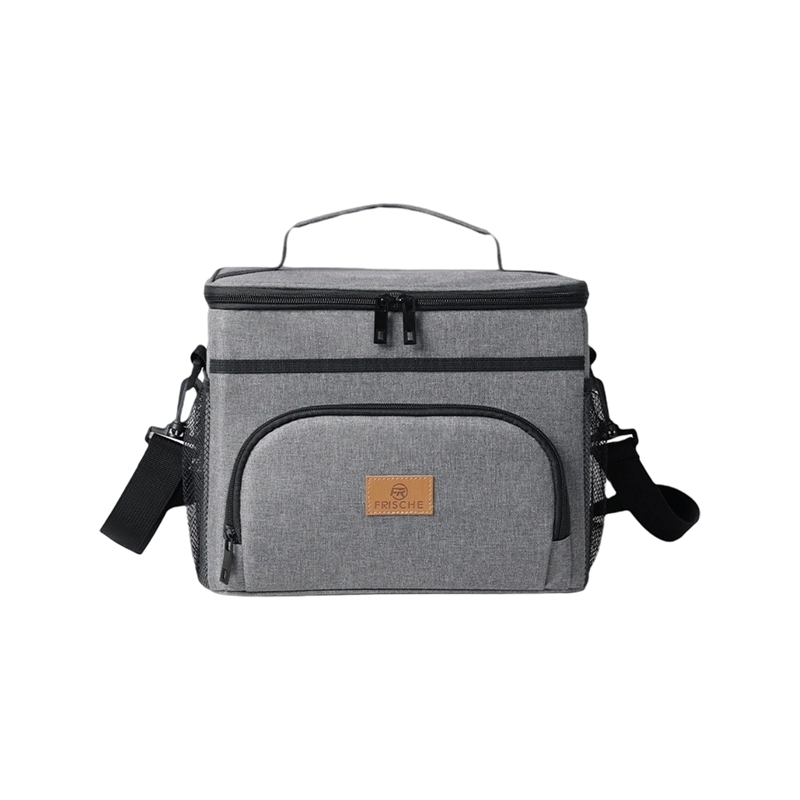
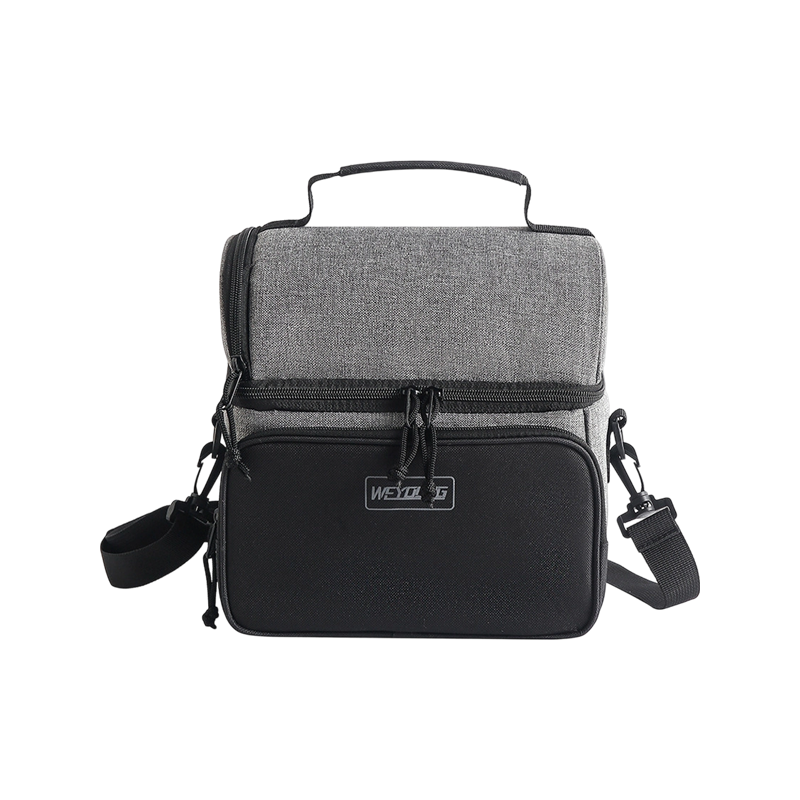
For a finished product that already applies this logic, CragHaven offers a large-capacity outdoor picnic bag with a PEVA leakproof, waterproof, and insulated liner.
 Large Capacity Outdoor Picnic Bag with PEVA Liner for Family UseThis spacious single-shoulder bag features a food-grade PEVA lining that is waterproof, stain-resistant, and easy to clean, with triple-layer insulation for lasting warmth or coolness—ideal for family outings.View Product →
Procurement note: If a supplier quotes a PEVA liner but cannot show a phthalate-free declaration, it is probably still using a blended film. Ask for the polymer trade name and the test report before committing to an order.
Frequently Asked Questions
Is PEVA safe for food contact in a picnic bag?
PEVA is considered safer than PVC in most food-contact picnic-bag uses because it does not require phthalate plasticizers. Always verify the exact grade with a food-contact certificate.
Can PVC be used in a picnic bag that touches food?
PVC can be made food-grade, but only with a controlled plasticizer package. For a picnic bag that is used daily and exposed to heat and oil, PEVA is a lower-risk specification.
Which material is more durable for repeated camping use?
PEVA is more durable in a picnic bag's normal folding and cold-weather use. PVC may be more abrasion-resistant, but it tends to stiffen and crack over time when folded repeatedly.
What should I ask a supplier before ordering a PEVA picnic bag?
Ask for the PEVA film thickness, the phthalate-free declaration, the food-contact compliance report, and a leak test result for the welded seams.

- Phone: +86-15968800379
- E-mail: [email protected]
- Address: Room 1002, Huishang Building, Gongshu District, Hangzhou City, Zhejiang Province.
Copyright © CragHaven Outdoor All Rights Reserved. Outdoor Gear Manufacturers Wholesale Mountaineering Camping Gear Suppliers
