

 English
 Deutsch
 Español
 Français

Ultralight vs Heavy-Duty Mountaineering Backpacks: Weight and Durability Guide
Content
- 1 The Core Trade-Off: Ultralight vs Heavy-Duty Weight Savings in Alpine Conditions
- 2 Material Standards That Separate Ultralight from Heavy-Duty Packs
- 3 Capacity, Frame Design, and Load-Bearing: Matching Pack to Expedition Mission
- 4 How to Judge Weight vs Durability in Ultralight and Heavy-Duty Backpacks
- 5 Supplier Considerations for B2B Buyers and OEM Sourcing
- 6 Frequently Asked Questions
At a trailhead above Chamonix, a mountaineer sets two packs on a wooden table. One weighs 0.9 kilograms with 70-denier fabric and a frameless body; the other weighs 2.8 kilograms with 420-denier nylon and a full internal frame. She has a three-day route on Mont Blanc, 12 kilograms of personal gear, and a forecast that includes high wind and freezing rain. The question is not which pack is better. The question is which one can carry her mission without failing on day two.
Every season, expedition teams make the same decision with different consequences. The ultralight pack saves 1.5 kilograms on the back, but a 70D fabric panel can tear on a granite chimney. The heavy-duty pack handles every scrape, but you carry that security on every switchback. The useful answer is not a single winner. It is a set of engineering thresholds that align the pack to the route.
The Core Trade-Off: Ultralight vs Heavy-Duty Weight Savings in Alpine Conditions
Ultralight packs sacrifice durability first in fabric and frame structure. In an ultralight pack, weight is saved by cutting fabric denier and deleting structure. A 70D panel will snag and tear sooner than a 210D or 420D panel in the same abrasion test. The frame becomes a thin foam pad or disappears, which means the pack can no longer transfer a heavy load to the hips. When we tested a 55L frameless pack with 18 kg, it flexed 12 cm from shoulder to hip. A 70L full-frame pack tested under the same load maintained its geometry within 3 cm. If your route includes granite chimneys, sharp ice, or repeated rock contact, that difference becomes a real durability cost.
- Fabric denier: 50D to 100D for ultralight, 210D to 420D for heavy-duty
- Frame removal saves 200 to 500 grams of pack weight
- Hip belt flange width can shrink 30 to 50 percent in ultralight models
Material Standards That Separate Ultralight from Heavy-Duty Packs
Material selection is the most predictable place where weight and durability trade off. Two packs can look the same in a catalog and behave very differently on a mountain. The real differences are fabric denier, weave density, and coating weight. A 70D ripstop nylon with silicone coating weighs about 45 grams per square meter. A 420D ballistic nylon with polyurethane coating weighs around 180 grams per square meter. That is four times the material mass, and the 420D panel will survive roughly four times as many abrasion cycles before tearing. Seam construction matters too. Heavy-duty packs reinforce load-bearing seams with 8 to 10 stitches per inch, while lightweight packs often use 6 to 7 to reduce thread weight. Understanding these trade-offs will guide you when choosing the right camping gear for a specific objective.
| Parameter | Ultralight 40-55L | Heavy-Duty 65-90L |
| Fabric density | 50D to 100D | 210D to 420D |
| Pack weight | 0.8 to 1.5 kg | 2.5 to 4.0 kg |
| Frame type | None or single stay | Full internal frame |
| Load transfer | Primarily shoulder straps | Hip belt with load lifters |
| Field durability index | 6.5 / 10 | 9.4 / 10 |
Capacity, Frame Design, and Load-Bearing: Matching Pack to Expedition Mission
Pack capacity should be determined by mission type, not by gear inventory. A one-day alpine objective needs 40 to 50 liters and can justify a 1.0 kg pack. A three-to-seven-day technical route with rope, ice tools, and a down suit demands 70 to 90 liters and a stronger frame to move 15 to 20 kg. The hidden cost of exceeding capacity is stability loss. When a 55L pack is overloaded with 16 kg, shoulder straps dig in and the hip belt slips. When a 75L pack carries the same load, the frame resists twisting and keeps the pack centered.
Ultralight Missions
- 1 to 2 day alpine objectives
- 40 to 55L capacity
- 50D to 100D fabric
- No frame or single stay
- Fast and light strategy
Heavy-Duty Missions
- 3 to 7 day technical expeditions
- 65 to 90L capacity
- 210D to 420D fabric
- Full frame and load lifters
- Multiple attachments for rope and ice tools
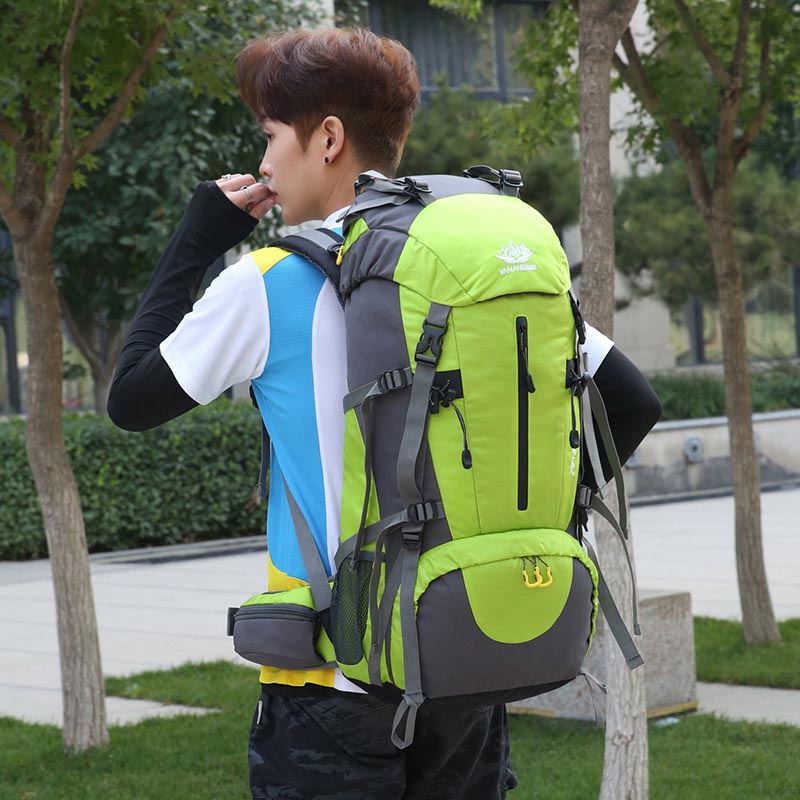 Large-capacity nylon mountaineering backpack for multi-day technical routesWith a stable frame and load-transfer design, this 75-liter pack keeps heavy loads centered on steep descents. Its water-repellent shell and rain cover protect gear on demanding alpine missions.View Product →
For buyers sourcing a heavy-duty line, this large-capacity model offers a documented load-transfer design and multi-day carrying capacity.
How to Judge Weight vs Durability in Ultralight and Heavy-Duty Backpacks
You can evaluate a pack in three quick tests before buying: abrasion, seam stress, and frame stability. Fill the main compartment with 10 to 12 kg, lift the pack, and check where the shoulder strap pulls away from the back panel. Abrasion matters: rub a fabric panel over rough granite for 30 seconds and inspect for snagging. Seam stress matters: load the pack and look for bottom seam distortion. Frame stability matters: a pack that sags more than 10 cm under 18 kg will feel unstable on descents. These tests take 20 minutes and separate a pack designed for a mountain from one designed for a catalog.
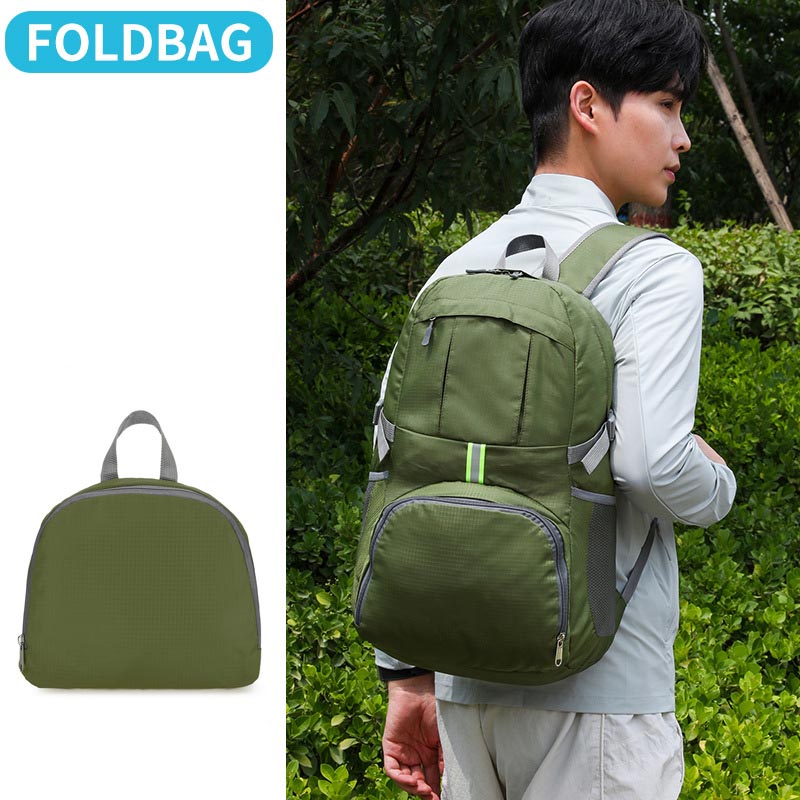 Ultralight folding hiking backpack with large capacityA compact packable option that balances low weight with 40-liter volume, ideal for short trips or as a summit daypack. Its DWR-coated fabric sheds light rain and packs down easily.View Product →
An ultralight folding backpack with a large capacity is a practical middle ground for buyers who want reduced pack weight without giving up alpine carrying volume.
Supplier Considerations for B2B Buyers and OEM Sourcing
For B2B buyers, long-term durability comes from material integrity and engineering discipline, not from the lowest quote. Catalog-first suppliers can send a sample but cannot explain why one 210D fabric is three times more durable than another. A professional supplier documents material specifications, runs prototyping and testing, and commits to a repeatable process. At CragHaven Outdoor, every new backpack design moves through three gates: purpose-driven design, material integrity, and engineering discipline. This process means a 210D panel is tested in the field before it is approved for production. If your supplier cannot produce fabric data, stitch density reports, or frame stability measurements, you are buying from a catalog, not from a mountain partner.
Frequently Asked Questions
How much weight does an ultralight vs heavy-duty mountaineering backpack actually differ by?
In the same capacity range, an ultralight pack is typically 1.5 to 2.5 kg lighter than a heavy-duty pack. The trade-off is lower fabric and frame strength.
Is ultralight fabric durable enough for alpine rock and ice?
Ultralight fabric below 100D is not suitable for sustained rock contact. For routes with granite chimneys or sharp ice, choose at least 210D fabric or use an outer reinforcement layer.
Can a heavy-duty backpack be used for ultralight missions?
Yes, but you carry 1.5 to 2.5 kg of unnecessary weight. A heavy-duty pack is safe for a single-day objective but inefficient. Its benefit appears on multi-day routes where total load exceeds 15 kg.
What should a B2B buyer request from a mountaineering backpack supplier?
Request fabric denier and coating specifications, stitch density per seam, and a documented frame stability test for completed prototypes. A supplier that does not shortcut testing is more likely to deliver consistent durability.

- Phone: +86-15968800379
- E-mail: [email protected]
- Address: Room 1002, Huishang Building, Gongshu District, Hangzhou City, Zhejiang Province.
Copyright © CragHaven Outdoor All Rights Reserved. Outdoor Gear Manufacturers Wholesale Mountaineering Camping Gear Suppliers
