

 English
 Deutsch
 Español
 Français

Quick-Pitch vs Traditional Tents: How to Choose Between Convenience & Structural Stability
Content
- 1 Quick-Pitch vs Traditional Tents: The Core Trade-Off
- 2 What Quick-Pitch Tents Deliver and What They Cost
- 3 Why Traditional Tents Still Set the Stability Benchmark
- 4 Quick-Pitch vs Traditional Tents: Procurement Evaluation Criteria
- 5 Decision Framework: Matching Tent Type to Use Case
- 6 How to Improve the Stability of Any Tent Design
- 7 Frequently Asked Questions
For a procurement team building a tent roster for the 2026 outdoor season, the Quick-Pitch vs Traditional Tents decision is a direct confrontation between two measurable outcomes: setup speed and storm survivability. A quick-pitch tent pitches in roughly 3 minutes, while a traditional cross-pole or geodesic design needs 10 to 15 minutes and two people to get right. The gap is trivial on a calm summer afternoon. It becomes the difference between a dry night and a 3 a.m. repitch when a cold front moves through at 2,400 meters.
Choosing between them is not a matter of which is better. It is a matter of which trade-off your product line can absorb.
Quick-Pitch vs Traditional Tents: The Core Trade-Off
Quick-pitch and traditional tents solve different problems. Quick-pitch geometry prioritizes low-effort, low-skill assembly. Traditional geometry prioritizes load distribution across the frame. If your target user camps in exposed terrain or shoulder seasons, structural stability must win. If your target user is a casual car camper in fair weather, quick-pitch wins.
| Attribute | Quick-Pitch | Traditional |
| Setup time (one user) | 2-5 minutes | 10-15 minutes |
| Pole architecture | Hub-and-sleeve | Cross-pole / geodesic |
| Effective wind resistance | 20-30 km/h | 40-60 km/h |
| Pack weight (2-person) | 2.2-2.8 kg | 2.0-3.5 kg |
| Assembly skill required | Low | Moderate-high |
What Quick-Pitch Tents Deliver and What They Cost
Quick-pitch tents are engineered around one goal: getting to shelter fast. Pre-bent pole segments, hub clusters, and integrated guylines create a frame that holds its shape even when the user does not perfectly follow the assembly sequence.
What quick-pitch gives you
- One-person setup in under 5 minutes
- Fewer loose poles to lose during transport
- Lower training requirement for event, rental, or group use
What it costs
- More flexible frame that moves in sustained wind
- Weight penalty from hub components, typically 300-500 g
- Less predictable geometry in heavy rain or snow
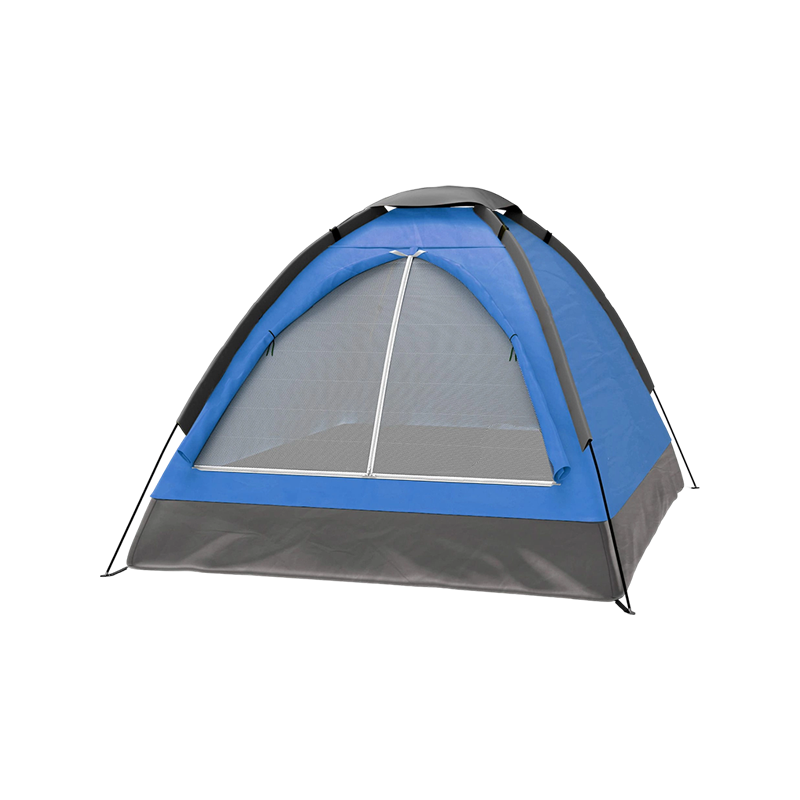
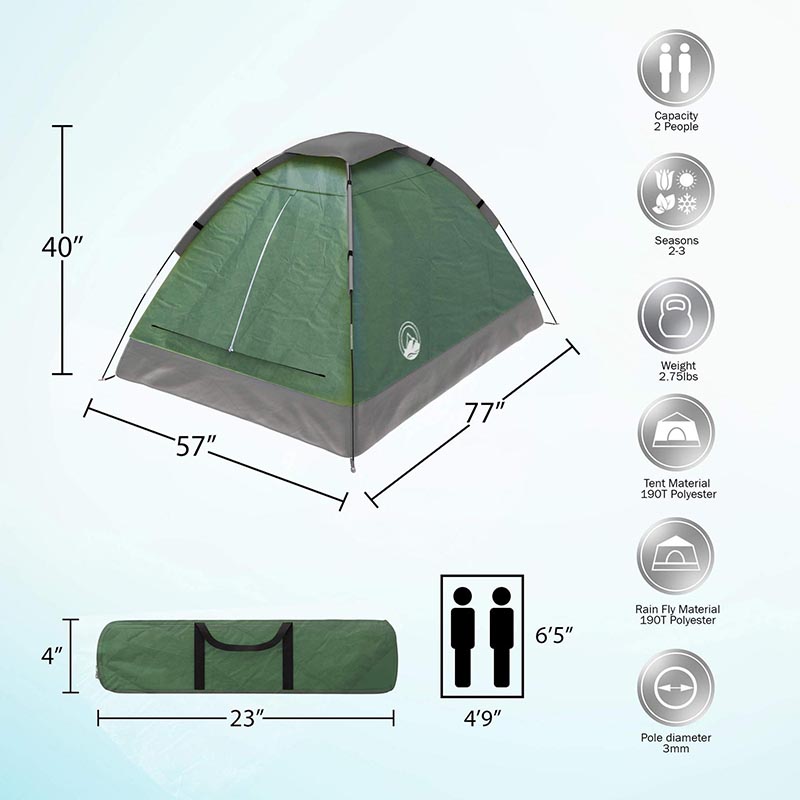 Quick-Setup Thickened Beach Tent for Two with Sun ProtectionThis hydraulic spring tent auto-assembles without manual setup, offering a double-layer structure for sun and rain protection. It fits two people and uses breathable mesh against mosquitoes, ideal for novice campers and beach use.View Product →
Why Traditional Tents Still Set the Stability Benchmark
Traditional tents still lead on structural stability because their frame physics is simpler and more forgiving under load. Cross-pole arches and geodesic patterns distribute wind load across the entire frame rather than concentrating it at a hub.
- Triangulated bracing through cross-pole geometry
- Pin-and-ring attachments for precise pole tension adjustment
- Multiple guy-out points for storm-specific tuning
- Replaceable pole segments with shock-corded ferrules
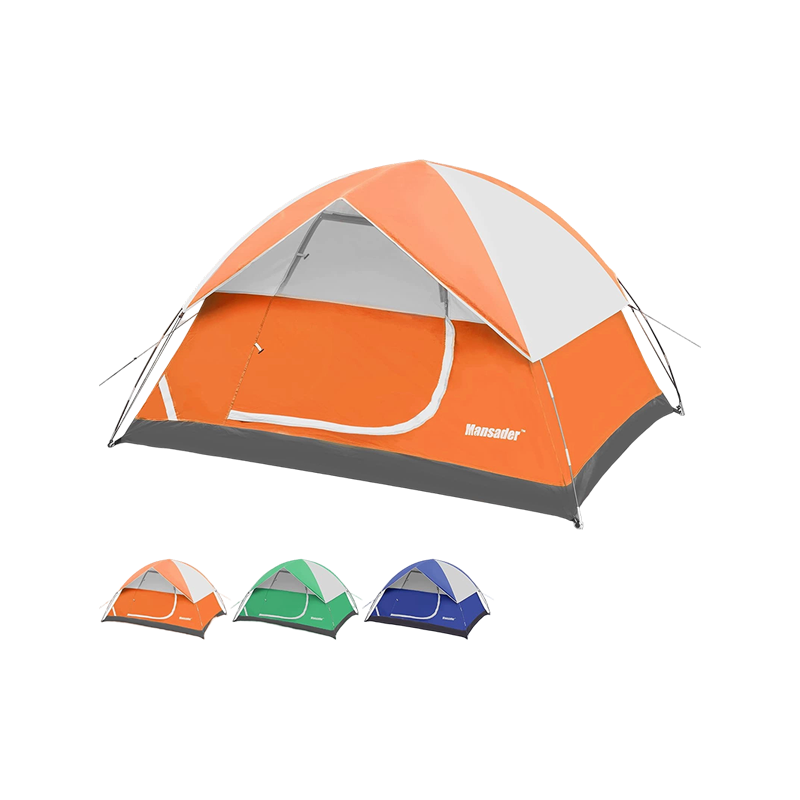 Two-Person Double-Layer Camping Tent with Waterproof CoatingFeaturing a classic double-layer design, this tent separates rainproof outer and breathable inner layers to prevent condensation. Taped seams and manual setup ensure stable shelter, making it a reliable choice for traditional camping.View Product →
Quick-Pitch vs Traditional Tents: Procurement Evaluation Criteria
Sourcing discipline matters just as much as product performance when choosing between quick-pitch and traditional tents. Waterproofing and weather resistance should be verified against actual test data, not marketing claims.
Key evaluation criteria for both architectures:
- Rated wind speed and the test method behind it
- Water column, seam sealing, and fabric coating quality
- Pole material: 7001 aluminum, 6061 aluminum, fiberglass, or carbon
- Availability of replacement hubs and pole segments
- Stakes and guylines included in the box
- Weight-to-protection ratio for the intended use case
Decision Framework: Matching Tent Type to Use Case
A practical decision matrix makes the choice repeatable across a product line.
| Use Case | Recommended Type | Reasoning |
| Car camping, fair weather | Quick-pitch | Speed matters more than wind resistance |
| Coastal or exposed terrain | Traditional | Wind and salt spray test shelter durability |
| Alpine or high altitude | Traditional | Snow load and sudden weather shifts |
| Multi-site festival rental | Quick-pitch | Fast turnaround between users |
| Backpacking, multiday trips | Traditional | Pack weight and space efficiency |
How to Improve the Stability of Any Tent Design
For procurement teams, the right accessories can close the stability gap between quick-pitch and traditional designs. Extended ground stakes, reinforced groundsheets, and additional guyline anchors shift wind load away from the pole structure.
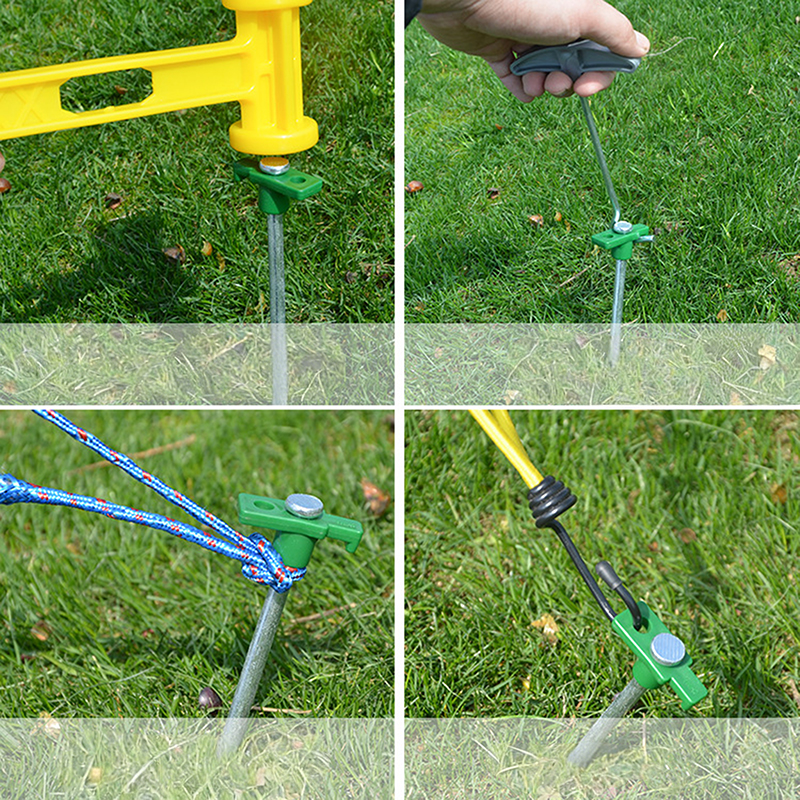 25cm High-Carbon Steel Ground Stakes with Glow-in-the-Dark HeadsThese galvanized steel stakes resist bending and corrosion, with a 25cm length for strong grip in sand or grass. The glow-in-the-dark heads aid night visibility, and universal hooks fit various tarps, enhancing stability in windy conditions.View Product →
- Extended-length 25 cm steel stakes anchor securely in loose or sandy soil
- A reinforced tarpaulin prevents ground moisture from seeping through the tent floor
- Additional anchors distribute wind load across a wider footprint
- These accessories work with both quick-pitch and traditional tents
The Quick-Pitch vs Traditional Tents choice should be made on the basis of where your end users camp, how much time they are willing to spend on setup, and how much wind they are likely to face. There is no universal winner. There is only a fit between tent architecture and use case. For procurement teams, the operational rule is simple: match the tent geometry to the verified use case, and keep the accessory kit ready for the conditions the product will actually meet.
Frequently Asked Questions
Are quick-pitch tents suitable for alpine environments?
Generally no. Quick-pitch geometries rely on hub-connected pole clusters that are more flexible than cross-pole arches. For sustained high winds, snow loading, and rapid weather changes in alpine environments, traditional geodesic or cross-pole tents provide a safer margin.
What role does pole material play in structural stability?
Pole material determines how much the frame will flex before it deforms permanently. 7001 aluminum offers the best weight-to-strength ratio for traditional frames, while 6061 aluminum is more ductile and less likely to fail in cold weather. Fiberglass is cost-effective but becomes brittle in freezing conditions.
Can a quick-pitch tent be made more stable?
Yes, to a point. Adding 25 cm ground stakes, using a reinforced groundsheet, and deploying extra guyline anchors can improve the wind tolerance of a quick-pitch tent. However, the hub-based frame remains the limiting factor.
What should a procurement team prioritize when sourcing tents?
Prioritize rated wind capacity, pole material, water column, and seam sealing in that order. Consistency of quality across production lots is also critical, and testing samples against the stated specifications is the only way to verify a supplier's claims.

- Phone: +86-15968800379
- E-mail: [email protected]
- Address: Room 1002, Huishang Building, Gongshu District, Hangzhou City, Zhejiang Province.
Copyright © CragHaven Outdoor All Rights Reserved. Outdoor Gear Manufacturers Wholesale Mountaineering Camping Gear Suppliers
