

 English
 Deutsch
 Español
 Français


Insulated vs Standard Lunch Bags: Thermal Retention and Food Safety Outdoors
Content
- 1 What Thermal Retention Actually Means in Lunch Bag Design
- 2 Food Safety Outcomes That Follow Thermal Retention
- 3 Material and Construction Factors That Decide Performance
- 4 Real-World Scenarios for Hikers, Campers, and Worksite Use
- 5 Procurement Benchmarks for Thermal Retention Testing
- 6 Frequently Asked Questions
On an 80°F summer day, a standard lunch bag holding perishable food can reach the internal danger zone (40°F–140°F) within 60 to 90 minutes. By hour two, the USDA requires you to discard the contents. For outdoor brands and procurement teams supplying food storage for hikers, campers, and day-trippers, this is not a marginal detail—it is a product specification that directly determines whether an insulated lunch bag is fit for purpose.
What Thermal Retention Actually Means in Lunch Bag Design
Thermal retention is the rate at which a bag resists heat transfer, and it is determined by material conductivity, insulation thickness, and closure integrity—not by whether a bag looks insulated.
A standard lunch bag uses a single-layer nylon or canvas shell with no insulating medium. Without a thermal barrier, the interior quickly equalizes with ambient temperature. An insulated lunch bag uses a foam layer such as expanded polyethylene (EPE) or closed-cell polyurethane, plus a reflective inner lining, to slow that exchange.
Three design factors define real thermal performance:
- Insulating layer thickness: 5 mm of closed-cell foam performs measurably better than 2 mm in standard ambient conditions.
- Reflective lining: aluminum or aluminized films reduce radiant heat gain through the bag walls.
- Closure quality: zippered openings create a tighter seal than hook-and-loop fasteners, reducing convective heat loss.
For manufacturers, the key metric is the thermal resistance value (R-value), although many consumer-facing product pages do not publish it. Buyers should ask for the time-temperature curve instead, because it shows the actual product behavior in testing conditions.
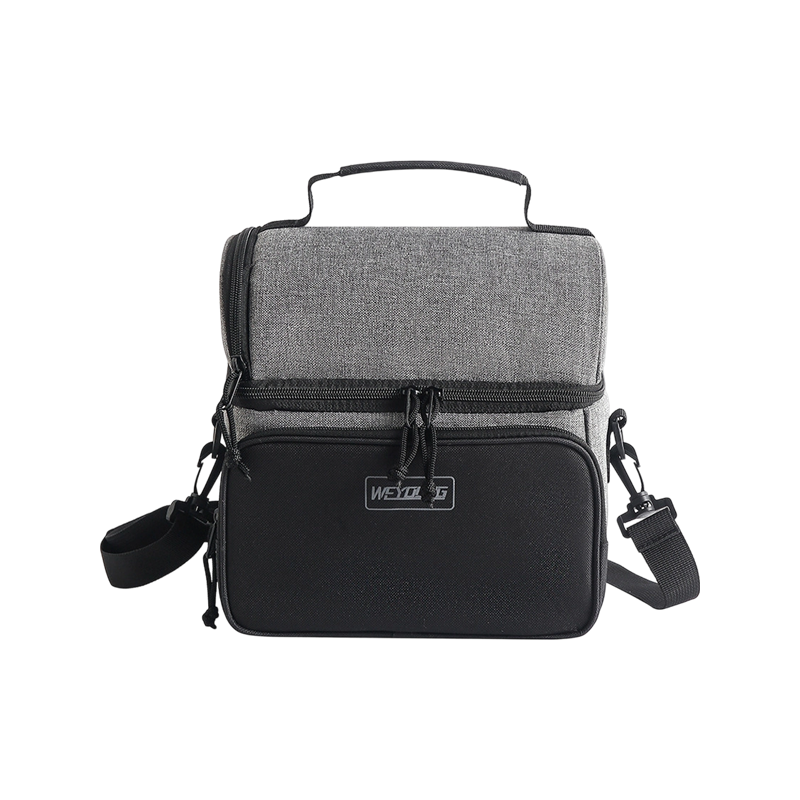
 Double-Layer Oxford Lunch Bag with Insulated Compartments for Commuting and PicnicsThis double-layer lunch bag uses Oxford cloth, pearl cotton, and a PEVA waterproof lining to separate wet and dry items, helping maintain safe food temperatures during commutes or outdoor trips.View Product →
Food Safety Outcomes That Follow Thermal Retention
Perishable food must stay below 40°F or above 140°F. A standard lunch bag cannot hold either condition for longer than two hours in most outdoor summer conditions.
The USDA Food Safety and Inspection Service sets the danger zone between 40°F and 140°F, and states that perishable food left in this range for more than two hours should be discarded. When the ambient temperature is above 90°F, that window shrinks to one hour. Bacteria double in number approximately every 20 minutes within this range, which can turn a safe sandwich into a food-poisoning risk.
| Elapsed Time | Standard Bag | Insulated Bag | Safety Status |
| 0 hours | 40°F | 40°F | Safe |
| 1 hour | 58°F | 44°F | Standard: danger zone |
| 2 hours | 74°F | 49°F | Standard: unsafe |
| 4 hours | 88°F | 56°F | Standard: discard |
The pattern is consistent across test conditions. A standard bag shows a rapid initial spike because there is no insulation to absorb the thermal load. An insulated bag produces a slower, flatter curve, which is exactly what food safety testing requires.
Danger zone: the temperature range from 40°F to 140°F in which harmful bacteria such as Salmonella, E. coli, and Listeria multiply rapidly. Food left in this zone for more than 2 hours (or 1 hour above 90°F) should not be consumed.
Material and Construction Factors That Decide Performance
Insulation efficiency in lunch bags comes down to three design choices: the insulating layer thickness, the lining's thermal reflectivity, and the closure style.
Outer shell
Oxford cloth is the most common outer material in outdoor lunch bags because it resists abrasion and tears during hiking and camping use. A 600D Oxford shell with a PU waterproof coating adds rain resistance without adding significant weight.
Insulating core
The insulating core is typically a foam pad. PE (polyethylene) foam and EPE (expanded polyethylene) are the most widely used cores in picnic bag production. PEVA (polyethylene vinyl acetate) linings are often paired with the foam layer, providing leak resistance and easy cleaning.
Closure mechanism
A full-length zipper creates a significantly better thermal seal than a flap or hook-and-loop strip. When the bag is zipped shut, the air gap remains trapped, and there is no direct path for warm air to enter. For B2B buyers, this is a specification worth writing into the RFQ.
Thicker closed-cell foam creates a larger dead-air space, reducing heat conduction by up to 50% compared with non-insulated walls.
Wipeable and leakproof, this lining protects the insulation layer from food spills and sweat condensation.
An extra air gap between outer shell and foam core prevents direct contact between exterior heat and the interior lining.
 Large Insulated Picnic Bag with Leak-Proof PEVA Lining and Shoulder StrapDesigned for family outings, this single-shoulder picnic bag features triple-layer insulation and a food-grade PEVA lining, keeping contents cool or warm for extended periods while freeing your hands.View Product →
Real-World Scenarios for Hikers, Campers, and Worksite Use
For full-day excursions or hot summer days, an insulated lunch bag is not optional; a standard bag fails the food safety requirement within the first hour.
Different outdoor activities create different thermal load conditions. A 15-minute worksite lunch break has a much lower demand than an 8-hour hiking day, but even for the shorter scenario, the standard bag offers no safety margin when the vehicle is parked in the sun.
- Hiking day trips: 4-8 hours in moderate warmth. Insulated bag with ice pack required to stay under 40°F for the full route.
- Camping base camp: 2-4 hours from a campsite to table. An insulated picnic bag keeps pre-chilled items safe while still allowing quick access.
- Worksite and school lunch: 4-6 hours in a vehicle. The interior of a car parked in summer can exceed 100°F, which breaks the 1-hour USDA rule for uninsulated bags.
- Family beach trip: 3-5 hours with repeated opening. PEVA leakproof linings prevent melted ice from soaking the contents.
From a procurement standpoint, the question is how long the final user needs to hold the food, and whether they will have ice pack support. If the user is likely to load the bag with cold items and carry it into the heat, the insulated bag with a leakproof lining provides a significant safety advantage.
Procurement Benchmarks for Thermal Retention Testing
Buyers should specify a thermal performance test before approving a lunch bag supplier, because insulation claims without a time-temperature test are not verifiable.
A common test method places a known mass of food or water at a controlled starting temperature, then monitors the temperature over 4 hours in a fixed ambient environment. For lunch bags, a practical benchmark is a 2-pound load at 40°F placed in 85°F ambient, with temperature recorded every 30 minutes.
Food temperature after 4 hours in 85°F ambient
The first number in the RFQ should be the maximum allowable temperature rise. For a 4-hour outdoor outing, a thermal rise of less than 15°F over the baseline indicates a properly insulated construction. A rise of more than 30°F suggests that the foam core is either too thin or has poor barrier material.
| Criterion | Minimum Requirement | Recommended Test |
| Thermal rise (4 hrs, 85°F) | Below 20°F | 2 lb load at 40°F |
| Lining leak resistance | No visible leak after 2 hrs | Water hold test |
| Outer shell durability | No tearing after 100 cycles | Abrasion rub test |
| Zipper seal integrity | No gap after 1000 cycles | Zipper durability test |
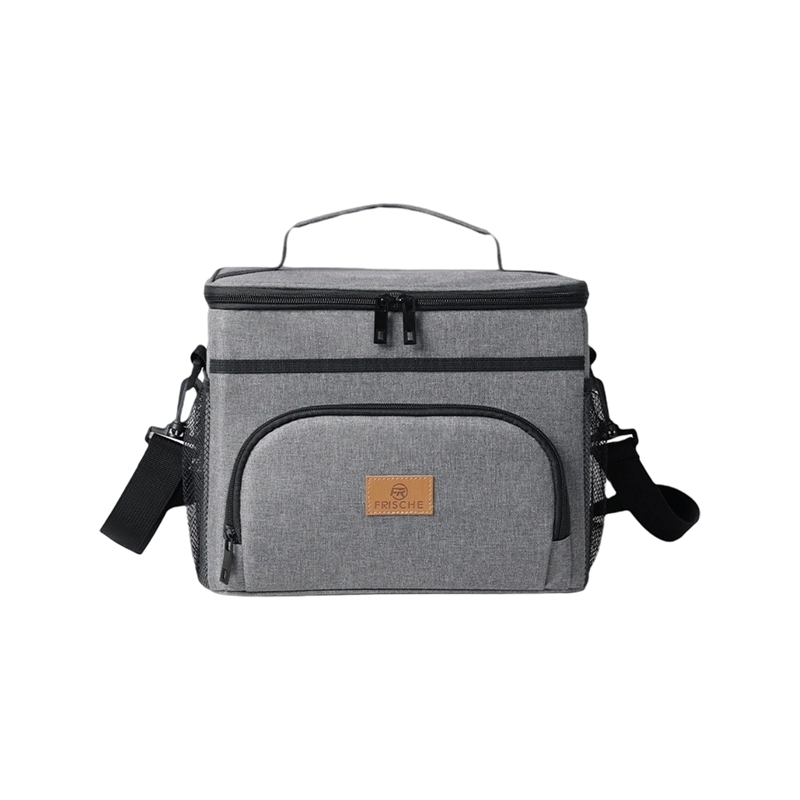
By requiring these benchmarks, procurement teams can compare suppliers objectively. The same logic applies to technical specifications for other outdoor gear, where measurable benchmarks reduce procurement risk. CragHaven Outdoor builds its picnic bag line with a PEVA leakproof liner and Oxford cloth outer shell, and runs sampling, testing, and optimization as standard stages in its manufacturing process.
Frequently Asked Questions
How long does food stay safe in a standard lunch bag outdoors?
Less than two hours in most outdoor summer conditions, and less than one hour when the ambient temperature exceeds 90°F. The bag has no insulation layer, so the food inside quickly reaches the danger zone of 40°F–140°F, where bacteria multiply rapidly.
What is the difference between an insulated lunch bag and a cooler?
An insulated lunch bag uses a foam layer to slow heat transfer, making it suitable for half-day or full-day outings. A hard cooler with thick walls is designed for multi-day use. For a 4-6 hour outdoor activity, an insulated lunch bag paired with a frozen ice pack is usually sufficient.
Which materials deliver the most effective thermal retention?
PEVA inner lining, Oxford cloth outer shell, and closed-cell PE or EPE foam insulation. A double-layer structure with an additional air gap provides better performance. These materials also provide leak resistance and tear resistance for rugged outdoor use.
Can temperature loss be offset with an ice pack?
Yes. Adding a frozen ice pack raises the thermal capacity of the bag and typically keeps food below 40°F for 4-6 hours. Insulated bags should be evaluated on their performance with a frozen insert, not on empty-bag performance.

- Phone: +86-15968800379
- E-mail: [email protected]
- Address: Room 1002, Huishang Building, Gongshu District, Hangzhou City, Zhejiang Province.
Copyright © CragHaven Outdoor All Rights Reserved. Outdoor Gear Manufacturers Wholesale Mountaineering Camping Gear Suppliers
