

 English
 Deutsch
 Español
 Français

Outdoor Gear Materials: Nylon, Polyester, Aluminum, Steel Compared | CragHaven
Content
In a 2026 procurement cycle, a distributor ordering 3,000 trekking poles or 500 mountaineering backpacks has to make the material call at the sample stage, before the purchase order is ever written. Nylon, polyester, aluminum, and steel each affect unit cost, QC pass rate, shipping weight, and field return rate differently. The right choice matches the dominant failure mode of the product, not the best-looking entry on a material chart.
Nylon vs Polyester: Which Fabric Delivers More Value Per Yard?
Nylon carries roughly 20 percent higher tensile strength and better abrasion resistance than polyester, which is why climbing backpacks, hammocks, and heavy-duty load carriers rely on it. Polyester absorbs only about 0.4 percent moisture compared to nylon's 3.5 to 4 percent, so it dries faster, holds its shape, and resists UV degradation much better over a 6-to-12-month field cycle.
For an OEM program, that difference turns into a specific product decision. A mountaineering backpack that gets stuffed into a haul bag, dragged over granite, and exposed to rain needs nylon's abrasion tolerance. A lightweight canopy or picnic mat that sits in direct sun on a beach needs polyester's UV stability. Polyester also tends to have a more stable price per kilogram because the fiber supply chain is larger and less exposed to the same petrochemical swings.
When a CragHaven Outdoor nylon mountaineering backpack is being speced, the team tests the denier range, the coating type, and the seam reinforcement because those variables change how much abrasion the fabric can absorb before a seam begins to fail. Nylon's edge becomes clearer in the field: it survives the dragging and compression that a weekly commuter bag would never see.
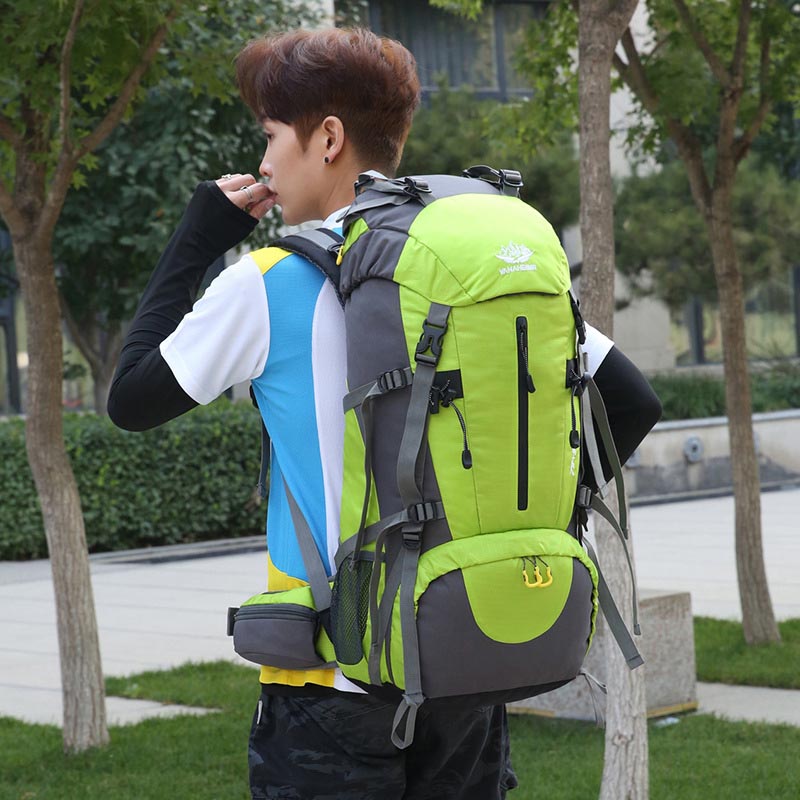 High-Strength Water-Repellent Nylon Mountaineering Backpack with Independent Rain CoverThis large-capacity nylon backpack offers double protection with a water-repellent outer and Oxford lining, plus a rain cover for extreme weather. Its ergonomic design and trekking pole system make it a robust choice for multi-day hikes.View Product →
| Property | Nylon | Polyester | Procurement Impact |
| Tensile strength | About 12,000 psi | About 9,000 psi | Higher strength per denier in nylon |
| Moisture absorption | 3.5 to 4 percent | 0.4 percent | Nylon gains shipping weight when damp |
| UV resistance | Moderate | High | Polyester better for sun-exposed gear |
| Weight per denier | Lower | Higher | Nylon supports ultra-light designs |
| Cost stability | Higher volatility | More stable | Polyester easier to forecast |
Key takeaway: choose nylon where abrasion and overload risk dominate, choose polyester where sun, moisture, and cost predictability are the bigger factors.
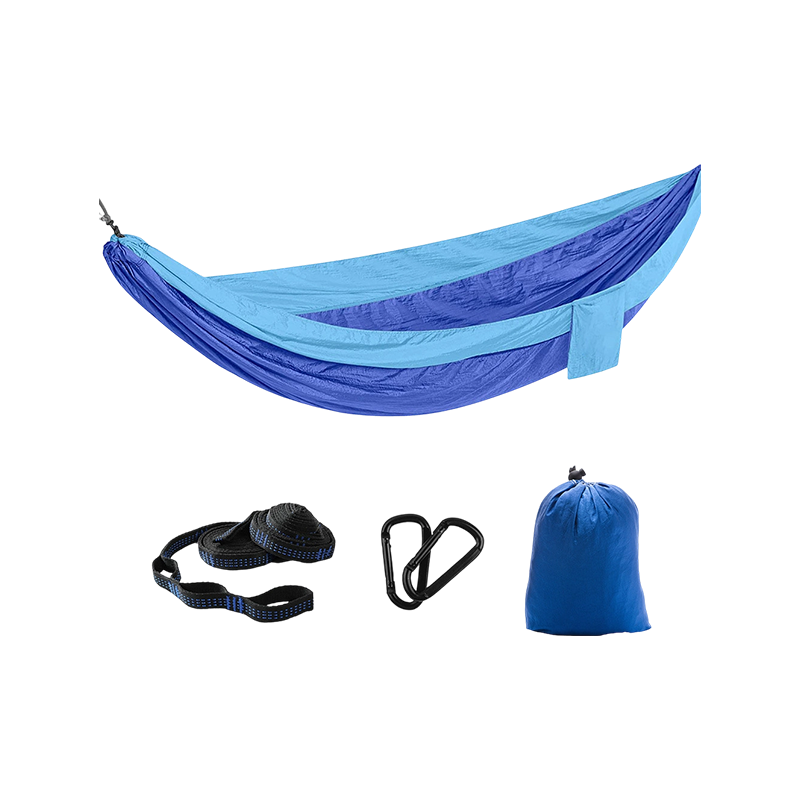
For camping gear, a nylon parachute hammock shows the weight advantage well. The same 210T fabric panel is lighter in nylon, which reduces packed weight for hikers who carry it into the backcountry. The trade-off is that a nylon hammock should be dried before storage and kept away from prolonged UV exposure to maintain its strength over repeated seasons.
 Tear-Resistant Parachute Nylon Hammock with Rust-Proof Steel BucklesLightweight and breathable, this hammock uses parachute-grade nylon and reinforced stitching. The included tree straps and steel buckles ensure reliable support, making it ideal for backcountry rest stops without adding excess weight.View Product →
Aluminum vs Steel: Matching Hardware to Load and Environment
Aluminum is the default for climbing hardware, tent poles, and trekking pole shafts because it weighs about one-third of steel and, when anodized, resists corrosion without an additional coating layer. Steel remains the better choice only where maximum yield strength is needed at a fixed point, such as ground stake shafts, rivets, and load-bearing brackets.
6061-T6 aluminum has a yield strength around 276 MPa and a density of 2.7 g/cm³. A comparable 4140 steel reaches roughly 655 MPa yield strength but at 7.85 g/cm³. In a trekking pole, the shaft is the main component under repeated bending and axial load. An aluminum shaft can meet the requirement with a slightly larger wall thickness while still saving hundreds of grams over a steel equivalent. That weight saving is what makes aluminum the industry standard for folding poles with external or internal locking systems.
CragHaven Outdoor's aluminum trekking poles use a three-section telescopic structure with an external locking mechanism, designed around repeated load cycles in hiking and climbing. The decision to use aluminum over steel was not a cost-driven one; it was a user-fatigue decision that balances strength against carry weight.
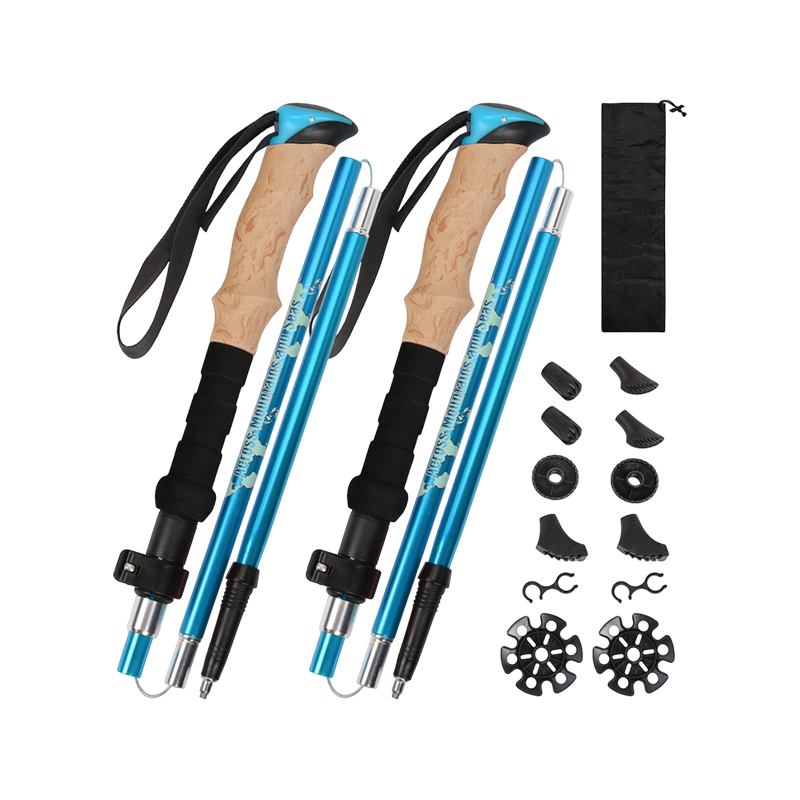 Three-Section Telescopic Aluminum Trekking Pole with External Locking SystemThis aluminum pole features a secure external locking mechanism and a tungsten steel tip for durability. Its lightweight, foldable design reduces fatigue during climbs, making it a dependable companion for mountain hiking.View Product →
| Property | Aluminum 6061-T6 | Steel 4140 | Procurement Impact |
| Density | 2.7 g/cm³ | 7.85 g/cm³ | Steel parts weigh about 2.9 times more |
| Yield strength | 276 MPa | 655 MPa | Steel stronger per cross-section |
| Corrosion handling | Anodized or powder coated | Zinc or paint required | Steel adds coating steps and cost |
| Weight in a pole shaft | Light | Heavy | Aluminum improves user fatigue |
| Maintenance cycle | Low | Higher | Steel needs paint touch-ups |
Engineering conclusion: power-to-weight ratio is the deciding metric. Aluminum wins in nearly all portable outdoor applications. Steel wins only where a part does not need to be carried or where impact toughness matters more than weight.
Material Selection Matrix for Outdoor Gear Kitting and Production
The most practical procurement approach is to define a stress hierarchy for each SKU, then assign the material that best controls the dominant failure mode. In this context, a stress hierarchy is a ranking of each gear component by the mechanical and environmental load it must survive before any other consideration.
Density comparison across materials
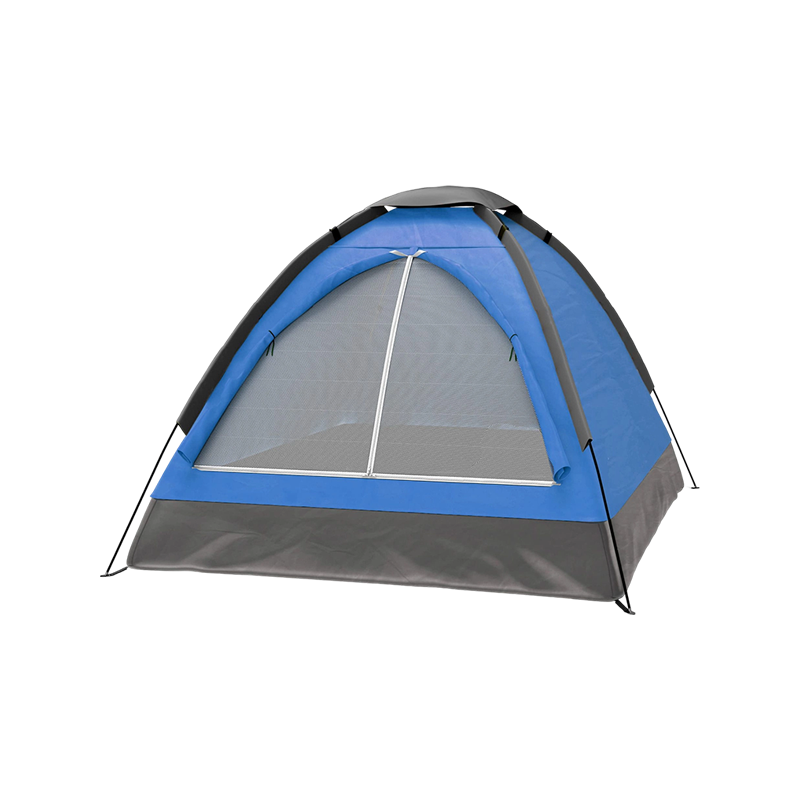
In practice, a production line rarely uses just one material across the whole kit. A backpack consists of a nylon main body, polyester lining for moisture management, aluminum frame stays, and steel buckles or reinforced strap webbing. A tent consists of a polyester rainfly and floor, aluminum poles, and steel stakes. The decision is about where each material appears, not which single material wins overall.
| Gear component | Primary material | Reason |
| Backpack main body | Nylon | Abrasion resistance and low weight |
| Tent rainfly | Polyester | UV and moisture resistance |
| Tent poles | Aluminum | Lightweight and strong |
| Ground stakes | Steel | Impact toughness |
| Hammock fabric | Nylon | Lightest strong fabric option |
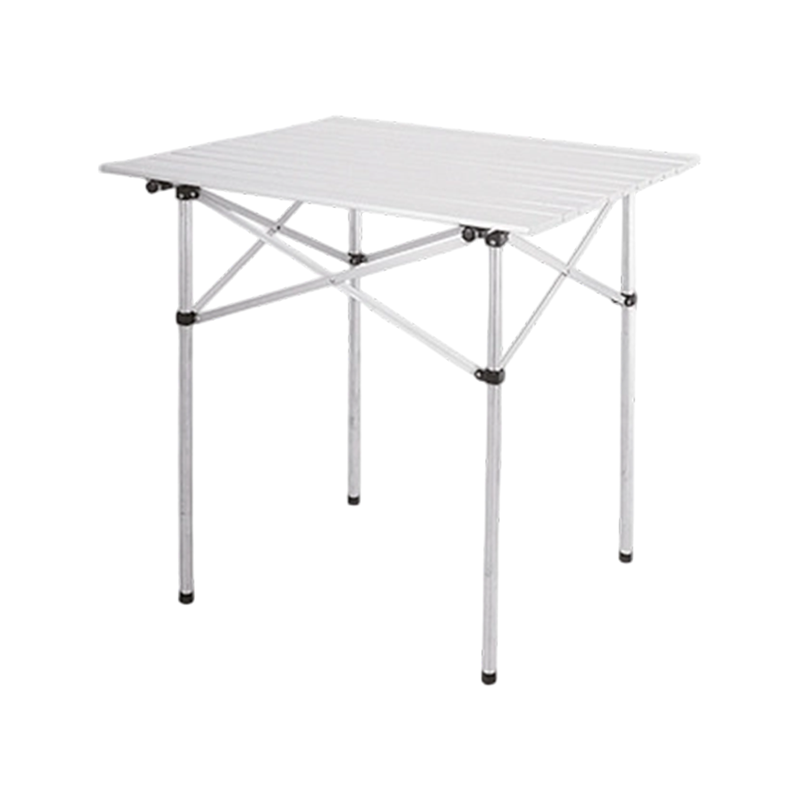
| Folding table top | Aluminum alloy | Lightweight, stable, no rust |
A usable rule for buy-side teams: the material must pass the least favorable condition it will see for 90 percent of its service life, not the average condition.
Procurement Risks Hidden in Material Specs
Most material-related returns do not come from a bad material choice but from an unspec'd tolerance, such as denier drift between sample and mass production, inconsistent anodizing thickness, or a steel plating that fails salt spray testing.
When placing a production order, the procurement terms should include measurable conditions rather than just a material name. The financial impact of these factors is real: rejecting one batch, redoing a surface treatment, or shifting a shipment date because of a moisture-related weight overage all add predictable risk to the program.
- Denier drift between approved sample and production rolls shifts fabric weight and unit cost unpredictably.
- Anodizing thickness below 8 microns leaves aluminum surfaces vulnerable to spotting and scratches.
- Nylon's moisture gain of 3 to 4 percent in transit changes the declared shipping weight and can trigger freight surcharges.
- UV degradation in polyester is low, but unpigmented nylon loses 30 to 50 percent of its tensile strength after 500 hours of accelerated weathering.
- Steel ground stakes without zinc coating begin rusting within days of contact with salt water.
For B2B buyers, these are not hypothetical edge cases. They are standard checkpoints in a material quality audit. Understanding how material choice interacts with QC limits helps a procurement team hold a supplier accountable on a specific test standard.
CragHaven Outdoor, as a design-and-manufacturing partner for outdoor brands, builds its sample-to-production protocol around these material tolerances. For a deeper view of technical specs, review the hiking poles B2B procurement material selection guide. CragHaven also shared its global supply chain upgrade to outline the traceability and QC emphasis in current manufacturing.
FAQ
Is nylon or polyester better for outdoor gear?
Nylon is better where strength, abrasion resistance, and light weight matter most, as in backpacks and hammocks. Polyester is better where UV exposure and moisture are the dominant concerns, as in tarps, tents, and rainflies. Choose based on the dominant failure mode of the specific product.
Should I use aluminum or steel for trekking poles?
Aluminum is the standard choice for trekking poles because it is lighter, corrosion-resistant, and strong enough for the bending and axial loads encountered in normal use. Steel is used only where impact toughness matters more than weight, such as heavy-duty stake shafts or load-bearing brackets.
What material is best for a camping hammock?
Nylon parachute fabric is the preferred hammock material because it packs small, weighs less than equivalent polyester, and provides enough stretch for a comfortable wrap. It requires drying before storage and protection from prolonged UV exposure to retain its strength over time.
How do I choose materials for an OEM outdoor product line?
Start by listing each component's dominant stress factor, then assign the material that controls it with the lowest total cost. Use a sample-to-production validation protocol that includes denier checks, anodizing thickness measurements, and UV or salt spray testing so the production batch matches the approved sample.

- Phone: +86-15968800379
- E-mail: [email protected]
- Address: Room 1002, Huishang Building, Gongshu District, Hangzhou City, Zhejiang Province.
Copyright © CragHaven Outdoor All Rights Reserved. Outdoor Gear Manufacturers Wholesale Mountaineering Camping Gear Suppliers
